


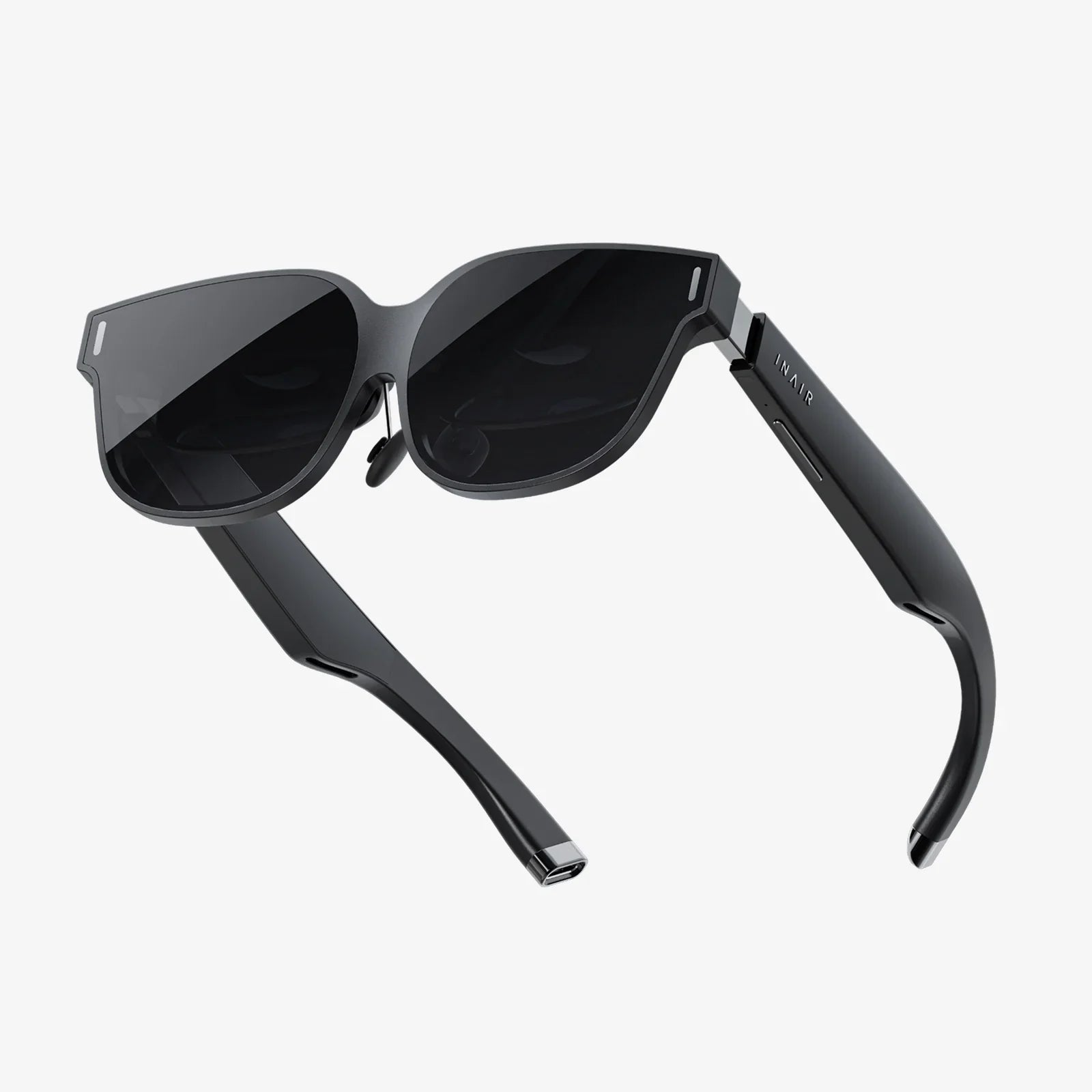
Imagine slipping on a pair of sleek, unassuming glasses and being instantly transported. Not just to a fantastical game world or a distant concert, but into the lived experience of another person, to walk a mile in their shoes in the most literal sense imaginable. This is the ultimate promise, and the profound ethical challenge, at the heart of the next generation of immersive technology. The conversation is shifting from pure technical specifications to a deeper, more pressing question: what does it mean to build and use this power virtuously? The term "Virtue VR Glasses" is less a brand and more a manifesto—a call to action for an industry and its users to navigate the immense potential and peril of virtual realms with a moral compass firmly in hand.
The Genesis of Immersion: From Novelty to Necessity
The journey of virtual reality from science fiction to consumer shelves is a tale of explosive, albeit sometimes stumbling, progress. Early iterations were clunky, expensive, and offered experiences that often induced more motion sickness than awe. They were novelties, fascinating proofs-of-concept that hinted at a future we could scarcely grasp. The primary focus was understandably on the hardware: higher resolutions, wider fields of view, more precise tracking. The goal was to trick the brain, to achieve the holy grail of "presence"—that undeniable feeling of being somewhere else.
This relentless pursuit of technical fidelity, however, largely ignored the softer, human side of the equation. It was a race to build the most powerful window, without fully considering what we would see through it or how it might change our perception of the world outside. As the technology matured, becoming more accessible, comfortable, and affordable, its applications expanded far beyond gaming. Suddenly, architects were walking clients through unbuilt homes, medical students were performing delicate virtual surgeries, and historians were reconstructing ancient cities. The window was no longer just for entertainment; it was becoming a tool for education, connection, and creation. This expansion of purpose forced a critical evolution in thinking. The question was no longer just "can we build it?" but "should we?" and "how should it be used?" This is the fertile ground from which the concept of virtuous design has grown.
Defining "Virtue" in a Digital Landscape
So, what exactly do we mean by "virtue" in the context of a piece of technology? It is not a feature that can be listed on a spec sheet, like processor speed or display resolution. Instead, it is a foundational philosophy that guides every stage of the product's lifecycle, from the initial design sketches to the final user experience. It encompasses a triad of responsibilities: to the individual user, to the community, and to society at large.
For the individual, virtuous design means prioritizing well-being. This includes physical comfort—ensuring the device is ergonomic and doesn't cause strain or nausea. More importantly, it encompasses psychological safety. It means building tools that allow users to curate their experiences, with robust and intuitive safety features to block harassment, easily report abuse, and define clear boundaries in social spaces. It means considering the potential for addiction and designing to encourage healthy usage patterns, not exploit psychological vulnerabilities for engagement metrics. A virtuous device respects the user's time, attention, and mental state.
For the community, virtue translates to fostering positive, inclusive, and equitable digital environments. The hardware itself must be designed for accessibility, accommodating a wide range of physical abilities and ensuring everyone has the opportunity to participate. The platforms it accesses should be built on principles that encourage collaboration, creativity, and genuine human connection rather than toxicity and division. This involves thoughtful governance, transparent community standards, and a commitment to digital civility. It's about creating a healthy "digital public square" where diverse voices can be heard and respected.
On a societal level, virtuous VR considers its long-term impact on how we perceive reality, truth, and our shared humanity. It involves a commitment to using this powerful medium for prosocial ends: promoting empathy through immersive journalism that drops users into the heart of a refugee crisis, enhancing education by letting students explore the human circulatory system from the inside, or providing exposure therapy for those suffering from phobias and PTSD. It also demands a fierce protection of user privacy and data, recognizing that the information collected by these devices—our eye movements, our physiological responses, our deepest reactions—is incredibly intimate and must be guarded with utmost security and ethical rigor.
The Empathy Machine: Theory Versus Practice
One of the most touted potential virtues of VR is its capacity to be an "empathy machine." The theory is compelling: by embodying another person's perspective in a visceral, first-person way, we can break down prejudices and foster a deeper understanding of experiences far removed from our own. Studies have shown promising results, such as reduced implicit bias after experiencing virtual scenarios from the perspective of a person of a different race, or increased compassion for the homeless after virtually experiencing the struggle of losing one's home.
However, this power is a double-edged sword. Empathy is a complex neurological and psychological process, and the idea that a short virtual experience can fundamentally rewire deep-seated beliefs is arguably simplistic and potentially dangerous. There is a risk of what some theorists call "virtual tourism"—a brief, sensationalized dip into another's suffering that provides the illusion of understanding without the substance, potentially leading to emotional fatigue or even a sense of complacency ("/I experienced it, so I get it//").
True virtuous design in this context means moving beyond the simplistic "empathy machine" label. It requires a nuanced approach that pairs immersive experiences with context, education, and calls to actionable change. It means collaborating with the communities being represented to ensure stories are told with authenticity and respect, not exploitation. The goal shouldn't just be to make someone /feel/ something for a few minutes, but to provide a deeper, more informed foundation for lasting compassion and informed action. The technology provides the compelling entry point; virtuous implementation ensures the journey continues meaningfully beyond the headset.
The Dark Side: Privacy, Addiction, and the Blurring of Reality
To discuss virtue is to also confront its opposite. The very features that make VR so powerful—its immersiveness, its ability to collect rich biometric data, its potential for persuasive storytelling—also make it a potential vector for significant harm. The privacy concerns are staggering. Unlike a smartphone or computer, VR headsets can track not just what you look at, but /how/ you look at it. They can measure pupil dilation, blink rate, body movement, and even vocal tone. This dataset is a biometric goldmine, revealing unconscious reactions, emotional states, and attentional focus. In the wrong hands, this data could be used for manipulative advertising, social scoring, or even political influence on an unprecedented scale. A virtuous approach mandates that this data belongs to the user, with ironclad privacy protections, transparent data policies, and a default setting of minimal collection.
Furthermore, the escapist potential of fully immersive worlds presents a real risk of addiction and reality blurring. For some, especially younger users whose brains are still developing, the allure of a virtual world where they are powerful, successful, and socially connected could be far preferable to the challenges of the real one. Prolonged and unsupervised use could potentially hinder social development, physical health, and a stable sense of self. Virtuous design must therefore incorporate well-being safeguards—usage timers, prompts to take breaks, and resources for healthy digital habits. It requires an industry commitment not to design experiences that are deliberately and psychologically addictive.
Forging the Future: A Collaborative Responsibility
The path to a future dominated by virtuous technology is not one that can be paved by manufacturers alone. It requires a collaborative effort, a multi-stakeholder approach where each group bears a piece of the responsibility.
Designers and Engineers must adopt a "privacy by design" and "ethics by design" methodology. This means baking ethical considerations into the code and the hardware from day one, not attempting to bolt them on as an afterthought. It involves diverse hiring practices to ensure development teams reflect the diversity of the user base they are building for, bringing a wide array of perspectives to the table to identify potential pitfalls and biases before a product ever launches.
Policymakers and Ethicists need to engage deeply with the technology to create thoughtful, agile regulations that protect citizens without stifling innovation. The law often lags behind technology, but in the case of something as impactful as VR, we must strive to close that gap. This means developing new frameworks for digital personhood, data ownership, and virtual crime.
Most importantly, Users themselves must be empowered and educated. Digital literacy must evolve to include immersive media. Users need to understand the data they are generating, how to control their privacy settings, and how to engage critically with the experiences they consume. They must be active participants, demanding better standards and holding companies accountable through their choices and their voices.
The dream of "Virtue VR Glasses" is not a fantasy. It is an achievable reality, but it is a future we must choose to build consciously, with intention and integrity. It is a future where this remarkable technology amplifies our best qualities—our curiosity, our compassion, our desire to learn and connect—rather than our worst. The headset is merely a tool; its ultimate virtue will be determined by the hearts and minds of those who build it and the wisdom of those who wear it.
This is the new frontier, not of pixels and processors, but of human character. The choices we make today, from the boardroom to the living room, will echo through the virtual halls we build tomorrow. Will they be palaces of learning and connection, or gilded cages of distraction and manipulation? The power to craft that reality, quite literally, is now on our heads. The next time you consider stepping into a virtual world, ask not what it can do for you, but what it asks of you—and what kind of world you want to help create when you take the glasses off.
Share:
Augmented Reality Market Size: A Deep Dive into the Explosive Growth and Future Potential
Augmented Reality Headsets Market: A Portal to the Future of Reality