


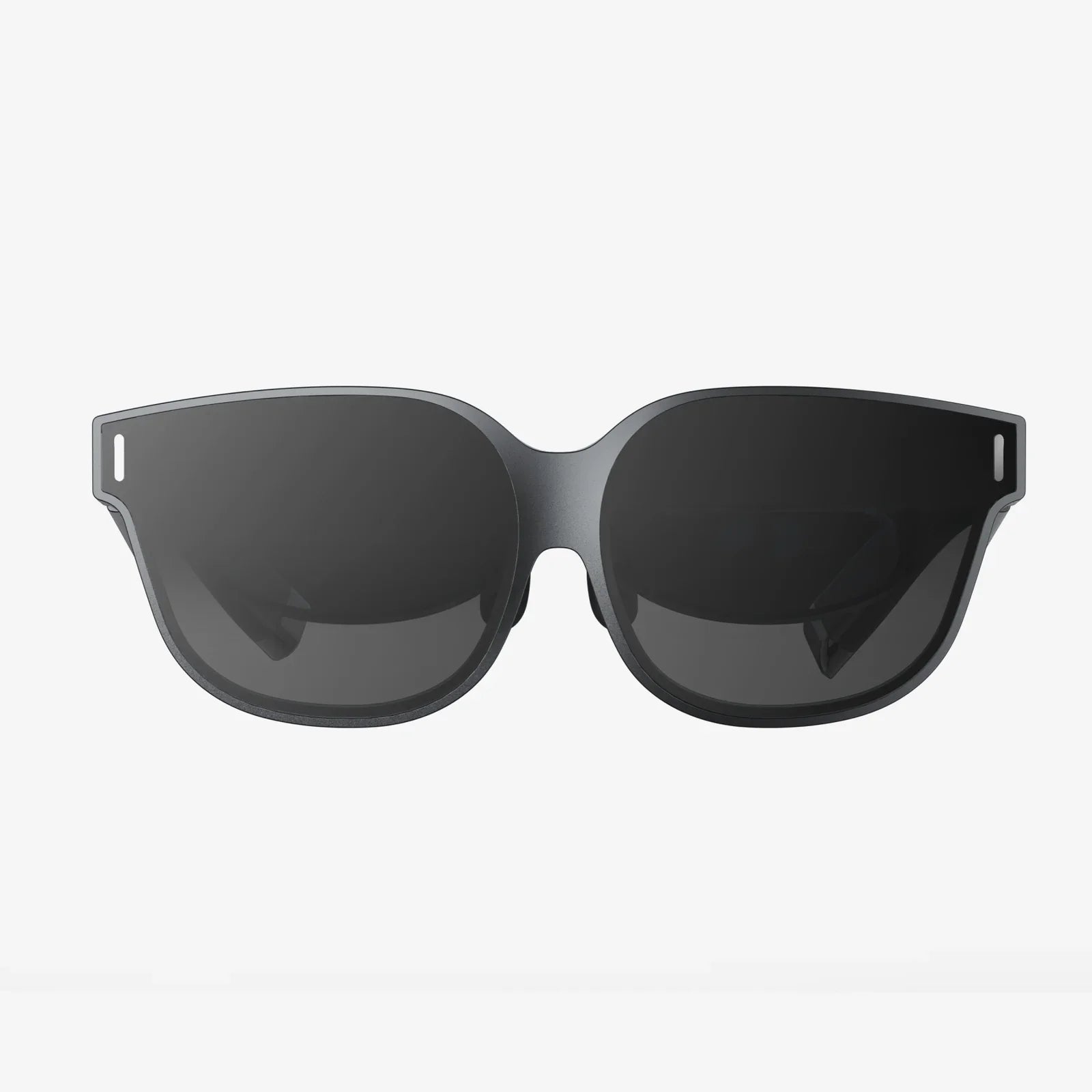
Imagine a world where the flat screen dissolves, where digital information doesn’t just sit on a surface but occupies the space around you, and where the line between the physical and the virtual becomes beautifully, functionally blurred. This is no longer the realm of science fiction; it is the emerging reality powered by Vision 3D, a technological revolution that is fundamentally altering our perception and interaction with the digital realm. This technology promises to unlock new dimensions of understanding, creativity, and connection, pushing the boundaries of what we once thought possible.
The Foundational Principles: More Than Meets the Eye
At its core, Vision 3D is about replicating the most sophisticated visual processing system known: human stereoscopic vision. Our ability to perceive depth and dimension is a biological marvel. By having two eyes spaced slightly apart, each captures a unique two-dimensional image of the world. The brain then performs an incredible computational feat, merging these two slightly offset images into a single, coherent three-dimensional picture, complete with depth, distance, and spatial relationships.
Vision 3D systems emulate this process through a combination of hardware and sophisticated software algorithms. The primary methods for capturing and displaying three-dimensional information can be broadly categorized.
Stereoscopic Capture
This is the most direct imitation of human vision. It involves using two or more cameras, strategically positioned to mimic the parallax of human eyes. By calculating the differences between the images from these cameras, a system can triangulate the position of objects and construct a depth map—a representation of the distance from the cameras to every point in the scene.
Structured Light
This technique involves projecting a known pattern of light, often a grid or series of lines, onto an object. A dedicated camera then observes how this pattern deforms across the object's surface. By analyzing these distortions, the system can calculate the precise contours and depth of the object with extremely high accuracy. This is particularly useful for capturing fine details.
Time-of-Flight (ToF)
This method operates like a high-tech radar for light. A sensor emits a pulse of infrared light and precisely measures the time it takes for that light to bounce back from objects in the scene. Since the speed of light is a constant, the system can calculate the distance to each point with remarkable speed, generating a depth map in real-time. This technology is often found in modern mobile devices and gaming systems for facial recognition and gesture control.
Photogrammetry
This process involves extracting three-dimensional information from two-dimensional photographs. By taking a large number of images of an object or environment from every possible angle, powerful software can identify common points across the images and use them to reconstruct a detailed 3D model. This technique has democratized 3D scanning, allowing anyone with a capable camera to create digital replicas of real-world objects.
A Revolution in Practice: Applications Reshaping Industries
The true power of Vision 3D is revealed not in its technical specifications, but in its transformative applications. It is a foundational technology, a new lens through which entire sectors are being reimagined.
Healthcare and Medical Imaging: A New Depth of Diagnosis
The impact on medicine is profound. Traditional 2D scans like X-rays and CT scans provide crucial data, but they require a physician to mentally reconstruct a 3D model of the patient's anatomy. Vision 3D changes this entirely.
Surgeons can now plan complex procedures by interacting with a precise 3D model of a patient's heart, brain, or skeletal structure, allowing them to anticipate challenges and optimize their approach before making a single incision. In operating theaters, augmented reality headsets can overlay these 3D models directly onto the surgeon's field of view, providing an X-ray vision-like guidance system that highlights critical structures like tumors or blood vessels. Furthermore, the field of prosthetics and implants has been revolutionized. Custom-fitted devices can be designed and 3D printed based on exact digital scans of a patient's body, ensuring a perfect fit and dramatically improving patient outcomes.
Manufacturing and Industrial Design: From Prototype to Perfection
In the world of manufacturing, precision is paramount. Vision 3D systems are deployed for automated quality control, where they can scan thousands of components per hour, comparing them against a perfect digital blueprint to detect microscopic defects invisible to the human eye. This ensures unparalleled consistency and safety, particularly in aerospace and automotive industries.
The design process itself has been upended. Engineers and designers can create and manipulate 3D models of their creations, testing form, fit, and function in a virtual space long before committing to expensive physical prototypes. This digital twin philosophy saves immense time and resources, accelerating innovation. Furthermore, robotics equipped with Vision 3D can navigate complex warehouse environments, identify and grasp items of varying shapes and sizes, and perform intricate assembly tasks with a level of dexterity and spatial awareness that was previously impossible.
Entertainment and Gaming: The Ultimate Immersion
The entertainment industry was one of the earliest adopters of 3D technology, and it continues to push the boundaries. In filmmaking, directors use advanced stereoscopic cameras to create immersive experiences that pull audiences into the story. The video game industry is perhaps the most visible driver of consumer-grade Vision 3D, with virtual reality headsets offering completely enveloping worlds that players can not only see but feel a part of. The ability to look around a virtual environment naturally, to judge distances, and to interact with objects in a spatially aware way creates a level of presence and engagement that flat screens cannot match.
Retail and E-Commerce: Try Before You Buy, Digitally
Online shopping has long suffered from one critical drawback: the inability to interact with a product. Vision 3D is solving this. Advanced web platforms now allow users to view products from every angle, zoom in on details, and even see how a piece of furniture would look in their own living room through augmented reality. Fashion retailers are developing virtual fitting rooms where customers can create a 3D avatar of their body and try on clothes digitally, reducing returns and increasing customer confidence. This fusion of the digital and physical retail experience is creating a new, more intuitive way to shop.
Beyond the Hype: Navigating the Challenges
Despite its incredible potential, the path of Vision 3D is not without its obstacles. For widespread adoption, several significant challenges must be addressed.
The computational power required to process high-fidelity 3D data in real-time is immense. Generating, rendering, and manipulating complex models demands robust hardware, which can be a barrier to accessibility. Furthermore, the data generated by 3D sensors is vast, raising questions about storage, transmission bandwidth, and efficient processing.
There is also the human factor. Prolonged use of some stereoscopic displays can cause eye strain, headaches, or a feeling of disorientation in certain individuals, a phenomenon known as vergence-accommodation conflict. Designing intuitive and comfortable user interfaces for interacting with 3D spaces is also a unique challenge, as it moves beyond the established paradigms of mouse and touchscreen.
Finally, the ethical and societal implications cannot be ignored. As our digital and physical realities merge, new questions arise. The ability to create hyper-realistic 3D models of people and places has serious implications for privacy, consent, and the potential for misuse in creating deepfakes or other forms of digital deception. Establishing clear ethical guidelines and robust security measures will be essential for building trust in this new visual frontier.
The Future is in Depth: What Lies Ahead
The evolution of Vision 3D is accelerating, driven by advances in artificial intelligence, sensor miniaturization, and computing power. We are moving towards a future where 3D perception will be seamlessly integrated into the fabric of our daily lives.
We can anticipate the rise of light-field displays and holographic technology that will eliminate the need for glasses or headsets, projecting realistic 3D imagery into open space for collaborative work and entertainment. The concept of the metaverse—a persistent network of shared 3D virtual spaces—is predicated entirely on advanced Vision 3D technology, offering new platforms for social connection, work, and play.
Perhaps most importantly, Vision 3D will become ambient and contextual. Small, low-power sensors will be embedded in our devices and environments, allowing them to understand the world in three dimensions. Your phone will better understand the room you're in; your smart home will anticipate your needs based on your spatial location; and assistive technologies will give those with visual impairments a new, richer understanding of their surroundings through haptic or auditory feedback based on 3D data.
This technology will cease to be a novelty and will instead become an invisible, indispensable layer of our reality, enhancing human capability and enriching our experience of the world.
The screen as we know it is fading, making way for a world alive with digital depth and dimension. Vision 3D is not just a new way to see; it is a new way to create, to connect, and to comprehend the universe around us, inviting you to step into a reality where every interaction is enriched by the profound power of depth.
Share:
Looking Glass Holographic Display News: The Future of Visual Interaction is Here
Human-Computer Interaction News Today: The Dawn of a Truly Invisible Interface