


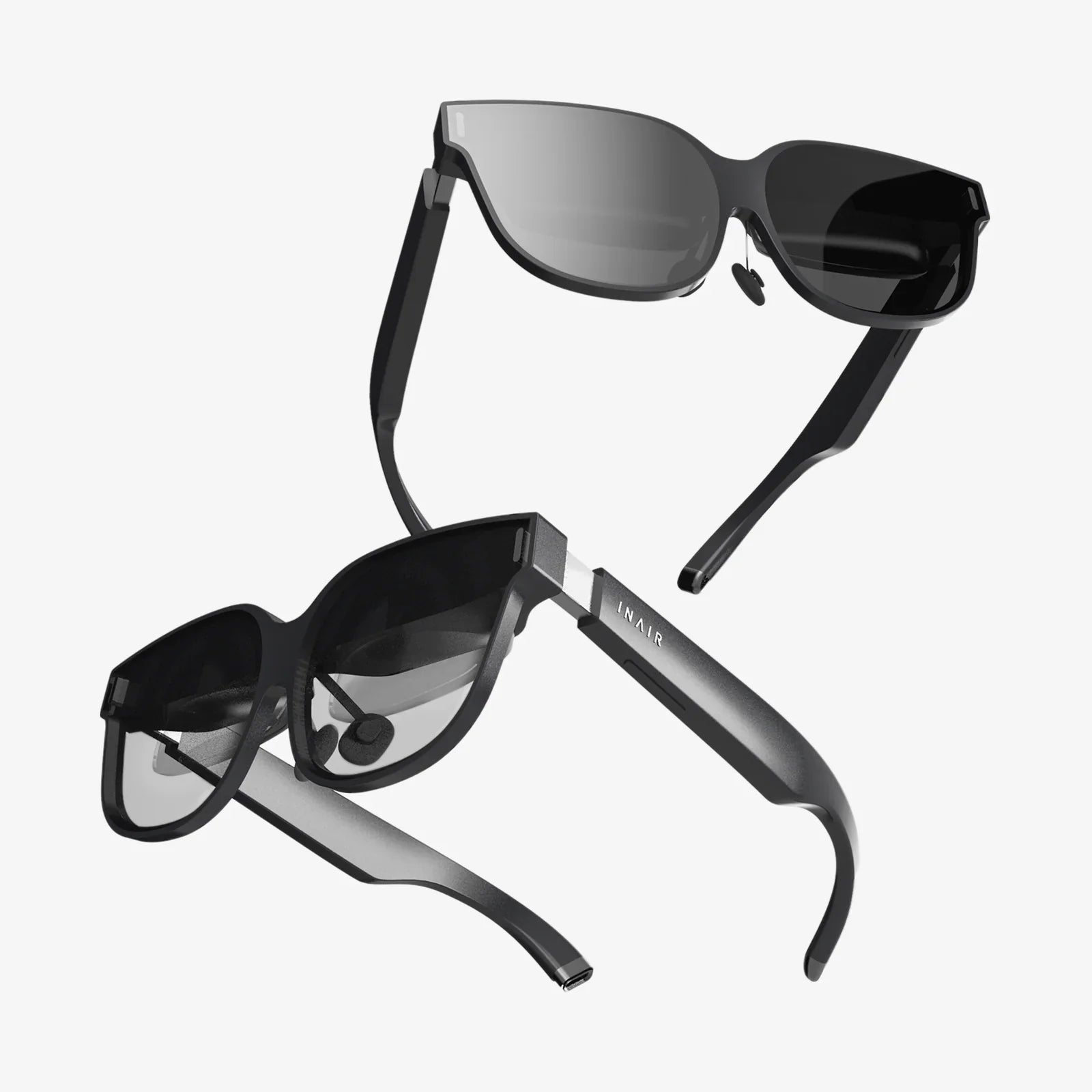
Close your eyes for a moment and imagine the most breathtaking view you've ever witnessed—a sunset over a vast ocean, the intricate ceiling of a historic cathedral, the vibrant energy of a city at night. Now, open them. That act, that immediate, effortless absorption of light and information, is merely the beginning of a story far more complex and wondrous than we often realize. We call it 'seeing,' but it is, in its entirety, the human vision experience: a profound, multi-layered interaction between the world, our eyes, our brain, and our consciousness. It is the primary lens through which we navigate reality, forge memories, and connect with everything around us. But what if we could pull back the curtain on this miracle? What if we could understand not just the mechanics of sight, but the very architecture of visual perception itself? The journey to decode this experience reveals a fascinating convergence of biology, psychology, and cutting-edge technology, shaping everything from how we create art to how we build the digital worlds of tomorrow.
The Biological Marvel: More Than Just a Camera
To reduce the human eye to a simple biological camera is to do a grand disservice to one of evolution's most sophisticated creations. The vision experience begins when photons, particles of light, bounce off an object and enter the eye through the cornea. This light is then focused by the lens onto the retina, a thin layer of tissue at the back of the eye that acts as a photochemical canvas. But here is where the simple analogy ends and the magic truly starts.
The retina is populated by over 100 million specialized neurons called photoreceptors—rods for low-light vision and cones for color and detail. These cells don't just capture light; they perform the first crucial act of interpretation. They begin processing the raw data, detecting edges, contrasts, and movements before the information has even left the eye. This pre-processed data is then bundled and transmitted as electrical impulses via the optic nerve to the brain. However, the optic nerve creates a literal blind spot in our visual field—a hole in the data. Our brain, an unparalleled pattern-recognition machine, seamlessly fills in this gap, extrapolating from the surrounding visual information to create a continuous, coherent picture. From the very outset, our vision experience is not a perfect recording; it is an active, constructive process.
The Brain's Editing Suite: Constructing Reality
If the eyes are the hardware, the brain is the software, director, and special effects studio all in one. The visual cortex, located in the occipital lobe at the back of the brain, is the primary stage for the vision experience. It deconstructs the incoming neural signals into fundamental components like color, orientation, and spatial frequency. Different regions specialize in recognizing faces, places, and objects.
This process is heavily influenced by cognitive factors. Our past experiences, memories, and expectations act as filters, shaping what we see and how we see it. This is why two people can witness the same event and have starkly different accounts; their unique neural pathways and personal histories create a slightly different vision experience. Optical illusions brilliantly demonstrate this brain-led construction. They exploit the shortcuts and assumptions our visual system makes, proving that perception is an interpretation, not a direct translation of external reality. The brain prioritizes efficiency over accuracy, constantly making predictions to create a stable and meaningful visual world from ambiguous and incomplete data.
The Digital Revolution: Crafting Synthetic Vision Experiences
In the 21st century, the human vision experience has been joined by a new, artificial sibling: the digital vision experience. This refers to the entire ecosystem of how visual information is created, delivered, and consumed through digital interfaces. It encompasses everything from the resolution of a smartphone screen and the frame rate of a video game to the user interface of an application and the immersive environment of a virtual world.
The goal of digital design is no longer merely to display information but to engineer a specific, intentional vision experience. This involves a deep understanding of human visual perception. For instance, techniques like adaptive contrast and dynamic refresh rates are used to reduce eye strain. High dynamic range (HDR) technology expands the range of both contrast and color, mimicking the way our eyes naturally perceive light in the real world, thus creating a more vivid and believable image. Motion smoothing and high frame rates aim to overcome the inherent limitations of a flat screen to deliver fluid movement that feels natural to our perception. Every pixel, every animation, and every transition is meticulously crafted to feel intuitive, engaging, and comfortable, aiming to make the digital interface feel like a natural extension of our own cognitive processes.
The Pillars of a Superior Digital Vision Experience
What separates a good digital vision experience from a great one? It rests on several key technological and design pillars that work in concert to respect and enhance human sight.
Resolution and Pixel Density: The Quest for Invisibility
The pursuit of higher resolution—from HD to 4K to 8K and beyond—is fundamentally a pursuit of invisibility. The goal is to increase pixel density to a point where the individual building blocks of the image disappear, and the screen itself vanishes, leaving only the content. This eliminates the screen-door effect, where the gaps between pixels are perceptible, creating a barrier between the viewer and the experience. High pixel density delivers breathtaking sharpness and detail, allowing for finer textures, cleaner text, and a more lifelike representation that requires less cognitive effort to interpret.
Color Fidelity and Gamut: Painting with a Fuller Palette
Color is a visceral component of the vision experience. Wider color gamuts allow devices to display a broader spectrum of colors, closer to what the human eye can perceive in nature. This means deeper reds, more vibrant greens, and richer blues. Color accuracy ensures that these colors are true to the creator's intent, whether it's a filmmaker's graded scene or a designer's brand palette. Inaccurate color can distort meaning, evoke the wrong emotion, and break immersion. Technologies like HDR further enhance this by allowing for a greater range of luminance within the same image, delivering brighter brights, darker darks, and a more three-dimensional, realistic picture.
Refresh Rate and Motion Clarity: The Illusion of Life
Life does not have a refresh rate; motion is continuous and fluid. Traditional displays, with lower refresh rates, often struggle with motion blur and judder, especially in fast-paced content like sports or action games. Higher refresh rates, such as 120Hz or even 240Hz, make on-screen motion incredibly smooth and clear. This reduces the strain on the eyes as they try to track moving objects and is critical for creating a convincing and comfortable vision experience in interactive media like gaming and virtual reality, where latency and blur can directly impact performance and immersion.
Adaptability and Comfort: Vision as a Partnership
A truly advanced vision experience is an adaptive one. It recognizes that the environment around us changes and that our eyes have needs. Automatic brightness control adjusts the screen's luminance to match the ambient light in a room, preventing it from being glaringly bright in the dark or too dim in sunlight. Blue light reduction technologies, especially for evening use, help mitigate the disruption of our circadian rhythms. These features represent a shift from a one-size-fits-all display to a responsive partner that works to maintain visual comfort and clarity in any condition.
Beyond the Screen: The Future of Immersive Vision
The next frontier for the digital vision experience lies in breaking the frame of the screen entirely. Virtual Reality (VR) and Augmented Reality (AR) represent the most ambitious attempts to hijack or augment our natural visual perception. VR seeks to construct an entire synthetic vision experience, replacing your real-world visual field with a computer-generated one. This requires incredibly low latency and high refresh rates to trick the brain into accepting the digital world as real, preventing the disorientation known as simulator sickness.
AR, on the other hand, aims to seamlessly blend digital objects and information with our view of the real world. The ultimate vision experience in AR would be one where holographic elements are indistinguishable from physical objects—anchored in space, interacting with real light and shadows, and responding to our movement. This requires a deep understanding of spatial computing, depth perception, and environmental mapping. The success of these technologies hinges entirely on the fidelity of the visual experience they provide; any lag, graphical glitch, or visual dissonance immediately shatters the illusion and breaks the sense of presence.
A Universal Language and a Personal Journey
It is also crucial to acknowledge that the vision experience is not universal. For individuals with visual impairments such as color blindness, low vision, or blindness, the experience of the visual world is fundamentally different. This has profound implications for design. Inclusive design and accessibility features are not an afterthought but a core component of crafting a complete vision experience. Tools like screen readers, high-contrast modes, color-blind filters, and text-to-speech are essential technologies that translate the visual world into an accessible format, ensuring that digital products and services can provide a rich experience for everyone, regardless of how they see.
Ultimately, the study of the vision experience is the study of what it means to be human in a increasingly visual and digital age. It is a reminder that sight is a gift of biological engineering, a personal and subjective construction, and now, a canvas for technological innovation. As we push the boundaries of displays, create immersive new realities, and strive for more inclusive design, we are not just building better gadgets; we are engaging in a profound dialogue with the very nature of human perception itself. We are learning to see, and to help others see, in ways once confined to the realm of science fiction.
Imagine a future where your digital world bends to the natural quirks of your sight, where your glasses can overlay information with the clarity of real life, and where visual art is not just seen but felt. This is not a distant dream but the direct trajectory of our deepening understanding of the vision experience. The next time you pause to admire a view, or get lost in a captivating film, remember—you are not just a passive observer. You are at the center of an intricate dance of light, biology, and mind, a dance that technology is now learning to join, forever changing what it means to see.
Share:
8K VR: The Ultimate Immersion and the Future of Digital Experience
What Does VR Look Like? A Journey Into The Digital Frontier