


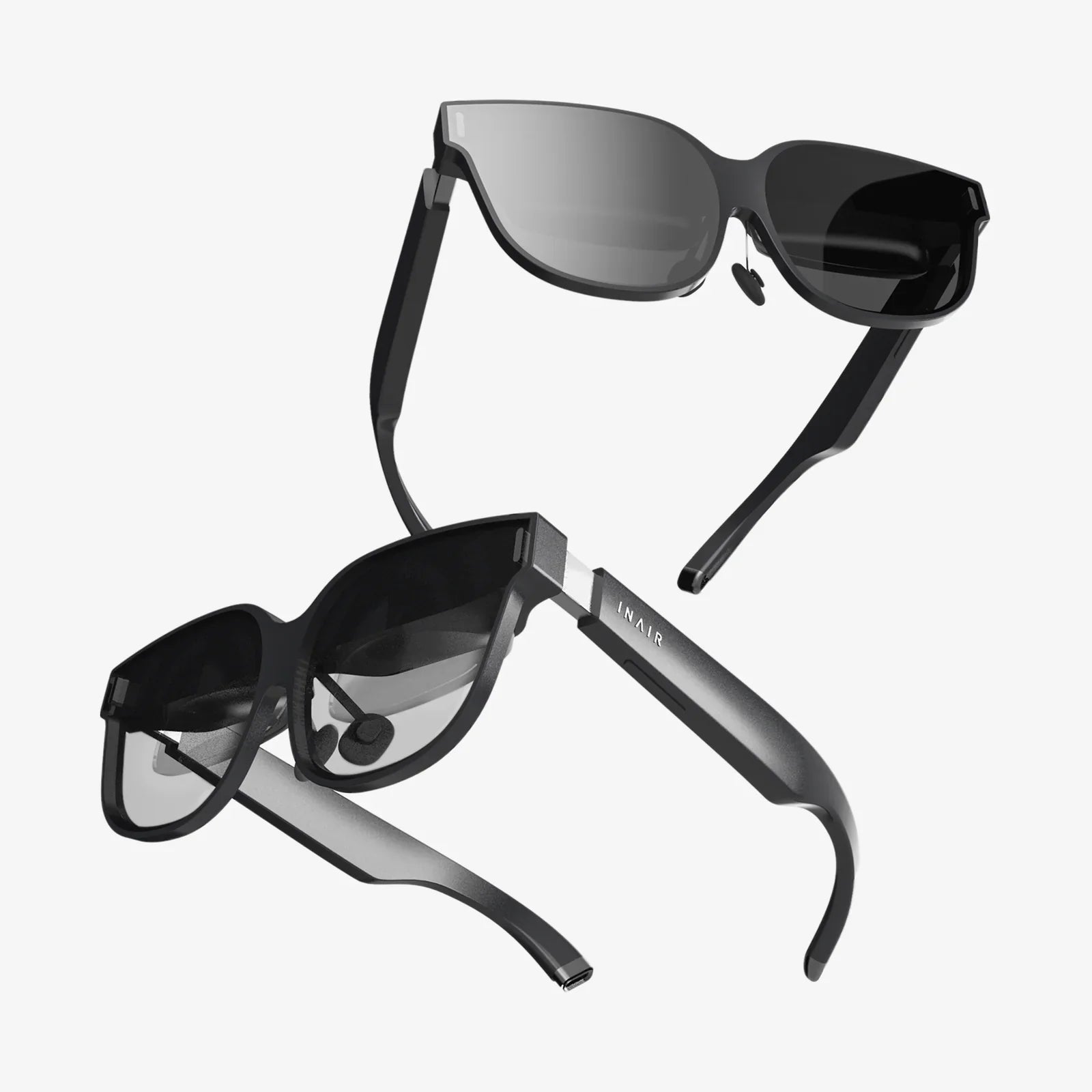
Imagine a world where your surroundings don't just exist but actively understand you—where the very fabric of your environment sees, interprets, and responds to your presence, your actions, and even your unspoken needs. This is not the distant realm of science fiction; it is the emerging reality being woven by the intricate and powerful threads of vision objects technology. This transformative field, sitting at the confluence of advanced optics, sensor systems, and artificial intelligence, is quietly building the eyes and brain of a new digital nervous system for our planet, promising to redefine everything from how we manufacture goods to how we safeguard our health and navigate our cities. The ability for machines to not just capture pixels but to comprehend the world as a structured, intelligent landscape of objects is perhaps the most significant technological leap of our time, and its implications are only just beginning to unfold.
The Core Mechanics: From Pixels to Perception
At its heart, vision objects technology is a multi-stage process of perception and cognition. It begins with the simple act of seeing. High-resolution cameras, LiDAR (Light Detection and Ranging) sensors, radar, and other sophisticated optical devices act as the retinas of the system, capturing raw visual data from the environment. This data is a chaotic sea of pixels, a matrix of color and light values without inherent meaning.
The first critical step is image preprocessing. Here, algorithms work to clean and standardize the raw image. This involves tasks like noise reduction to remove visual static, contrast enhancement to clarify edges, and normalization to ensure consistency across different lighting conditions and camera types. It’s the equivalent of an artist preparing a canvas, ensuring a clean and uniform surface before the first stroke of paint is applied.
The next stage is where the magic truly starts: object detection. This is the process of identifying and locating specific instances of objects within an image or video stream. Techniques like:
- Feature-based detection: Identifying objects by searching for specific shapes, edges, or patterns.
- Viola-Jones framework: An efficient method for real-time face detection using Haar-like features.
- Deep Learning-based methods: Utilizing convolutional neural networks (CNNs) like YOLO (You Only Look Once) or SSD (Single Shot Detector) that can analyze an image in a single pass, drawing bounding boxes around detected objects with astonishing speed and accuracy.
Once an object is detected, the system must classify it. This is image classification, where the system answers the question, "What is this object?" Is it a car, a pedestrian, a bicycle, or a traffic sign? This task is dominated by deep learning models trained on millions of labeled images. These models learn a hierarchical representation of features, from simple edges and curves in early layers to complex, object-specific shapes in deeper layers, allowing them to categorize objects with superhuman precision.
Perhaps the most complex step is instance segmentation. This goes beyond drawing a box; it involves precisely delineating the exact boundaries of each detected object at the pixel level. It doesn't just identify "a car"; it identifies every single pixel that belongs to that specific car, separating it from the road, the background, and other vehicles. This granular understanding is crucial for applications requiring high-precision interaction with the environment.
Finally, this visual data is often paired with depth perception from stereoscopic cameras or LiDAR to create a rich, three-dimensional understanding of the scene—a process known as 3D object recognition. This allows the system to gauge distance, volume, and spatial relationships, completing the transformation from a 2D picture to a navigable 3D world.
The Invisible Hand in Industry: Manufacturing and Logistics
Nowhere is the impact of vision objects technology more immediately tangible than in the industrial sector. It has become the cornerstone of the modern smart factory and the automated warehouse, driving unprecedented levels of efficiency, quality, and safety.
On the production line, automated optical inspection (AOI) systems powered by this technology perform superhuman quality control. They can scrutinize thousands of microchips, pharmaceutical pills, or automotive parts per hour, identifying defects—a hairline crack, a misapplied label, a minuscule solder bridge—that are invisible to the human eye. This not only ensures product quality but also minimizes waste and prevents costly recalls.
In logistics and warehousing, the technology is the engine of automation. Autonomous guided vehicles (AGVs) and mobile robots use it to navigate vast fulfillment centers safely, avoiding obstacles and human workers. Robotic picking arms, once clumsy and limited, can now use advanced vision systems to identify, locate, and grasp a vast array of items of different sizes, shapes, and textures from a chaotic bin, dramatically accelerating the order fulfillment process. Furthermore, vision systems automate inventory management by constantly scanning shelves to track stock levels in real-time, eliminating manual counts and preventing stock-outs.
Transforming Transportation: The Eyes of the Autonomous Vehicle
The most publicized application of vision objects technology is in the development of autonomous vehicles (AVs). For a self-driving car to safely navigate a complex and dynamic world, it must perceive and understand its environment with near-perfect reliability. This is a task of immense complexity that relies on a sensor fusion approach, combining data from cameras, LiDAR, radar, and ultrasonic sensors.
The vision system's role is paramount. In real-time, it must:
- Detect and classify other vehicles, cyclists, pedestrians, and animals.
- Interpret traffic signs, signals, and road markings.
- Understand the drivable path and identify hazards like potholes or debris.
- Predict the trajectory and intent of other moving objects.
This is a continuous, high-stakes ballet of detection, segmentation, and 3D mapping, all performed at highway speeds. The technology enables the vehicle to make life-or-death decisions, such as braking for a child running into the street or safely changing lanes on a busy motorway. Beyond personal cars, this same technology is automating trucks for long-haul freight, transforming agricultural harvesting with autonomous tractors, and enabling last-mile delivery robots to traverse city sidewalks.
A New Lens on Health: Revolutionizing Medicine and Care
In the medical field, vision objects technology is moving from a辅助 tool to a primary diagnostic and therapeutic partner, enhancing the capabilities of healthcare professionals and improving patient outcomes.
In medical imaging, AI-powered vision systems are achieving remarkable feats in radiology and pathology. They can analyze MRI, CT, and X-ray scans to detect early-stage tumors, pinpoint anomalies, and highlight areas of concern with a consistency and speed that can augment even the most experienced radiologist. In microscopy, these systems can scan thousands of tissue samples to identify cancerous cells, reducing diagnostic time and human error.
Surgery is being revolutionized by augmented reality (AR) and robotic assistance. Surgeons can wear AR headsets that overlay critical information—such as the location of a tumor beneath healthy tissue or the path of a major blood vessel—directly onto their field of view. Robotic surgical systems provide a magnified, high-definition 3D view and can use vision technology to stabilize the image against the surgeon's natural hand tremors and even enforce virtual boundaries to prevent accidental incisions into critical anatomy.
Furthermore, this technology is empowering new forms of patient monitoring. Systems can now observe patients in hospital rooms or elderly residents in care homes to detect falls, monitor for signs of distress, and ensure compliance with treatment regimens, all while preserving privacy by analyzing skeletal pose and movement rather than identifiable imagery.
The Everyday and the Experimental: Retail, Security, and Beyond
The tendrils of vision objects technology extend deep into our daily lives. In the retail sector, it enables cashier-less shopping experiences, where cameras track the items customers select and automatically charge them upon exit. Smart mirrors in fitting rooms can suggest alternative sizes or complementary clothing items. Inventory robots roam aisles, identifying missing stock and misplaced products.
In security and surveillance, the technology moves beyond simple recording to proactive intelligence. It can analyze video feeds to identify suspicious behaviors, recognize unauthorized access in restricted areas, and find missing persons in crowds. However, this application also raises significant ethical questions regarding privacy and mass surveillance that society must carefully address.
On the more experimental frontier, the technology is enabling breathtaking new forms of human-computer interaction. AR applications can map a user's living room to seamlessly place virtual furniture within it or bring educational textbooks to life with 3D models. It is the foundation of the much-hyped metaverse, aiming to blend our physical and digital realities into a cohesive whole.
Navigating the Challenges: The Ethical and Technical Imperative
For all its promise, the path forward for vision objects technology is not without significant hurdles. Technically, systems still struggle with "edge cases"—rare or unusual scenarios they weren't trained on, such as extreme weather conditions, bizarre vehicle modifications, or highly occluded objects. Achieving true robustness and reliability, especially in safety-critical applications, remains a primary challenge.
Furthermore, the ethical implications are profound and demand urgent and thoughtful consideration. The pervasive use of facial recognition and behavioral tracking threatens to erode personal privacy and enable unprecedented forms of social control and discrimination. Bias in training data is a critical issue; if a dataset is overwhelmingly composed of images of one demographic, the resulting model will perform poorly for others, leading to unfair and potentially dangerous outcomes. Establishing clear regulatory frameworks, ensuring algorithmic transparency, and embedding ethical principles into the design process are not optional extras but essential prerequisites for building a future with this technology that is equitable and just.
The journey of vision objects technology is a testament to human ingenuity, a story of teaching machines to see not just light, but meaning. It is a tool of immense power, and its trajectory will be shaped not only by the engineers who refine its algorithms but by the policymakers, ethicists, and citizens who guide its application. We are building a world that can see itself, and in doing so, we are presented with a mirror reflecting our own choices, challenges, and incredible potential.
We stand at the threshold of a perceptual revolution, where the line between the physical and the digital will blur into irrelevance, creating an ecosystem of intelligence that is aware, responsive, and profoundly useful. The true potential of vision objects technology lies not in the cold efficiency of automation alone, but in its power to augment human intuition, to free us from mundane tasks, to protect us from unseen dangers, and to open doors to discoveries and experiences we have yet to even imagine. The machines are learning to see, and in their sight, we are gaining a new lens to reimagine the very possibilities of our own existence.
Share:
Holographic PC The Future of Personal Computing and Immersive Interaction
Eyeglass Headphones: The Future of Personal Audio and Wearable Tech