


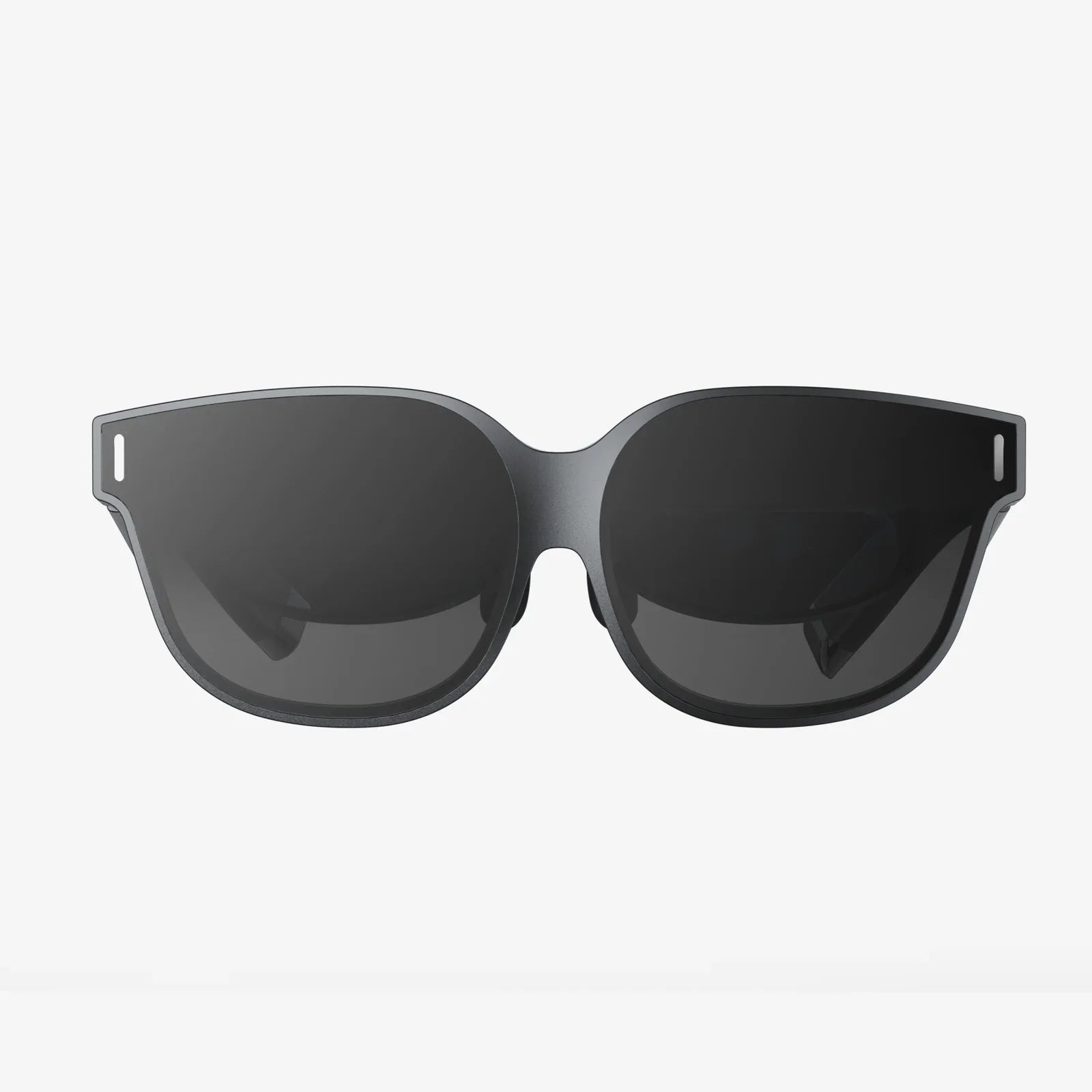
Imagine a digital world so crisp, so lifelike, that the very boundary between the pixels on a screen and the reality you perceive begins to dissolve. This is the promise held within the realm of ultra-high-resolution displays, a frontier where the term 'retina display' is merely a starting point. The pursuit of visual perfection has long driven technological innovation, but we are now entering an era where the limitations of human eyesight are the final arbiters of quality. The discussion around a certain headset's visual capabilities isn't just about sharper text or more vibrant colors; it's about fundamentally reorienting our relationship with digital content, creating a canvas so seamless that the technology itself fades into the background, leaving only pure, unadulterated experience.
The Anatomy of Visual Fidelity: Beyond Megapixels
To understand the significance of this advancement, one must first move beyond simplistic megapixel counts. True visual fidelity is a symphony composed of several interconnected elements, each playing a critical role in the final perception.
Pixel Density (PPI - Pixels Per Inch): This is the cornerstone. It measures how many individual pixels are packed into one linear inch of display. A higher PPI means the pixels are smaller and closer together, reducing the "screen door effect"—that visible grid-like pattern that has plagued previous immersive headsets—and creating a smoother, more continuous image.
Subpixel Arrangement: Each pixel on a color display is typically made of red, green, and blue subpixels. The technology and layout of these subpixels dramatically affect sharpness, color accuracy, and even the perceived brightness. Innovative micro-OLED technology allows for advanced subpixel structures that maximize the efficiency and clarity of each individual pixel.
Optical Stack and Lenses:
The most pristine display panel is useless if the optics in front of it distort, blur, or chromatic aberration. The journey of light from the microscopic pixels to the user's retina is fraught with potential pitfalls. Advanced, custom-designed lenses are employed to meticulously manage this path. These complex lens systems are engineered to minimize artifacts, maintain edge-to-edge clarity, and ensure that the incredible resolution generated by the panels is faithfully delivered to the eye without degradation. This marriage of display and optics is non-negotiable; one cannot exist without the other in the quest for visual truth. This leap in resolution is powered by a shift in underlying display technology. While many consumer devices have relied on LCD or its more advanced variants, the future of immersive visual fidelity lies with micro-OLED (Organic Light-Emitting Diode). Unlike traditional LCDs that require a backlight, each subpixel in a micro-OLED panel is its own microscopic light source. This allows for perfect blacks, as individual pixels can be turned off completely, resulting in an infinite contrast ratio. The colors are more vibrant and saturated, and the response time is incredibly fast, eliminating motion blur. However, the true magic is in the "micro" prefix. Fabricating OLED panels at such an incredibly small size, yet with such an astronomically high pixel count, represents a monumental achievement in manufacturing precision. These panels are produced on silicon wafers, using photolithography processes similar to those used for computer chips, allowing for pixel densities that were previously unimaginable for consumer-grade hardware. This shift from conventional display manufacturing to a process more akin to semiconductor fabrication is what unlocks this new realm of resolution. The ultimate benchmark for any display is the human eye. Engineers are no longer just competing with other companies; they are designing against the limits of human visual acuity. Visual acuity is typically measured in terms of arcminutes, which refers to the eye's ability to distinguish fine detail. The goal of an "retina" display is to provide a pixel density so high that at a typical viewing distance, the human eye cannot distinguish individual pixels. For a headset that places screens just centimeters from the user's eyes, this requirement becomes exponentially more challenging. The pixel density must be so immense that the eye, even when focusing on a virtual object mere inches away, perceives no pixelation or graininess. This has profound implications. It means text rendered in a virtual workspace appears as sharp as ink on paper, down to the finest serif. It means that virtual objects cast shadows with perfectly defined edges. It means that watching a film feels like having a personal cinema with a flawless screen. By meeting and exceeding the biological limits of human sight, the technology ceases to be an intermediary and becomes a portal. High resolution is not an end in itself; it is the foundational layer upon which the entire experience of presence is built. Presence—that elusive, magical feeling of truly "being there" in a virtual environment—is a fragile state. It can be shattered by a multitude of factors: latency, poor tracking, unrealistic audio, or low visual fidelity. A low-resolution display is a constant reminder of the artificiality of the experience. The visible pixels, the shimmering edges, the lack of fine detail—all these elements keep the user's brain cognitively anchored in the fact that it is looking at a simulated image. Ultra-high resolution systematically removes these anchors. When the visual field is filled with seemingly infinite detail, the brain is more readily convinced of the reality of the scene. It allows for subtle cues—the texture of fabric, the individual leaves on a distant tree, the pores on a digital character's skin—to be perceived, adding layers of believability that were previously impossible to achieve. In this context, resolution is the bedrock of immersion. It is the first and most critical step in building a convincing alternate reality, making everything from spatial computing apps to immersive films more intuitive, comfortable, and real. Driving two displays of such exceptional density is a Herculean computational task. The data throughput required is staggering. We are not just talking about rendering a high-resolution desktop; we are talking about generating two unique, high-frame-rate, low-latency perspectives for a three-dimensional world in real time. This demands a dedicated processing architecture capable of handling immense data streams without a hint of lag. It involves specialized image processing chips designed to mitigate optical distortions, manage color calibration, and ensure perfect synchronization between the two panels. Any delay or imperfection in this pipeline would immediately break the illusion of presence and could induce user discomfort. The internal processing system is a marvel of efficiency, a silent choreographer orchestrating a ballet of billions of pixels per second to create a seamless and responsive window into another world. This leap in visual fidelity is not just a benefit for end-users; it represents a new and expansive canvas for creators. Developers of spatial computing applications can now design interfaces with incredibly fine detail, knowing that their work will be presented with perfect clarity. Text is legible at any size, intricate 3D models can be examined in their full detail, and subtle user interface elements become practical. For filmmakers and game developers, it opens up new avenues for storytelling. They can build worlds with a depth of detail that was previously reserved for large-scale video projections or high-end monitors, but now it can envelop the viewer's entire field of vision. This level of resolution empowers artists to focus on their craft without being constrained by the technological limitations of the display medium. It shifts the creative challenge from "how do we make this look good within the limits of the headset?" to "what can we imagine?" The establishment of this new high-resolution benchmark has irrevocably shifted the landscape of immersive technology. It has set a new expectation for what is possible and, indeed, necessary for widespread adoption of spatial computing. Future iterations across the industry will be measured against this standard, pushing everyone to innovate in optics, display technology, and processing power. We are moving towards a future where digital artifacts are no longer a given, where the concept of "screen resolution" may become irrelevant because the display will simply mimic the perfect resolution of reality itself. This progression will be crucial for applications far beyond entertainment: in medical visualization, where a surgeon must see a diagnostic scan with absolute precision; in remote collaboration, where an engineer needs to examine a prototype in minute detail from across the globe; and in education, where students can explore historical artifacts or biological structures as if they were holding them in their hands. The pursuit is no longer just about adding more pixels. It's about refining them, making them smarter, and ensuring they work in perfect harmony with our perception. It is a pursuit of visual truth, and it is redefining our digital future. This isn't just another spec sheet victory or a incremental upgrade; it's a fundamental threshold being crossed. We are witnessing the moment where the pixel grid, a digital cage that has defined our interactions with machines for decades, finally vanishes. What remains is something far more profound: a clear, unmediated window. A window for work, for escape, for connection, and for creation, limited not by the technology in front of our eyes, but only by the boundless potential of the human imagination behind them. The era of compromising visual quality for immersion is over, and the age of truly believable digital worlds has just begun.The Micro-OLED Breakthrough: A New Display Paradigm
The Human Factor: When Technology Meets Biology
Resolution as the Foundation for Presence
The Computational Choreography: Powering the Pixels
A New Canvas for Creators and Developers
The Road Ahead: The Implications of Visual Truth
Share:
3D Display: The Future of Visual Technology is Here and It's Glasses-Free
Multi Monitor AR Glasses: The Future of Productivity is a Wearable Workspace