


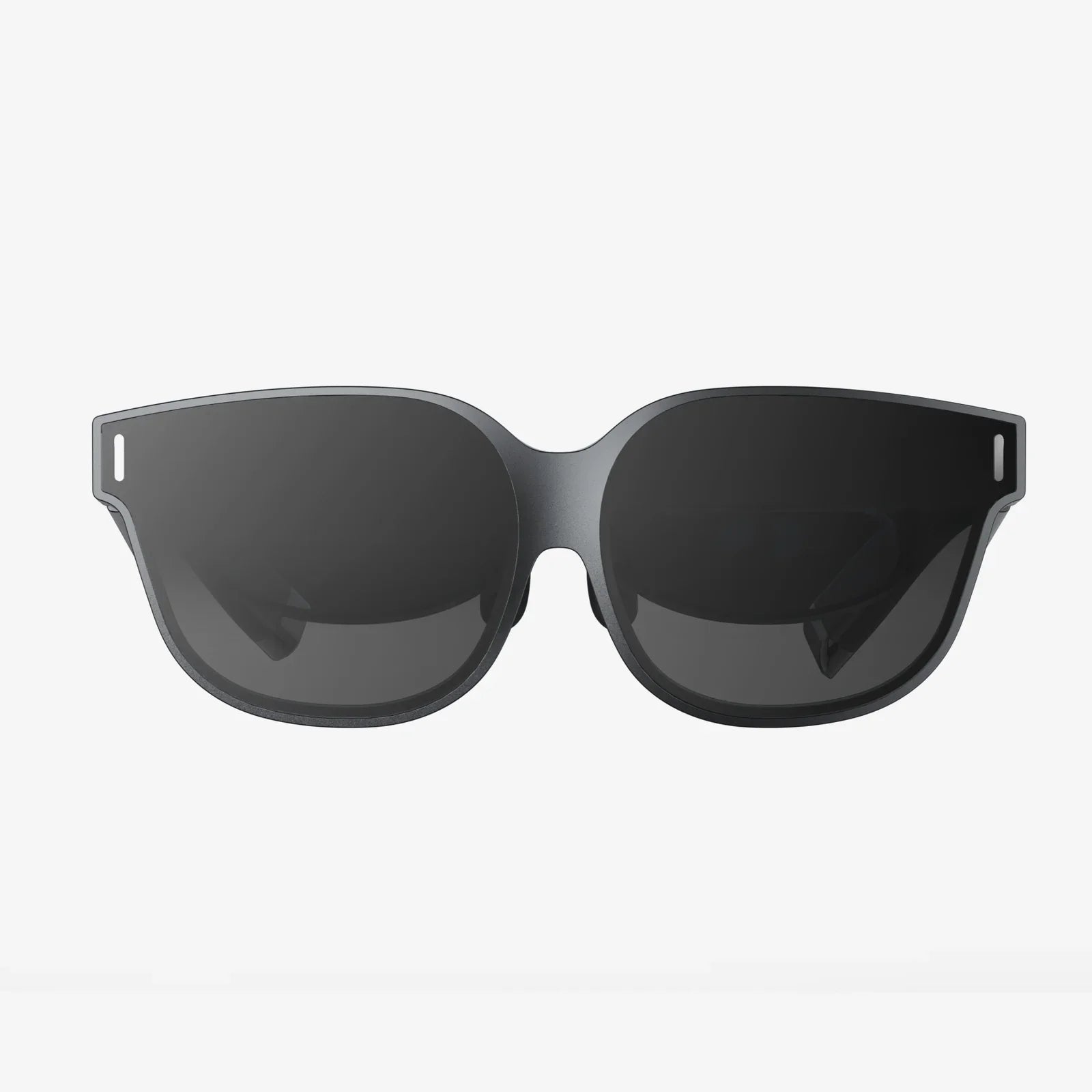
Imagine a window not just to the world, but through it—a canvas so vast it doesn’t just display content but dissolves the barrier between the digital and the physical. This is the promise, the allure, the sheer gravitational pull of the Vision Pro Ultra Wide Screen. It’s a technological leap that whispers of futures once confined to science fiction, inviting you to step into a realm where your entire field of vision becomes an interactive playground, a professional workstation, and a portal to other worlds, all at once. The concept is no longer a fantastical 'what if' but a tangible 'what is,' and it is poised to fundamentally recalibrate our relationship with technology, information, and each other. This isn't just about seeing more; it's about experiencing everything.
The Architectural Leap: Engineering an Expansive Digital Reality
Crafting a visual experience that seamlessly blends with human sight is a feat of engineering that borders on the miraculous. The core challenge is immense: to project a high-fidelity, high-resolution digital image across the entirety of the human visual field without the tell-tale artifacts of traditional displays—like screen-door effects, latency, or limited field-of-view—that shatter the illusion of immersion.
The "Ultra Wide Screen" in this context is a misnomer in the traditional sense. It is not a physical panel with bezels and a set aspect ratio. Instead, it represents a breakthrough in optical engineering and micro-display technology. It leverages advanced micro-OLED or similar next-generation display panels, each pixel microscopic in size, boasting astonishing pixel-per-degree density that exceeds the resolving power of the human eye. These panels are then paired with a complex array of custom-designed lenses, including precision pancake lenses that fold light, creating a deep focal distance in a compact form factor. This optical system is meticulously calibrated to project imagery across an extreme field of view, often exceeding 120 degrees horizontally, effectively filling your peripheral vision and creating a sense of boundless, panoramic depth.
This technical symphony is conducted by a powerhouse of integrated processors. Their role is Herculean: to render incredibly detailed, complex environments in real-time, track the user's head and eye movements with sub-millimeter accuracy to adjust the perspective instantly, and manage a constant, high-bandwidth stream of sensor data. This relentless processing ensures the digital world remains locked in place, responding to your movements with zero perceptible lag—a non-negotiable prerequisite for maintaining presence and avoiding user discomfort. The result is not a screen you look at, but a reality you look into.
Beyond Entertainment: The Professional Paradigm Shift
While immersive gaming and hyper-realistic cinematic experiences are the most visceral and immediately obvious applications, the true revolutionary potential of this technology lies in its capacity to augment human capability in professional and creative fields. The Vision Pro Ultra Wide Screen is poised to become the ultimate tool for focus and execution, transforming abstract data into tangible, manipulable objects.
- The Unbounded Workspace: Imagine a digital workspace that is limited only by the boundaries of your imagination. Architects can walk through their 3D blueprints at a 1:1 scale. Software developers can surround themselves with multiple large, virtual monitors of code, documentation, and live previews, free from the physical constraints of a desk. Financial analysts can visualize complex market data and trends in three-dimensional graphs, spotting correlations that would be invisible on a 2D chart.
- Precision Design and Prototyping: For 3D artists, engineers, and product designers, this technology is a quantum leap. They can sculpt, model, and assemble virtual prototypes with their hands, viewing their creations from every angle with a natural turn of the head. The ability to see a design in its full scale, with perfect depth perception, dramatically accelerates the iterative process and reduces the need for costly physical prototypes.
- Remote Collaboration Reimagined: The concept of a 'video call' becomes obsolete. Instead, colleagues from across the globe can manifest as photorealistic avatars or even volumetric captures within a shared virtual space. They can collectively examine a 3D model of a new engine, annotate a life-sized virtual mockup of a building, or brainstorm on an infinite whiteboard, all with the natural nuance of body language and spatial presence that flat screens cannot convey.
The Human Factor: Perception, Presence, and a New Cognitive Load
Introducing a technology that overlays or replaces our primary sense—sight—carries profound psychological and physiological implications. The term often used to describe the pinnacle of this experience is "presence"—the uncanny, powerful sensation of actually being in a virtual environment. The ultra-wide field of view is the single most critical factor in achieving this. By engaging the peripheral vision, it tricks the most ancient parts of our brain into accepting the digital world as real, triggering instinctual reactions and a deep emotional connection to the experience.
However, this power demands a new level of responsibility. Prolonged exposure to such convincing virtuality can lead to a phenomenon known as "simulator sickness" for some, a disconnect between what the eyes see and what the vestibular system in the inner ear feels. Furthermore, re-adapting to the real world after extended sessions in a high-fidelity virtual one can involve a brief period of disorientation. Ethically, we must grapple with questions of hyper-reality: at what point does an augmented world become preferable to the real one, and what are the societal consequences? The technology also raises the stakes for data privacy and security to an unprecedented level, as these devices have the potential to understand our environment, our behaviors, and even our biometric responses in intimate detail.
A Canvas for the Senses: The Future of Interaction
The ultra-wide screen is merely the foundation. The future of this platform lies in multi-modal interaction, where sight is just one part of a symphony of sensory input and output. The next evolution involves integrating:
- Spatial Audio: High-fidelity sound that is anchored to virtual objects, moving realistically as you move your head, completing the illusion of a tangible world.
- Haptic Feedback: Wearable devices or controllers that provide tactile sensation, allowing you to 'feel' the texture and weight of a virtual object.
- Eye and Hand Tracking: As the primary input method, this creates an incredibly intuitive interface. Your gaze becomes a cursor, and subtle hand gestures become commands, eliminating the abstraction of a mouse and keyboard and making the technology feel like a natural extension of your will.
This convergence of technologies points toward a future where the Vision Pro Ultra Wide Screen evolves into a true "telepresence" device. You could virtually attend a live concert and feel the energy of the crowd, inspect a historical artifact in a museum on the other side of the planet, or receive hands-on training from a master surgeon—all from your living room, with a fidelity that makes the distance meaningless.
The journey toward perfect digital convergence is not a destination but a continuous evolution. The Vision Pro Ultra Wide Screen is the bold, foundational step that makes this future imaginable, building a bridge from our limited present to a world of infinite digital possibility. It challenges creators, developers, and users alike to rethink the very nature of interface and experience. It’s an invitation to paint on the biggest canvas humanity has ever known—the canvas of reality itself. The view is breathtaking, and it’s only going to get wider.
Share:
3D Work: The Complete Guide to Mastering the Third Dimension
What Is Immersive Space 3D in Teams - The Ultimate Guide to Next-Gen Collaboration