


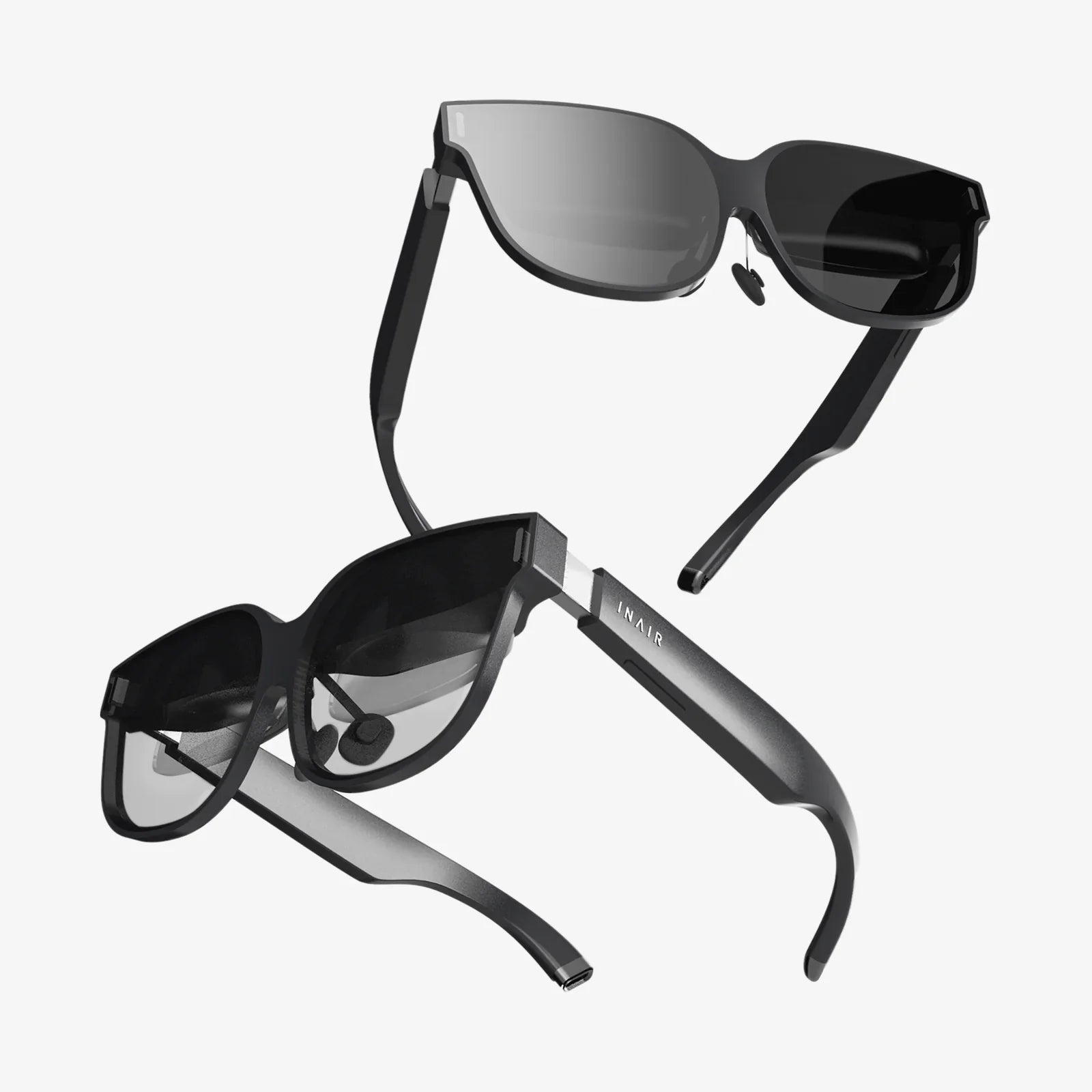
Imagine stepping through a portal not of wood and stone, but of light and data, into a world limited only by the imagination. This is the promise, the siren call, of Vision VR—a technology that has vaulted from the pages of science fiction into our living rooms, poised not merely to entertain, but to fundamentally redefine the human experience. It’s more than a headset; it’s a key to unlocking realities we’ve only ever dreamed of, and its implications are as vast and profound as the digital universes it creates. The journey beyond the screen has begun, and it promises to reshape everything we know.
The Evolution of the Dream: From Stereoscope to Cyberspace
The desire to simulate reality is not a product of the silicon age. Its roots stretch back centuries. In the 19th century, the stereoscope offered Victorians a tantalizing glimpse of three-dimensional photographs, a novelty that foreshadowed a much greater ambition. The term "Virtual Reality" itself was coined in the 1980s, but the conceptual groundwork was laid decades earlier by visionaries like Morton Heilig, who built the Sensorama machine in the 1960s, a bulky apparatus that engaged multiple senses in a futile attempt to capture the experience of riding a motorcycle through Brooklyn.
For decades, VR remained a clunky, expensive dream, confined to research labs and military simulations. The hardware was too heavy, the graphics too primitive, and the latency—the delay between a user’s movement and the visual response—too nauseating. It was a classic case of the technology not yet being equal to the ambition. The turning point arrived on a confluence of advancements: the miniaturization of high-resolution displays, the development of incredibly precise inside-out tracking systems that replaced cumbersome external sensors, and the raw processing power of modern computing, capable of rendering complex, believable worlds in real-time. This trinity of innovation finally provided the foundation for Vision VR to become a viable, and truly immersive, medium.
Deconstructing the Illusion: How Vision VR Creates Presence
The magic of Vision VR lies in its ability to trick the most complex computer in the known universe: the human brain. This trickery, known as achieving "presence," is the holy grail of VR design. It’s the uncanny, powerful sensation of actually being in a virtual place, not just looking at it. This is accomplished through a meticulous orchestration of technology.
First, the visual field is completely dominated by high-fidelity displays placed mere centimeters from the eyes, each lens carefully calibrated to create a stereoscopic 3D effect with a wide field of view. This is coupled with precise head-tracking, using a combination of gyroscopes, accelerometers, and external or internal cameras to ensure the virtual world rotates and moves in perfect, imperceptible sync with the user’s own head motions. The final, critical piece is positional tracking, which maps the user’s physical movement in a room into the virtual space, allowing them to walk, crouch, and lean within the digital environment. When these elements work in harmony, the brain’s objections are silenced, and the illusion becomes, however temporarily, reality.
Beyond the Game: Vision VR's Transformative Impact on Industry
While gaming provided the initial commercial thrust for Vision VR, its most profound applications are happening far beyond the realm of entertainment. The ability to simulate any environment with perfect fidelity is revolutionizing how we work, learn, and heal.
Revolutionizing Healthcare and Therapy
In medicine, Vision VR is a powerful new tool. Surgeons now routinely use detailed VR simulations to practice complex procedures, navigating a patient’s specific anatomy derived from CT and MRI scans before ever making an incision. This rehearsal space reduces risk and improves outcomes. In therapy, VR exposure therapy is proving remarkably effective for treating PTSD, phobias, and anxiety disorders. Patients can confront their fears in a safe, controlled, and gradual manner—be it fear of heights, flying, or public speaking—allowing them to rewire their neural responses without real-world danger.
Reimagining Education and Training
The educational potential is staggering. Instead of reading about ancient Rome, students can don a headset and walk through a faithfully reconstructed Forum, hearing the echoes of history. Medical students can dissect a virtual cadaver infinitely. Apprentice mechanics can practice on a virtual jet engine, and astronauts can train for spacewalks without leaving the ground. Vision VR transforms learning from a passive activity into an active, experiential journey, dramatically improving retention and engagement.
Redefining Architecture and Design
For architects and designers, Vision VR is the ultimate communication tool. Clients are no longer forced to interpret blueprints or static 3D models on a screen. They can put on a headset and literally walk through their unbuilt home, experiencing the scale of a room, the flow of the space, and the fall of light through a window at different times of day. This eliminates costly misunderstandings and allows for design changes to be made long before construction begins.
The Future of Remote Work and Collaboration
The concept of the metaverse, a persistent network of shared virtual spaces, is intrinsically linked to Vision VR. It promises a future for remote work that is far more immersive and collaborative than today’s grid of video calls. Colleagues from across the globe could meet around a virtual prototype, manipulating 3D models together as if they were in the same physical room, their avatars conveying body language and intent in a way a flat screen never could.
The Human Connection: Social VR and Empathetic Experiences
Perhaps the most surprising and beautiful application of Vision VR is its power to connect people and foster empathy. Social VR platforms allow users to interact not as usernames, but as embodied avatars, gathering for virtual concerts, watching movies together in a digital theater, or simply chatting in a serene, user-created environment. The sense of shared space creates a powerful feeling of togetherness that transcends geographic isolation.
Furthermore, VR is being used as an "empathy machine." Journalists and documentarians are creating immersive experiences that place viewers directly in the shoes of others—a refugee fleeing a conflict zone, a person living with a disability, or someone experiencing homelessness. This visceral, first-person perspective can break down barriers of understanding in a way traditional media struggles to achieve, fostering a deeper, more visceral form of compassion.
Navigating the Uncharted: Ethical and Societal Considerations
With such transformative power comes immense responsibility. The ascent of Vision VR is not without its perils and ethical quandaries. As we spend more time in curated digital worlds, questions of data privacy become paramount. These devices are data collection engines, capturing not just what we look at, but how we move, where we hesitate, and what we interact with. This biometric data is incredibly sensitive.
The potential for psychological impact is another critical frontier. How does long-term immersion affect our sense of self, our relationships with our physical bodies (a phenomenon known as proprioception), and our connection to the real world? The risk of addiction to idealized virtual existences is a real concern. Furthermore, the concept of "virtual crime"—harassment or assault within a VR space—presents a unique challenge for lawmakers, as the psychological trauma can feel very real even if no physical touch occurred.
Finally, the digital divide must be addressed. If Vision VR becomes the primary platform for work, education, and socializing, ensuring equitable access is crucial to prevent a new, immersive form of inequality from emerging.
The Horizon of Possibility: What Lies Ahead for Vision VR
The current state of Vision VR, as impressive as it is, is likely just the primordial dawn. The technology is on a rapid trajectory of refinement. We are moving towards lighter, wireless headsets with resolutions matching human visual acuity, eliminating the "screen door effect" entirely. Haptic feedback technology will evolve from simple controller vibrations to full-body suits that allow users to feel the virtual world—the texture of a wall, the impact of a virtual raindrop, or the grip of a digital hand.
Perhaps the ultimate frontier is the integration of brain-computer interfaces (BCIs), which aim to translate neural signals directly into digital commands. This could eventually allow us to navigate virtual spaces through thought alone, creating a level of immersion and intuitive control that is unimaginable today. The line between the biological and the digital, the real and the virtual, will continue to blur, challenging our very definitions of reality and experience.
The true potential of Vision VR will not be realized by the technology alone, but by the creativity of the artists, engineers, educators, and storytellers who wield it. It is a canvas for the human imagination, a tool for connection, and a mirror reflecting both our greatest aspirations and our deepest responsibilities. We are not just building new worlds; we are deciding what kind of reality we want to create, and ultimately, what kind of species we want to become within it. The headset is merely the door. It is up to all of us to step through it wisely, with wonder in our eyes and a mindful awareness of the power we now hold.
Share:
What Is Computer Interaction: The Invisible Language Shaping Our Digital World
Types of Digital Content: The Ultimate Guide to Modern Media Formats