


- by wangfred
Visual Augmented Reality The Digital Layer Reshaping Human Experience
- by wangfred
Imagine a world where the line between the digital and the physical doesn't just blur—it disappears. Where information, art, and assistance are not confined to screens but are woven seamlessly into the fabric of your reality, accessible with a glance. This is the promise and the present reality of Visual Augmented Reality (VAR), a technology poised to become as ubiquitous and transformative as the smartphone. It’s not about escaping our world, but about enhancing it, enriching it with a dynamic, interactive digital stratum that responds to our needs and commands.
At its essence, Visual Augmented Reality is a sophisticated technology that overlays computer-generated perceptual information onto the user's view of the real world. Unlike its cousin, Virtual Reality, which creates a fully immersive, digital environment, VAR uses the existing environment and simply adds to it. This process relies on a complex interplay of hardware and software.
The journey begins with sensors and cameras. These components act as the eyes of the device, continuously capturing the user's surroundings. They gather raw data about the physical environment, including objects, surfaces, and spatial geometry.
Next, this visual data is processed by sophisticated simultaneous localization and mapping (SLAM) algorithms. SLAM is the true brain of the operation. It does two critical things simultaneously: it localizes the device (figures out its precise position in the environment) and it maps the environment (creates a 3D digital understanding of the space). This allows the system to understand where the floor is, how far away a wall is, and how a table relates to a chair, creating a digital anchor for virtual objects.
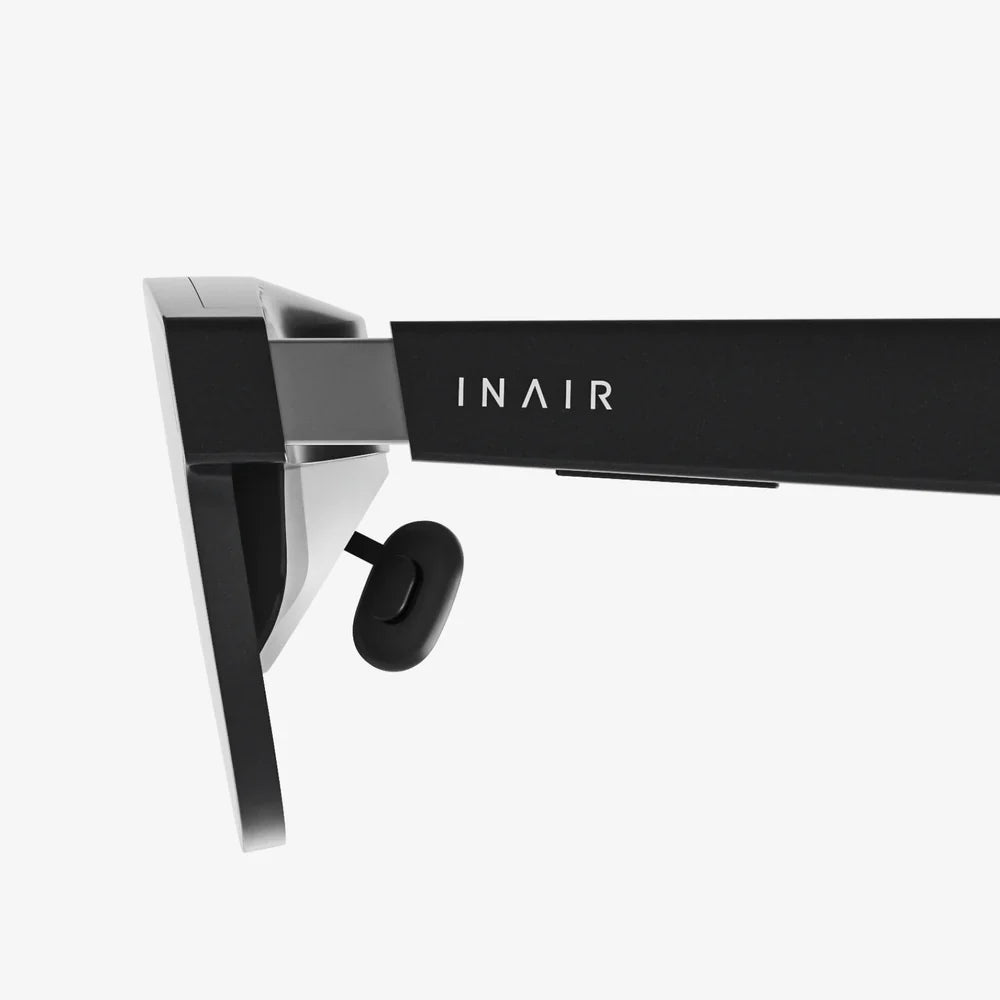
Once the environment is mapped, the system must seamlessly integrate the digital content. This is where rendering engines come into play, generating high-fidelity 3D models, animations, or information panels. The final and most crucial step is display. This is achieved through specialized optics that project or reflect the digital imagery onto transparent lenses or screens positioned in front of the user's eyes. Advanced systems use waveguides or holographic optical elements to bend light, making the virtual objects appear to exist at various depths within the real world. The result is a cohesive experience where a digital dinosaur can convincingly stomp across your living room floor or repair instructions can be superimposed directly onto a malfunctioning engine.
While playful filters and games brought VAR initial mainstream attention, its most profound impact is being felt in enterprise, education, and healthcare. Here, it is moving from a novelty to a necessity, solving real-world problems with unprecedented efficiency.
On factory floors and in warehouses, VAR is a game-changer. Technicians wearing smart glasses can see schematic diagrams and step-by-step instructions overlaid directly onto the complex machinery they are repairing, freeing their hands and reducing errors. Warehouse workers can have optimal picking routes and item information displayed in their line of sight, dramatically accelerating logistics and improving accuracy. Architects and engineers can project full-scale 3D models of their designs onto empty construction sites, allowing for virtual walkthroughs and identifying potential issues long before ground is broken.
VAR turns any classroom into an interactive learning hub. Instead of reading about ancient Rome, students can use a tablet or glasses to watch a virtual Colosseum rise from their desk, exploring its architecture in detail. Medical students can practice complex surgical procedures on detailed, interactive holograms of human anatomy, gaining invaluable experience without risk to patients. This hands-on, visual learning paradigm enhances retention and understanding in ways textbooks never could.
In hospitals, surgeons are using VAR to visualize critical patient data—like MRI scans or heart rates—floating in their field of view during operations, eliminating the need to look away at distant monitors. This improves focus and can lead to better patient outcomes. The technology is also being used for physical therapy, guiding patients through exercises with virtual cues, and for aiding in diagnosis by allowing doctors to manipulate 3D visualizations of medical scans.
The age of wondering if a new sofa will fit your living room is over. VAR apps allow consumers to project true-to-scale 3D models of furniture, appliances, and decor into their homes before making a purchase. You can see how a new paint color would look on your walls or how a car's design would look in your driveway. This "try before you buy" capability reduces purchase anxiety and returns, revolutionizing the consumer journey.
Despite its immense potential, Visual Augmented Reality must overcome significant technological and social hurdles before it can achieve widespread, all-day adoption.
The quest for the perfect form factor remains the holy grail. Current generation hardware, while advanced, often faces a trade-off between capability and comfort. For VAR to become an all-day companion, devices need to be as lightweight, comfortable, and socially acceptable as a pair of everyday eyeglasses. This requires monumental advancements in miniaturizing components like batteries, processors, and displays.
This leads directly to the challenge of power consumption and battery life. Processing high-fidelity graphics and running constant environmental recognition are computationally intensive tasks that drain batteries quickly. Developing more efficient chipsets and alternative power solutions is critical.
Perhaps the most complex challenge is creating a truly persistent and shared digital layer. This requires a robust spatial mapping and semantic understanding of the world. The system needs to do more than just see a table; it needs to understand it is a "table," know that a "cup" can be placed on it, and remember that a virtual note was left there yesterday. This "AR cloud" would allow for persistent digital content that multiple users can interact with simultaneously, a foundational element for the next evolution of the technology.
Finally, there are pressing privacy and security concerns. Devices with always-on cameras scanning our homes, offices, and public spaces raise legitimate questions about data collection and surveillance. Establishing clear ethical guidelines, robust data encryption, and user-controlled privacy settings is not just important—it is essential for public trust and adoption.
Looking beyond the immediate challenges, the long-term trajectory of Visual Augmented Reality points toward a future that feels like science fiction. We are moving toward a world where VAR evolves into a contextually aware, AI-powered interface for all information.
Imagine walking through a foreign city, and subtitles automatically appear for street signs and conversations. A recipe you saved hovers next to your ingredients as you cook, automatically progressing to the next step. A network of invisible, context-aware notes left by your family members guides you through your daily tasks. The device itself will fade into the background, becoming an unobtrusive gateway to a richer reality.
This evolution will likely culminate in the replacement of the smartphone as our primary connected device. Instead of pulling a slab of glass from our pocket, we will simply glance, gesture, and speak to interact with a boundless digital universe layered over our own. It will become the ultimate tool for human augmentation, enhancing our memory, perception, and ability to connect with both information and each other.
The ultimate goal is not to isolate us with flashy graphics, but to connect us more deeply with our environment and with each other. It promises a future where the digital world finally serves us on our terms, integrated into our reality rather than pulling us away from it. The screen, as we know it, will vanish, and our world itself will become the interface.
We stand at the precipice of this fundamental shift, not in a distant decade, but within this one. The technology is being refined in labs and tested on factory floors today. The next time you use your phone to navigate or look up a fact, imagine that information simply appearing in the world around you, just when you need it. That future is being built now, and it will redefine our very perception of reality itself, making every glance an opportunity to learn, create, and connect in ways we are only beginning to imagine.
Share:
AR VR Headset Market Forecast 2030: A Glimpse into the Next Digital Revolution
Smart Glasses AI News Today: The Dawn of a New Augmented Reality Era