


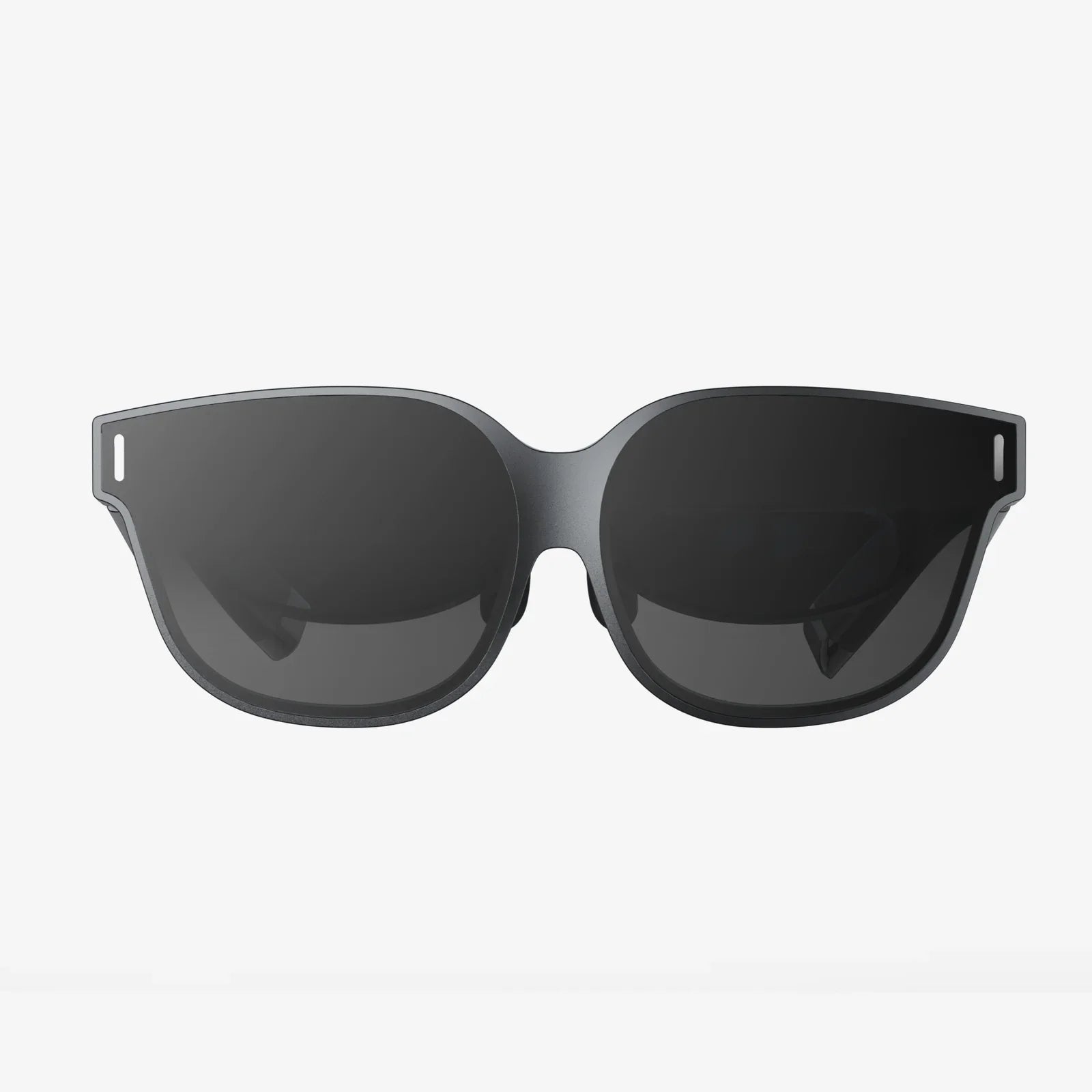
Imagine whispering a command into the void and watching an entire universe bend to your will. This is no longer the stuff of science fiction fantasy, but the tangible reality ushered in by the advent of the voice virtual reality headset, a technological leap poised to redefine our very relationship with digital spaces. For years, VR promised a portal to other worlds, yet a fundamental barrier remained: the interface. Bulky controllers, complex button combinations, and a steep learning curve often reminded users they were merely visitors in a simulated realm, their physical actions awkwardly translating into digital intent. But now, by harnessing the most natural tool humanity has ever possessed—our voice—this barrier is dissolving, paving the way for an era of truly seamless and intuitive immersion. The marriage of voice recognition and virtual reality isn't just an upgrade; it's a revolution, and it’s here to change everything.
The Historical Divide: The Controller as a Barrier to True Presence
The journey of virtual reality has been one of incremental breakthroughs, each aiming to deepen the user's sense of "presence"—the elusive feeling of truly being inside a digital environment. Early systems relied on rudimentary controllers, keyboards, and even data gloves. While revolutionary for their time, these interfaces created a constant cognitive load. Users had to memorize which button swung a sword, which trigger activated a menu, and how to manipulate analog sticks to move. This process of translation—from thought to physical action to digital outcome—inevitably created a layer of separation between the user and the experience. The mind might be fooled by visual and auditory cues, but the hands were constantly aware of holding a piece of plastic, a reminder of the artifice. This divide prevented VR from achieving its full potential for universal accessibility and effortless immersion, keeping it largely in the domain of gamers and tech enthusiasts willing to endure the complexity.
The Power of the Spoken Word: Why Voice is the Ultimate Interface
Human communication is inherently multimodal, but speech holds a privileged position. It is fast, expressive, and deeply intuitive. We learn to command with our voices before we can even walk. Integrating this fundamental human capability into VR is a paradigm shift. Instead of navigating a complex menu system, a user can simply state, "Open map" or "Play song by [Artist Name]." The speed and efficiency of voice commands drastically reduce the friction between intention and action.
Beyond mere efficiency, voice enables a new dimension of expressiveness. Tone, pitch, volume, and cadence carry immense emotional and intentional weight. A future game could see non-player characters (NPCs) reacting not just to the words a player says, but to how they are said. A shouted command could instill fear or urgency, while a whispered plea might elicit sympathy. This allows for nuanced interactions and storytelling possibilities that are impossible with a binary button press. Voice transforms the user from a passive button-pusher into an active, vocal participant within the narrative, fostering a deeper emotional connection to the virtual world and its inhabitants.
Architecting the Voice-First VR Experience: A Symphony of Technology
Creating a seamless voice-controlled VR experience is a formidable technical challenge that requires a sophisticated symphony of hardware and software working in perfect harmony. It is far more complex than simply embedding a standard voice assistant.
Advanced Microphone Arrays and Acoustic Engineering
The first and most critical component is capturing clear audio input. A standard single microphone is utterly insufficient. Modern headsets employ sophisticated arrays of beamforming microphones. These microphones work in concert to actively identify the direction of the user's voice while simultaneously employing advanced algorithms to cancel out ambient room noise, the hum of the headset's own cooling fans, and even the sound of the user's own breathing. This ensures that the command "Attack!" is picked up crystal clear, while the background noise of a television or air conditioner is filtered into oblivion.
On-Device Processing and the Imperative of Low Latency
For immersion to remain unbroken, the response to a voice command must be near-instantaneous. Sending audio data to a remote cloud server for processing and waiting for a response introduces latency—a delay that shatters the illusion of direct control. Therefore, the most effective systems leverage powerful on-device processing. Natural Language Understanding (NLU) models and speech-to-text engines are run directly on the headset's chipset. This edge computing approach eliminates lag, allowing the virtual world to respond to a user's voice in real-time, just as it would to a physical gesture. This local processing also enhances privacy and security, as sensitive voice data never needs to leave the device.
Contextual Awareness and Spatial Voice Integration
A truly intelligent system understands context. The command "Pick that up" means nothing without the system knowing what "that" refers to. This requires a deep integration between the voice AI and the VR environment's rendering engine. The AI must be aware of the user's gaze, the objects in their vicinity, the current application state, and the ongoing narrative. Furthermore, spatial voice technology allows users in social VR spaces to communicate naturally; your friend's voice will sound like it's coming from their avatar's position, making conversations feel authentic and grounded in the shared virtual space.
Transforming Industries and Applications: Beyond Gaming
While gaming provides the most visceral examples, the impact of voice VR headsets will ripple across countless sectors, redefining professional and educational paradigms.
Revolutionizing Enterprise Training and Design
In enterprise, the implications are profound. Imagine a surgeon training on a complex procedure. Instead pausing the simulation to fumble with a controller to select a new tool, they can simply say, "Scalpel," and it appears in their virtual hand. An architect walking a client through a virtual building design can command, "Change the wall color to slate grey" or "Open a window here," iterating in real-time based on feedback. This hands-free, voice-activated workflow dramatically increases efficiency, reduces training times, and minimizes errors in high-stakes environments.
Creating Accessible and Empowering Educational Tools
This technology is a powerful force for accessibility. Individuals with certain motor disabilities or mobility limitations who found traditional controllers prohibitive can now navigate and interact with virtual worlds using only their voice. This opens up VR for therapeutic uses, educational field trips, and social experiences to a whole new demographic. In education, a student exploring a virtual Roman Colosseum can ask, "Who was the emperor when this was built?" and receive an immediate, contextual answer, creating a dynamic and interactive form of learning that adapts to the user's curiosity.
The Future of Social Connection and Remote Collaboration
Social VR platforms and remote collaboration tools will be utterly transformed. Meetings in virtual boardrooms will become more fluid and natural when participants can interrupt, agree, or brainstorm verbally just as they would in person, with their voice and avatar movements conveying meaning beyond words. The stilted, turn-based conversation of controller-based systems will give way to the dynamic, overlapping flow of real human dialogue, making remote presence feel genuinely present.
Navigating the Challenges: Privacy, Accuracy, and the Social Dilemma
This new frontier is not without its significant challenges and ethical considerations. The prospect of a device strapped to your face, equipped with always-listening microphones, raises legitimate and serious privacy concerns. Manufacturers must adopt a principle of "privacy by design," ensuring clear, user-controlled data policies, robust encryption, and unambiguous visual indicators showing when audio is being captured and processed. The industry must proactively address the "creep factor" to earn user trust.
Furthermore, voice AI is not infallible. Accents, speech impediments, and background noise can still lead to misinterpretation, which can break immersion or lead to frustration. Continuous improvement in NLU models trained on diverse datasets is crucial to ensure equity and accessibility for all users, not just those with a "standard" accent. There is also the social challenge of the "CICADA Effect"—a room full of VR users shouting seemingly random commands into the void, which, while amusing, highlights a potential real-world social awkwardness that will need to be navigated as the technology becomes more widespread.
Gazing into the Future: The Path to a Conversational Reality
The voice virtual reality headset is not the end point, but a crucial stepping stone toward a future of even more immersive interfaces. We are moving toward a paradigm of "Conversational Reality," where our interactions with digital environments are as natural as speaking to another person. The next evolution will likely involve the fusion of voice with other biometric and neural inputs. Imagine a system that combines your voice commands with eye-tracking (to know what you're looking at), hand-tracking (for subtle gestures), and even emerging technologies that can interpret neural signals for silent, thought-based commands.
This multimodal approach will create a seamless symphony of interaction where the boundary between the physical self and the digital avatar dissolves completely. You might think about moving an object, subtly gesture toward it, and verbally confirm the action—all in a single, fluid motion that the system understands as holistic intent. The headset will evolve from a viewing device into an intelligent companion, an AI-driven facilitator that understands not just your commands, but your context, your preferences, and your emotional state, crafting personalized and responsive experiences on the fly.
The true potential of virtual reality has been waiting in the wings, constrained by the limitations of our interfaces. With the power of voice, we are finally removing the last vestiges of the physical world's intrusion, unlocking a level of immersion, accessibility, and intuitive control that was once unimaginable. The era of shouting into the void is over; the void is now listening, and it's ready to talk back. The next time you step into a virtual world, your ticket won't be a controller—it will be your voice, and the experiences that await are limited only by the commands you dare to speak.
Share:
Virtual Reality Progress: From Sci-Fi Fantasy to Transformative Reality
AR Glasses for Office Work: The Dawn of the Immersive Digital Workspace