


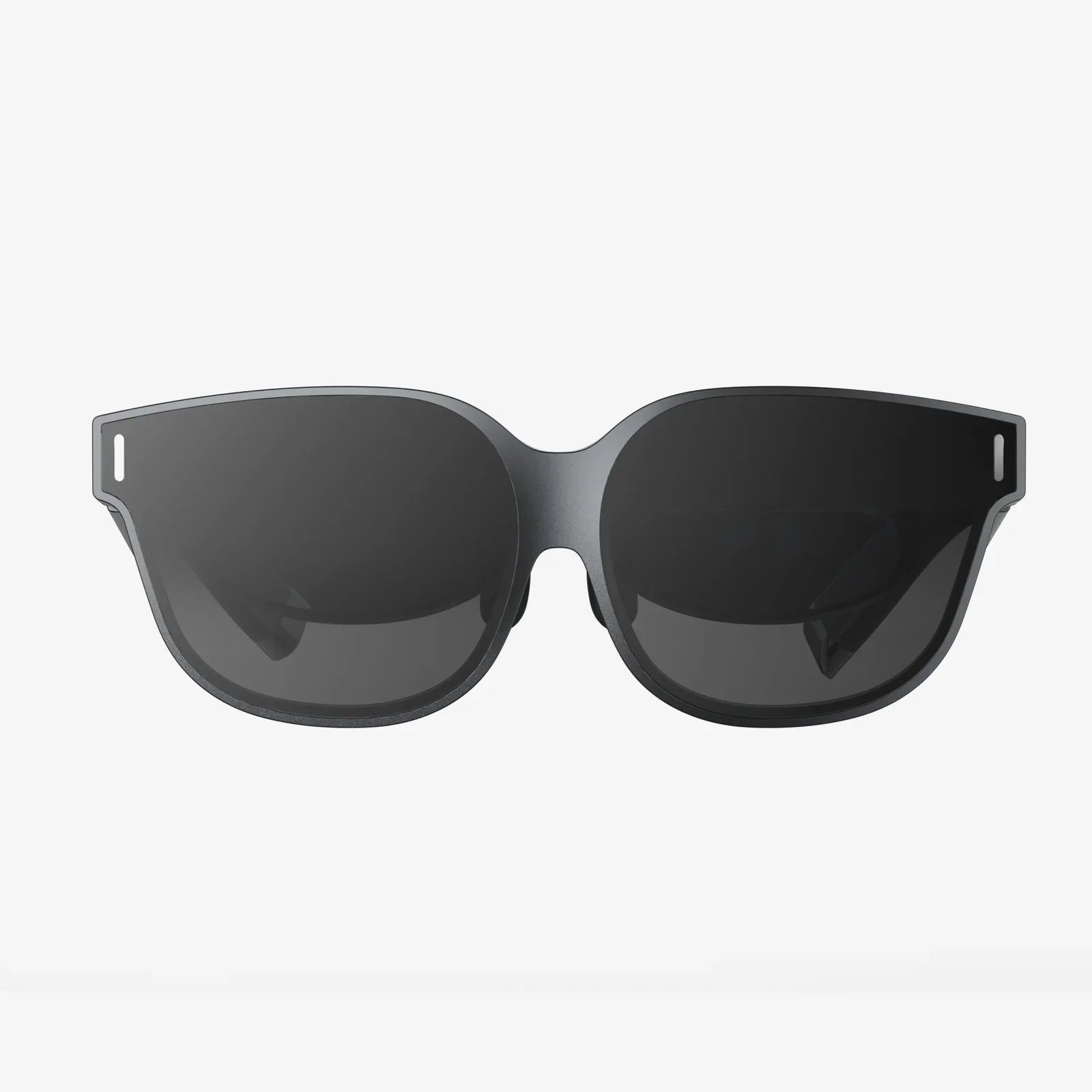
Remember when virtual and augmented reality were the stuff of science fiction, promising a future we could barely imagine? That future is not only here; it’s evolving at a breakneck pace, reshaping everything from how we work and learn to how we connect and create. Keeping up with the constant stream of VR AR industry updates is no longer a niche hobby for tech enthusiasts—it’s essential for understanding the next wave of digital transformation that is quietly integrating into the fabric of our daily lives. The journey from clunky headsets and simplistic games to sophisticated enterprise tools and seamless digital overlays is a story of relentless innovation, and we are right in the middle of its most exciting chapter.
The Enterprise Arena: Where VR and AR Are Finding Their Footing
While consumer applications often grab headlines, the most significant and sustained growth revealed in recent VR AR industry updates is occurring within the enterprise sector. Companies are moving beyond pilot programs and experiments to full-scale implementation, driven by clear returns on investment and tangible efficiency gains.
In manufacturing and industrial design, AR is revolutionizing complex assembly, maintenance, and repair procedures. Technicians wearing AR smart glasses can see digital overlays of wiring diagrams, torque specifications, and step-by-step instructions directly onto the physical machinery they are working on. This hands-free access to crucial information reduces errors, slashes training time for new employees, and significantly improves safety protocols by allowing workers to keep their focus on the task at hand. Similarly, VR is being used to create detailed digital twins of factories and production lines. Engineers and planners can walk through a fully immersive, virtual replica of a facility before it's even built, identifying potential bottlenecks, safety hazards, and workflow inefficiencies, saving millions in costly post-construction modifications.
The corporate world is also embracing immersive technology for soft skills training. VR simulations are now routinely used for everything from practicing difficult conversations and honing public speaking skills to conducting realistic customer service scenarios. These controlled, repeatable environments provide a safe space for employees to fail, learn, and improve without real-world consequences, leading to higher retention rates and more confident performance.
The Consumer Evolution: Beyond Gaming and Novelty
On the consumer front, the narrative is shifting. The initial wave of VR was dominated by gaming, and while that remains a powerful driver, the scope is broadening considerably. Recent VR AR industry updates highlight a push towards social connection and experiential activities.
Social VR platforms are creating persistent virtual spaces where people can meet, attend concerts, watch movies, and play games together, regardless of their physical location. This represents a move towards a more connected and experiential internet, often referred to as the metaverse. While the ultimate vision of a fully-realized, interoperable metaverse is still years away, these platforms are its early building blocks, offering glimpses of a future where our social and digital lives are more deeply intertwined.
Furthermore, AR on smartphones has become almost ubiquitous. From trying on furniture in your living room before you buy it to using navigation arrows superimposed on the real world to find your way, mobile AR has delivered practical utility to billions of devices without requiring specialized hardware. This widespread adoption has laid the groundwork for the eventual consumer uptake of more advanced AR wearables, familiarizing the mass market with the core concept of blending the digital and physical worlds.
The Hardware Revolution: Lighter, Faster, Smarter
A critical driver of all these advancements is the rapid evolution of hardware. Early VR headsets were cumbersome, tethered to powerful computers, and often caused discomfort or nausea. Today's leading devices are a testament to engineering innovation.
Standalone, all-in-one headsets have become the standard, offering high-fidelity experiences without the need for external sensors or a trailing cable. Processor improvements have made them more powerful than ever, while advancements in display technology—such as pancake lenses—have made them significantly smaller and lighter. A major focus for developers is on improving ergonomics and wearability, understanding that for prolonged use in enterprise or social settings, comfort is paramount.
On the AR side, the holy grail remains a pair of stylish, lightweight glasses that can deliver a rich, full-color immersive experience. Progress is being made, with newer waveguides and micro-LED display technologies enabling slimmer form factors. While consumer-ready AR glasses are still in development, recent prototypes and developer kits show a clear path toward a device that people would be willing to wear all day. Haptic feedback technology is also advancing, moving beyond simple controller vibrations to gloves and even full-body suits that can simulate the sensation of touch, adding a crucial layer of realism to virtual interactions.
The Software and Ecosystem Surge: Building the Immersive Web
Powerful hardware is useless without compelling software and a robust ecosystem. This is an area seeing explosive growth, as detailed in countless VR AR industry updates. Development engines have integrated robust XR toolkits, making it easier than ever for creators to build immersive experiences.
A significant trend is the push towards standardization and interoperability. The development of OpenXR, a royalty-free open standard, provides a universal API for developers to create applications that can run across a wide variety of VR and AR hardware. This reduces fragmentation and lowers the barrier to entry, encouraging more software development and preventing the ecosystem from being locked into specific hardware vendors.
Furthermore, the concept of the "immersive web" is gaining traction. Through WebXR, users can access basic VR and AR experiences directly through a web browser without needing to download a dedicated application. This dramatically lowers the friction for first-time users and opens up possibilities for AR marketing, virtual showrooms, and educational content that can be accessed with a simple click. The software landscape is maturing from a collection of isolated apps into a connected, web-like structure that is far more accessible and scalable.
The Spatial Computing Shift: A New Paradigm for Interaction
Perhaps the most profound update in the VR AR industry is the conceptual shift from thinking about these technologies as isolated devices to understanding them as the interface for a broader paradigm called spatial computing. Spatial computing uses the context of the physical space around us as the foundation for digital interaction.
Instead of interacting with a flat screen, we will interact with digital objects that are anchored in our real world. Your productivity apps could be arranged on virtual monitors around your physical desk. A digital assistant could appear as a hologram in your living room to help you with a recipe. Your smart home controls could be virtual dials on your actual wall. This represents a fundamental change in our relationship with computers, making them ambient and contextual rather than something we go to and sit in front of. This shift is why major tech companies are investing billions, believing it to be the successor to the mobile era.
Challenges and Considerations: The Road Ahead
Despite the incredible progress, the industry still faces significant hurdles that are frequently highlighted in VR AR industry updates. For mass consumer adoption, the cost of high-end hardware remains a barrier. Creating compelling, must-have content that justifies the investment is an ongoing challenge.
On a societal level, new questions about privacy and data security are emerging. AR devices, in particular, with their always-on cameras and sensors, collect vast amounts of data about our physical environments and behaviors. Establishing clear ethical guidelines and robust security frameworks is critical to building public trust.
There are also concerns about the potential for increased social isolation or the creation of a deeper digital divide. As with any transformative technology, the industry must proactively address these challenges through responsible development, transparent policies, and inclusive design to ensure the immersive future benefits everyone.
The stream of VR AR industry updates tells a story of a technology coming of age. It’s moving out of the lab and the gaming den and into our hospitals, factories, offices, and homes. The pieces of the puzzle—hardware, software, connectivity, and use cases—are rapidly falling into place. We are standing at the precipice of a fundamental shift in how we perceive and interact with both the digital and physical realms. The revolution will not be televised; it will be overlayed, immersive, and all around us, and it’s arriving faster than anyone predicted.
Share:
Who Has the Best AI Glasses? The Ultimate 2024 Showdown
Smart Sunglasses Comparison: A Deep Dive into the Future on Your Face