


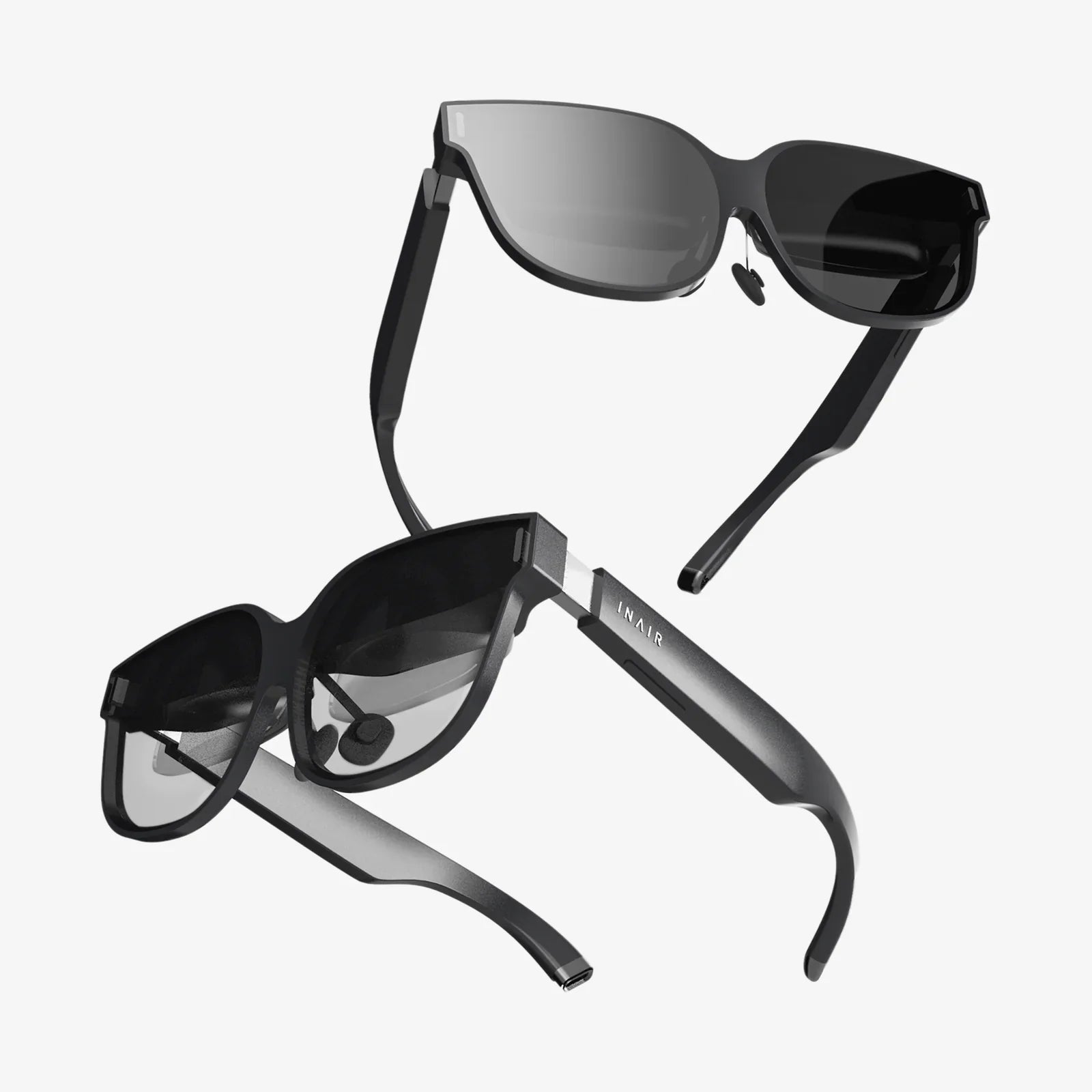
Imagine a world where the line between the digital and the physical isn't just blurred—it's erased. A world where you can train for complex surgery, walk through your unbuilt dream home, or collaborate with colleagues across the globe as if they were in the same room, all without leaving your chair. This isn't a distant sci-fi fantasy; it's the reality being built today, brick by digital brick, through the most groundbreaking VR AR technology updates. The pace of change is so rapid and the applications so profound that to overlook them is to risk being left behind in a world that's being fundamentally remade before our eyes.
The Hardware Leap: Beyond Clunky Headsets and Gimmicks
The most visible of the VR AR technology updates are in the hardware itself. The era of cumbersome, tethered headsets with limited field-of-view and nausea-inducing latency is rapidly receding into memory. The new generation of devices is lighter, more powerful, and infinitely more comfortable, designed for prolonged use rather than brief novelty experiences.
Significant advancements in display technology are at the forefront. We're seeing the adoption of micro-OLED and pancake lens systems that deliver stunningly crisp resolutions with incredibly deep blacks and vibrant colors, all while drastically reducing the size and weight of the units. This eliminates the screen-door effect that once plagued early adopters and creates a truly believable sense of presence. Furthermore, inside-out tracking has become the standard, eliminating the need for external sensors or lighthouses. Cameras embedded on the device itself map the physical environment in real-time, allowing for seamless movement and interaction. This is a crucial update for achieving mass adoption, as it lowers the barrier to entry, making setup as simple as putting on the headset.
Perhaps the most exciting hardware development is the move towards more natural and intuitive interfaces. Eye-tracking and facial expression tracking are no longer futuristic concepts but available features. These capabilities allow avatars in social and professional settings to convey nuanced non-verbal cues—a subtle smile, a raised eyebrow, a glance of recognition—supercharging remote collaboration with a layer of human connection previously impossible through a flat screen. Haptic feedback is also evolving beyond simple controller vibrations into full-body suits and gloves that can simulate the touch and pressure of virtual objects, closing the loop on sensory immersion.
The Software Symphony: AI, The Cloud, and The Metaverse
Powerful hardware is nothing without sophisticated software to drive it. The most profound VR AR technology updates are happening under the hood, where artificial intelligence and cloud computing are converging to create experiences that are not only immersive but also intelligent and persistent.
AI is the silent engine powering this revolution. Machine learning algorithms are being used for advanced environmental understanding. Devices can now not only map the geometry of a room but also identify and classify objects within it—a chair, a table, a screen. This allows digital content to interact intelligently with the physical world; a virtual character can sit on your real sofa, or a digital instruction manual can be pinned to the actual machinery you are repairing. AI is also revolutionizing content creation through generative algorithms that can build expansive, detailed virtual worlds from simple text prompts, drastically reducing the time and cost of development.
Cloud streaming is another pivotal update. Instead of being constrained by the processing power of the device on your head, intensive graphical rendering can be handled by powerful remote servers and streamed to the headset seamlessly. This paradigm shift, similar to the move in gaming, means that future headsets can be lighter, more affordable, and still access experiences of unimaginable complexity. It enables the concept of a persistent metaverse—a continuous digital layer over our world that is always on, always evolving, and accessible from any capable device, anywhere.
Transforming the Corporate Landscape: Enterprise Adoption Soars
While consumer applications often grab headlines, the most significant and immediate impact of recent VR AR technology updates is being felt within the enterprise sector. Companies are deploying these tools to solve real-world problems, drive efficiency, reduce costs, and enhance safety.
- Design and Prototyping: Automotive and aerospace engineers are using immersive environments to design, prototype, and test new vehicles and components in a collaborative digital space long before a physical prototype is ever built. This saves millions of dollars and shaves months off development cycles.
- Remote Assistance and Training: A seasoned expert located thousands of miles away can see what a field technician sees through AR smart glasses. The expert can then annotate the technician's real-world view with arrows, diagrams, and instructions, guiding them through a complex repair procedure step-by-step. This dramatically improves first-time fix rates and reduces the need for costly travel.
- Immersive Learning: From training surgeons on virtual anatomy to preparing warehouse employees for safety protocols, VR provides a risk-free environment to practice and fail. This experiential learning leads to significantly higher knowledge retention compared to traditional videos or manuals.
The return on investment for these enterprise applications is so clear and compelling that they are becoming a standard part of operational toolkits across manufacturing, logistics, healthcare, and energy sectors.
Redefining Human Connection and Storytelling
Beyond spreadsheets and training manuals, VR AR technology updates are unlocking new forms of human connection and artistic expression. Social VR platforms are evolving into vibrant digital spaces where people meet, attend concerts, watch films, and play games with a powerful sense of shared presence. These are not merely video chats; they are shared experiences in a common digital space, offering a compelling antidote to the isolation of remote work and geographic separation.
The art of storytelling is also being rewritten. Filmmakers and artists are exploring immersive narratives where you are no longer a passive observer but an active participant within the story. You can look anywhere, move around, and your choices can influence the narrative outcome. This creates an unparalleled level of empathy and engagement. Museums are using AR to bring exhibits to life, allowing statues to speak and historical events to unfold around visitors. These updates are transforming entertainment and culture from something we watch into something we live.
The Road Ahead: Challenges and The Next Frontier
Despite the breathtaking progress, challenges remain. For true ubiquity, issues of battery life, network latency for cloud streaming (necessitating widespread 5G and eventually 6G adoption), and the development of a compelling killer app for the mass consumer market must be addressed. Furthermore, critical conversations around data privacy, digital identity, and the psychological effects of prolonged immersion in synthetic environments are essential and ongoing.
The next frontier of updates is already coming into focus. The convergence of VR/AR with brain-computer interfaces (BCIs) promises a future where we can control digital environments with our thoughts. Developments in photorealistic avatars and volumetric capture will make interactions indistinguishable from real life. And as the spatial computing layer becomes more integrated with the Internet of Things (IoT), your immersive glasses will not just show you information but will allow you to control the smart world around you—adjusting the thermostat, checking your fridge, or controlling lighting—all with a glance or a gesture.
We are standing at the precipice of a fundamental shift in how we compute, communicate, and experience reality itself. The updates rolling out now are not just incremental improvements; they are the foundational pillars of the next major computing platform. This is no longer about gaming or novelty; it is about a paradigm shift in human experience and capability. The revolution is not coming; it is already here, being woven into the fabric of our daily lives and professional workflows, and it promises a future limited only by our imagination.
Share:
Best AI Glasses Australia: A Visionary Guide to the Future on Your Face
AI Glasses Companies List: The Innovators Shaping the Future of Wearable Tech