


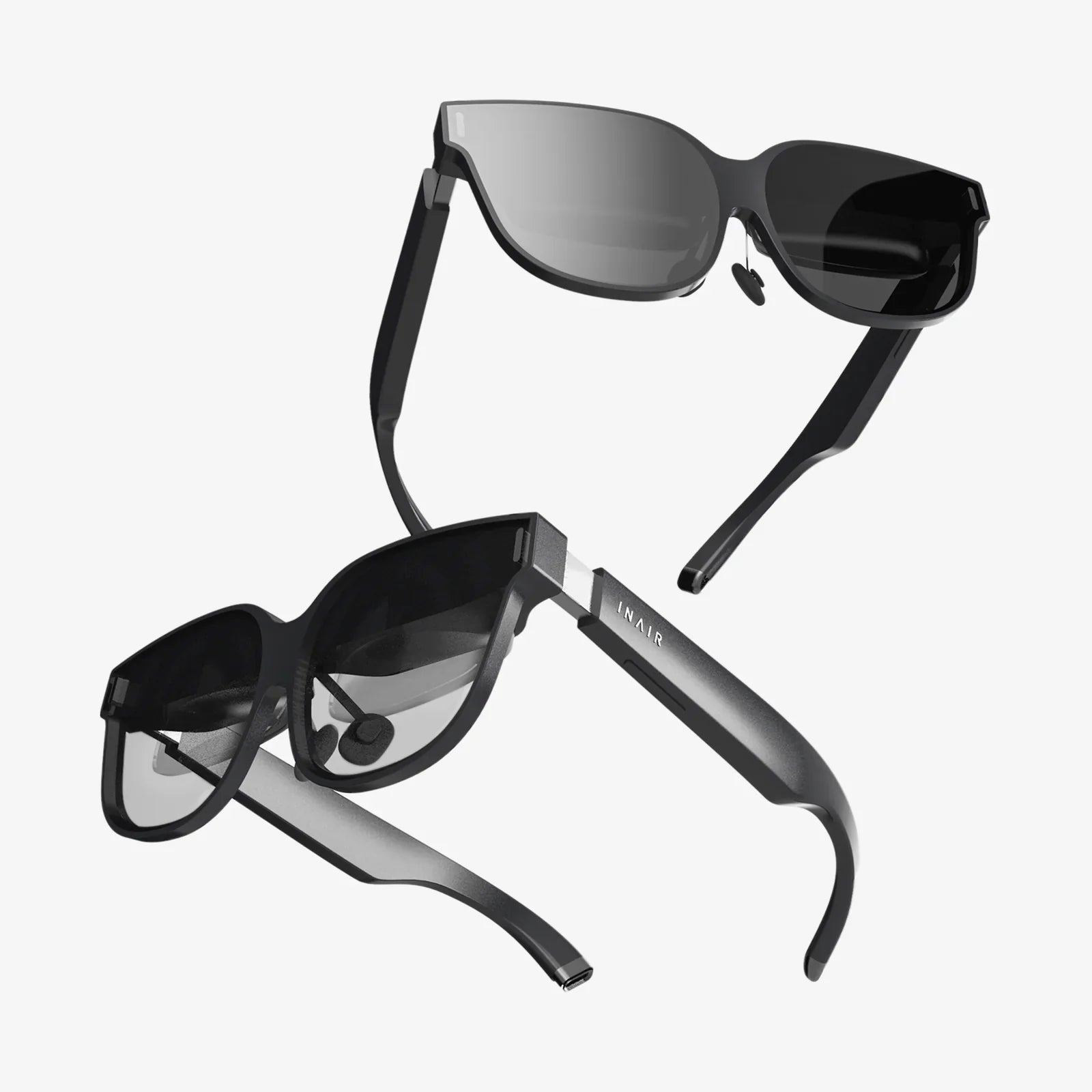
Imagine a world where the boundaries between the digital and the physical dissolve, where information and imagination are painted onto the canvas of reality itself. This is no longer the stuff of science fiction; it is the burgeoning frontier being forged by the powerful and converging technologies of Virtual Reality (VR) and Augmented Reality (AR). Together, they are poised to revolutionize every facet of our lives, from how we work and learn to how we connect and escape. The journey into this blended reality is beginning, and it promises to be the most transformative technological shift of our generation.
Defining the Digital Spectrum: From VR to AR
To understand their convergence, we must first delineate the two distinct, yet related, technologies. While often grouped under the umbrella term 'XR' or Extended Reality, VR and AR offer fundamentally different experiences.
Virtual Reality (VR) is an immersive, simulated digital environment. By wearing a head-mounted display that completely occludes the user's view of the physical world, VR transports the individual into a computer-generated reality. This environment can be a photorealistic recreation of a real place, a fantastical game world, or a abstract data visualization. The key tenet of VR is immersion—the sensation of being physically present in a non-physical world. This is achieved through stereoscopic 3D visuals, spatial audio, and sophisticated motion tracking that allows users to interact with the virtual space using motion controllers or their own hands.
Augmented Reality (AR), by contrast, does not seek to replace the real world but to augment it. AR overlays digital information—images, text, 3D models, and animations—onto the user's view of their immediate physical surroundings. The real world remains the primary backdrop, enhanced with a layer of interactive digital content. This technology is most commonly experienced today through smartphone cameras, but its true potential is unlocked through transparent glasses or lenses that allow for a hands-free, seamless integration of the digital and the physical. The core principle of AR is contextual enhancement—providing relevant information exactly when and where it is needed.
The Blurring Line: The Emergence of Mixed Reality (MR)
The most exciting development is not happening in pure VR or pure AR, but in the space where they merge. This is often referred to as Mixed Reality (MR). MR is a spectrum that encompasses everything between the completely real and the completely virtual. It describes environments where physical and digital objects co-exist and interact in real-time.
In a true MR experience, a virtual character can walk behind your real sofa, and you can use your real hands to manipulate a digital object as if it had physical weight and properties. This requires advanced sensors and cameras to continuously map the physical environment, understanding its geometry, lighting, and surfaces. This digital twin of the real world allows the system to anchor virtual content convincingly, creating the magical effect of the digital and physical worlds becoming one cohesive experience. This is the ultimate goal: a seamless blend where the user is no longer aware of where the real ends and the virtual begins.
The Engine Room: Core Technologies Powering the Revolution
The evolution of VR and AR is driven by breathtaking advances in several critical technological fields.
Sensory Immersion: Displays, Audio, and Haptics
Visual fidelity is paramount. High-resolution micro-OLED displays with incredibly high pixel density are eliminating the "screen door effect," making virtual scenes appear crisp and real. Advancements in lens technology are creating wider fields of view and reducing the bulk of headsets. For AR, waveguides and holographic optical elements are being developed to project bright, clear images onto transparent lenses without obstructing the user's view.
Audio is equally important for presence. Spatial audio technology mimics how sound waves interact with the human ears in a 3D space, allowing users to pinpoint the location of a sound source—be it a virtual bird chirping behind them or a colleague speaking to their left in a meeting—making the experience profoundly realistic.
Perhaps the next frontier is haptic feedback. Companies are developing gloves, suits, and controllers that can simulate the sensation of touch, texture, pressure, and even temperature. The ability to "feel" a virtual object will shatter the final barrier to total immersion.
Mapping the World: Computer Vision and Spatial Computing
The magic of convincing AR and MR lies in a device's ability to see and understand the world. This is the domain of computer vision. Using a suite of cameras, LiDAR scanners, and depth sensors, devices perform simultaneous localization and mapping (SLAM). They scan the environment in real-time, creating a detailed 3D mesh map. This map allows the system to place digital objects on real surfaces, understand occlusions (so a virtual ball can roll under a real table), and interact with the geometry of the room. This capability, known as spatial computing, turns any space into a potential interactive canvas.
The Invisible Force: Artificial Intelligence
Artificial Intelligence (AI) is the brain that makes sense of the sensory data. AI algorithms are used for hand-tracking, allowing users to interact with virtual interfaces using natural gestures without controllers. It enables eye-tracking, which can create more lifelike avatars by replicating eye movement and also allows for foveated rendering—a technique that drastically boosts performance by rendering only the area the user is directly looking at in high detail. AI is also crucial for understanding voice commands, recognizing objects in the real world (e.g., identifying a specific machine part to overlay instructions), and generating dynamic, responsive virtual environments.
Transforming Industries: Practical Applications Today and Tomorrow
The potential applications for VR and AR extend far beyond entertainment, permeating every major sector of the global economy.
Revolutionizing Enterprise and Manufacturing
In the industrial world, these technologies are already delivering immense value. Technicians wearing AR glasses can see schematics and step-by-step repair instructions overlaid directly on the complex machinery they are fixing, reducing errors and training time. Architects and engineers can walk clients through full-scale, immersive 3D models of unbuilt structures, making changes in real-time. Factory floor managers can visualize real-time data on production lines, identifying bottlenecks instantly. This "digital twin" concept allows for unprecedented optimization and remote collaboration.
The Future of Medicine and Healthcare
In healthcare, the impact is life-changing. Medical students can practice complex surgical procedures on virtual patients in a risk-free environment, honing their skills without consequence. Surgeons can use AR to visualize a patient's internal anatomy—such as CT scans projected onto their body—during an operation, improving precision and outcomes. Therapists are using VR to treat PTSD through controlled exposure therapy, and to manage chronic pain by distracting the brain with immersive experiences. These tools are making healthcare more effective, accessible, and personalized.
Redefining Education and Training
Education is being transformed from passive learning to active experience. Instead of reading about ancient Rome, students can walk its streets in VR. Chemistry students can conduct dangerous experiments with virtual chemicals. AR can bring textbook diagrams to life, with a 3D heart model beating above the page. This experiential learning dramatically improves retention and engagement, catering to diverse learning styles.
New Frontiers in Social Connection and Retail
These technologies promise to evolve the internet from a network of pages to a network of places—a "spatial web" or "metaverse." Social interaction will move beyond video calls to shared virtual spaces where you can feel like you're sitting on the same couch as a friend who lives across the globe, watching a movie or playing a game together as lifelike avatars.
In retail, AR allows customers to "try on" clothes, visualize how a new sofa would look in their living room, or see how a shade of paint would change a room's ambiance before making a purchase, reducing returns and increasing consumer confidence.
Navigating the Uncharted: Ethical and Societal Considerations
With such profound power comes significant responsibility. The widespread adoption of persistent AR and VR experiences raises critical questions that society must address.
- Privacy and Data Security: These devices are data collection powerhouses. They have the potential to continuously record audio, video, and precise location data of your home and life. The biometric data they collect—your eye movements, gait, and even emotional responses—is incredibly sensitive. Robust frameworks for data ownership, consent, and security are not just necessary; they are imperative to prevent a dystopian future of perpetual surveillance.
- The Reality Divide: As with any transformative technology, there is a risk of creating a new socioeconomic divide. Will access to these powerful educational and professional tools be available to all, or will they become a privilege for the wealthy, exacerbating existing inequalities?
- Mental Health and Reality Blur: What are the long-term psychological effects of spending significant time in virtual or augmented spaces? Could it lead to increased isolation, dissociation, or an inability to distinguish between virtual and real experiences? Establishing digital wellness practices will be crucial.
- Content Moderation and Safety: If the internet has taught us anything, it is that any new platform can be misused. How do we prevent harassment in immersive social spaces? How do we combat the spread of deeply convincing AR misinformation in the physical world? These are complex challenges without easy answers.
The Path Forward: Towards a Seamless Interface
The ultimate trajectory of VR and AR is towards invisibility. The bulky headsets of today will evolve into sleek glasses, and eventually, to contact lenses or even direct neural interfaces. The technology will fade into the background, and the experiences will move to the foreground. The goal is not to have a device, but to have a capability—an innate part of our perception.
We are moving towards a world where we will effortlessly summon information, communicate with others, and express our creativity through intuitive gestures and glances, all while remaining present in our physical environment. This will not mean abandoning the real world for the virtual, but rather enriching our reality with a limitless digital layer, empowering us to be more productive, knowledgeable, and connected than ever before.
The convergence of VR and AR is more than a technological trend; it is a fundamental shift in the human-computer interface. It represents a new medium for storytelling, a new platform for commerce, a new tool for innovation, and a new canvas for human connection. The door to this blended world is now open, and the experiences waiting on the other side will forever change our definition of what is real.
Share:
VR Prescription Glenses: The Ultimate Guide to Crystal Clear Immersion
Best Glasses for Gaming: The Ultimate Guide to Enhanced Performance and Comfort