


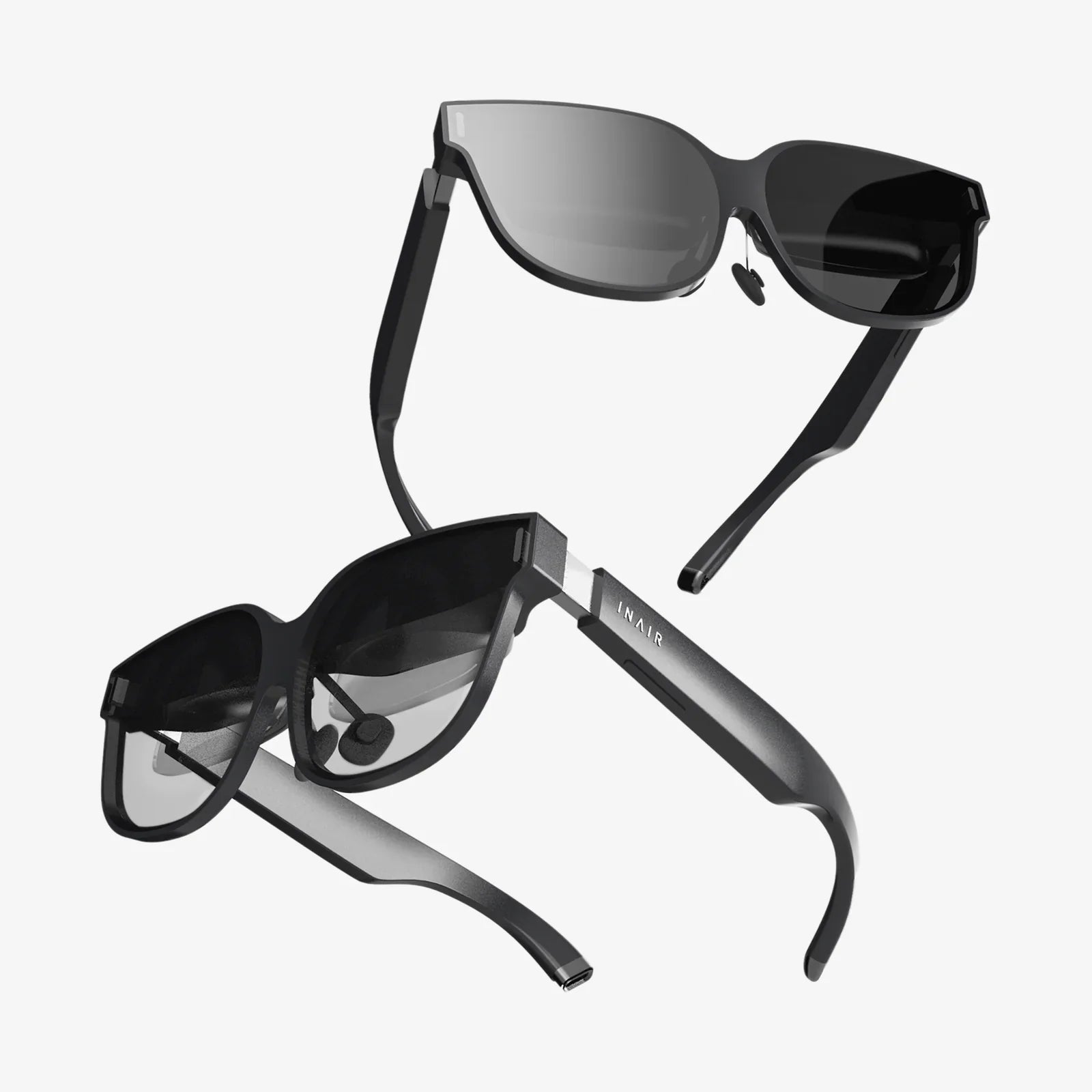
Imagine stepping through a portal into another world, a digital dimension where the only limit is the imagination. This is the profound promise of virtual reality, a technology that doesn't just sit on your desk but transports you out of it. The allure isn't just in the sleek headsets or the advanced graphics; it's in the fundamental, almost magical characteristics that make this experience possible. To understand VR is to dissect these core traits, the pillars upon which entire realities are built and believable experiences are forged. This journey into the defining VR characteristics reveals not just how the technology works, but how it captivates our senses, rewires our expectations, and is poised to revolutionize everything from entertainment to enterprise.
The Triumvirate of Presence: Immersion, Interactivity, and Imagination
At the heart of every compelling virtual reality experience lies a powerful trinity of concepts often called the "3 I's of VR." These are not just features; they are the essential ingredients that, when combined correctly, create the phenomenon known as presence—the undeniable, often startling sensation of actually being in the virtual environment.
Immersion: The Art of Sensory Deception
Immersion is the technical foundation of presence. It refers to the objective ability of the hardware and software to shut out the physical world and present a convincing, continuous stream of virtual stimuli to the user's senses. It's a measure of the system's fidelity. Key technical characteristics that contribute to immersion include:
- Visual Fidelity: This encompasses high-resolution displays, a wide field of view that mimics human binocular vision, high refresh rates to ensure smooth motion, and low persistence to eliminate motion blur. The goal is to create a visual scene that is sharp, expansive, and fluid enough to prevent the brain from recognizing it as a screen.
- Stereoscopic 3D Vision: By presenting slightly different images to each eye, VR systems replicate the way we naturally perceive depth in the real world. This depth perception is fundamental to judging distances and scale, making a virtual object feel solid and a chasm feel deep.
- Audio Fidelity: Often called spatial audio or 3D audio, this technology uses head-related transfer functions (HRTFs) to simulate how sound waves interact with the human head and ears. A sound coming from your left in the virtual world will reach your left ear slightly sooner and with a different frequency signature than your right, exactly as it does in reality. This allows users to locate sounds intuitively, enhancing realism immensely.
- Tracking Precision: Immersion is shattered the moment the virtual world fails to track your movements perfectly. Six degrees-of-freedom (6DoF) tracking, which monitors both rotational (pitch, yaw, roll) and translational (forward/back, up/down, left/right) movements, is crucial. Low-latency, sub-millimeter accurate tracking ensures that when you move your head or hands, the virtual world responds instantly and precisely, maintaining the fragile illusion.
Immersion is what the system provides. It's the canvas. But a blank, high-resolution canvas is not yet art.
Interactivity: The Power to Influence and Be Influenced
If immersion is the canvas, then interactivity is the brush. It is the characteristic that allows the user to become an active participant rather than a passive observer. This is where VR fundamentally diverges from all previous media. You don't watch something happen; you make it happen.
- Natural Input Modalities: VR interaction strives for intuitiveness. Instead of pressing a button to open a door, you reach out, grab the handle, turn it, and push. This is enabled by motion-tracked controllers, hand-tracking technology, and even haptic feedback devices that provide a sense of touch. The user's actions in the physical world have direct, logical consequences in the virtual one.
- Agency and Impact: True interactivity means the virtual world reacts to your presence and actions. Objects have physics; they can be picked up, thrown, stacked, or broken. Non-player characters (NPCs) might react to your gaze or gestures. This agency—the power to influence the environment—is a profound psychological trigger that deepens investment and belief in the experience.
- Haptic Feedback: Also known as force feedback, this technology provides tactile sensations to the user. A simple vibration when touching a virtual surface, the resistance felt when pulling a virtual bowstring, or the kick of a virtual weapon are all examples. Haptics close the loop between seeing an action and feeling it, dramatically strengthening the mind's acceptance of the virtual event as real.
Interactivity transforms the user from a spectator into an agent, making the experience personal and unique.
Imagination: The Narrative and Creative Engine
The third "I" is the most human element of the trio. Imagination refers to the creative and narrative design of the experience itself. The most technically advanced system is worthless without a compelling reason to use it. This characteristic is about the content and the user's own cognitive and emotional engagement.
- World-Building and Narrative: A believable world, whether realistic or fantastical, must have its own internal logic and consistency. Strong art direction, storytelling, and environmental design guide the user's imagination, encouraging them to invest emotionally in the experience. It answers the question, "Why am I here?"
- Embodiment: This is the experience of inhabiting a virtual body (an avatar). Seeing your own virtual hands or body move in sync with your own actions is a powerful cognitive trick that reinforces ownership and presence. The design of the avatar can profoundly affect behavior—a phenomenon known as the Proteus Effect, where users subconsciously conform to the characteristics of their virtual representation.
- Emotional Resonance: The ultimate goal of combining immersion and interactivity within a well-imagined world is to elicit genuine emotional responses. This could be the thrill of scaling a dizzying peak, the tension of a stealth mission, the wonder of exploring an alien ecosystem, or the connection felt during a social gathering with friends represented as avatars.
These three characteristics are deeply interdependent. Weak immersion breaks interactivity. Poor interactivity stifles imagination. It is only when they are woven together seamlessly that the magic of VR is fully realized.
Beyond the Basics: Other Critical VR Characteristics
While the 3 I's form the core, several other characteristics are vital to understanding the full scope and challenges of VR technology.
Presence: The Ultimate Goal
As mentioned, presence is the holy grail. It's the subjective, psychological feeling of being in the virtual space, not just the technical means to achieve it. It's the moment your brain stops registering the headset and accepts the simulation as your reality. This is why a simple, low-poly art style can sometimes feel more "real" than a graphically complex but poorly executed one—if it maintains consistency and perfect tracking, the brain is more easily fooled. Presence is the culmination of all other characteristics working in perfect harmony.
Isolation: A Double-Edged Sword
A key characteristic of most current VR systems is sensory isolation. The headset blocks out your physical surroundings, and headphones block external sound. This is immensely powerful for fostering immersion and presence, as it eliminates distractions and competing sensory input. However, it also presents significant challenges regarding user safety (preventing trips and bumps), social alienation (being cut off from people in the same room), and accessibility. Newer developments in passthrough AR and mixed reality are beginning to address this by digitally reconstructing the physical world inside the headset, blending the real and the virtual.
Embodiment and Agency
These two concepts are so central they deserve reiteration. Embodiment provides the "self" in the virtual world, while agency provides the will. The feeling of ownership over a virtual body and the power to act meaningfully within a digital ruleset are what make VR experiences uniquely impactful and memorable compared to other media.
Scalability and Accessibility
As the technology matures, its characteristics are evolving to become more accessible and scalable. This includes the development of standalone headsets that untether the user from powerful computers, making VR more convenient and affordable. Similarly, advancements in inside-out tracking (where sensors are on the headset itself) eliminate the need for external base stations, simplifying setup. These characteristics are crucial for moving VR from a niche enthusiast market into the mainstream.
The Impact and Future Shaped by These Characteristics
The unique combination of VR characteristics is not just creating new games; it's forging new tools for nearly every sector of society.
- Education and Training: The immersive and interactive nature of VR allows for experiential learning. Medical students can practice complex surgeries, mechanics can learn to repair engines, and history students can walk through ancient Rome—all in a risk-free, repeatable, and highly engaging virtual space. The learning is by doing, not just by reading or watching.
- Therapy and Rehabilitation: Therapists use controlled VR environments to treat phobias (like fear of heights or public speaking) through gradual exposure. Patients recovering from strokes or injuries can use gamified VR exercises to make physical therapy more engaging and measurable.
- Remote Collaboration and Social Connection: VR characteristics enable a new form of telepresence. Instead of a grid of faces on a video call, colleagues from around the world can meet as avatars in a virtual boardroom, examining 3D models of a new product together. Friends can feel like they are sitting in the same virtual cinema watching a movie, sharing space and reactions in a way that flat screens cannot replicate.
- Design and Architecture: Architects and designers can step inside their creations long before the first brick is laid. They can experience the scale of a building, test sightlines, and identify potential design flaws in an immersive 1:1 scale model, saving immense time and resources.
The path forward will involve refining these core characteristics—higher resolutions, wider fields of view, more realistic haptics, and lighter, more comfortable form factors. The goal is to make the technology itself fade away, leaving only the experience, until the line between the real and the virtual becomes not a barrier to cross, but a canvas to paint upon.
We stand on the precipice of a new reality, one defined by digital worlds we can not only see but touch, shape, and inhabit. The true power of VR doesn't lie in its ability to mimic our world, but in its capacity to transcend it, offering glimpses of what was once confined to dreams. The next time you witness someone lost in a virtual experience, know that you are seeing more than just technology at work; you are witnessing a fundamental human characteristic—the urge to explore, create, and connect—amplified by a suite of digital traits working in perfect, mesmerizing harmony. The journey into virtuality has just begun, and its defining characteristics are the map to its limitless potential.
Share:
Ultra Wide Screen Setup: The Ultimate Guide to Unlocking Unprecedented Productivity and Immersion
Top AR Companies Shaping Our Digital Future and Blurring Reality