


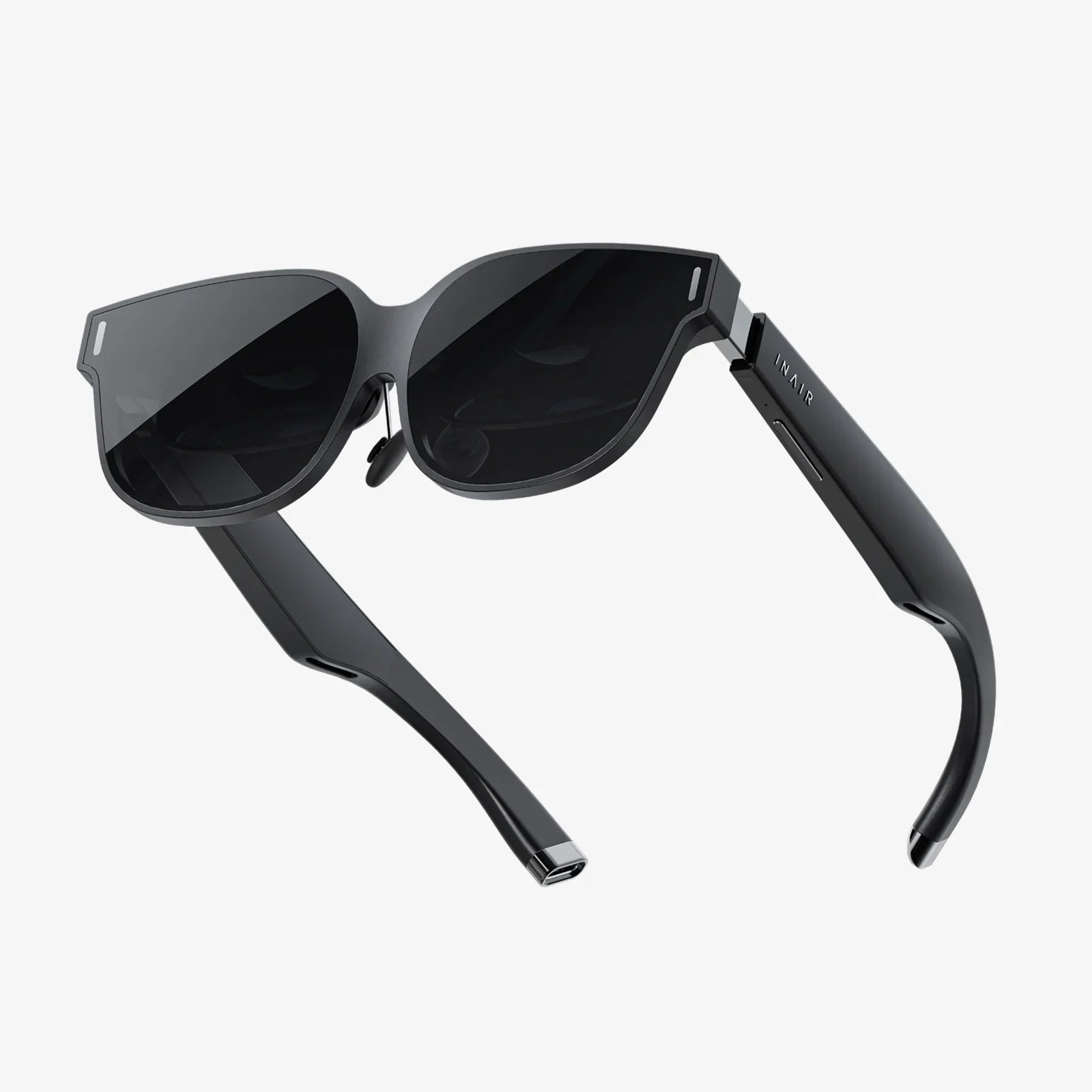
- by wangfred
VR Display Screen: The Gateway to Immersive Virtual Realities
- by wangfred
Step beyond the boundary of the physical world and into the limitless expanse of the virtual; the gateway to these experiences is not a complex controller or a powerful processor, but the very window through which you perceive it all—the VR display screen. This unsung hero of the headset is the final, crucial link in the chain of immersion, the canvas upon which entire universes are painted. Its evolution is the story of virtual reality itself, a relentless pursuit of visual fidelity so convincing that the brain willingly suspends its disbelief. To understand the VR display is to understand the very heart of the virtual reality experience.
At its most fundamental level, a VR display screen is tasked with a deceptively simple job: to project a stereoscopic image directly into the user's eyes. However, this simplicity belies a universe of engineering challenges. Unlike a television or a monitor, a VR screen is measured not just by its resolution, but by its ability to create a seamless, comfortable, and convincing illusion of depth and space.
The primary metrics that define a VR display's quality are:
The battle for visual supremacy in VR is fought primarily between two display technologies, each with its own strengths and trade-offs.
LCD panels have become the workhorse for many modern VR headsets. They operate by using a backlight to shine through a layer of liquid crystals that act as shutters, filtering light to create colors.
Advantages:
Disadvantages:
OLED technology represents a different philosophy. Each pixel is its own tiny light source, emitting its own light and color independently.
Advantages:
Disadvantages:
This is the technology generating the most excitement for the next generation of VR displays. Micro-OLED (or OLEDoS - OLED on Silicon) builds the OLED display directly onto a silicon wafer, enabling incredibly small, dense, and efficient panels.
Micro-OLED combines the best of both worlds: the perfect blacks and fast response of traditional OLED with the incredibly high resolution and pixel density of LCD, all while being remarkably power-efficient. This makes them ideal for compact, high-performance headsets, including those aimed at mixed reality applications.
A discussion of the VR display is incomplete without mentioning the optics. The screen itself is just the image source; the lenses are what shape and deliver that image to your eyes. The evolution from simple spherical lenses to today's sophisticated Fresnel and aspherical hybrids, and now to groundbreaking Pancake lenses, is a direct response to the needs of the display.
Pancake optics use a folded light path, allowing for a dramatically slimmer and lighter headset design. They enable a larger "eyebox" (the sweet spot where the image is clear) and better edge-to-edge clarity. However, they demand exceptionally bright displays because light is lost as it bounces through the optical layers. This symbiotic relationship means advancements in display brightness and efficiency directly enable better, more comfortable optical solutions.
The ultimate goal of all this technology is not to win spec sheets, but to create a comfortable and accessible experience for the human brain. The phenomenon of vergence-accommodation conflict (VAC) is a prime example of a biological hurdle. In the real world, our eyes converge (cross) and their lenses accommodate (focus) in tandem when looking at close objects. In VR, the eyes converge on a virtual object, but the lenses must remain focused on the fixed focal plane of the physical display screen. This mismatch is a key contributor to eye strain and fatigue.
The next great frontier in VR display technology is solving this: varifocal and focal surface displays. These systems use eye-tracking to measure where you are looking and then mechanically or electronically adjust the focus of the lenses or the display itself to match the virtual distance, dynamically providing the correct focal cue. This will represent a monumental leap in visual comfort and long-term usability.
Furthermore, the future points toward displays that are not just visual but also multimodal. Imagine displays that can modulate their opacity for seamless mixed reality, or panels that can somehow simulate depth not just through stereoscopy, but through light field technology, projecting rays of light as they would emanate from a real object, allowing the eye to focus naturally at different depths.
The journey of the VR display screen is far from over. It is a relentless march toward higher fidelity, greater comfort, and deeper immersion. It is a pursuit to make the window to virtual worlds not just a pane of glass, but an invisible portal. It is the hardware that, more than any other, holds the power to make us believe, if only for a moment, that we are somewhere else entirely.
Imagine a world where the line between the digital and the physical dissolves not through a bulky headset, but through a pair of sleek glasses, their lenses alive with pin-sharp, dynamically focused light that is indistinguishable from reality. This is the destination toward which every innovation in VR display technology is tirelessly driving, transforming science fiction into tangible reality with every passing year.