


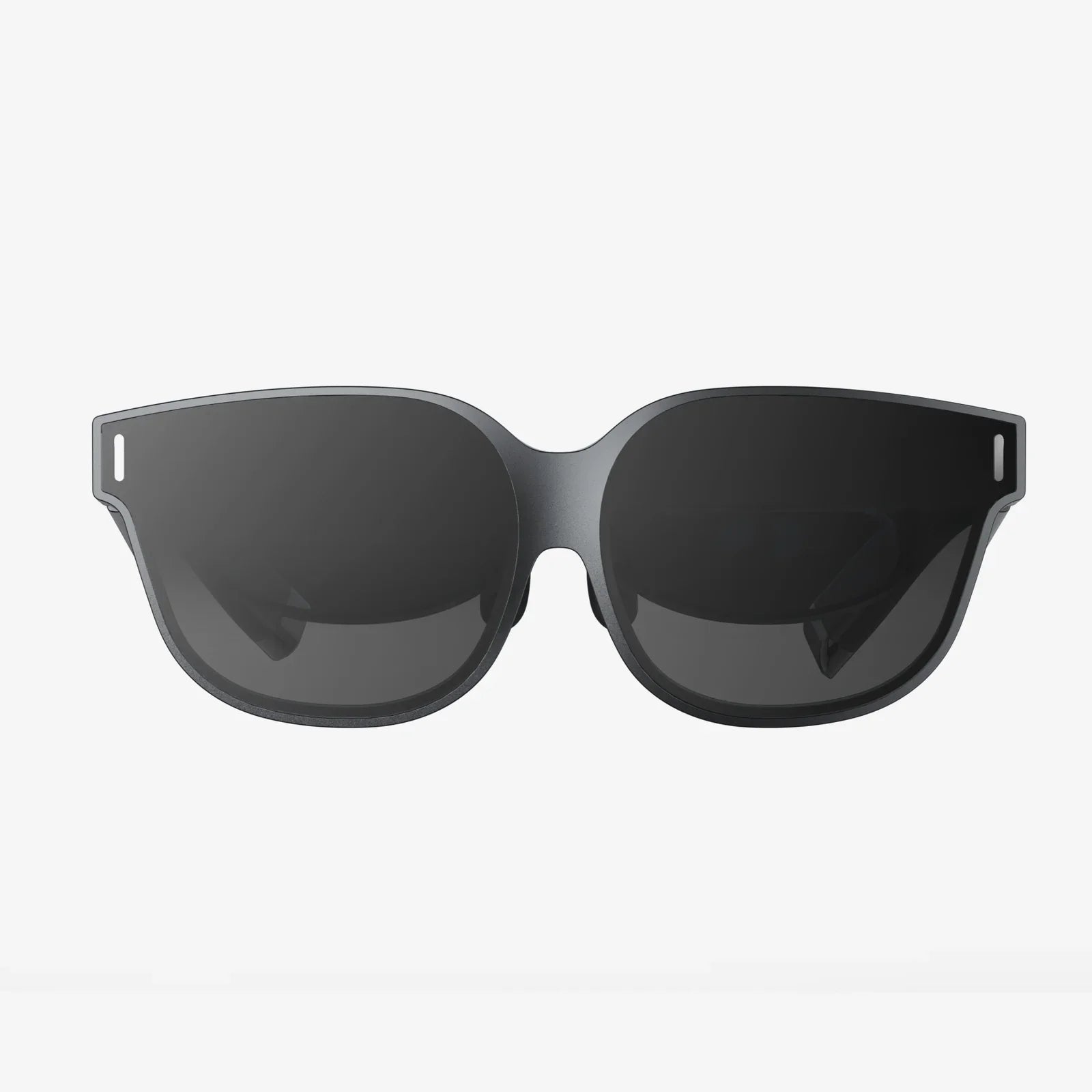
Imagine holding a portal to another dimension in the palm of your hand. A world where you can walk with dinosaurs, stand on the surface of Mars, or sit courtside at a championship game, all from your living room. This isn't a glimpse into a distant, sci-fi future; it's the reality available today through the powerful computer you likely already own. The fusion of sophisticated hardware and innovative software has ushered in an era of unprecedented accessibility, making immersive digital experiences available to millions. This is the promise and the power of leveraging advanced mobile technology for immersive experiences, a revolution that is quietly reshaping entertainment, education, and social connection. The journey begins not with a specialized and expensive gadget, but with the device in your pocket.
The Democratization of Virtual Reality
For years, virtual reality was the domain of hardcore gamers and tech enthusiasts with deep pockets. High-end systems required a powerful personal computer, a tangle of wires, external sensors meticulously placed around a room, and a headset costing as much as the computer itself. It was an impressive but inaccessible technology for the average consumer. The advent of sophisticated mobile technology for immersive experiences changed everything. It stripped away the complexity and the high cost of entry. Suddenly, the core components needed for VR—a high-resolution display, a powerful processor, precise motion sensors, and a robust software ecosystem—were consolidated into a single, sleek device that millions already owned and understood how to use. This shift didn't just make VR cheaper; it made it convenient, portable, and social. You could now share a VR experience with a friend simply by handing them your phone and a viewer, demystifying the technology and inviting a much broader audience to step inside.
How It Works: The Magic Behind the Viewer
The elegance of this approach lies in its simplicity and ingenuity. The system is typically divided into two key components: the smartphone itself and a head-mounted viewer.
The Power Within: Your Device's Hardware
Modern smartphones are technological marvels engineered for this very purpose. They are packed with hardware that is perfectly suited for creating believable virtual worlds:
- High-Resolution Retina Display: The screen is the window to the virtual world. The high pixel density of modern smartphone displays ensures that the image is sharp and clear, reducing the "screen door effect" where users can see the gaps between pixels, which was a common issue in early VR.
- Gyroscope and Accelerometer: These are the unsung heroes of mobile VR. Working in tandem, these sensors track the precise orientation and movement of your head in real-time. When you look up, down, left, or right, the sensors relay this data instantly to the processor, which adjusts the virtual environment accordingly. This creates the fundamental illusion of being present in a 3D space.
- Powerful Processors: The chip at the heart of your device is a computational powerhouse. It's responsible for rendering two slightly different perspectives for each eye (to create stereoscopic 3D depth), processing the sensor data at incredibly high speeds to prevent latency, and running the immersive application itself. Any delay between your head movement and the visual update can cause discomfort, so this processing must be both fast and efficient.
The Gateway: Understanding Head-Mounted Viewers
The viewer, often made of plastic or cardboard, is far more than a simple holder. Its design is crucial for comfort and immersion:
- Lenses: The key components of any viewer are its lenses. These special convex lenses are placed between your eyes and the phone's screen. They take the dual images on the screen and warp them, focusing your vision to fill your entire field of view. This transforms the small, flat screen into a vast, panoramic environment.
- Head Straps and Comfort Padding: To be immersive, an experience must be comfortable. Quality viewers feature adjustable straps and soft padding around the eyes and nose to block out ambient light and allow for extended use without fatigue.
- Input Methods: Basic viewers rely on a magnetic or capacitive touch button on the side to interact with the virtual world. More advanced models may include a separate Bluetooth controller for more complex inputs, like navigating menus or playing games.
A Universe of Experiences at Your Fingertips
The true potential of this technology is unlocked through software. App marketplaces are brimming with applications designed specifically for immersive viewing, categorized into several compelling genres.
Gaming and Interactive Entertainment
This is where VR truly shines. Games range from simple roller coaster simulators that showcase the thrill of VR to full-fledged adventure games where you must physically turn your head to spot enemies and dodge attacks. Puzzle games place you inside the mystery, and horror games achieve a new level of intensity when the monster is seemingly right in front of you. The immersion factor provided by a headset transforms traditional mobile gaming into a physically engaging activity.
Travel and Exploration
You can embark on a virtual field trip to the Louvre in Paris, dive the Great Barrier Reef, or stand in the midst of a bustling Hong Kong night market. Numerous apps offer 360-degree videos and photospheres of locations around the globe, providing a powerful sense of presence and scale that flat photos and videos cannot match. It's the next best thing to being there and an incredible tool for sparking wanderlust and cultural education.
Education and Training
Imagine a medical student exploring a detailed, beating 3D model of the human heart, an astronomy student flying through a scale model of our solar system, or a history student walking through a digitally reconstructed ancient Roman forum. VR makes abstract concepts tangible and complex subjects engaging. It provides a safe, repeatable environment for training in fields where real-world practice is expensive or dangerous.
Social Connection and Media Consumption
Platforms exist that allow you to meet friends in a virtual space, watch movies together on a giant virtual screen as if you were in the same theater, or share 360-degree videos from your last vacation. It adds a new dimension to remote communication, fostering a sense of shared presence. Furthermore, watching standard movies or YouTube videos in a virtual cinema provides a personal, theater-like experience anywhere you go.
Limitations and Considerations
While revolutionary in its accessibility, it's important to understand that this approach has inherent limitations compared to dedicated, high-end VR systems.
Processing Power: Even the most powerful smartphone cannot match the raw graphical output of a top-tier PC-powered VR system. Experiences are often less graphically complex and may have simpler environments.
Positional Tracking: Most basic setups offer only 3 Degrees of Freedom (3DoF), meaning they track rotational head movement (pitch, yaw, roll) but not translational movement (leaning forward, crouching, moving side-to-side). High-end systems offer 6DoF, tracking full positional movement, which greatly enhances immersion and allows for more natural interaction within the virtual space. Some advanced mobile viewers are beginning to incorporate external cameras for limited positional tracking, bridging this gap.
Battery Life and Heat: Rendering two high-frame-rate videos and running all sensors at full tilt is incredibly demanding on the smartphone's battery and can cause the device to become warm during extended sessions.
Potential for Discomfort: As with any VR system, some users may experience motion sickness or eye strain, especially during experiences with artificial locomotion. It is always recommended to start with short sessions and take frequent breaks.
The Future is Mobile and Immersive
The trajectory of this technology is incredibly exciting. We are moving towards even more seamless integration. Future smartphones may feature dedicated processing cores optimized for the intense demands of AR and VR workloads. Displays will become even higher resolution and faster refreshing, eliminating any remaining visual artifacts. The line between the physical and digital worlds will continue to blur with advancements in Augmented Reality (AR), where digital objects are superimposed onto your real-world view through the phone's camera. This technology already allows you to see how a new piece of furniture would look in your room or play a game of chess on your kitchen table with a virtual opponent. The smartphone is poised to become the primary hub for both VR and AR, a single device that can toggle between a fully immersive virtual world and an augmented version of our reality. This convergence will unlock creative and practical applications we are only beginning to imagine.
The gateway to these incredible experiences is already in your pocket, waiting to be unlocked. All that remains is for you to take the first step, slide your device into a viewer, and look around. A universe of games, distant planets, historical landmarks, and interactive stories awaits your exploration. The barrier to entry has never been lower, and the potential for adventure has never been higher. This isn't just about technology; it's about expanding the horizons of what your smartphone can do and transforming it from a tool for communication into a tool for experience. Your front row seat to the future is ready.
Share:
Holographic Display The Future of Visual Technology is Here
Android XR Pricing The Ultimate Guide to Navigating the Cost of Immersive Technology