


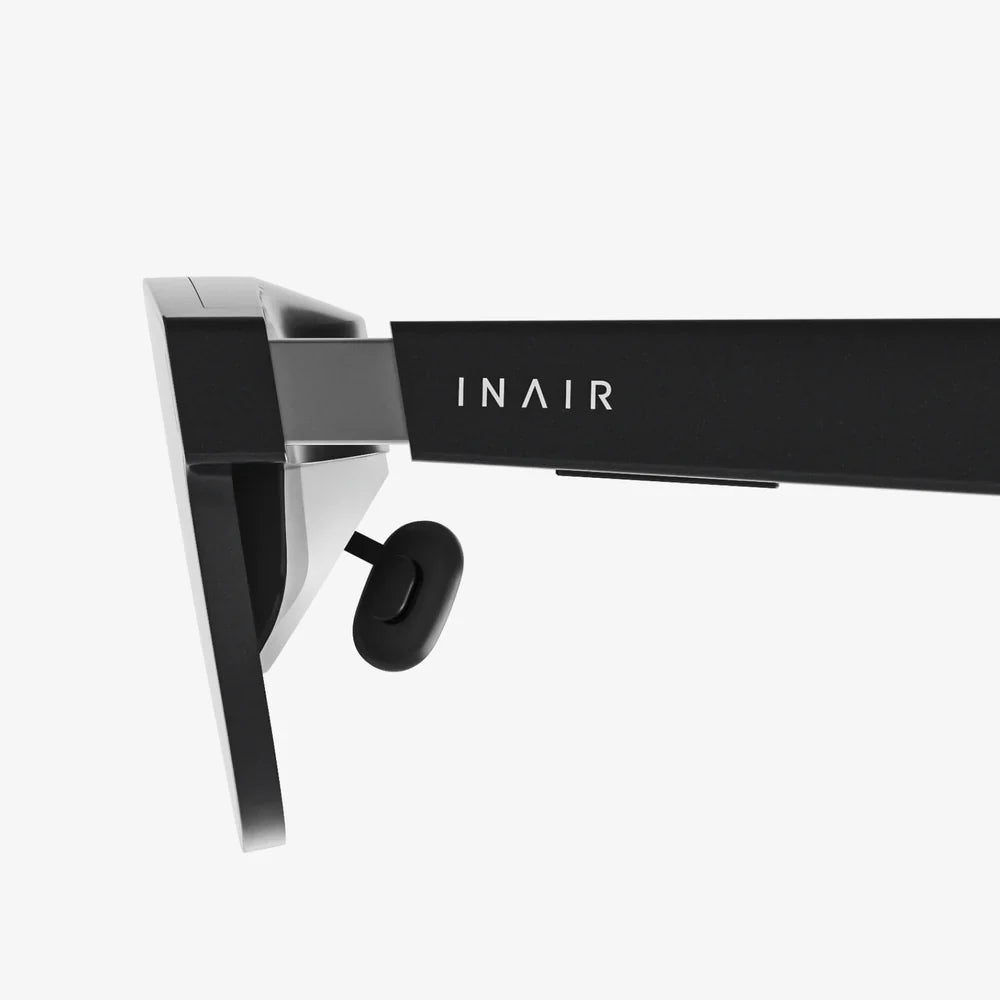
Imagine stepping into a breathtaking virtual world, a landscape of infinite possibility, only to be pulled back to reality by the nagging discomfort of a headset that doesn't fit, or worse, the blurry frustration of not being able to see the stunning visuals clearly. For the billions of people worldwide who rely on prescription eyewear, this has been a persistent barrier to true immersion in virtual reality. But what if the solution wasn't to awkwardly cram your glasses inside a headset, but to have the prescription built directly into the experience itself? This is the revolutionary promise of VR frames glasses, a pivotal innovation that is quietly transforming the accessibility, comfort, and future of virtual reality.
The Unseen Barrier: Prescription Eyewear and the VR Experience
For many early adopters and enthusiasts, the experience of using a virtual reality headset while wearing standard prescription glasses has been, at best, a compromise. The challenges are multifaceted and significant. Firstly, there is the issue of physical space. Most headsets are designed with a certain amount of clearance between the user's eyes and the headset's internal lenses. When a pair of glasses is introduced into this equation, it often results in a tight, uncomfortable fit. The arms of the glasses are pressed against the user's temples by the headset's strap, leading to pressure points and headaches during extended use.
Secondly, the glasses themselves can move and shift during active VR sessions, especially those involving physical movement like in fitness applications or room-scale games. This constant readjustment breaks immersion and can become a source of constant irritation. Furthermore, the proximity of the two sets of lenses—the headset's Fresnel or pancake lenses and the user's prescription lenses—creates a high risk of scratching. A single errant touch during insertion or removal can permanently damage both expensive pieces of equipment.
Finally, there is the optical compromise. Even if the glasses fit, the additional layer of glass or plastic and the minute air gap between the lenses can sometimes cause visual artifacts, glare, or a slight reduction in the field of view. For an technology whose entire purpose is to provide a seamless visual experience, these are critical flaws. VR frames glasses are engineered from the ground up to eliminate every single one of these pain points, representing not just an accessory, but a fundamental rethinking of personalization in VR.
What Exactly Are VR Frames? A Deep Dive into the Design
At their core, VR frames are a dedicated pair of prescription lenses housed in a minimalist frame, specifically designed to integrate perfectly within a virtual reality headset. They are not standalone glasses; they are a component of the VR system itself. The design philosophy is one of precision and necessity.
The frames are typically crafted from lightweight, durable polymers or flexible alloys. They forego the traditional long arms (temples) that hook over the ears, opting instead for short, low-profile stems that are secured by the headset's internal mounting points or facial interface. This eliminates pressure on the temples entirely. The nose bridge is also designed to be minimal, providing support without adding bulk.
The true magic, however, lies in the lenses. These are high-quality prescription lenses, often including options for complex corrections like astigmatism and prism. They are precision-cut to fit the specific contours of the headset model they are designed for, ensuring they sit at the perfect distance from the headset's own lenses to maximize the field of view and minimize any optical distortion. Many providers offer lenses with advanced coatings, such as anti-reflective (AR) and blue light filtering, to further enhance visual clarity and comfort during long sessions. By replacing the standard non-prescription spacer lenses that come with most headsets, VR frames become an invisible, integral part of the visual pipeline.
A Universe of Benefits: Why They Are a Game-Changer
The advantages of adopting VR frames extend far beyond simply making the image clear. They touch upon every aspect of the user experience, elevating it from a novelty to a truly usable and comfortable platform.
- Unparalleled Comfort and Immersion: This is the most immediate and noticeable benefit. Without the bulk of external glasses, the headset fits as the designers intended. The weight distribution feels natural, and the pressure is evenly spread across the face and forehead. There are no more pinched temples or sore spots. This comfort is directly tied to immersion; when the hardware disappears from your perception, you are free to become fully absorbed in the virtual world.
- Optimal Visual Fidelity and Eye Health: Because the prescription is calibrated for the specific optical system of the headset, users often report a sharper, clearer, and wider image than they ever achieved with their regular glasses. The removal of the extra air gap and the potential for misalignment means the visuals are pristine. Furthermore, for those who need bifocals or progressive lenses, dedicated VR frames can be made with a single-vision prescription optimized for the fixed focal distance of current VR headsets (usually around 2 meters), reducing eye strain.
- Protection for Your Investment: Your expensive headset lenses and your expensive prescription glasses are no longer at risk of scratching each other. The VR frames act as a protective barrier, and since they are only used inside the headset, their own risk of damage is minimal.
- Enhanced Hygiene and Shared Experiences: For demoing VR to friends and family or in commercial settings like arcades, VR frames offer a hygienic solution. Instead of sharing a headset that presses against multiple people's glasses, users can have their own personalized insert, or a non-prescription “plano” insert can be used for those without vision correction, keeping the headset's optics clean for everyone.
Acquiring Your Perfect Pair: A User's Guide
The process of obtaining VR frames is straightforward and mirrors the experience of ordering regular prescription glasses online, with a few key differences centered on the headset itself.
- Know Your Headset: The first and most crucial step is to identify the exact make and model of your virtual reality headset. Frames are not universally compatible; they are meticulously designed for specific devices to ensure a perfect snap-in fit.
- Know Your Prescription: You will need a copy of your most recent prescription from your optometrist. The required information is the same: Sphere (SPH), Cylinder (CYL), Axis, and Pupillary Distance (PD). It is vital that your PD is measured accurately, as this determines the optical center of the lenses relative to your eyes in the headset. Some services offer tools to measure your PD at home using a smartphone app or a printable guide.
- Choose a Provider and Order: Numerous specialized online retailers now cater to this growing market. You will select your headset model, enter your prescription details, and choose any additional lens coatings. The lenses are then custom-ground and mounted into the proprietary frame designed for your headset.
- Simple Installation: Upon arrival, installation is typically a simple process of removing the headset's facial interface, snapping the VR frames into the designated slots or using provided adhesive mounts, and reassembling the headset. The process takes minutes and requires no tools.
Beyond Correction: The Future of Personalized Vision in VR
While solving the problem of refractive errors is a massive leap forward, the concept of customizable inserts points to an even more profound future for personalized vision in virtual and augmented reality. Imagine inserts that do more than just correct vision.
Researchers and developers are exploring electro-active lenses that could dynamically change their focal plane. This could solve the vergence-accommodation conflict (VAC), a primary source of eye strain in VR where your eyes conflict between focusing on a near or far object. Lenses could instantly adjust their power to match the virtual depth of the object you are looking at, creating a truly natural and comfortable visual experience.
Furthermore, inserts could be equipped with lightweight technology to enhance the experience. Think of built-in eye-tracking sensors for foveated rendering (which drastically improves performance by rendering only the center of your vision in high detail), or miniature OLED screens for providing a live video feed of the real world in mixed reality applications without needing to remove the headset. The insert, sitting so close to the eye, becomes the ideal platform for the next wave of human-computer interaction interfaces.
Addressing Considerations and Limitations
As with any technology, there are considerations. The primary one is cost; a custom set of VR frames is an additional investment on top of the already significant cost of the headset itself. However, most users find the dramatic improvement in comfort and visual quality to be well worth the price. Secondly, if your prescription changes, you will need to purchase a new set of lenses. For users who share a headset with someone who has a different prescription, this can be a logistical hurdle, though it reinforces the argument for personalized inserts. Finally, while the market is expanding, support is not yet universal for every single headset model on the market, though most popular devices are covered by multiple vendors.
The journey into virtual reality should be about exploring new worlds, not battling with old limitations. VR frames glasses represent a critical maturation of the technology, moving it from a niche hobby for those with 20/20 vision to an inclusive medium accessible to all. They solve a fundamental, physical problem with an elegant, personalized solution, proving that the future of VR isn't just about more pixels and faster processors—it's about a perfect, comfortable, and crystal-clear view.
Stepping into the metaverse should feel effortless, a natural transition from one reality to the next. With this ingenious innovation, the blurry barrier between you and the digital frontier vanishes, leaving only the pure, stunning potential of the experience ahead. The next generation of immersive technology is here, and it's finally looking clear for everyone.
Share:
Create Virtual Workspaces: The Ultimate Guide to Building a Borderless Digital Office
Who Has the Best Virtual Reality Headset? The Ultimate 2024 Showdown