


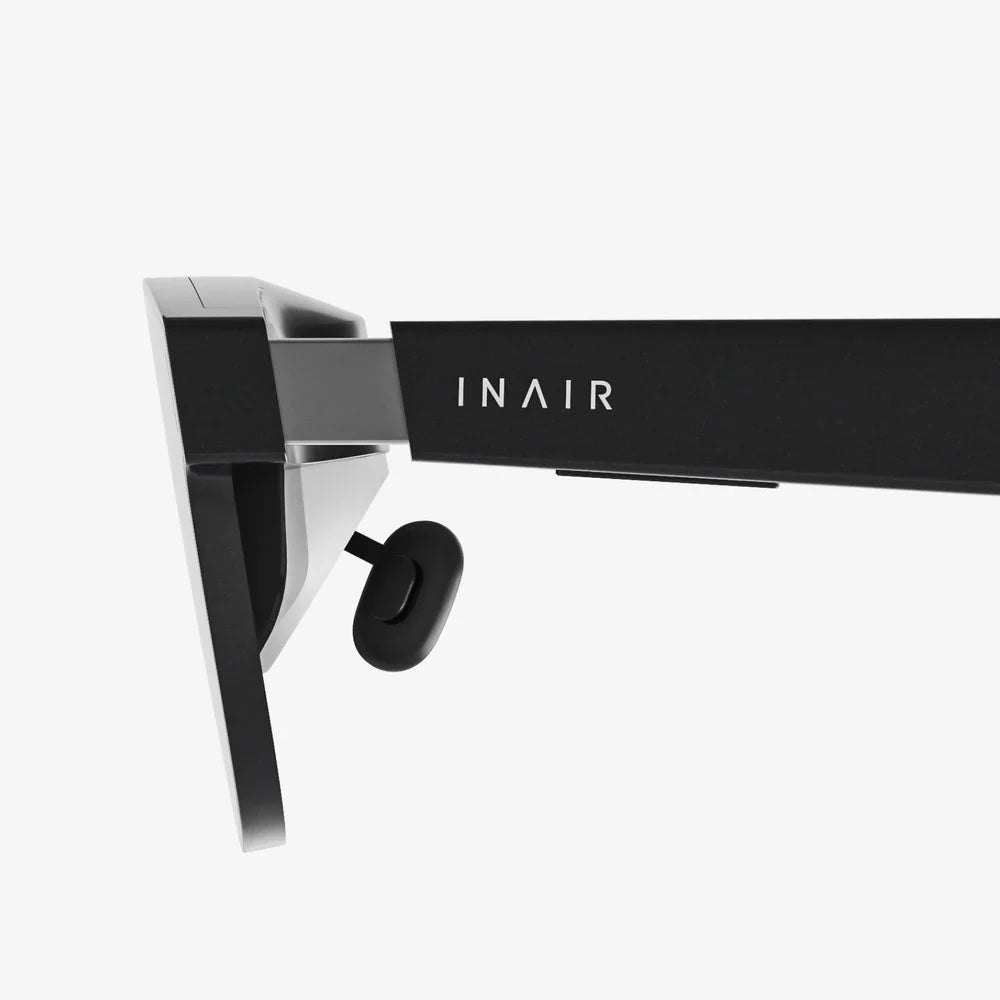
Imagine stepping through a portal into another world, leaving the confines of your living room behind to wield a lightsaber on a distant planet, solve intricate puzzles in an ancient tomb, or create art on a canvas suspended in the cosmos. This is no longer the stuff of science fiction; it is the palpable reality offered by the modern VR game system, a technological marvel that is not just changing how we play, but fundamentally reshaping our perception of entertainment, social connection, and reality itself. The journey from a niche enthusiast's dream to a mainstream portal to new experiences is a story of relentless innovation, and it’s a story that is still being written with every new headset donned.
The Pillars of Presence: How VR Trick Your Senses
At its core, a VR game system is an elaborate illusion, a symphony of hardware and software working in perfect harmony to convince your brain you are somewhere you are not. This magic trick, known as “presence,” is the ultimate goal, and it rests on several critical technological pillars.
Visual Immersion: More Than Just Pixels
The window to these virtual worlds is the head-mounted display (HMD). Early systems suffered from low resolutions and a “screen door effect,” where users could see the gaps between pixels. Today’s advancements feature high-resolution OLED or LCD panels with fast refresh rates (90Hz and above), which are crucial for smooth, comfortable visuals that reduce motion sickness. The field of view (FOV) has also expanded, moving beyond a binocular-like experience to a more natural, encompassing vista. Perhaps the most crucial visual innovation is inside-out tracking. Unlike older systems that required external sensors placed around the room, modern headsets use integrated cameras to map the environment and track the headset’s position in real-time, making setup effortless and freeing the user from a limited play space.
Auditory Depth: The Sound of Reality
Visuals are only half the battle. Immersive 3D spatial audio is what completes the illusion. A VR game system uses advanced audio algorithms to simulate how sound waves interact with the human head and ears. A creaking door to your left truly sounds like it’s to your left, and the echo of your footsteps in a virtual cavern changes as you move. This auditory feedback is subliminally powerful, providing critical environmental cues and deepening the emotional impact of the experience, making a whisper feel intimate and an explosion feel overwhelmingly powerful.
Haptic Feedback: The Sense of Touch
To truly feel embodied in a virtual space, you need to feel interaction. This is where haptic technology comes in. Modern VR controllers are sophisticated instruments equipped with precise motion tracking, analog triggers, buttons, and, most importantly, haptic feedback motors. These aren’t the simple rumble packs of old; they are capable of delivering a wide range of nuanced sensations—from the subtle vibration of drawing a bowstring to the jarring recoil of a virtual weapon. The frontier of haptics is expanding to include haptic vests and gloves, which promise to simulate everything from a gentle touch on the shoulder to the impact of a punch, bringing the promise of true tactile immersion ever closer.
Beyond the Game: The Expansive Universe of VR Applications
While gaming is the most visible and popular application, the potential of a VR game system stretches far beyond. It is becoming a versatile tool in numerous professional and creative fields.
Revolutionizing Education and Training
VR offers an unparalleled medium for experiential learning. Instead of reading about ancient Rome, students can take a guided tour through a historically accurate reconstruction. Medical students can practice complex surgical procedures on virtual patients without risk, allowing for repetition and mistake-making that is impossible in the real world. Similarly, VR is revolutionizing vocational training, allowing mechanics to train on virtual engines, pilots to navigate emergency scenarios in flight simulators, and warehouse workers to learn complex logistics systems in a safe, virtual copy of their environment.
The New Social Frontier
Social VR platforms have emerged as vibrant digital meeting spaces. Here, users are represented by customizable avatars and can gather to watch movies, attend live concerts, play social games, or simply chat in environments ranging from cozy apartments to fantastical landscapes. These spaces offer a sense of shared presence and embodiment that traditional video calls cannot match, fostering a new kind of long-distance connection and digital community. For many, a VR game system is less about games and more about spending quality time with friends and family who are physically far away.
A Canvas for Creativity and Design
Artists and designers are embracing VR as a powerful new medium. VR painting and sculpting applications allow creators to work in three dimensions, crafting sculptures from virtual clay or painting dynamic brushstrokes in the air around them. Architects and interior designers use VR to walk clients through unbuilt homes and spaces, providing a true sense of scale and design that blueprints or renders cannot convey. This immersive design review process saves time, resources, and ensures the final product meets expectations.
Navigating the Challenges: The Hurdles on the Path to Ubiquity
Despite its rapid progress, the VR industry still faces significant challenges that must be overcome to achieve true mass adoption.
The Comfort Conundrum
Motion sickness, often called “VR sickness,” remains a barrier for a significant portion of the population. It’s caused by a dissonance between the visual motion perceived in the headset and the body’s vestibular system sensing no physical movement. While higher refresh rates, better tracking, and smarter game design have mitigated this greatly, it is not yet entirely solved. Furthermore, headset comfort—in terms of weight, heat, and fit—is a constant focus of iteration. The ideal is a device that feels as light and forgettable as a pair of sunglasses.
The Accessibility Equation
Cost, both of the hardware and the high-end computer often required to run it, is a major factor. While more affordable, all-in-one systems have dramatically lowered the entry barrier, the pursuit of photorealistic graphics and complex physics continues to push the computational envelope, keeping high-fidelity VR at a premium price point. There is also the issue of physical space; not everyone has a dedicated, clear area for room-scale VR experiences, which limits the types of applications that can be universally enjoyed.
The Content Crucible
Hardware is nothing without software. The VR software library is growing exponentially but still lacks the consistent pipeline of AAA blockbuster titles that console gamers are accustomed to. The market is currently a healthy mix of innovative indie gems and a handful of larger, system-selling experiences. For VR to become essential, it needs a steady stream of must-have content that appeals to a broad audience, proving its value beyond being a novel tech demo.
The Future is Virtual: What Lies Beyond the Horizon
The trajectory of VR technology points towards a future that is even more seamless, immersive, and integrated into our daily lives. Several key developments are poised to define the next generation.
The Quest for Photorealism and Eye Tracking
The next leap in visual fidelity will be driven by technologies like foveated rendering, powered by eye-tracking. This technology monitors where the user is looking and renders only the center of their gaze in full detail, while intelligently reducing the rendering load in their peripheral vision. This massive efficiency gain will allow for near-photorealistic graphics without requiring a corresponding massive increase in computing power, making high-end visuals more accessible.
The Merging of Realities: Augmented and Virtual
The line between Virtual Reality (VR) and Augmented Reality (AR) is beginning to blur with the development of Mixed Reality (MR) headsets. These devices use high-resolution passthrough cameras to blend digital objects seamlessly into the user’s real-world environment. This technology transforms a VR game system from a tool for complete escape into a platform for enhancing reality—allowing you to have a virtual giant screen TV on your real wall, play a digital tabletop game on your actual coffee table, or have interactive training overlays appear on real-world equipment.
Towards the Metaverse
The VR game system is the primary gateway to the much-hyped concept of the metaverse—a persistent, interconnected network of shared virtual spaces. While the full vision is still years away, the foundational elements are being built today within social VR platforms and online VR games. The evolution of this technology will focus on creating more seamless, standardized, and interoperable experiences, allowing users to travel between virtual worlds with their digital identities and assets intact, ultimately creating a new layer of human interaction and economy on top of our physical reality.
The echo of a virtual blade clashing, the profound silence of a digital ocean deep, the shared laughter of friends represented as avatars in a cartoon world—these are the moments that define the current era of VR. But this is merely the opening chapter. As the hardware dissolves into lighter, more powerful, and more intuitive forms, and the software evolves from isolated experiences into a connected continuum of virtual spaces, the very definition of a VR game system will become obsolete. It will no longer be a ‘game system’ at all, but a fundamental portal to work, play, learn, and connect. The revolution is not coming; it is already here, waiting for you to pick up the headset and step through.
Share:
Limitless AI The Future of Human Potential and Technological Evolution
Cost of a VR: A Comprehensive Guide to Understanding the True Price of Virtual Reality