


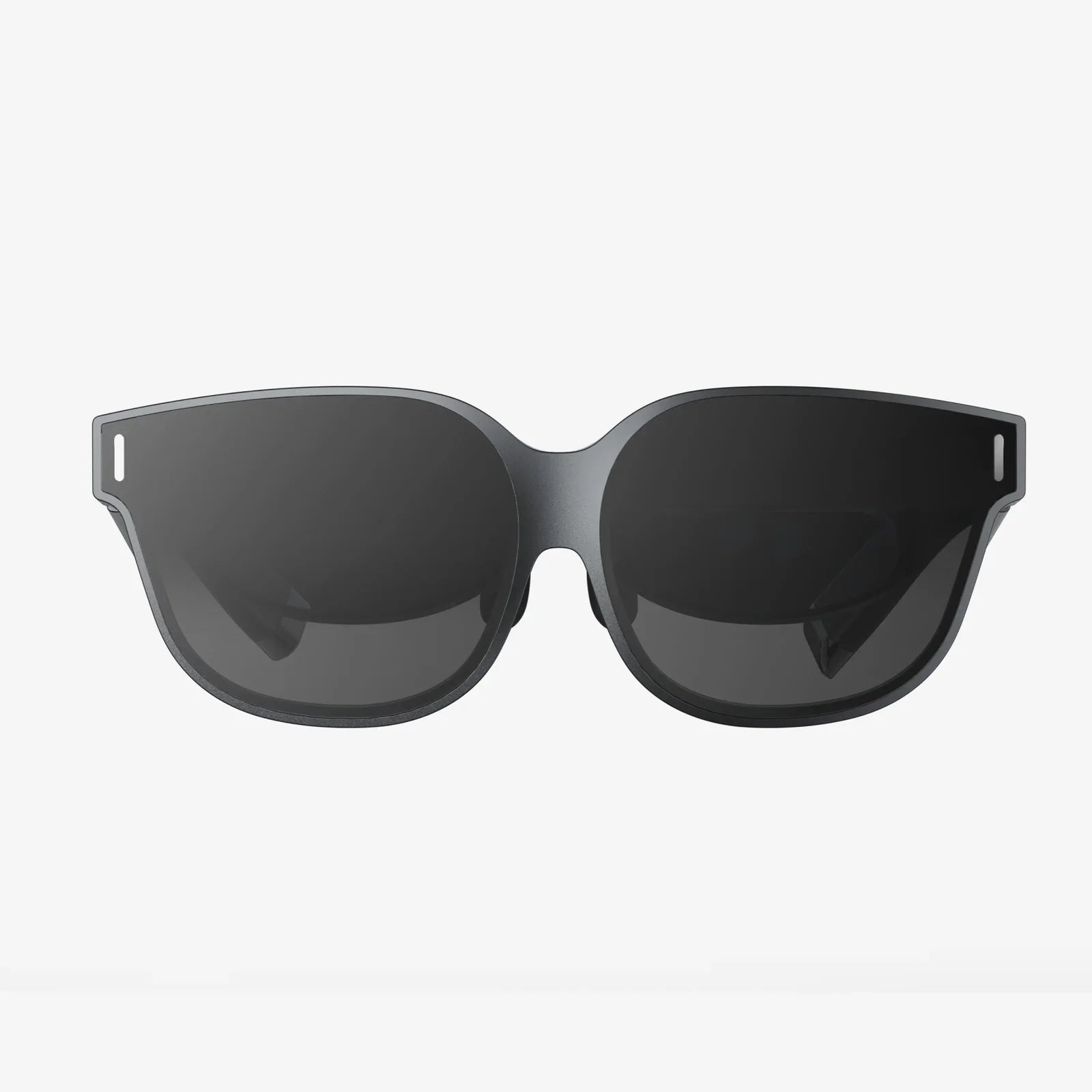
Imagine stepping through a portal, leaving your living room behind and finding yourself on the deck of a starship, the grip of a medieval sword in your hand, or the edge of a vertigo-inducing cliff. This is no longer the stuff of science fiction; it's the reality offered by modern VR gear for gaming, a technological revolution that is fundamentally reshaping our very concept of play and interaction. The promise of total immersion has finally arrived, and it is an experience that must be felt to be truly believed.
The Evolution of a Digital Dream
The concept of virtual reality is far from new. For decades, it lived in the imaginations of science fiction writers and the clunky, wire-filled labs of pioneering technologists. Early iterations were cumbersome, astronomically expensive, and offered low-resolution visuals that were more likely to induce motion sickness than a sense of wonder. They were proof-of-concept prototypes, a glimpse at a potential future that seemed perpetually a generation away.
The turning point arrived in the early 2010s, catalyzed by two key developments: the proliferation of high-resolution smartphone displays, which provided perfect, mass-produced screens for VR optics, and the creation of accessible, precise motion-tracking technology. This convergence birthed the first generation of modern VR headsets, bringing the technology out of research labs and into the consumer market. While these initial consumer devices were still tethered to powerful personal computers, they demonstrated that compelling, comfortable, and immersive VR was commercially viable. The race was on.
Today, the landscape of VR gear for gaming has matured dramatically. We now have a spectrum of devices catering to different needs and budgets. Standalone headsets, which are entirely self-contained computers, offer incredible freedom and accessibility, untethering players from external devices. Tethered headsets, connected to a powerful gaming PC or console, deliver the highest-fidelity experiences with breathtaking graphical detail and complex physics. This evolution from niche curiosity to mainstream gaming peripheral represents one of the most significant leaps in interactive entertainment history.
Deconstructing the VR Arsenal: More Than Just a Headset
When we talk about VR gear for gaming, it's a common mistake to think only of the headset. In truth, immersion is achieved through a sophisticated ecosystem of hardware working in perfect harmony. Each component plays a critical role in selling the illusion of a virtual world.
The Head-Mounted Display (HMD): Your Window to Another World
The headset, or HMD, is the centerpiece of the entire experience. It's a feat of miniaturization and optical engineering, containing several crucial elements:
- High-Resolution Displays: Modern HMDs use two fast-switching LCD or OLED screens (one for each eye) with very high pixel density to create a crisp image and minimize the "screen-door effect" where users could see the gaps between pixels.
- Lenses: Sophisticated Fresnel or pancake lenses sit between the screens and your eyes, focusing the image and providing a wide field of view (FOV). A wider FOV increases the feeling of immersion by filling more of your peripheral vision.
- Precise Tracking Systems: The headset must constantly know its position and orientation in 3D space. This is achieved through inside-out tracking (using cameras on the headset itself to map the room) or outside-in tracking (using external sensors placed around the room).
- Integrated Audio: Spatial audio is non-negotiable for immersion. Built-in headphones or audio solutions simulate 3D sound, so a noise behind you in the game actually sounds like it's coming from behind you in the real world.
The Controllers: Extending Your Virtual Hands
If the headset is your eyes and ears, the controllers are your hands. Gone are simple gamepads; VR controllers are ergonomic marvels equipped with:
- Motion Tracking: They are tracked in space just like the headset, allowing you to see your virtual hands and arms move in real-time with your actual movements.
- Haptic Feedback: Subtle, precise vibrations simulate the feeling of touching virtual objects, from the gentle buzz of a hummingbird's wings to the jarring kick of a virtual weapon.
- Analog Grips and Triggers: These allow for nuanced interactions like gently picking up an object, throwing it with varying force, or squeezing a trigger slowly to aim carefully.
- Button Layouts: Designed for intuitive use, often with thumbsticks, buttons, and touch-sensitive pads that mimic in-game actions.
Supporting Cast: Base Stations and the Power Within
For some systems, external base stations or sensors are placed in the room to create a laser grid that tracks the position of the headset and controllers with millimeter accuracy, offering the highest level of precision for competitive gaming. Furthermore, the computational power required, whether housed in a standalone headset or a nearby gaming PC, is the unsung hero, rendering two high-frame-rate videos simultaneously to ensure a smooth, comfortable experience.
The Magic of Immersion: How VR Tricks Your Brain
The ultimate goal of all this technology is a psychological state known as presence—the undeniable sensation of actually being inside the virtual environment. This is achieved through a multi-sensory assault on the brain's perception.
Visual and auditory fidelity are the primary drivers. When you look around and the world responds with perfect 1:1 tracking, with realistic lighting and depth, your brain begins to accept the reality of the situation. Spatial audio completes the picture, convincing you that sounds are emanating from specific points in the virtual space. This is why you'll instinctively duck when a virtual object flies at your head; your brain has been fooled into reacting to a perceived real threat.
Haptic feedback adds the crucial sense of touch. The controller vibrating in a specific way when you run your virtual hand over a rocky wall provides a tactile anchor to the visual stimulus. Even more advanced systems are exploring haptic vests and gloves that can simulate pressure, impact, and temperature, pushing immersion even further.
Perhaps the most critical technical factor is low latency. This refers to the minuscule delay between your real-world movement and the corresponding movement in the headset. High latency is the primary cause of VR-induced motion sickness, as it creates a disconnect between what your eyes see and what your inner ear feels. Modern VR gear has reduced this latency to near-imperceptible levels, allowing for longer, more comfortable play sessions and a stronger sense of presence.
A New Dimension of Gameplay: Genres Transformed
VR doesn't just enhance existing game genres; it invents entirely new ones and fundamentally changes others.
First-person shooters are the most obvious beneficiary. Aiming is no longer done with a thumbstick but by physically pointing your controller. Peeking around corners involves actually leaning your body, and dodging enemy fire requires real-world ducking and weaving. This adds a layer of physical skill and instinct that is impossible to replicate on a flat screen.
Puzzle and exploration games become profoundly more engaging. Instead of clicking on an object to interact, you physically reach out, grab it, rotate it in your hands, and manipulate it. Solving a environmental puzzle feels like genuinely tinkering with machinery rather than simply pressing a button prompt.
Horror games are arguably VR's most potent—and terrifying—application. The genre is built on atmosphere and the fear of the unknown, and VR amplifies this a hundredfold. The monster isn't on a screen in front of you; it's in the room with you. The dread is palpable, and the jump scares are heart-stoppingly effective because they exploit your primal instincts.
Social and experiential games have also flourished. Platforms exist where you can meet friends in virtual spaces, watch movies together on a giant virtual screen, or attend live events. These experiences foster a genuine sense of shared space and connection that video calls cannot match.
Beyond the Hype: Considerations and Comfort
Despite the incredible advances, VR is not without its considerations. A primary concern for many is motion sickness, though its prevalence is decreasing with better technology. Developers use clever software techniques like "comfort mode" turning and teleportation movement to help new users acclimate.
Physical space is another factor. While some experiences can be enjoyed seated, the magic of "room-scale" VR requires a clear, safe area to move around in. Setting up virtual boundaries that appear in your headset when you get too close to a real-world wall is a standard and essential safety feature.
Finally, there is the question of accessibility. VR is a physical medium, and not all users have the mobility or ability to stand, duck, or make precise arm movements. The industry is increasingly aware of this, developing experiences and control options that are inclusive to players of all abilities, ensuring the virtual world is open to everyone.
The Horizon of Virtual Play
The future of VR gear for gaming is already taking shape on the horizon. We are moving towards lighter, more comfortable headsets with wireless functionality becoming the standard. Eye-tracking technology will allow for "foveated rendering," where the headset renders only the area you are directly looking at in full detail, drastically reducing the computational power needed for even more complex graphics.
Haptic technology will evolve beyond simple vibration into full-force feedback gloves that allow you to feel the shape and resistance of virtual objects. Advances in brain-computer interfaces, while far off, hint at a future where we might control games through thought alone. The line between the real and the virtual will continue to blur, offering experiences we can currently only dream of.
The living room is no longer just a place to watch stories unfold on a screen; it has become a launchpad for infinite adventures. With every technological refinement, VR gear for gaming is shedding its novelty status and cementing its place as a transformative pillar of the gaming industry. It challenges developers to think in entirely new dimensions and offers players an unprecedented level of agency and emotional connection to digital worlds. This is just the beginning of the journey, and the destination promises to be more extraordinary than any game we've ever played.
Share:
Wearable Audio Device Market: A Symphony of Innovation and Consumer Evolution
Spatial Computing News Updates: The Invisible Revolution Reshaping Our Reality