


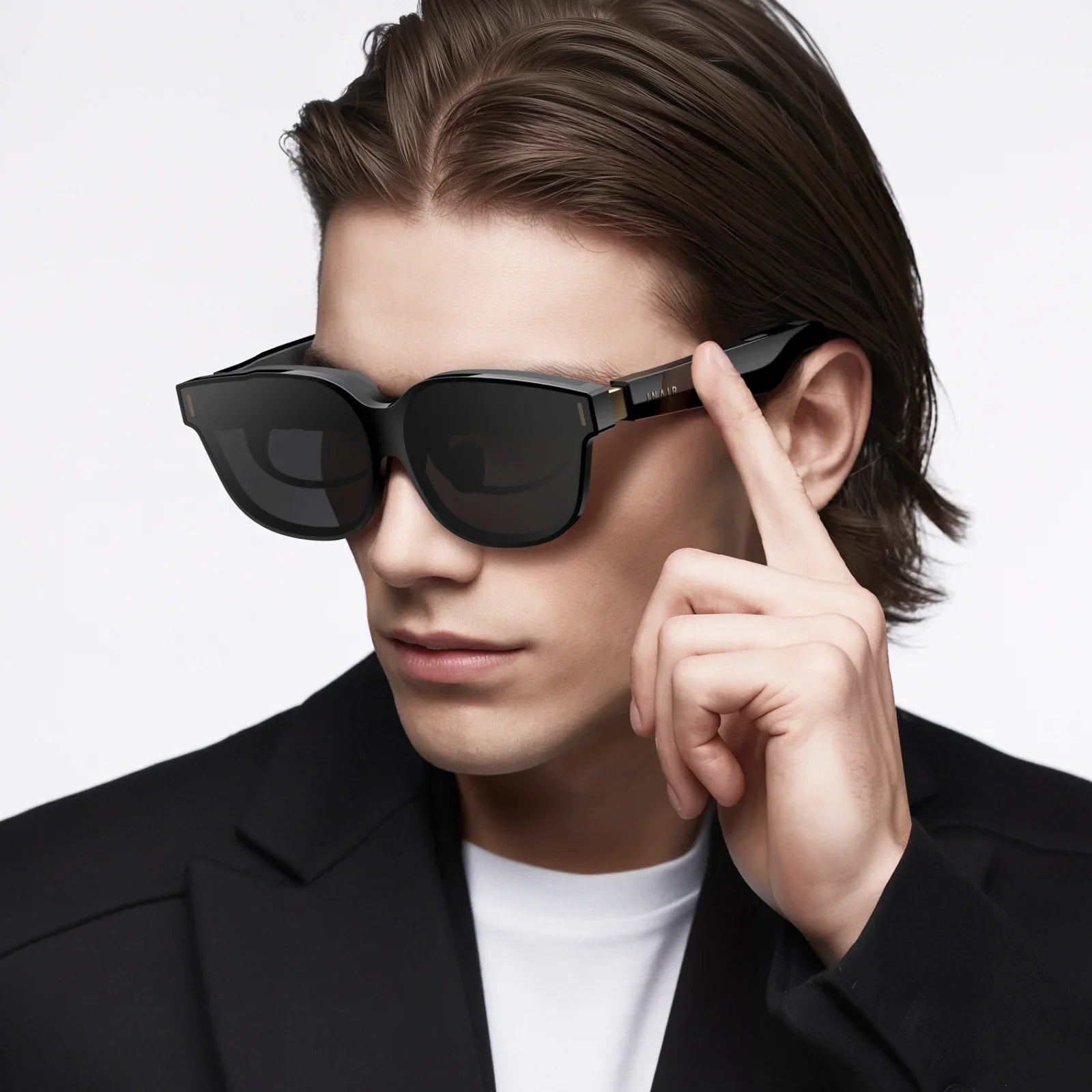
Imagine slipping on a pair of sleek, unassuming glasses and instantly being transported. One moment you're in your living room; the next, you're standing on the surface of Mars, the red dust crunching under your virtual boots as you gaze at a pale sun in a vast, alien sky. Or perhaps you're sitting in the front row of a roaring concert, the bass vibrating through your very being, or collaborating with colleagues from across the globe as if you were all in the same room. This is the promise, the magic, and the rapidly unfolding reality of VR glasses—a technology that is not just changing how we play games, but how we perceive reality itself. This journey into the virtual is no longer a distant fantasy; it's here, and it's poised to redefine the human experience in ways we are only beginning to comprehend.
The Evolution of the Virtual Window: From Sci-Fi to Your Shelf
The concept of virtual reality has tantalized storytellers and inventors for decades. Early prototypes were monstrous, cumbersome machines, the stuff of research labs and science fiction novels. They were far from the accessible, consumer-friendly devices we see today. The modern era of VR glasses began with a crucial shift in philosophy: the move from building immersive rooms to creating immersive headsets. This was powered by the simultaneous explosion in smartphone technology, which provided the essential components—high-resolution displays, precise motion sensors, and powerful processors—in a miniaturized and cost-effective form.
The first wave of modern VR glasses leveraged this directly, using a smartphone as the brain and screen. Users would slot their phone into a head-mounted holder, creating a simple yet effective portal to virtual worlds. This was a critical stepping stone, democratizing access to VR and introducing millions to its potential. However, it was limited by the phone's processing power, its non-optimal sensors, and the inherent friction of the setup.
The next evolutionary leap was the development of all-in-one VR systems. These integrated the display, processors, batteries, and tracking cameras directly into the headset, cutting the cord completely. This liberation from external PCs or consoles was a game-changer, offering unparalleled freedom of movement and simplifying the user experience immensely. For the first time, high-quality VR became a truly untethered, pick-up-and-play experience. Alongside these, PC-connected headsets continued to evolve, pushing the absolute boundaries of visual fidelity and processing power for enthusiasts and professionals, creating a vibrant ecosystem catering to different needs and budgets.
More Than Just Lenses and Screens: The Technology Inside
To understand the magic of VR glasses, one must look past the outer shell and into the sophisticated technology that makes immersion possible. It's a symphony of components working in perfect harmony.
The Display and Lenses: Crafting the Illusion
At its heart, a VR headset is a viewing device. Two high-resolution screens (or one split screen) are placed mere centimeters from the user's eyes. But simply placing a screen that close would be an uncomfortable, blurry mess. This is where the complex lens systems come in. Specialized fresnel or pancake lenses focus and reshape the light from the screens, creating a wide field of view that feels natural and expansive. The quality of these lenses is paramount, directly impacting visual clarity, the dreaded "screen-door effect," and overall comfort.
Tracking and Movement: Knowing Where You Are
Immersion shatters the moment the virtual world doesn't perfectly align with your physical movements. This is solved through advanced tracking systems. Inside-out tracking, now the standard for most standalone devices, uses multiple wide-angle cameras on the headset itself to map the surrounding room and track the position of the controllers simultaneously. This creates a robust understanding of the user's position in space, allowing them to walk, crouch, and dodge within a designated play area. This technology is so precise it can even enable hand-tracking, allowing users to manipulate virtual objects with their bare hands, making the experience feel even more intuitive and magical.
Spatial Audio: Hearing in 3D
Visuals are only half the story. True immersion is achieved through 3D spatial audio. Unlike standard stereo sound, spatial audio uses complex algorithms to simulate how sound waves interact with the human head and ears. A sound coming from your left in the virtual world will actually sound like it's coming from your left, even changing subtly as you turn your head. This auditory cue is incredibly powerful for selling the illusion of presence, making environments feel alive and threats feel genuinely disconcerting as they creep up behind you.
Transforming Industries: The Practical Power of Virtual Worlds
While gaming remains the most famous application, the impact of VR glasses is being felt across a vast spectrum of professional fields, revolutionizing practices and offering new, powerful tools.
Revolutionizing Education and Training
VR offers the ultimate interactive textbook. Imagine medical students performing intricate virtual dissections or practicing complex surgical procedures without ever touching a cadaver. Trainee mechanics can disassemble and reassemble a virtual engine, and history students can walk through ancient Rome, witnessing the construction of the Colosseum firsthand. This learn-by-doing approach in a risk-free environment dramatically improves knowledge retention and skill acquisition. Corporations are also using VR for immersive safety training, placing employees in hazardous virtual situations to teach proper protocols without any real-world danger.
The Future of Remote Work and Collaboration
The concept of the "metaverse" is deeply tied to the proliferation of VR glasses. It promises a shift from flat video calls to shared virtual workspaces. Architects and engineers can collaborate on 3D models as if they were physical objects in the room with them. Remote teams can have meetings around a virtual whiteboard, feeling a sense of co-presence that Zoom cannot replicate. This has the potential to make remote work more engaging, collaborative, and ultimately, more human.
Healthcare and Therapy
The therapeutic potential of VR is immense. It is already being used successfully for exposure therapy, helping patients with phobias like fear of heights or flying confront their anxieties in a controlled, gradual way. It's also used for pain management, distracting burn victims during painful wound care procedures by immersing them in a calming, icy landscape. Physical therapists are using VR to turn repetitive rehabilitation exercises into engaging games, improving patient motivation and outcomes.
Navigating the Virtual Frontier: Challenges and Considerations
For all its promise, the path forward for VR glasses is not without significant hurdles and important ethical questions that society must grapple with.
The Comfort Conundrum
Despite improvements, discomfort remains a barrier for many users. Issues like VR-induced motion sickness (cybersickness), caused by a disconnect between visual movement and physical stillness, still affect a portion of the population. Furthermore, the form factor itself—strapping a device weighing several hundred grams to your face—can cause fatigue during extended sessions. The industry is tirelessly working on solutions, from better weight distribution and softer materials to advanced software tricks and higher refresh rates to minimize these issues.
The Social and Ethical Dimension
As we spend more time in virtual spaces, profound questions emerge. What are the psychological effects of long-term immersion? How do we prevent the creation of deeper digital divides? Data privacy becomes a paramount concern—VR glasses can collect incredibly intimate data, including eye-tracking, biometric responses, and a detailed map of your home. Establishing clear ethical guidelines and robust security frameworks is not optional; it is essential for the healthy adoption of this technology. Furthermore, we must be mindful of escapism, ensuring that these enriching virtual worlds augment our reality rather than become a replacement for it.
The Next Decade: What Lies Beyond the Horizon?
The current state of VR is impressive, but it is merely the foundation for a far more transformative future. The next decade will be defined by several key trends.
We are moving towards a future of hyper-realism. Foveated rendering, which uses eye-tracking to render only the area you're directly looking at in high detail, will allow for photorealistic graphics without unimaginable processing power. Haptic feedback suits will evolve from novelties to standard equipment, allowing users to feel virtual objects and sensations, from the texture of a stone wall to the impact of a virtual punch.
Most importantly, the form factor will continue to shrink. The ultimate goal is a pair of glasses that look no different from standard eyewear. Advances in holographic optics, micro-LED displays, and neural interfaces will eventually make the bulky headsets of today look like antiquated relics. This normalization of the technology will be the final step in its mainstream adoption, making the transition between the physical and digital worlds as seamless as putting on a pair of sunglasses.
The journey of VR glasses is a testament to human ingenuity, a relentless push to expand the boundaries of experience. They are more than a gadget; they are a new canvas for art, a new tool for science, a new medium for storytelling, and a new bridge for human connection. The virtual frontier is open, and it invites us all to step through and see what we can become.
Share:
Augmented Reality Assisted Visualization: The Future of Seeing and Interacting with Data
Augmented Reality Glasses Maintenance: The Ultimate Guide to Longevity and Performance