


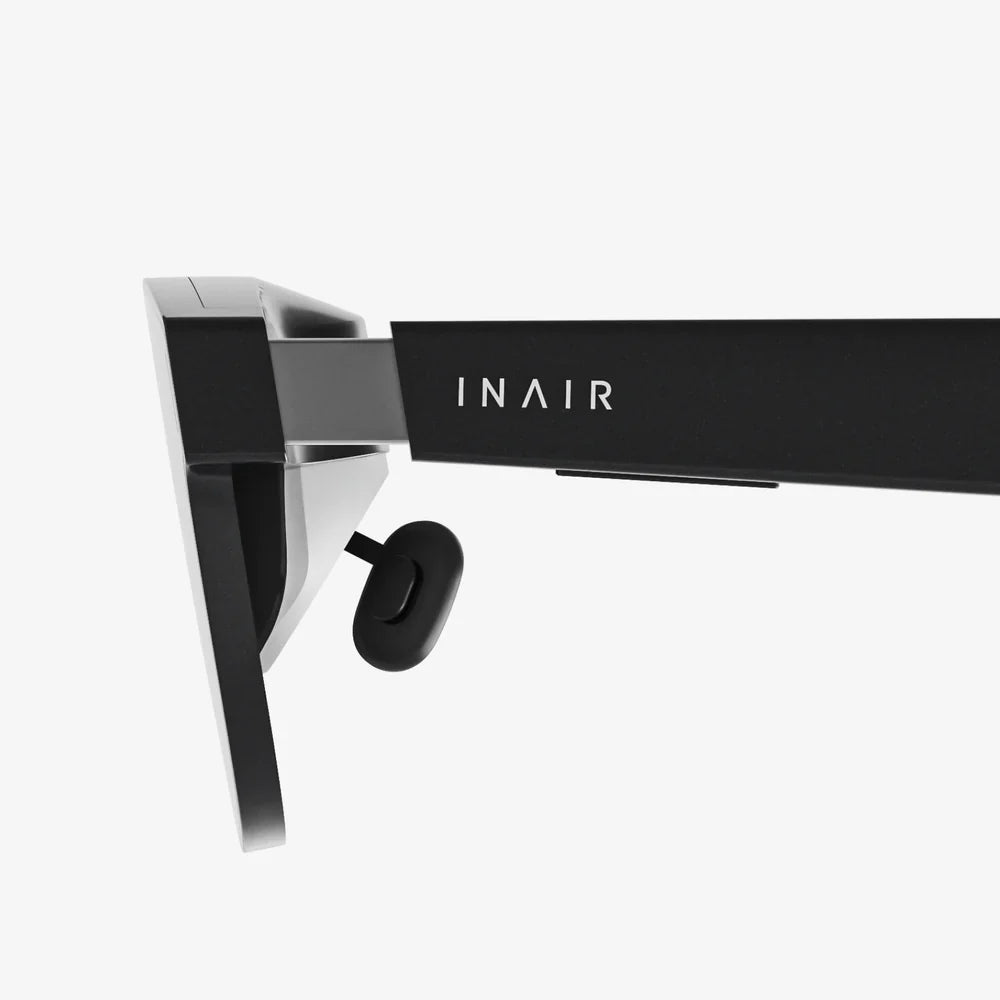
Imagine slipping on a sleek, compact headset and being instantly transported. One moment you're in your living room, and the next you're front row at a concert, exploring the depths of the ocean, or walking on the surface of Mars. This isn't science fiction; it's the accessible, awe-inspiring reality offered by VR glasses for mobile. This technology has democratized virtual reality, placing immense power and potential right in our pockets, waiting to be unlocked. The gateway to a thousand worlds is not a high-powered supercomputer; it's the smartphone you already own and a simple, ingenious frame that can change your perception of reality itself.
The Magic Behind the Lenses: How Mobile VR Works
At its core, the concept of mobile-based virtual reality is elegantly simple, yet the execution is a marvel of modern engineering and software. Unlike their more expensive, PC-tethered counterparts, mobile VR headsets are primarily passive devices. They don't contain powerful processors or graphics cards. Instead, they act as a sophisticated interface for your smartphone, which does all the heavy lifting.
The process begins when you secure your smartphone into the headset's harness, positioned directly in front of two high-quality, specially calibrated lenses. These lenses are the heart of the experience. Their primary job is to take the split-screen image displayed on your phone—where two slightly different perspectives are shown side-by-side—and warp and focus each one for your individual eyes. This creates a stereoscopic 3D effect, providing the crucial depth perception that makes VR feel real.
But vision is only one part of immersion. To truly believe you're moving within a virtual space, the system needs to track your head movements. This is achieved using the smartphone's built-in gyroscope and accelerometer. These sensors detect the precise orientation and rotation of your head in real-time. As you look up, down, left, or right, this data is instantly fed to the VR application, which adjusts the visual perspective accordingly. This low-latency tracking is vital; any noticeable delay between your movement and the visual update can break immersion and cause discomfort.
Finally, interaction is handled through a combination of methods. Many headsets feature a simple capacitive touch button on the side, which allows you to interact with the VR environment. More advanced models may include a separate handheld controller that connects via Bluetooth, offering more precise pointing, clicking, and even gesture-based controls, making the experience far more intuitive and engaging.
A Spectrum of Experiences: What Can You Actually Do?
The library of content available for mobile VR is vast and surprisingly diverse, catering to a wide array of interests. It extends far beyond simple novelty games.
- Gaming and Interactive Entertainment: This is often the first entry point for many users. The range is spectacular, from heart-pounding horror games where you must fend off zombies in a derelict building, to serene puzzle games where you manipulate beautiful environments with your gaze. Rhythm games have you slicing through blocks in time with music, while adventure titles can have you exploring vast, fantastical landscapes. The immersion factor in gaming is unparalleled, making you feel like you are inside the game world, not just controlling a character on a screen.
- 360-Degree Videos and Films: This is where mobile VR truly shines as an empathy machine. You can find yourself standing amidst the cheering crowds at a sporting event, swimming with whales in a documentary, or walking through the ancient ruins of Machu Picchu. News organizations have used this technology to place viewers in the midst of stories, creating a powerful, visceral understanding of events around the globe. It's passive viewing transformed into an active, exploratory experience.
- Social and Connected Experiences: Virtual reality is becoming increasingly social. Platforms exist where you can create an avatar and meet friends from across the world in a virtual space. You can watch movies together in a virtual cinema, attend live events, play social games, or simply hang out and chat as if you were in the same room. This application saw a massive surge as a way to combat isolation, proving that VR can be a powerful tool for human connection.
- Education and Training: Mobile VR offers incredible potential for learning. Students can take a virtual field trip to the Roman Colosseum, explore the human body from the inside, or practice complex surgical procedures in a risk-free environment. Companies use it for soft skills training, simulating difficult conversations or public speaking. The ability to learn by doing and seeing in a fully immersive context dramatically improves knowledge retention.
- Travel and Real Estate: Before booking a vacation, you can take a virtual tour of a hotel, a walk on a beach, or a flight over a city. Real estate agents use VR tours to allow potential buyers to walk through properties remotely, saving time and expanding their market reach. It's a practical application that has tangible benefits.
Choosing Your Portal: Key Features to Consider
Not all mobile VR headsets are created equal. While the basic principle remains the same, the quality of the experience can vary dramatically based on several key factors.
- Field of View (FoV): Measured in degrees, the FoV determines how much of the virtual world you can see without turning your head. A wider FoV (100-110 degrees is common) is more immersive and feels more natural, while a narrow FoV can feel like looking through a pair of binoculars, reminding you that you're wearing a headset.
- Lens Quality and Adjustability: The clarity of the lenses is paramount. Look for headsets with high-quality, aspherical lenses that reduce distortion, especially around the edges. Equally important is the ability to adjust the distance between the lenses (interpupillary distance or IPD) and the focus (diopter adjustment). This ensures a sharp, clear image for users with different vision characteristics, potentially allowing those with mild nearsightedness to use the headset without their glasses.
- Comfort and Build Quality: You'll likely be wearing the headset for extended periods, so comfort is non-negotiable. Consider the weight distribution, the quality of the padding (foam vs. leather-like materials), and the strap system. A rigid headstrap that goes over the top of the head is generally more stable and comfortable for long sessions than a simple elastic strap. Good ventilation is also key to preventing the lenses from fogging up.
- Input Method: Does it come with a dedicated controller, or does it rely on a simplistic button on the headset? A good controller significantly enhances interactivity and is a must for serious gaming. Check for compatibility with your specific smartphone model, as size and sensor placement can vary.
Navigating the Limitations: A Dose of Reality
While revolutionary, mobile VR is not without its constraints. Understanding these limitations helps set realistic expectations.
The most significant limitation is processing power. The graphical fidelity and complexity of experiences are entirely dependent on the capabilities of your smartphone. While high-end phones can produce stunning visuals, they cannot match the photorealistic graphics and vast, physics-heavy worlds generated by a powerful gaming PC. Experiences are often shorter and less complex.
Battery life is another major consideration. Running the screen at a high refresh rate and powering the sensors and GPU-intensive applications drains your phone's battery remarkably quickly. Long VR sessions will require a power bank or a break to recharge.
Some users may experience motion discomfort, often called VR sickness. This occurs when your eyes perceive motion in the virtual world (like riding a roller coaster) but your inner ear feels no corresponding movement. This sensory conflict can cause dizziness and nausea. It's advisable to start with stationary experiences and take frequent breaks.
Finally, there is the issue of content discovery. While there are thousands of apps available, finding truly high-quality, polished experiences can sometimes require sifting through a sea of simplistic or poorly made demos. Sticking to curated stores and reading reviews is essential.
The Future is in Your Pocket
The landscape of mobile VR is constantly evolving. We are seeing the integration of inside-out tracking, where cameras on the headset itself (or using the phone's camera) can map your physical room, allowing you to move within it safely and interact with virtual objects. Wireless streaming from a PC is also becoming more viable, blurring the lines between mobile and tethered VR. As smartphone technology continues to advance with faster chipsets, higher-resolution displays, and better sensors, the potential of mobile VR will only grow, making it an even more compelling portal to new realities.
You are already holding the key to countless adventures, breathtaking landscapes, and transformative learning experiences. It's hiding in plain sight, disguised as your communication device. VR glasses for mobile are the missing piece, the looking glass that transforms that flat screen into a window you can step through. The question is no longer about what is possible, but rather, which world will you choose to explore first?
Share:
Augmented Reality Characteristics: The Digital Layer Reshaping Our World
Augmented Reality Characteristics: The Digital Layer Reshaping Our World