


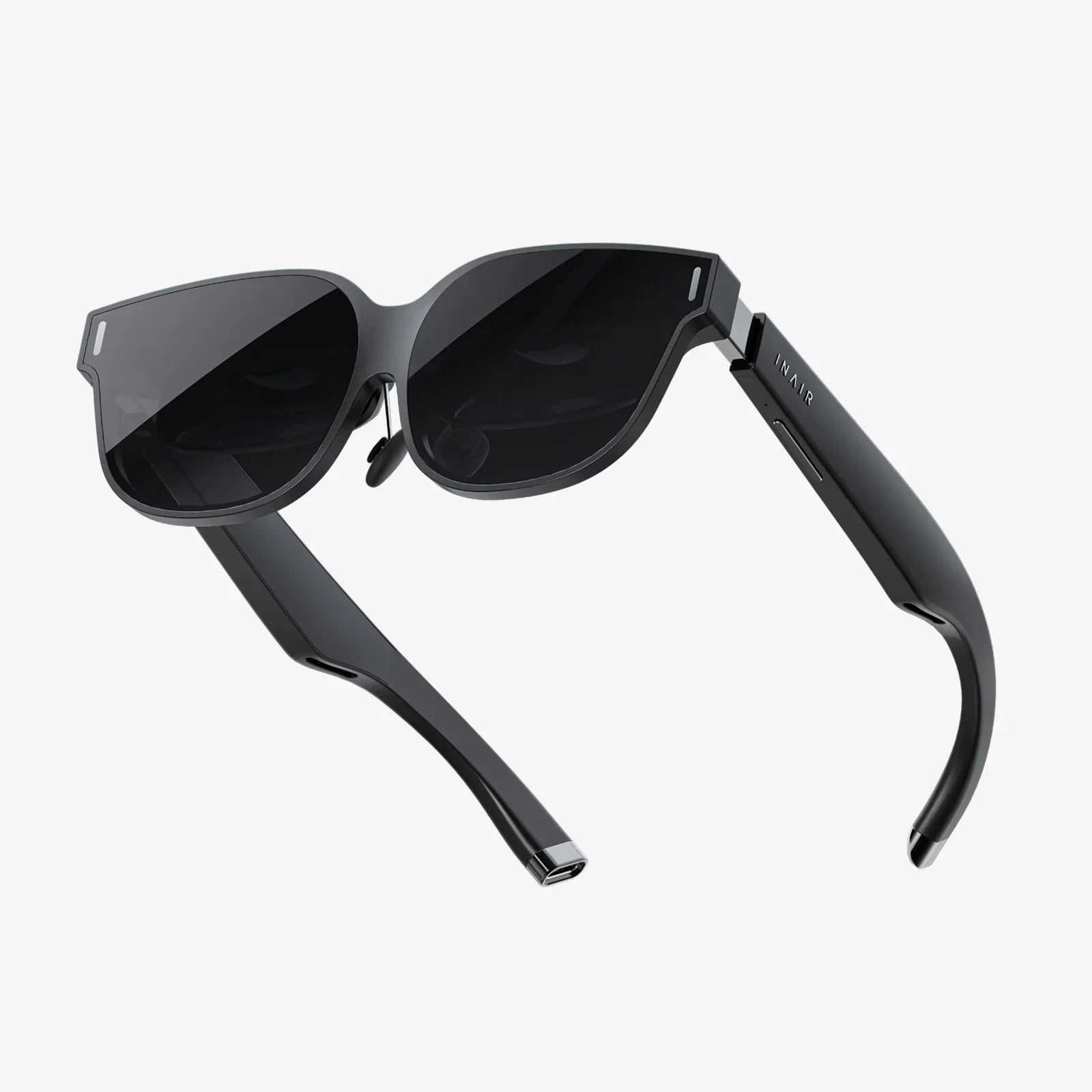
Imagine a workspace that expands beyond the physical confines of your desk, a command center where your digital life isn't limited by the size of your monitors but stretches into the infinite horizon of the virtual realm. This is no longer the stuff of science fiction. The emergence of VR glasses for productivity is poised to shatter the two-dimensional shackles of the traditional computer screen, offering a glimpse into a future of work that is more immersive, focused, and profoundly efficient. The era of the virtual office is dawning, and it promises to revolutionize how we create, collaborate, and concentrate.
The Evolution of the Workspace: From Physical Desks to Digital Realms
For decades, the fundamental tools of knowledge work have remained largely unchanged: a desk, a chair, and a screen. We've progressed from single monochrome monitors to multi-monitor setups in a quest for more digital real estate, yet we remain trapped within the bezels of our displays. The promise of VR glasses is to break this final barrier. Instead of looking at a portal to the digital world, you step inside it. This shift from observation to immersion represents the most significant leap in human-computer interaction since the graphical user interface replaced the command line.
The core appeal lies in the concept of spatial computing. By projecting applications, browser windows, and video streams into a three-dimensional space, these devices effectively offer an infinite canvas. A user is no longer constrained by the physical dimensions of their desk but can arrange virtual screens in a 360-degree arc, pin reference materials to virtual walls, or shrink and enlarge windows with a gesture. This spatial freedom allows for workflows that are simply impossible with traditional hardware, creating a personalized and vast digital environment tailored to the task at hand.
Unlocking Deep Focus: The Power of Immersive Environments
One of the most immediate and powerful applications of VR for productivity is its unparalleled ability to facilitate deep work. In an age of constant notifications, open-plan offices, and digital distractions, the capacity to focus is a superpower. Donning a headset acts as the ultimate "do not disturb" sign, physically and audibly separating the user from their physical environment.
Beyond mere isolation, these devices allow for the creation of custom, distraction-free virtual workspaces. Imagine choosing to work from a minimalist virtual studio overlooking a serene mountain range, the deep silence of a digital space library, or even the bridge of a starship—any environment that fosters concentration. The ability to control every aspect of one's sensory input is a powerful tool for combating distraction. This controlled immersion can lead to a state of flow, where hours of highly productive work can feel like minutes, dramatically increasing output and quality on cognitively demanding tasks.
Revolutionizing Remote Collaboration: Beyond the Video Grid
If VR transforms individual focus, it completely reinvents remote collaboration. Traditional video conferencing tools, while essential, often feel like a poor substitute for in-person interaction. They flatten communication into a grid of faces, stripping away the nuance of body language and the shared sense of space. VR collaboration platforms address this by placing remote team members into a shared virtual room as avatars.
In these spaces, collaboration becomes spatial and intuitive. Team members can gather around a 3D model of a new product design, examining it from every angle and making annotations in real-time that everyone can see. Architects can walk clients through a full-scale virtual building before a single brick is laid. Data scientists can visualize complex datasets as interactive 3D graphs, walking through the information to spot trends and anomalies. This shared presence fosters a sense of connection and understanding that a flat screen cannot replicate, making meetings more engaging, memorable, and effective. It's the difference between talking about a blueprint and standing inside the future building together.
Practical Applications Across Industries
The potential use cases for immersive productivity tools extend far beyond the generic knowledge worker. Numerous professions stand to benefit from this spatial revolution.
- Software Development & Data Science: Developers can code within massive, multi-monitor setups without the cost or space requirements. Data scientists can manipulate and explore complex multi-dimensional datasets in a virtual space, gaining insights that are difficult to perceive on a 2D plot.
- Architecture, Engineering, and Construction (AEC): Professionals can conduct design reviews in 1:1 scale models, identifying potential issues long before construction begins. This saves immense time and resources and improves safety and design fidelity.
- Content Creation & Design: Artists and designers can create 3D sculptures and models with intuitive hand-tracking tools. Writers and researchers can create sprawling "idea spaces," pinning notes, images, and documents around them to visualize connections and narratives.
- Education and Training: Trainers can create immersive simulations for everything from complex machinery operation to soft-skills practice, providing a safe, repeatable, and effective learning environment.
Navigating the Current Challenges
Despite the exciting potential, the path to mainstream adoption of VR for productivity is not without its hurdles. The technology is still maturing, and users must weigh several important considerations.
Hardware Limitations: For all-day comfort, the hardware must be lightweight, have a high-resolution display to ensure text is crisp and readable (addressing the issue of screen-door effect), and offer sufficient battery life or a comfortable tethered solution. Ergonomics are paramount; a device that causes neck strain or discomfort will not be adopted for prolonged work sessions.
The Human Factor: Prolonged use can lead to eye strain or VR-induced nausea for some users, though these effects are diminishing with newer generations of hardware featuring improved optics and higher refresh rates. Furthermore, working in a fully immersive environment creates a physical disconnect from one's surroundings, which can be isolating and make simple actions like drinking coffee or checking a physical document more cumbersome.
Software Ecosystem: The hardware is only as good as its software. A robust ecosystem of professional-grade applications—from virtual desktop interfaces and collaboration suites to specialized industry tools—is essential for this to be a viable replacement for traditional setups. Integration with existing workflows and operating systems is a critical challenge that developers are actively solving.
The Future is Spatial: What Lies Ahead?
The trajectory of this technology points toward a future where the line between physical and digital workspace blurs into irrelevance. We are moving towards devices that are even more lightweight and comfortable, perhaps eventually resembling standard eyeglasses. Advancements in passthrough augmented reality (AR) will allow for a seamless blend of high-resolution virtual screens and the user's physical environment, enabling interaction with both digital and real-world objects simultaneously.
Furthermore, the development of more sophisticated input methods, from advanced hand and eye tracking to neural interfaces, will make manipulating the virtual workspace as natural and intuitive as moving our own limbs. The concept of a universal virtual workspace that you can access from anywhere, with all your files, applications, and preferences perfectly arranged, is the ultimate endpoint. This would decouple productivity from a specific physical location, truly enabling a global and flexible workforce.
The journey into the virtual office is just beginning. While the technology may still have one foot in the realm of early adopters, the direction is clear. The limitations of the two-dimensional screen are finally being recognized, and the solution is being built around us—or rather, we are being immersed within it. The question is no longer if we will use immersive technology to work, but how soon it will become an indispensable part of our daily productivity toolkit, transforming not just where we work, but how we think and create.
Ready to trade your cluttered desktop for an endless virtual vista? The next wave of productivity tools won't sit on your desk—they'll transport you to a dimension of limitless potential, where your focus is absolute and your digital workspace is bound only by the limits of your imagination. The revolution won't be displayed on a screen; you'll be living inside it.
Share:
Augmented Reality Forecast: Navigating the Next Decade of Digital Integration
How Much Is Smart Glass Cost? A Comprehensive Price Breakdown