


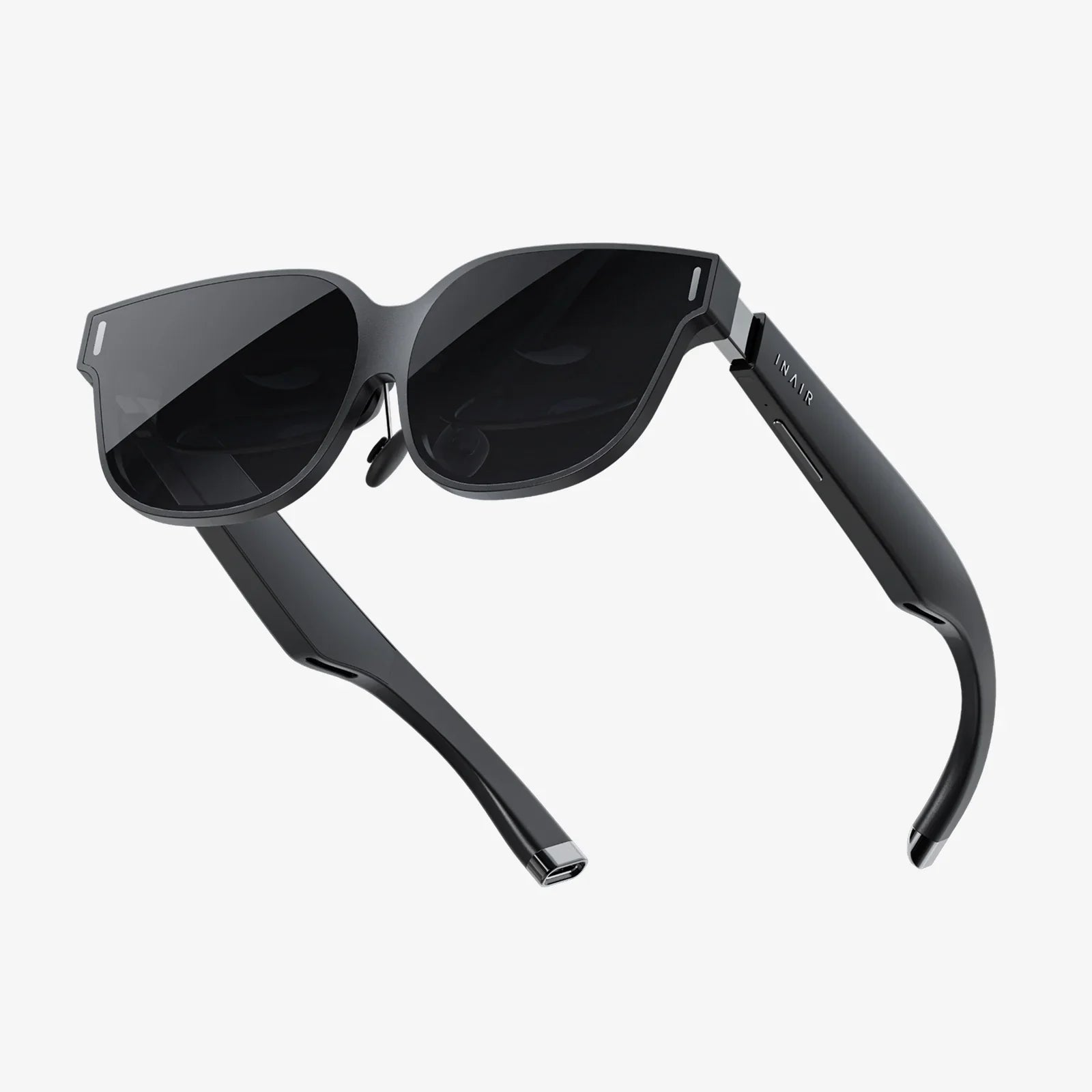
You slip on a pair of sleek, futuristic goggles, and in an instant, the world around you vanishes. You’re no longer in your living room; you’re standing on the surface of Mars, dodging bullets in a high-stakes firefight, or sitting in the front row of a concert happening halfway across the globe. This is the magic of virtual reality, a technological leap that feels nothing short of sorcery. But behind this seemingly magical experience lies a fascinatingly complex orchestration of hardware and software, all engineered to perform one incredibly difficult task: convincingly fooling the human brain. So, how do these remarkable devices actually create these immersive worlds from scratch? The journey from silicon and glass to a believable reality is a story of precision engineering, biological trickery, and computational power.
The Foundation: Creating a Believable World for Each Eye
At its absolute core, the primary function of VR glasses is to present a different image to each of your eyes. This simple-sounding task is the bedrock of the entire immersive experience and is achieved through a technology known as stereoscopic display.
The Stereoscopic Display
Human vision is binocular. Because our eyes are spaced approximately two-and-a-half inches apart, each one sees the world from a slightly different perspective. Our brain fuses these two separate two-dimensional images into a single, coherent three-dimensional picture, providing us with depth perception. VR glasses replicate this biological process perfectly.
Inside the headset, there are two miniature displays—one for the left eye and one for the right. These are typically high-resolution, fast-refresh-rate LCD or OLED screens. The software running the VR experience renders the virtual world twice, once from the exact perspective of the left eye and once from the perspective of the right eye. By presenting these two offset images simultaneously, the glasses create a stereoscopic effect. Your brain receives these two distinct images and does what it has always done: it combines them, interpreting the differences between them as depth. This is the fundamental trick that makes the virtual world feel solid and tangible rather than flat like a movie screen.
The Lenses: Focusing on the Virtual
If the screens were simply placed directly in front of your eyes, the image would be a large, blurry mess. Your eyes cannot focus on something that is physically only an inch or two away. This is where another critical optical component comes into play: the lenses.
VR headsets use specially designed convex lenses that are placed between the screens and your eyes. These lenses perform two crucial jobs. First, they refocus the image from the very close screens to make it appear at a more comfortable distance for your eyes to focus on, often simulating a focal distance of several feet away. This prevents eye strain and allows for a more relaxed viewing experience. Second, the lenses warp the image from the flat panel, correcting the picture to account for the distortion the lenses themselves introduce—a process known as a barrel distortion. The software pre-warps the image in the opposite way (pincushion distortion) so that when it is viewed through the lenses, it appears perfectly normal and rectilinear to the user.
Field of View (FOV)
A key metric for immersion is the field of view—how much of your vision is occupied by the virtual world. A narrow FOV feels like looking through a pair of binoculars, constantly reminding you that you are wearing a device. A wider FOV, often between 90 and 110 degrees for most consumer headsets, fills your peripheral vision, selling the illusion that you are truly "there." The design of the lenses and the size of the screens are the primary factors determining the FOV.
The Magic of Movement: Tracking Your Every Move
Displaying a 3D image is only half the battle. If the world remained static when you moved your head, the illusion would instantly shatter. For immersion to hold, the virtual world must be perfectly anchored to your real-world movements. This requires a sophisticated system of sensors to track the position and orientation of your head with extreme speed and precision.
Head Tracking: The 6 Degrees of Freedom (6DoF)
Head tracking is what allows you to look around the virtual environment naturally. Advanced VR systems track movement in what is known as 6 Degrees of Freedom (6DoF). This means they can track both your head's rotation (yaw, pitch, and roll—looking left/right, up/down, and tilting) and its translation (moving forward/backward, side-to-side, and up/down).
This is achieved through a combination of sensors:
- Inertial Measurement Unit (IMU): This is the workhorse of rotational tracking. An IMU is a micro-electromechanical system (MEMS) that contains a gyroscope (to measure rotational velocity), an accelerometer (to measure linear acceleration), and often a magnetometer (to act as a digital compass and correct for drift). The IMU provides extremely high-speed data on how the headset is rotating, which is crucial for low-latency updates.
- Positional Tracking: While the IMU is great for rotation, it is poor at accurately measuring precise positional movement over time. To solve this, systems use external or internal cameras. Outside-in tracking uses external sensors or base stations placed in the room that emit light or lasers. These sensors track the position of the headset (often via LEDs on its surface), providing a highly accurate external reference point. Inside-out tracking, now more common in consumer devices, uses cameras mounted directly on the headset itself. These cameras observe the real-world environment, tracking the movement of specific features and objects in the room to triangulate the headset's own position in space without any external hardware.
The Critical Role of Low Latency
All this tracking data is useless if it isn't processed fast enough. The time between when you move your head and when the image on the screen updates to reflect that movement is called latency. High latency—a delay of even 20 milliseconds—can break immersion and, for many users, cause motion sickness. The human vestibular system (your inner ear balance system) and your vision are tightly coupled; a disconnect between them tells your brain that something is wrong, potentially leading to nausea.
To combat this, VR systems are engineered for ultra-low latency (aiming for under 20 ms, and often much lower). This requires incredibly fast sensor data processing, efficient software, and displays with very high refresh rates (90Hz, 120Hz, or even higher), which reduce motion blur and make the virtual world feel solid and responsive.
Building the World: The Software and Hardware Engine
The headset is just the window; the virtual world itself needs to be generated, and this is a task that demands immense computational power.
The Rendering Pipeline
Rendering a 3D environment for VR is exponentially more demanding than rendering for a standard flat screen. As discussed, everything must be rendered twice—once for each eye. Furthermore, to maintain a high frame rate and low latency, the system must render these two perspectives at a blistering pace. This is handled by a powerful graphics processing unit, either in a connected computer or, in the case of standalone headsets, a sophisticated mobile chipset built into the device itself.
The software, typically a game engine, builds the world in real-time, applying textures, lighting, and physics. It takes the precise head-tracking data and uses it to calculate the exact correct perspective for each frame, ensuring the world remains stable and responsive.
Audio: The Forgotten Half of Immersion
Visuals are only part of the experience. Spatial audio, or 3D audio, is equally critical for selling the illusion. Instead of standard stereo sound, spatial audio simulates how sound waves interact with the human head and ears. Sounds coming from your right will subtly reach your left ear slightly later and with a different frequency response. VR systems model this, using Head-Related Transfer Functions (HRTF) to process audio so that it appears to come from specific points in the 3D space around you. The sound of a bird chirping behind you and to your left will genuinely sound like it's coming from that exact spot, compelling you to turn your head to look for it. This auditory cue is a powerful reinforcement of the visual reality.
Interacting With the Virtual: Beyond Just Looking
To be truly immersive, you need to be able to reach out and interact with the virtual world. This is the domain of motion controllers and, increasingly, hand-tracking technology.
Motion Controllers
These handheld devices are packed with their own IMUs (accelerometers and gyroscopes) to track their orientation and, often, similar tracking technology (like LEDs or sensors) to determine their position in space relative to the headset or external sensors. They act as virtual hands, allowing you to grab, throw, shoot, and manipulate objects. Haptic feedback, small vibrations or precise impulses within the controllers, provides tactile confirmation of your interactions, like feeling the virtual vibration of a bowstring or the click of a trigger.
Hand Tracking
The next frontier of interaction is ditching controllers altogether. Using the onboard cameras on inside-out tracked headsets, advanced computer vision algorithms can now track the precise movement of all 21 points of articulation in each hand (finger joints and knuckles). This allows you to use your bare hands to interact with the virtual environment—making gestures, pointing, grabbing, and pushing buttons with a level of intuitive freedom that controllers cannot match.
Challenges and The Future of Perception
Despite the incredible technology, current systems still face challenges. The resolution, while high, is still often below the pixel density of the human eye, leading to a faint "screen door" effect if you look for it. The focal distance is also fixed, causing a conflict known as the vergence-accommodation conflict—your eyes converge on a nearby virtual object, but must still focus on the fixed focal plane of the screen, which can cause strain for some users.
The future of VR glasses lies in solving these problems. Technologies like foveated rendering (which uses eye-tracking to render only the center of your vision in high detail, saving processing power), varifocal displays (which dynamically adjust the focal plane to match where you are looking), and light-field displays (which more accurately simulate how light works in the real world) are all areas of intense research and development. These innovations promise to make virtual experiences even more comfortable, visually stunning, and indistinguishable from physical reality.
Imagine a future where your morning meeting takes place around a virtual table with colleagues who look and sound as if they are sitting right across from you, where you can learn complex surgery by practicing on a perfect digital simulation, or where you can explore ancient ruins not through a video, but by walking through them yourself. The humble VR headset, a marvel of modern engineering that plays a symphony of tricks on our senses, is the key that unlocks this door. It’s not just a piece of hardware; it’s a passport to infinite experiences, limited only by the boundaries of our imagination and the relentless march of technology that continues to blur the line between the real and the virtual.
Share:
3 Types of Augmented Reality: A Deep Dive into the Future of Digital Overlays
What Are The New AI Glasses - A Deep Dive Into The Next Digital Revolution