


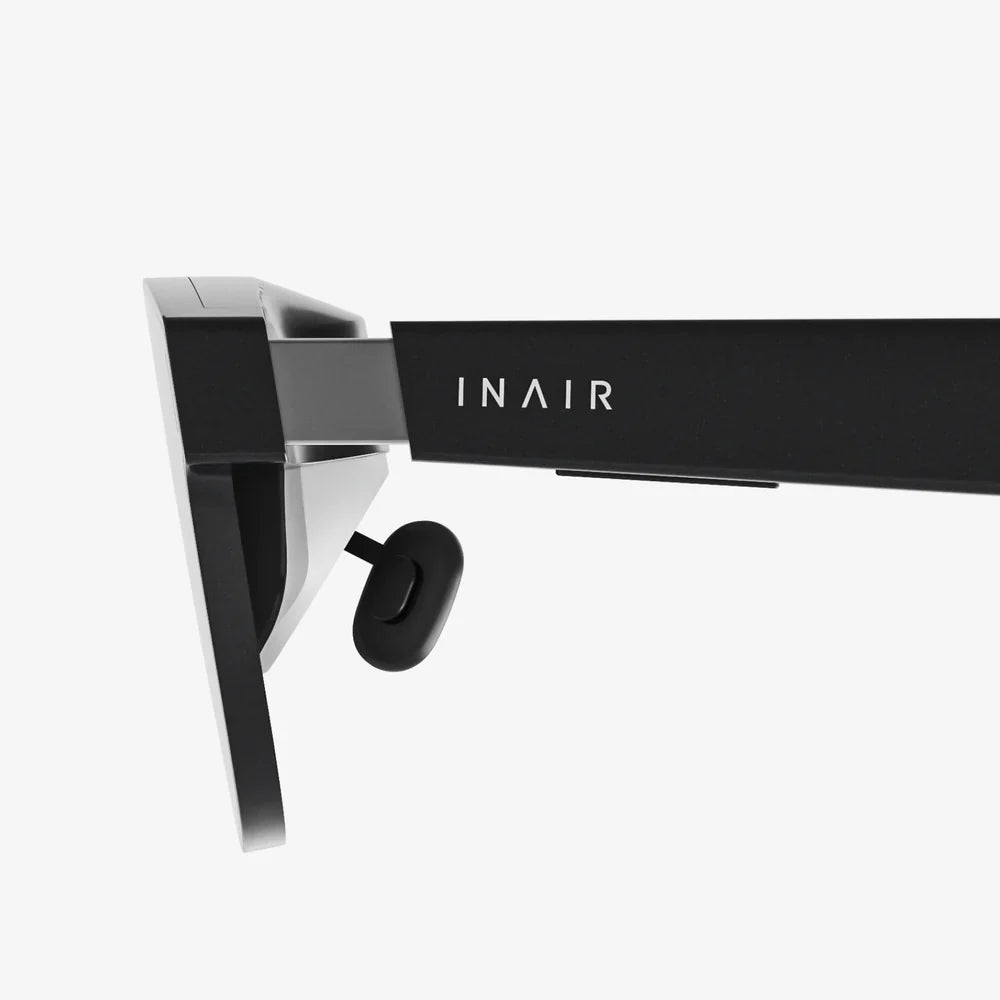
You're about to step through a portal into another world, but the gateway itself—the pair of VR goggles you choose—can make or break the entire experience. The quest for the perfect headset isn't about chasing specs; it's about finding the key that unlocks your imagination, whether that's scaling Everest, designing a skyscraper, or battling intergalactic foes. The market is a labyrinth of options, each promising unparalleled immersion. This guide is your trusted map, designed to lead you directly to your personal VR goggles best buy, ensuring your investment catapults you into the future, not into a drawer of forgotten gadgets.
Demystifying the VR Landscape: More Than Just a Screen on Your Face
Before diving into features and specs, it's crucial to understand the fundamental categories of VR headsets available today. The right category for you depends almost entirely on how you plan to use the device and what other equipment you're willing to invest in.
Standalone VR: The All-in-One Powerhouse
Standalone headsets represent the most accessible and user-friendly entry point into virtual reality. These devices have all the necessary computing power, sensors, and batteries built directly into the headset itself. There are no wires tethering you to a powerful computer, and no need to set up external tracking sensors around your room.
The primary advantage of a standalone system is its sheer convenience. You can power it on anywhere—in your living room, a large empty garage, or even a hotel room while traveling—and be inside a virtual environment within seconds. This makes it the undisputed champion for casual gaming, social VR applications, and media consumption like watching immersive films or YouTube videos.
The trade-off for this convenience has traditionally been raw processing power. Because the computer is miniaturized and strapped to your face, it cannot compete with the graphical fidelity and complex computational tasks handled by a high-end desktop computer. However, the performance gap is closing rapidly with each new generation of standalone hardware, making them a compelling option for a vast majority of users.
PC-Connected VR: The Fidelity Frontier
For users who demand the absolute highest quality visual experience, the most immersive environments, and the most computationally intensive applications, PC-connected (or tethered) headsets are the gold standard. These devices act as high-resolution displays and sophisticated sensor arrays, but they offload all the actual processing to a powerful external computer.
This setup unlocks breathtaking graphics, highly detailed textures, vast draw distances, and incredibly stable performance that standalone systems are still working to achieve. It is the preferred platform for hardcore simulation enthusiasts (flight sims, racing sims), developers creating complex VR experiences, and professionals using VR for detailed architectural visualization or medical training.
The obvious drawbacks are cost and complexity. You must own or purchase a high-end computer with a specific, powerful graphics card, and you are physically connected to it with a cable. This tether limits freedom of movement and can be a tripping hazard, though wireless adapter kits exist for some models. Setup often involves mounting external base stations or sensors in the corners of your play space for precise tracking.
Console-Based VR: The Plug-and-Play Proposition
Sitting in a unique niche are VR systems designed to work exclusively with a specific video game console. These headsets offer a middle ground between the convenience of standalone and the powered performance of PC-VR. They leverage the consistent, optimized hardware of the console to deliver a high-fidelity experience that is remarkably easy to set up.
There is no need to worry about PC hardware compatibility or minimum specs. If you own the console, you know the headset will work. The library of content, while smaller than the PC ecosystem, is typically curated for quality, featuring many exclusive and highly polished titles. The major limitation is that you are locked into a single content ecosystem and dependent on the console manufacturer for ongoing support and hardware iterations.
The Anatomy of a Great Headset: Key Features to Scrutinize
Once you've identified which category aligns with your lifestyle, it's time to dissect the individual features that separate a good headset from a truly great one. These are the critical specifications and design elements that will define your daily experience.
Visual Clarity: Resolution, Refresh Rate, and Lens Technology
The quality of the visual display is paramount. Three factors work in concert:
- Resolution: Measured in pixels per eye (e.g., 1832 x 1920). Higher numbers generally mean a sharper, clearer image with less visible "screen door effect" (the fine grid lines between pixels). However, resolution is meaningless without the processing power to drive it.
- Refresh Rate: Measured in Hertz (Hz), this is how many times the image on the screen refreshes per second. A higher refresh rate (90Hz and above) results in smoother motion, significantly reduces latency (lag), and is critical for preventing simulation sickness and nausea. For fast-paced games, 120Hz is a notable luxury.
- Lens Quality & Field of View (FoV): Good lenses are sharp from edge to edge with minimal distortion or chromatic aberration. The Field of View is how much of the virtual world you can see, typically measured diagonally. A wider FoV (110 degrees and above) feels more immersive and natural, like wearing a diving mask, whereas a narrow FoV can feel like looking through binoculars.
Tracking: How Your World Stays in Sync
Accurate tracking is what makes VR feel real. It's the technology that translates your real-world movements perfectly into the virtual space. There are two main types:
- Inside-Out Tracking: Cameras on the headset itself look outward to map your environment and track the position of the controllers. This is used by all standalone and most modern PC headsets. It requires no external hardware setup but can sometimes lose tracking if controllers are held directly out of the cameras' line of sight (e.g., behind your back).
- Outside-In Tracking: External sensors or base stations placed around the room emit signals (like lasers or infrared light) that are picked up by sensors on the headset and controllers. This method is renowned for its millimetric precision and flawless tracking, even when controllers are occluded from the headset's view. The downside is the hassle of mounting and calibrating the external units.
Comfort and Ergonomics: The Long-Haul Experience
A headset can have the best specs in the world, but if it's unbearable to wear, you won't use it. Comfort is a combination of:
- Weight Distribution: Is the weight front-heavy? The best designs use counter-balancing straps or battery packs in the back to evenly distribute weight across your head, relieving pressure on your face.
- Headstrap Design: Basic elastic straps are common on entry-level models but often lack support. Rigid, customizable straps with a dial-tightening mechanism and top strap are the gold standard for stability and comfort during active sessions.
- Facial Interface: The foam or silicone material that touches your face. It should be soft, breathable, and easily removable for cleaning. Many manufacturers offer optional interfaces made of premium materials like leather or faux leather for easier wiping.
- IPD Adjustment: Interpupillary Distance (IPD) is the distance between your pupils. A mechanical or software-based adjustment allows you to align the lenses with your eyes, which is absolutely critical for visual sharpness and preventing eye strain and headaches.
Audio: Building the Soundscape
3D spatial audio is half of the immersion equation. Most headsets offer one of three solutions:
- Built-in Premium Speakers: High-quality speakers positioned near the ears that provide excellent spatial audio without isolating you from your real-world environment. Perfect for being aware of your surroundings.
- Standard Headphone Jack: The flexibility to use your own favorite pair of headphones for potentially superior sound quality and noise isolation.
- Integrated Built-in Headphones: On-ear or over-ear headphones built directly into the headstrap, offering a curated, high-quality audio experience that is always there when you need it.
Defining Your "Best Buy": Aligning Dreams with Reality
With the technical landscape mapped out, the most important step is turning inward. Your personal VR goggles best buy is a unique intersection of your desires, your environment, and your budget.
The Gaming Aficionado
If your primary goal is gaming, you must ask what kind of games you want to play. Are you a fan of graphically rich, narrative-driven adventures and intense simulations? If so, a PC-connected headset is your destination, and you must be prepared to invest in the necessary computer hardware. Are you more interested in fitness apps, rhythm games, and social experiences where wireless freedom is paramount? Then a high-end standalone headset is your perfect match, offering a vast library of active and engaging content without a single wire.
The Creative Professional and Developer
For those using VR as a tool—for 3D sculpting, architecture, virtual prototyping, or software development—the demands are specific. Maximum visual clarity, color accuracy, and processing power are non-negotiable. This path almost certainly leads to a high-resolution PC-VR headset. Additionally, professionals should pay close attention to controller design, as some feature more advanced haptics and tracking rings better suited for precise manipulation of virtual tools.
The Media Consumer and Socializer
If your dream is to have a personal immersive theater for watching movies or to hang out with friends in virtual spaces, convenience and comfort are your guiding stars. A standalone headset is designed for you. Look for models with a high-resolution display, strong battery life for longer viewing sessions, and exceptional comfort for wearing during a two-hour film. The ease of jumping into a social app without being tied to a single room is a massive benefit for this use case.
The Budget-Conscious Explorer
Entering the VR world doesn't require a king's ransom. Fantastic options exist at accessible price points. Often, the best value is found in previous-generation standalone headsets, which receive heavy discounts when new models are released. They still provide a breathtaking introduction to VR and access to thousands of applications and games. The key is to manage expectations; you may sacrifice some resolution or processing power, but you will still gain an unforgettable portal to new experiences.
Beyond the Headset: The Ecosystem is Everything
Your headset is not an island. Its value is deeply tied to the ecosystem it inhabits. The true cost of ownership includes the software and accessories that bring it to life.
The Content Library
Investigate the digital storefront that your chosen headset uses. How many applications and games are available? Are the specific titles you're excited about available on that platform? Does the platform host regular sales? Some ecosystems are more open than others, allowing you to sideload applications from other sources, which can be a major plus for tinkerers and developers.
Controllers and Accessories
The standard controllers are just the beginning. The VR accessory market is thriving. Consider whether you might want to invest in:
- Proprietary Accessories: Things like additional tracking pucks for full-body tracking or specialized controller grips for better ergonomics.
- Third-Party Add-ons: From prescription lens inserts so you don't have to wear glasses inside the headset, to padded comfort straps, to haptic vests that let you feel in-game impacts.
- Battery Packs: For standalone headsets, an external battery pack is a popular upgrade to extend play sessions beyond the 2-3 hour typical limit.
Future-Proofing and Support
VR technology is advancing at a breakneck pace. While you can't future-proof completely, you can make a smart bet. Choose a headset from a company with a proven track record of supporting its hardware with consistent software updates, new features, and a clear roadmap for the future. A healthy, active community of users is also a great sign of a platform's longevity.
The journey to your perfect VR goggles best buy is a personal one, a balance of cold, hard specs and the warm, exciting promise of future adventures. It's about matching incredible technology to your individual dreams of play, creation, and connection. By understanding the categories, scrutinizing the features, and honestly assessing your own needs, you can confidently choose the headset that won't just be a purchase, but a passport. Your new reality is waiting—all you have to do is put it on.
Share:
What is a Holographic Display? Unraveling the Science of Light
Best VR to Watch Movies: Your Ultimate Guide to Cinematic Immersion