


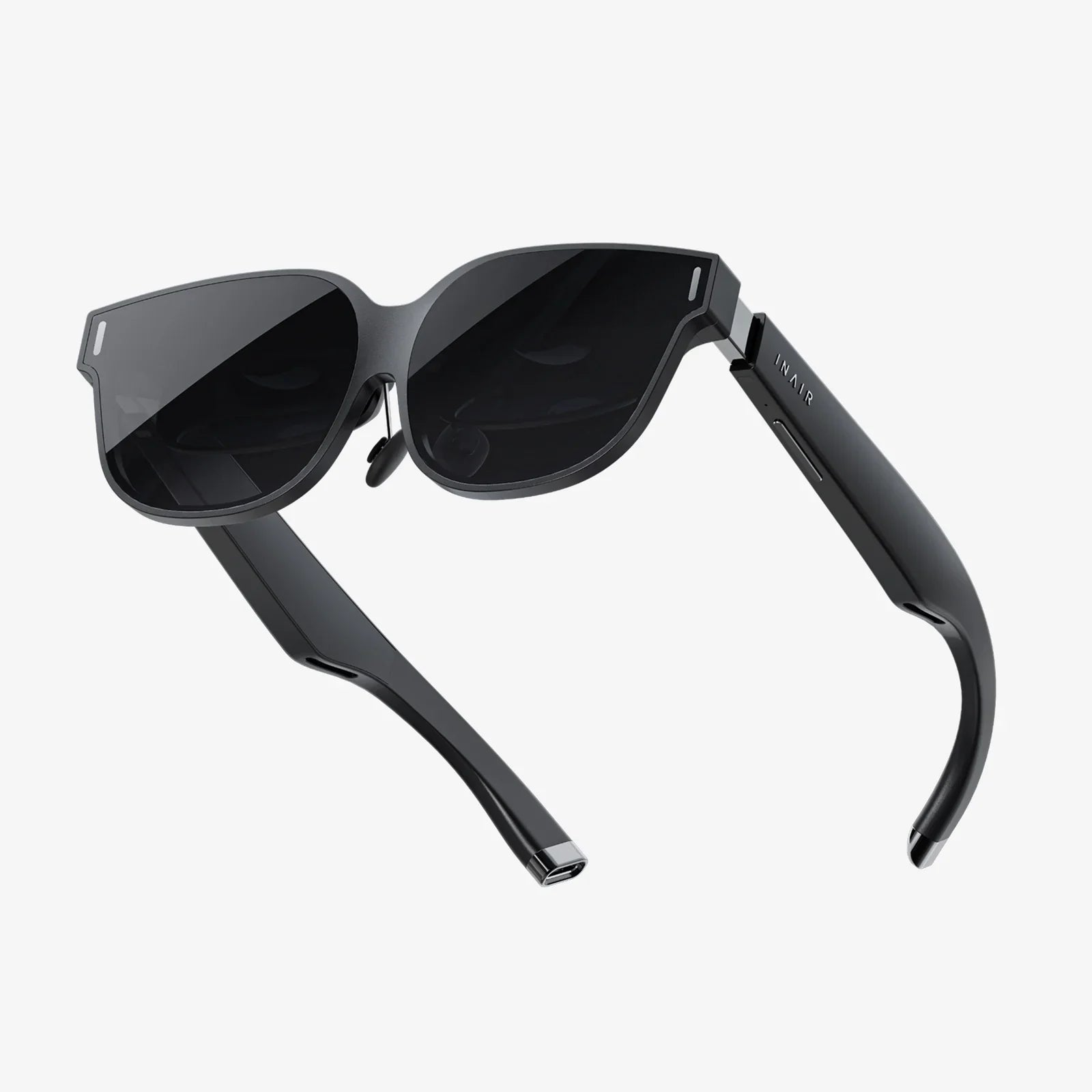
Imagine stepping through the screen, leaving your desk and physical reality behind to truly inhabit the worlds you've only ever visited with a mouse and keyboard. This is the unparalleled promise of VR goggles for PC gaming, a technological leap that has redefined the very meaning of immersion. It’s no longer about just seeing a game; it’s about living it. Your heart pounds as you peer over a virtual cliff edge, your muscles tense in a sword fight, and your instincts scream to duck behind cover from incoming fire. This is the frontier of interactive entertainment, and it’s more accessible and breathtaking than ever before. For the discerning PC gamer, it represents the final step through the looking glass.
The Hardware Symphony: More Than Just Goggles
While the headset itself is the star of the show, a true PC-powered virtual reality setup is a symphony of coordinated hardware. Understanding each component is key to building a seamless and powerful experience.
The Head-Mounted Display (HMD)
This is the unit you wear on your head, the 'goggles' themselves. Its primary components are the high-resolution displays (one for each eye), the sophisticated lens system that focuses and shapes the image, and a constellation of sensors that track your head's orientation and movement in real-time. Modern PC-connected HMDs offer stunning visual fidelity, with high refresh rates that are crucial for maintaining comfort and preventing motion sickness. Features like integrated headphones for spatial audio and built-in microphones for social interaction are now commonplace, creating an all-in-one sensory portal.
The Tracking Ecosystem
For you to move freely in a virtual space, the system must know where you are. This is handled by tracking technology, which comes in two primary forms:
- Outside-In Tracking: This method uses external sensors or base stations placed around your play area. These devices emit lasers or infrared light that is detected by sensors on the HMD and controllers, providing extremely precise, millimeter-accurate positional data. It's considered the gold standard for competitive and high-fidelity experiences.
- Inside-Out Tracking: A more recent innovation, this system uses cameras mounted directly on the HMD itself to observe the surrounding environment and track the controllers. This eliminates the need for external sensors, making setup significantly easier and more portable, though it can sometimes be less accurate when controllers are outside the headset's field of view.
The Controllers
Your hands in the virtual world are represented by motion-tracked controllers. These are not simple gamepads; they are ergonomically designed instruments that are tracked in 3D space. They feature buttons, analog sticks, triggers, and haptic feedback motors that allow you to reach out, grab, throw, shoot, and manipulate the digital world with an astonishing degree of naturalism. Feeling the subtle vibration of a virtual object in your hand is a small detail that massively enhances the illusion of presence.
The PC: The Unseen Powerhouse
The personal computer is the engine room of this entire operation. VR gaming is one of the most demanding tasks you can ask of a system. It must render two high-resolution images (one for each eye) at a very high frame rate (90Hz or more is standard) to ensure smoothness and comfort. This requires a powerful dedicated graphics card, a capable multi-core processor, and sufficient RAM. Skimping on PC hardware will result in a subpar, juddery, and potentially nauseating experience. A robust PC is non-negotiable for high-end VR.
Crafting Your Play Space: From Stationary to Room-Scale
Before you dive in, you must define your physical boundaries. VR software will guide you through this process, typically offering two modes:
- Seated/Standing Experience: Perfect for simulation games like racing or flying, where you remain in one spot. You define a stationary play area.
- Room-Scale VR: The ultimate expression of VR. You define a clear rectangular area on the floor, and the software creates a digital boundary wall (the 'Guardian' or 'Chaperone' system) that becomes visible if you get too close to the real-world limits. This allows you to physically walk around, crouch, and dodge within the game world, offering the highest level of immersion.
A clear, safe space free of obstacles and trip hazards is paramount. A good play mat in the center of your area can also provide a tactile reminder of your real-world orientation.
A Universe of Experiences: Genres Transformed
PC VR gaming is not a single genre; it's a medium that enhances and redefines nearly all of them.
First-Person Shooters (FPS) & Action Adventures
This is where VR feels like a natural evolution. Aiming is no longer an abstract movement of a mouse but a physical act of pointing your hand. Peeking around corners, manually reloading your weapon by reaching over your shoulder, and physically ducking behind cover create a level of tension and engagement that flat-screen gaming cannot match. You are not controlling a soldier; you are the soldier.
Simulation and Racing
For flight simulators, space sims, and racing games, VR is nothing short of revolutionary. The sense of scale, speed, and presence is overwhelming. Being able to naturally look around your cockpit, check your mirrors, and glance at a competitor pulling up beside you provides a critical tactical advantage and a massive adrenaline rush. It’s the closest most will get to sitting in the cockpit of a fighter jet or a Formula 1 car.
Puzzle and Narrative Games
VR excels at making you feel like you are inside a story. Narrative-driven games place you directly in the environment, allowing you to examine clues firsthand and interact with characters in a more personal space. Puzzle games are transformed as you manipulate objects with your own hands, turning abstract challenges into tangible, physical tests of logic and spatial reasoning.
Social VR and MMOs
The metaverse concept, while often overhyped, finds a compelling foundation in social VR platforms. Meeting friends or strangers in a virtual space, where you can see and interpret their body language and gestures through avatar movement, creates a sense of social presence that transcends traditional voice chat. Attending a virtual concert, watching a movie in a massive cinema, or simply hanging out in a custom space feels genuinely communal.
Overcoming the Hurdles: Comfort and Accessibility
VR is incredible, but it's not without its challenges. The good news is that most can be mitigated.
Motion Sickness
The disconnect between what your eyes see (movement) and what your inner ear feels (stationary) can cause VR-induced motion sickness, or 'sim sickness'. The key to overcoming this is building 'VR legs' gradually. Start with experiences that have minimal artificial locomotion (like wave shooters or stationary games). Use comfort settings like 'teleportation' movement and 'vignetting' (blurring the periphery during movement) when available. Most importantly, stop immediately at the first sign of discomfort. Never try to push through it. With short, frequent sessions, most users can acclimatize over time.
Setup and Cost
A high-end PC VR setup represents a significant investment, both in terms of the computer itself and the peripheral hardware. The setup process, while vastly improved from the early days, still requires more technical fiddling than plugging in a console. However, for those who value the absolute pinnacle of visual and performance fidelity, this investment is the price of entry for an experience that is years ahead of standalone alternatives.
Space Requirements
True room-scale VR demands a dedicated clear area, a luxury not everyone has. However, the vast library of fantastic seated and standing experiences ensures that even those with limited space can still enjoy the medium to its fullest.
The Future is Now: Where Do We Go From Here?
The trajectory of PC VR is pointed firmly toward higher resolution, wider fields of view, and greater comfort. Wireless adapter kits have already untethered many PC headsets, offering incredible freedom without sacrificing the power of the desktop. Eye-tracking technology is emerging, enabling foveated rendering—a technique that drastically reduces GPU load by rendering only the area you are directly looking at in full detail—which will allow for even more complex and beautiful worlds. Haptic feedback suits and gloves are in development, promising to add the sense of touch to the virtual experience.
We are standing at the threshold. The technology has moved from a clunky prototype to a refined, powerful, and genuinely awe-inspiring window into digital realms. It challenges developers to think differently about game design and rewards players with a form of play that is more visceral, more memorable, and more human. It connects us to games not through a screen, but through our entire being. The question is no longer if you will try it, but when you will finally take that step and see what awaits on the other side.
Share:
AR Entertainment: The Invisible Revolution Reshaping Our Digital and Physical Worlds
Virtual Office Environment: The Future of Work is Here and It's Digital