


- by wangfred
VR Goggles Illustration: A Comprehensive Guide to Visualizing Virtual Reality
- by wangfred
Imagine a world where you can step inside a painting, manipulate digital clay with your bare hands, or walk on the surface of Mars—all from your living room. This is the promise of virtual reality, a technology that has captivated our collective imagination. But before a single line of code is written or a polymer mold is cast, this future is first born in the mind of an artist. The gateway to these immersive worlds isn't just the headset itself; it's the compelling, evocative, and technically precise illustrations of VR goggles that first draw us in. These images do more than just sell a product; they sell a possibility, a vision of a reality unbound by physical constraints. They are the crucial first draft of a technological revolution, making the intangible tangible and the futuristic immediately accessible.
Illustrating VR goggles is a unique discipline that sits at the intersection of industrial design, science fiction, and marketing. It is not merely about drawing a piece of hardware; it's about visualizing an experience. The illustrator's task is to convey a sense of immersion, comfort, and technological sophistication, often without the user being visibly present in the image. This requires a deep understanding of both form and function.
The process often begins with extensive research. An illustrator must understand ergonomics—how the device contours to the human face, the distribution of weight, the placement of adjustable straps, and the location of crucial sensors and lenses. This foundational knowledge ensures the illustration feels believable and grounded, even if the final design is highly stylized or futuristic. From loose, exploratory thumbnails exploring different shapes and profiles, the artist refines the concept into a more defined line drawing, carefully considering perspective and proportion.
The true magic of a compelling VR goggles illustration lies in the rendering of materials. A successful piece makes you feel like you could reach into the screen and pick up the device. This is achieved through a meticulous depiction of how light interacts with different surfaces.
A pair of VR goggles does not exist in a vacuum. The most engaging illustrations place the device in a context that hints at its use. This is often done implicitly. An illustration might show the headset hovering in space, but with the straps slightly extended and the interface shaped to a face, implying recent use. Others might show it resting on a surface, perhaps next to a pair of motion controllers, telling a small story of a session just completed.
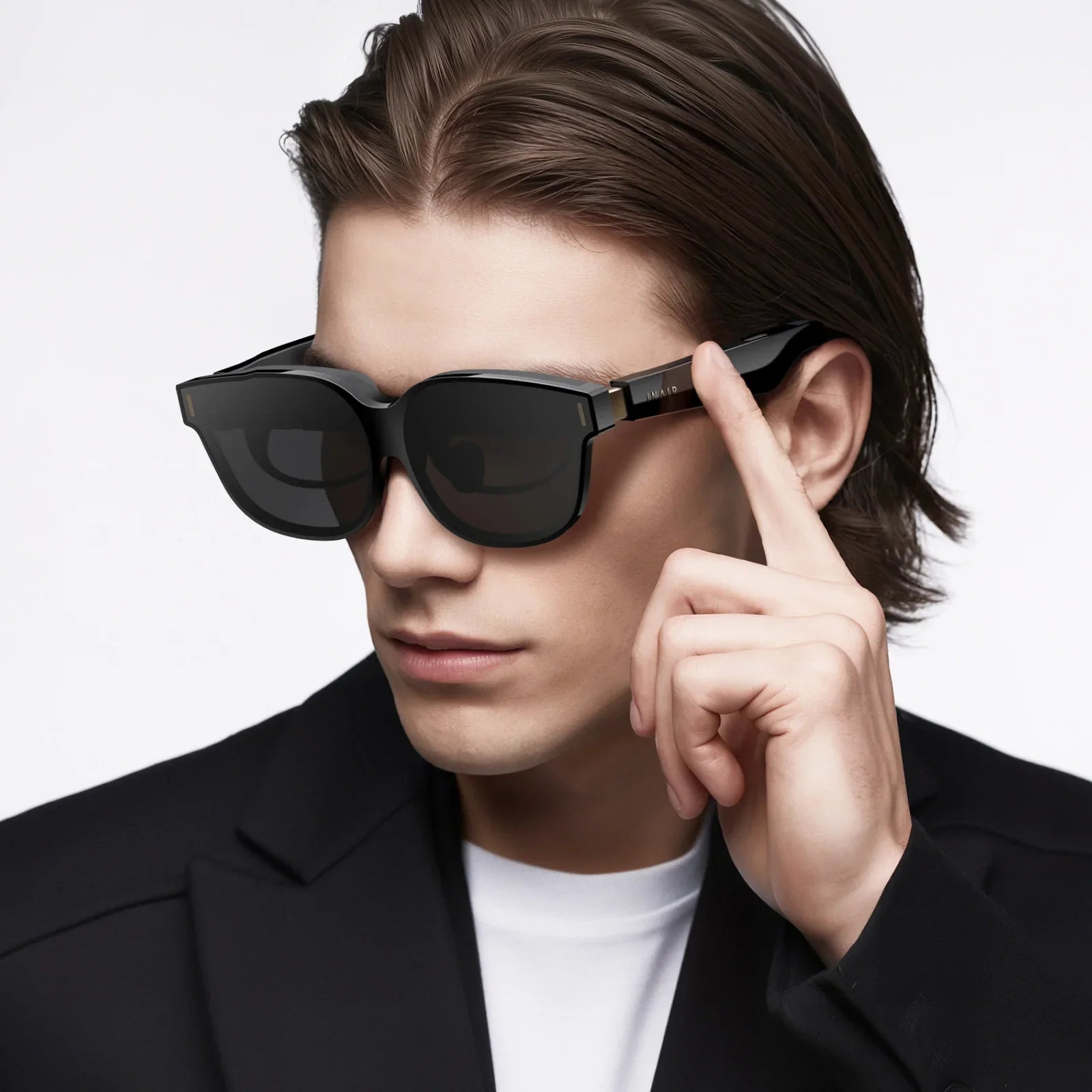
Some illustrations incorporate the human form, either in full or in part. A common and powerful technique is to show the headset from a first-person perspective, being lowered onto the viewer's face or held in their own hands. This creates an immediate and powerful sense of identification and immersion for the audience. Alternatively, showing a person from behind, fully engaged with their arms outstretched in a virtual environment, effectively communicates the isolating yet empowering experience of VR—the user is physically present but mentally worlds away.
The tools of the trade have evolved dramatically. While foundational skills in pencil and paper remain invaluable for quick ideation, the vast majority of professional VR goggles illustration is created digitally.
Software like Adobe Illustrator is perfect for creating clean, scalable vector-based linework, ideal for technical schematics and iconographic representations. For full-color, photorealistic renders, artists turn to raster-based programs like Adobe Photoshop or Corel Painter, which offer immense control over brushes, textures, and layer styles for building up complex material effects.
Furthermore, 3D modeling software has become an indispensable part of the workflow. An artist can build a accurate 3D model of their headset design, which allows them to perfectly nail the perspective, rotate the model to find the most dynamic angle, and set up realistic lighting scenarios. This 3D base model can then be rendered and imported into a program like Photoshop for detailed painting and texturing, combining technical accuracy with artistic flair. This hybrid approach is often the key to achieving the highest level of realism and impact.
While marketing and advertising are the most visible applications for VR goggles illustration, its utility extends far deeper into the development cycle.
The illustrator must walk a fine line. The goal is to create a device that looks advanced and desirable but not intimidating or overly complex. A headset covered in dozens of sharp, glaring camera lenses might be technically accurate, but it could also appear sinister or off-putting. The artist's job is to streamline these elements, integrating technology into a form that feels friendly, approachable, and human-centric.
Another significant challenge is representing the intangible experience of VR. How do you illustrate the feeling of presence? The sensation of depth and scale? Artists use visual metaphors: glowing particles emanating from the device, ethereal light bursting from the lenses, or environmental reflections on the surface of the goggles that show not the real room, but a fantastical digital landscape. These artistic liberties are not dishonest; they are essential for translating a neurological experience into a static visual.
As VR technology advances towards sleeker form factors like neural interfaces and eventually, perhaps, contact lenses or augmented reality glasses, the role of the illustrator will evolve in tandem. The challenge will shift from illustrating a recognizable headset to visualizing something far more subtle and integrated into our lives and even our bodies.
Future illustrations might focus on the human eye enhanced with a digital overlay, or a minimalist pair of glasses that project information directly onto the retina. The emphasis will move from the hardware itself to the seamless integration of the digital and physical worlds. The illustrator's enduring task, however, will remain the same: to make the future feel inevitable, exciting, and within our grasp. They will continue to be the visionaries who draft the blueprints for our digital dreams, giving form to technology that pushes the very boundaries of human experience.
Every revolution needs its posters, and the virtual reality revolution is no different. Those stunning, hyper-realistic images of VR goggles you see are far more than just attractive pictures; they are a silent symphony of art and science, a carefully constructed promise of a new layer of reality. They are the reason you click to learn more, the reason you believe the technology is worth trying, and the very first portal you step through long before you ever physically put a headset on. They don’t just show you a device; they offer you a key to another world, and that is a power that goes far beyond simple illustration.