


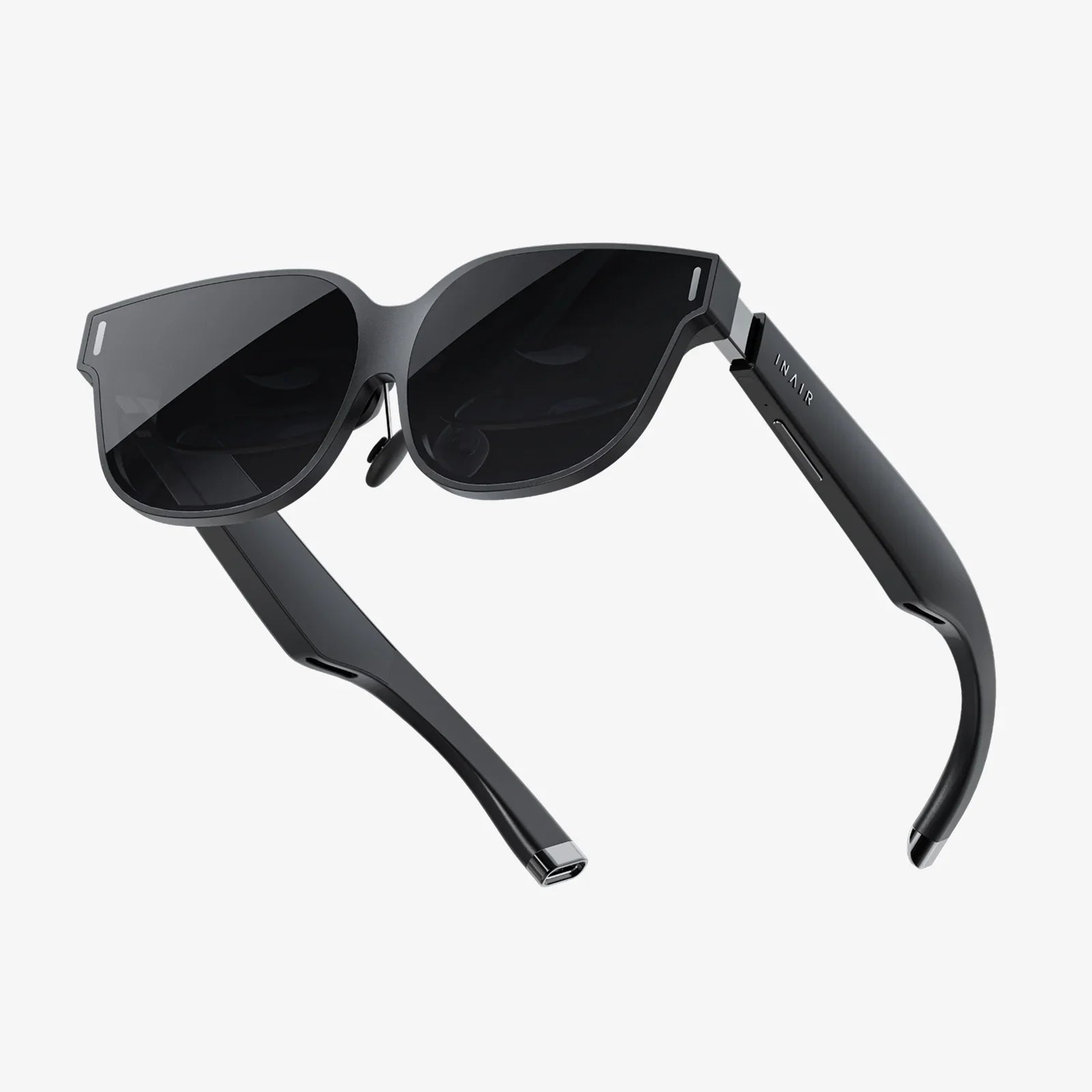
You're about to step into another world, a digital realm limited only by the imagination of developers and the power of the hardware on your face. But with so many options, specs, and technical jargon, how do you possibly choose? The right VR goggles can unlock breathtaking experiences, while the wrong choice can lead to a costly piece of tech gathering dust in a drawer. This ultimate ranking guide cuts through the noise, evaluating the entire market landscape to show you which headsets truly deliver on the promise of virtual reality, based on the metrics that matter most to you.
The Metrics That Define a Superior VR Experience
Before we dive into any form of ranking, it's crucial to establish the criteria. Ranking VR goggles isn't as simple as listing them from best to worst; it's about matching the right headset to the right user. A device perfect for a hardcore gamer might be overkill for a casual user, and a headset designed for standalone mobility will inevitably make different trade-offs compared to a powerhouse tethered to a computer. Our evaluation is built on a weighted system that considers the following pillars:
Visual Fidelity: Seeing is Believing
The window to any virtual world is its display. This is arguably the most important category, as it directly impacts immersion and comfort.
- Resolution and PPD (Pixels Per Degree): While manufacturers love to tout total resolution (e.g., 4K), a more accurate measure is PPD, which accounts for the lens field of view. A higher PPD means a sharper, clearer image with less “screen door effect” (the visible grid between pixels).
- Lens Quality: The type of lenses (Fresnel, pancake, aspherical) dramatically affects edge-to-edge clarity, glare (“god rays”), and the sweet spot. Advanced lens technology is a significant differentiator in high-tier models.
- Refresh Rate: Measured in Hertz (Hz), a higher refresh rate (90Hz, 120Hz, and beyond) leads to smoother motion, which is critical for fast-paced games and reducing the potential for motion sickness.
- Field of View (FoV): This is the extent of the observable world seen at any given moment, measured diagonally in degrees. A wider FoV (110°+) enhances the feeling of “being there” but often comes at a higher cost.
Performance and Processing Power
What drives the experience? This category splits into two distinct camps: standalone and PC-powered.
- Standalone Processing: For untethered headsets, the internal System-on-a-Chip (SoC) is the brain. We evaluate its ability to render complex environments, maintain high frame rates, and handle advanced features like hand tracking without stuttering.
- PC VR Requirements: Tethered headsets rely on an external computer. Their ranking is tied to the quality of the experience they can deliver when fed by a powerful GPU and CPU, including support for high-resolution rendering, advanced physics, and detailed textures.
Tracking and Controllers
How you interact with the virtual world is just as important as how you see it.
- Inside-Out vs. Outside-In Tracking: Modern headsets predominantly use inside-out tracking, using cameras on the headset itself to map the room and track controllers. Its accuracy, robustness against different lighting conditions, and range of motion are key evaluation points. Outside-in tracking, which uses external base stations, is still considered the gold standard for precision but sacrifices simplicity and portability.
- Controller Design and Haptics: Ergonomic, intuitive controllers with responsive buttons, accurate finger tracking, and immersive haptic feedback (from simple rumble to precise, localized vibrations) significantly elevate the sense of presence.
Comfort and Design
A headset can have the best specs on paper, but if it's a pain to wear, it will fail.
- Ergonomics and Weight Distribution: Is the weight front-heavy? How is it balanced? A good design uses counter-weights, flexible straps, and facial interfaces to distribute pressure evenly across the head and face for long sessions.
- IPD Adjustment: The ability to physically adjust the distance between the lenses (Interpupillary Distance) is vital for visual clarity and comfort for a wide range of users. Software-only adjustment is a notable compromise.
- Built-in Audio: High-quality, spatialized audio delivered via built-in directional speakers or dedicated headphones is a massive immersion booster and a feature that separates good headsets from great ones.
Software and Content Ecosystem
The hardware is useless without compelling software.
- Content Library: Access to a vast, diverse library of games, experiences, productivity apps, and social platforms is a huge advantage. An open ecosystem that allows for experimentation is also a major plus.
- User Interface and Features: The operating system should be intuitive, snappy, and packed with useful features like easy boundary setup, intuitive home environments, robust social features, and support for multitasking or augmented reality passthrough.
The Contenders: Ranking by User Profile
With our criteria established, let's rank the current landscape of VR goggles. Remember, this is not a single, linear list but a breakdown of which headsets excel in specific categories and for specific types of users.
Top Tier: The Uncompromising Enthusiast's Choice
This category is for those who seek the absolute pinnacle of visual fidelity and performance, with budget as a secondary concern. These headsets are almost exclusively tethered to high-end computers.
The Pinnacle of Visual Clarity: At the very top sits a headset renowned for its breathtaking mini-LED display technology. It offers an exceptionally high PPD, eliminating the screen door effect entirely for most users. Combined with a wide color gamut, full array local dimming for perfect blacks, and high-end pancake lenses, it delivers a visual experience that is currently unmatched in consumer VR. Its trade-offs include a higher price point and a requirement for a powerful computer and a wired connection, placing it firmly in the enthusiast domain.
The Gold Standard for Precision Tracking: Another contender for the top spot is a system known for its flawless outside-in tracking. While it requires external base stations set up in your play space, it delivers millimetre-accurate tracking of your head and controllers, making it the undisputed choice for competitive VR gamers and professionals in fields like motion capture. Its expansive field of view and high refresh rate options further cement its status as a premium experience for those who value performance above all else.
High Tier: The Best All-Rounders
This category represents the sweet spot for most serious users, offering a fantastic blend of performance, features, and accessibility, often in a standalone form factor.
The Standalone Powerhouse: Leading this pack is a recent standalone headset that has set a new benchmark for what untettered VR can achieve. It boasts a sharp display with a high PPD, powered by a new processor that delivers impressive graphical performance. Its mixed reality capabilities, powered by high-resolution color passthrough cameras, are best-in-class, opening up a new world of AR-like applications. With excellent inside-out tracking, comfortable ergonomics, and a strong content library, it represents the most complete and forward-looking package for users who want a single device for gaming, fitness, productivity, and socializing.
The Value King (Previous Generation): Still holding a strong position is the previous generation of a popular standalone headset. While its display and processing power have been surpassed by its successor, it remains an incredible value proposition. Its vast content library, robust tracking, and reliable performance, often available at a significantly reduced price, make it the best entry point for new users wanting a full-fat VR experience without the premium cost.
Mid Tier: Accessibility and Entry-Level VR
This tier is focused on making VR accessible to the widest possible audience, prioritizing low cost and simplicity, often with some notable compromises.
The True Entry Point: The standout in this category is a headset that functions primarily as a display for your smartphone or computer. It requires almost no processing power of its own, making it the most affordable way to experience basic VR and 360-degree content. Its limitations are clear: it lacks positional tracking (you can't move around in space), has basic controllers or none at all, and its experiences are far less immersive. However, for media consumption or a first taste of VR, it serves a valuable purpose.
The Standalone Lite: Another option is a scaled-down version of a more powerful standalone headset. It typically retains the same core software and tracking capabilities but makes compromises on the display (often using LCD instead of OLED), build materials, and storage capacity. It's a competent device for casual gaming and media but clearly differentiates itself from the higher-end models in its family.
Beyond the Hype: Key Considerations Before You Buy
Rankings and specs only tell part of the story. Your personal circumstances will ultimately dictate the best choice.
The PC Power Question
Are you willing to invest in a high-end gaming computer? If the answer is no, then a tethered headset from the top tier is immediately off the table. Your choice will be limited to standalone devices. If you already own a powerful GPU, then a PC-powered headset will offer a level of visual fidelity that standalone systems cannot yet match.
Intended Use Case
Be honest with yourself about how you will use the headset.
- Gaming: If you're a sim-racer or flight enthusiast, a wide FoV and high refresh rate are paramount. For room-scale action games, robust tracking and comfortable controllers are key.
- Fitness: Comfort, hygiene (easy-to-clean facial interfaces), and battery life are your top priorities.
- Productivity & Social: High-resolution passthrough for mixed reality, a sharp display for reading text, and a comfortable design for extended wear are essential.
- Media Consumption: Display resolution, contrast ratio (OLED is superior here), and built-in audio quality are the most important factors.
The Ecosystem Lock
Many standalone headsets are tied to a specific digital storefront. Your investment in software is often non-transferable. Choosing a platform with a healthy, growing library and a roadmap you believe in is a long-term decision.
The journey to finding your perfect portal to virtual worlds starts with understanding that the “best” headset is a deeply personal choice. It's the one whose technical prowess aligns perfectly with your budget, your gaming rig, and your wildest digital dreams. Forget the marketing slogans and focus on the metrics that create real presence—the stunning clarity that makes you forget the lenses, the flawless tracking that convinces your body you're really there, and the comfort that lets you stay for hours. Your ultimate VR experience is waiting; you just need to rank your priorities to find it.
Share:
Digital Product Display: The Ultimate Guide to Captivating Your Online Audience
Smart Glasses Platform: The Invisible Operating System Reshaping Our Digital and Physical Worlds