


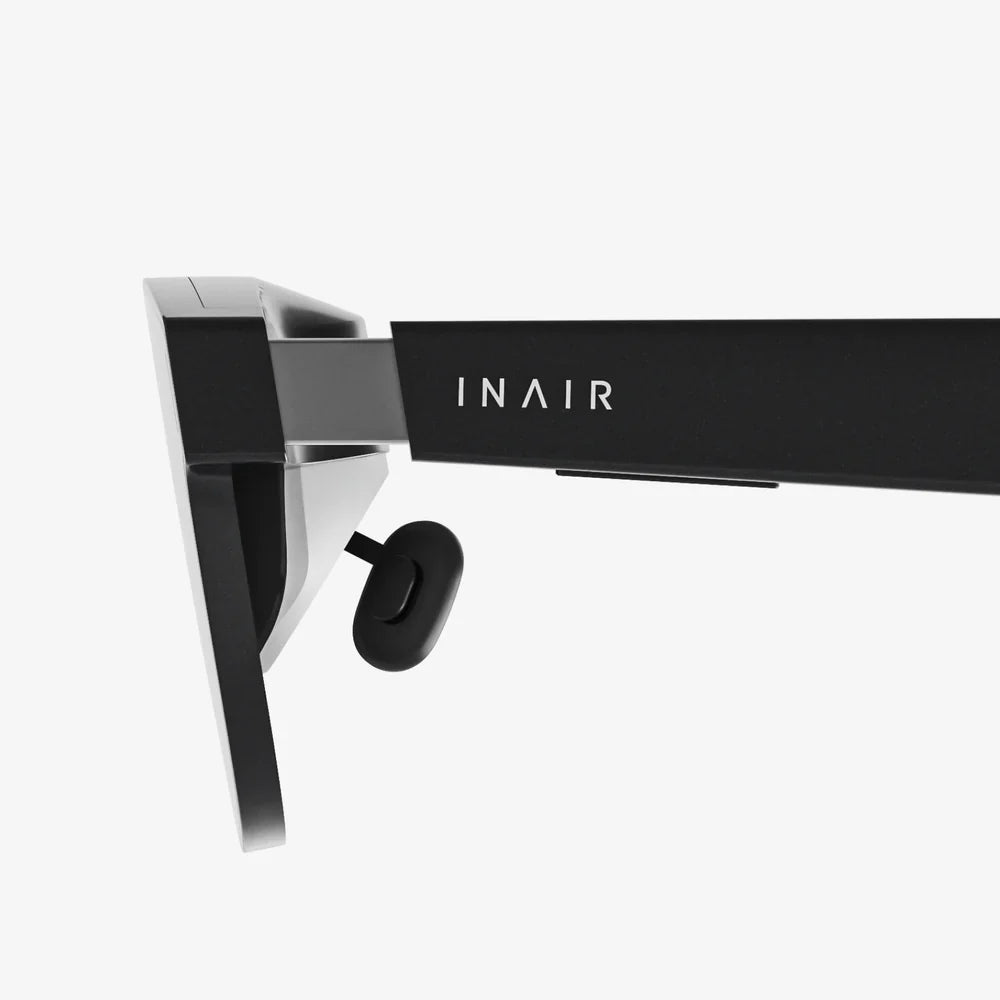
Imagine slipping on a pair of sleek, unassuming goggles and instantly being transported to a limitless digital universe—a sprawling metaverse where you can be anyone, go anywhere, and do anything. This is the breathtaking vision presented by Ernest Cline's seminal novel and its blockbuster film adaptation, Ready Player One. For many, it was a dazzling work of science fiction. But for a growing number of technologists, engineers, and dreamers, the VR goggles of the OASIS are not a distant fantasy; they are an imminent destination, a blueprint for a future that is materializing at a staggering pace. The line between the fictional immersion of the OASIS and the tangible hardware in development labs is blurring faster than anyone could have predicted, forcing us to ask a profound question: are we ready for the world we've been so eagerly awaiting?
The Blueprint: Deconstructing the OASIS Experience
To understand how close we are to the reality of Ready Player One, we must first dissect the core components of the OASIS experience as depicted. It wasn't just about the headset; it was a complete ecosystem of immersion.
The Haptic Technology: Wade Watts doesn't just see and hear the OASIS; he feels it. His haptic suit and gloves provide tactile feedback, from the recoil of a weapon to the warmth of a virtual sun. This level of sensory immersion is a critical pillar of the fiction. Today, while consumer-grade full-body haptic suits are still nascent, the technology is explosively advanced. Researchers and startups are developing gloves with intricate force feedback mechanisms, vests that simulate impacts and emotional cues like a pounding heart, and even devices that can simulate temperature changes. The foundational research in haptics is solid; the challenge lies in miniaturizing the technology, making it affordable, and creating a universal standard—a challenge that is being met with relentless innovation.
The Omni-Directional Treadmill: The ability to run infinitely in any direction within a physical room is a key enabler for the freedom of the OASIS. In the real world, this problem is being tackled head-on with various locomotion solutions. Advanced omnidirectional treadmills, though still primarily in the enthusiast and professional market, are a reality. They use low-friction surfaces, harness systems, and sophisticated tracking to allow natural walking and running motions that translate into virtual movement. Other solutions involve clever software tricks that create the illusion of movement without physically going anywhere, but the pursuit of perfect, unconstrained locomotion remains a holy grail for VR developers.
The Social and Economic Fabric: Perhaps the most prescient aspect of Ready Player One is its depiction of the OASIS as a socio-economic platform. It's not just for games; it's for education, work, commerce, and socializing. People have jobs, own property, and build lives inside the simulation. This mirrors the current trajectory of the "metaverse" concept being pursued by major tech entities. Virtual concerts draw millions of attendees, digital real estate sells for vast sums of cryptocurrency, and remote teams collaborate in shared virtual offices. The foundational layers of a parallel digital society are already being laid, echoing the dystopian and utopian potentials of Cline's world.
The Current Reality: Where Our Technology Stands Today
So, if the OASIS is the destination, how far down the road are we? The answer is: much further than most people realize, though significant hurdles remain.
Visual and Auditory Fidelity: Modern high-end VR headsets have already surpassed the visual clarity one might imagine from the film's depiction. Ultra-high-resolution displays, combined with ever-increasing pixel density, are eliminating the "screen door effect." Wide field-of-view lenses are expanding the peripheral vision, and high dynamic range (HDR) is bringing stunning contrast and color to virtual environments. Inside-out tracking, where sensors on the headset itself map the environment, has eliminated the need for external base stations, granting a freedom of movement that early VR systems lacked. Spatial audio has also become standard, accurately simulating 3D soundscapes so that a user can hear a spaceship fly overhead from the correct direction. The audiovisual barrier to immersion is crumbling fast.
The Processing Power Conundrum: The OASIS is a planet-sized simulation running in real-time. Our current technology, while powerful, cannot yet render an entire universe with photorealistic detail simultaneously. However, the path forward is clear: cloud streaming. Just as video games are now streamed to phones and TVs, the heavy computational lifting for VR will increasingly be handled by remote servers. 5G and future 6G networks, with their high bandwidth and low latency, will be the arteries pumping this data to our headsets. This shift will untether VR from powerful local computers, allowing for lighter, more comfortable, and more accessible goggles—a necessary step toward the all-day wearability suggested by the fiction.
The Human Factor: Societal Implications of an OASIS-Like World
The technology is only half the story. The deeper and more complex question is: what would the widespread adoption of a truly immersive metaverse do to us as individuals and as a society? Ready Player One serves as both a warning and a promise.
The Allure and The Escape: The story is set in a dystopian future where the real world is bleak, polluted, and rife with poverty. The OASIS offers an escape, a digital utopia that is infinitely more appealing. This raises a stark warning for our own future. As climate change and social inequality present ever-greater challenges, will we be tempted to retreat into a comfortable simulation rather than fix our tangible problems? The potential for addiction and the neglect of the physical world and real human relationships is a central theme of the narrative and a serious ethical consideration for developers today.
Identity and Anonymity: In the OASIS, your avatar is your identity. You can change your appearance, gender, species, and form at will. This freedom of expression is a powerful draw, offering a safe space for exploration and anonymity. However, it also opens the door to deception and the dissolution of authentic identity. If anyone can look like anything, how do we build trust? How do we form genuine connections? These are questions we are already beginning to grapple with in online spaces, and they will only become more pronounced in a fully immersive 3D environment.
The Digital Divide 2.0: The novel highlights a stark divide between those who have premium access to VR technology and those who are limited to basic setups. This is a direct parallel to our current reality. Access to high-speed internet and cutting-edge hardware is not universal. An OASIS-like future risks creating a new, even more extreme class stratification: those who can afford to live in a curated, beautiful digital paradise, and those who are trapped in a deteriorating physical world with only limited, perhaps advertiser-supported, access to the digital one. Ensuring equitable access will be one of the greatest societal challenges of the coming decades.
The Road Ahead: Bridging the Final Gaps
The journey to the OASIS is not a single invention but a convergence of several technological revolutions happening simultaneously.
Brain-Computer Interfaces (BCI): The ultimate interface may not be a glove or a treadmill, but a direct neural link. Companies are making significant strides in non-invasive and invasive BCI technology. The goal is to allow users to control digital environments with their thoughts and to receive sensory feedback directly into their nervous system, bypassing traditional hardware altogether. This is the long-term horizon that could finally deliver the seamless, "realer than real" experience that the OASIS represents.
Artificial Intelligence and Procedural Generation: No team of artists could ever manually create an entire universe. The OASIS must be built, at least in part, by AI. Advances in generative AI and procedural generation are making this possible. AI can now create compelling landscapes, characters, and objects on the fly, building a unique and endless world for each user. This technology is crucial for moving beyond pre-scripted experiences into a truly living, breathing digital existence.
Interoperability and Standards: For a true metaverse to exist, it cannot be owned by a single corporation. It must be an open, interoperable network of experiences, much like the internet itself. Users must be able to take their avatar and digital possessions from one virtual world to another. Establishing these standards is a complex, ongoing battle between the open-source community and large tech corporations, and its outcome will fundamentally shape the nature of our digital future.
The VR headset is no longer just a peripheral for playing games; it is rapidly evolving into a portal, a gateway to experiences that will redefine human connection, creativity, and reality itself. The captivating fiction of Ready Player One did not just predict a piece of hardware; it foresaw a cultural and technological shift of seismic proportions. The haptic suits, the sprawling virtual economies, and the very human desire to escape and reinvent ourselves are already emerging from the realm of science fiction and into our daily lives. The final pieces of the puzzle—neural interfaces, photorealistic AI-generated worlds, and seamless connectivity—are the focus of the world's most brilliant minds. The OASIS isn't a question of if anymore, but when. And that future, with all its exhilarating potential and profound challenges, is putting on its headset and booting up.
Share:
Add Smart Device: The Ultimate Guide to Transforming Your Home and Lifestyle
Add Smart Device: The Ultimate Guide to Transforming Your Home and Lifestyle