


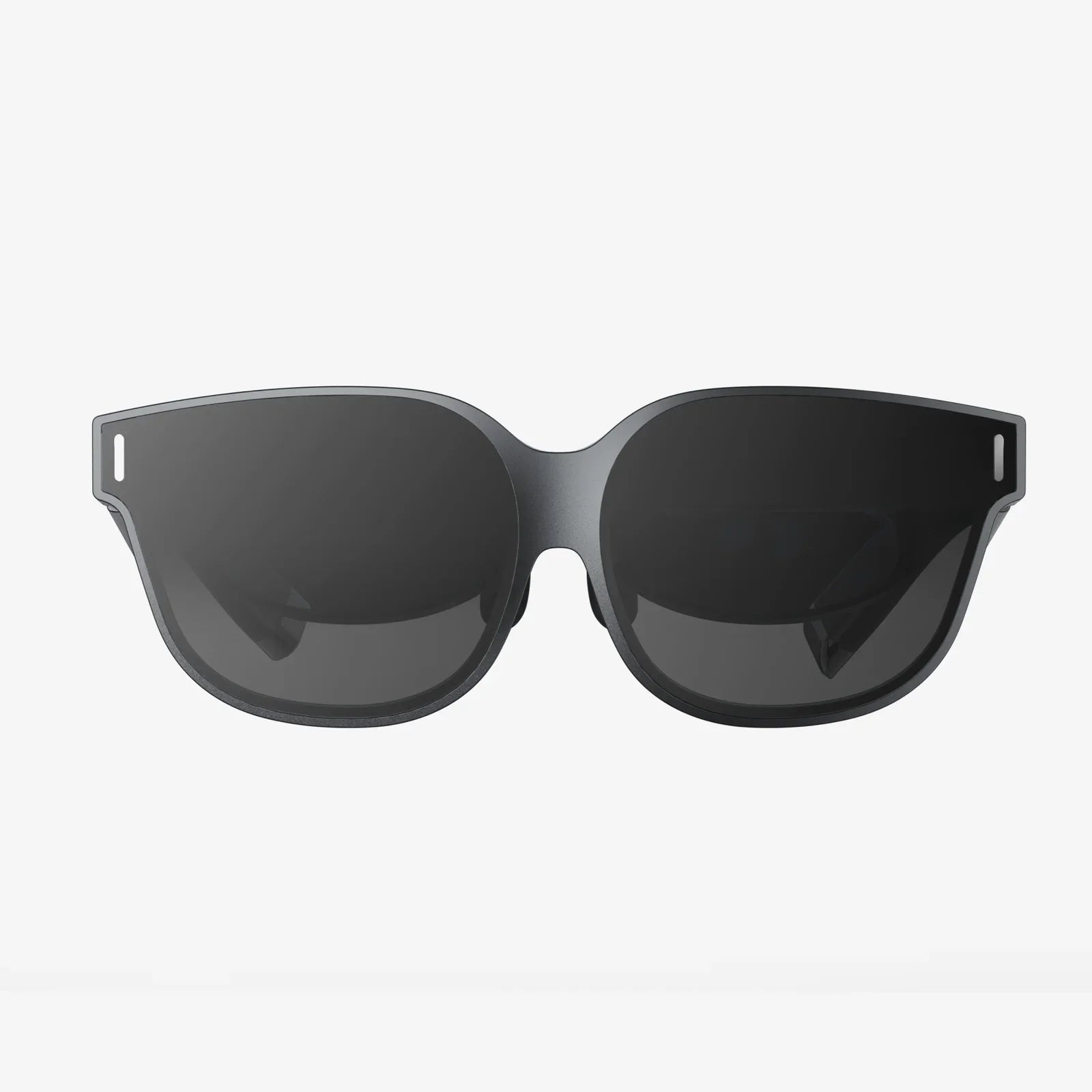
Imagine slipping on a pair of VR goggles and being instantly transported to a breathtaking alien landscape, a thrilling concert front row, or a immersive training simulation—only to be jerked back to reality by the painful pinch of your headset against your glasses frames, or the frustrating blur of a world not tuned to your vision. For the billions of people worldwide who rely on corrective lenses, this has been the unfortunate and uncomfortable barrier between them and the wonders of virtual reality. But what if that barrier no longer existed? The quest for the perfect pair of VR goggles with glasses is not just about convenience; it's about unlocking a universe of experience for a massive segment of the population, ensuring that the digital future is inclusive, clear, and profoundly comfortable from the very first click.
The Fundamental Challenge: Why Glasses and VR Don't Always Mix
At first glance, it might seem like a simple spatial issue. In reality, the friction between standard VR goggles and eyeglasses is a complex interplay of physics, physiology, and design.
The Space Race Inside Your Headset
The single most common issue is the lack of physical space, often referred to as the eye relief or eye box. VR headsets are designed to create a deep sense of immersion by placing high-resolution displays very close to your eyes, using specialized lenses to bend the light and create a wide field of view. This entire optical system requires a specific and precise distance between your cornea and the headset's lenses to function correctly—the eye relief distance.
When you wear glasses, you are adding several layers of material and air gaps between your eye and the headset's lens:
- Your glasses frames
- The prescription lenses in your glasses
- The physical gap between your glasses and your face
- The gap between your glasses and the VR lenses
This added depth pushes your eyes outside the ideal eye relief, leading to a host of problems like a significantly reduced field of view (often called looking through binoculars or a tunnel), visual distortions, and a loss of image clarity, especially at the peripheries.
The Comfort Conundrum: Pressure and Scratches
Even if you manage to squeeze your glasses inside, comfort quickly becomes a major concern. The rigid arms of your glasses are sandwiched between the tight headstrap of the VR goggles and your temples, creating intense pressure points that can lead to headaches and make longer VR sessions unbearable. Furthermore, the hard plastic or metal of your frames can dig into the bridge of your nose or the side of your head.
Perhaps the most heart-stopping risk is the potential for scratches. The VR headset's lenses are often made of high-quality, coated plastic that is notoriously soft and susceptible to damage. The slightest contact with a glasses lens, especially if it's mineral-based or has any hardened debris on it, can leave permanent, immersion-breaking scratches on both your expensive glasses and your expensive VR equipment.
Light Leak and Stability
Glasses frames can break the seal that many VR headsets use to block out external light. This light leak can shatter the sense of presence and remind you that you're in your living room. Moreover, every time you move your head quickly, there's a chance your glasses will shift, slide down your nose, or even become misaligned with the headset's lenses, forcing you to constantly readjust and breaking the fragile illusion of VR.
Engineering a Solution: How Headset Design is Evolving
Recognizing that a huge portion of their potential market wears glasses, manufacturers have begun to innovate, designing headsets with a glasses-wearing audience in mind from the ground up. Several key design philosophies have emerged.
The Generous Foam Gasket
The simplest and most common solution is to design the facial interface—the soft foam or silicone piece that contacts your face—with extra depth. By creating a deeper “cup,” the headset provides more room for glasses frames to sit without touching the hard plastic interior or the precious lenses. Some companies offer optional, deeper replacement gaskets for users who need even more space, a welcome move towards modularity and customization.
The Glasses Relief Mechanism
A more active solution is a mechanical adjustment, often a knob or a slider, that physically moves the headset's lenses and displays closer to or farther away from your face. This is a game-changer. A user with glasses can dial the lenses out to their furthest point, don the headset over their glasses, and then gently dial the lenses back in until they are as close as possible without making contact. This allows for a custom-fit experience that maximizes the field of view while minimizing the risk of scratches and pressure.
Integrated Prescription Lens Adapters
The most elegant and effective solution, though often an aftermarket accessory, is the use of custom prescription lens inserts. These are magnetic or clip-in adapters that slot perfectly into the lens housing of a specific VR headset model. You then have prescription lenses, ground exactly to your optometrist's specifications, mounted onto these adapters.
The benefits are immense:
- Perfect Clarity: The lenses are optimized for the fixed focal distance of the VR displays, potentially offering even better clarity than your everyday glasses.
- Maximum Comfort: The headache-inducing pressure of frames is eliminated entirely. The headset feels like it was made for you—because it now is.
- Zero Scratch Risk: Your expensive headset lenses and your glasses are never in contact. The adapters act as a permanent protective barrier.
- Improved Field of View: With the lenses sitting much closer to your eyes, you often gain back the peripheral view that was lost when wearing glasses.
While this represents an additional cost, for enthusiasts and regular users, it is widely considered the ultimate upgrade, transforming the experience from a compromised hassle to a seamless portal.
A User's Guide to Finding Your Perfect VR Fit
If you're ready to take the plunge, here’s a practical, step-by-step approach to ensuring your journey into VR is a clear and comfortable one.
1. Do Your Research: Key Specs to Look For
Before purchasing any headset, investigate its glasses-friendly features. Look for mentions of:
- Adjustable Eye Relief: This is the golden feature. A dial or slider is a strong indicator the manufacturer has considered glasses wearers.
- Interchangeable Facial Interfaces: Check if the company sells a “glasses spacer” or a deeper default foam interface.
- Overall Design: Look at product images. Does the face gasket look deep? Are the sides open and soft to accommodate arms?
2. Prepare Your Glasses
Not all glasses are created equal for VR. Ideally, you want:
- Thin, Flexible Arms: Glasses with thin, springy titanium or flexible plastic arms will cause far less pressure.
- Smaller, Rounder Frames: Large, rectangular “hipster” frames are the worst offenders. Smaller, more circular frames fit more easily into the headset's confines.
- Clean Lenses: Any dust or grit on your glasses lenses becomes a scratching hazard. Always give them a proper clean with a microfiber cloth before inserting them into a headset.
3. The Art of Insertion and Adjustment
There is a technique to it. Never force the headset onto your face. Instead:
- Fully extend the side arms of the headstrap.
- Hold the headset in front of your face and pull the rear strap up and over the back of your head.
- Gently lower the front of the headset onto your face, using your free hand to guide your glasses arms under the side straps.
- Once the headset is seated, tighten the straps just enough to hold it securely without applying excessive pressure.
- Use the eye relief adjustment (if available) to bring the lenses as close as possible without touching.
4. Consider the Aftermarket
If you find yourself using VR regularly, investing in a set of prescription lens adapters is arguably the best money you can spend. Numerous reputable online retailers specialize in these, offering lenses for a wide range of common prescriptions. The process typically involves selecting your headset model and entering your prescription details. The improvement in comfort and visual fidelity is immediate and transformative.
The Future is Clear: Emerging Technologies
The long-term solution to the glasses problem may not involve physical lenses at all. Several cutting-edge technologies are on the horizon that could make the entire debate obsolete.
Varifocal and Autofocal Displays
Current VR headsets have a fixed focal distance, typically simulating an object about 2 meters away. This is why looking at something very close or far away in VR can sometimes cause eye strain—your eyes try to focus, but the focal plane doesn't change. Next-generation varifocal displays use eye-tracking to determine exactly where you are looking and then mechanically or electronically adjust the focus of the lenses to match the virtual distance of that object. This not only creates a more natural and comfortable experience but could also accommodate many common prescriptions by dynamically adjusting to the user's needs.
Light Field Technology and Holographics
Even more futuristic are light field displays, which aim to replicate how light behaves in the real world. Instead of presenting a flat image, a light field headset would project a light field that allows your eyes to focus naturally at different depths. In theory, a user with presbyopia (age-related farsightedness) could look at a virtual book in their hands and their eyes would naturally focus as if it were real, no glasses required. While this technology is still in its infancy for consumer gear, it represents the ultimate endpoint: VR and AR that works in perfect harmony with human biology.
Customizable Software-Based Correction
Another intriguing possibility is software-based correction. By combining precise eye-tracking with a detailed map of a user's visual aberrations, it might be possible to pre-warp the rendered image in such a way that it appears perfectly sharp to that individual when viewed through a standard, neutral lens. This would be the most minimalist solution, requiring no hardware changes whatsoever.
The journey to find comfortable VR goggles with glasses is a story of innovation meeting necessity. It's a movement from awkward compromise to elegant, user-centric design. From the simple genius of a deeper foam gasket to the high-tech promise of adaptive optics, the industry is steadily dismantling the barriers to entry. This evolution ensures that virtual reality is not just a playground for those with 20/20 vision, but a rich, accessible, and stunningly clear medium for everyone. The message is simple: your prescription is no longer a prescription for missing out. The virtual world is waiting, and it's being designed for you to see it in perfect, comfortable, and breathtaking detail.
Share:
What Are AI Glasses Good For? Exploring 10 Transformative Applications
Latest Augmented Reality News 2025: The Year the Digital and Physical Worlds Fully Merged