


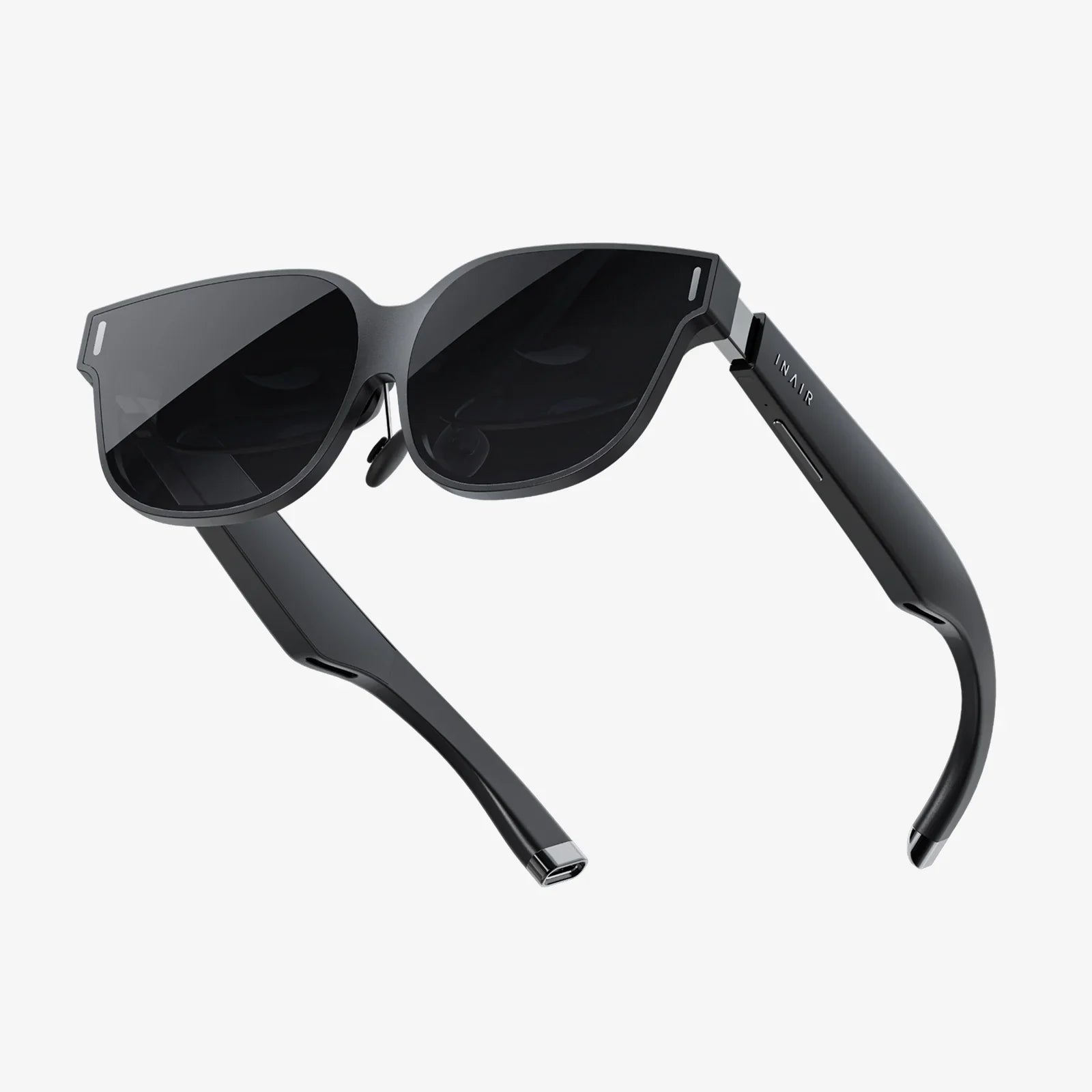
Imagine strapping a portal to another dimension onto your face. A device so powerful it can transport you from your living room to the edge of a volcano, the depths of the ocean, or a strategic conference room on the other side of the globe. This is no longer the stuff of science fiction; it is the tangible, awe-inspiring reality offered by modern VR goggles with a screen. This technology, once a clunky and niche novelty, has evolved into a sophisticated gateway to immersive experiences that are reshaping our perception of reality itself. The journey of these headsets from cumbersome prototypes to sleek, powerful portals is a story of relentless innovation, and it’s a story that is just beginning to unfold, promising to redefine every aspect of our lives.
The Heart of the Machine: Understanding the Integrated Display
At the core of every VR goggle unit lies its most critical component: the screen. Unlike early models that relied on inserting a smartphone, dedicated VR goggles feature integrated, high-resolution displays specifically engineered for virtual reality. This fundamental shift is what separates a casual viewing experience from true immersion.
The magic begins with the display technology itself. Most modern units utilize fast-switching LCD or advanced OLED panels. LCDs offer high resolutions and a sub-pixel structure that reduces the "screen-door effect"—that faint grid-like pattern that once reminded users they were looking at a screen. OLEDs, on the other hand, provide unparalleled contrast ratios with true blacks, as each pixel can be turned on or off independently. This creates incredibly vivid and lifelike imagery, especially crucial for experiences set in dark environments or space.
Resolution is paramount. Early VR suffered from a noticeable lack of clarity, but today's headsets boast resolutions that rival high-end monitors. We're seeing per-eye displays reaching 2K and beyond, resulting in a combined resolution that makes text sharp, details crisp, and the virtual world convincingly real. However, resolution is only part of the equation. The field of view (FOV) determines how much of your vision is encompassed by the virtual environment. A narrow FOV feels like looking through binoculars, while a wider FOV, ideally over 100 degrees, creates a much more natural and encompassing feeling of presence.
Another critical, and often overlooked, factor is the refresh rate. Measured in Hertz (Hz), this is how many times per second the image on the screen refreshes. A higher refresh rate, typically 90Hz or 120Hz and now pushing into 144Hz, is essential for smooth, comfortable VR. Low refresh rates can lead to latency, which manifests as a lag between your head movements and the world updating on the screen. This discrepancy is a primary cause of simulation sickness, a type of motion sickness. High refresh rates, combined with powerful processors, minimize this latency, making prolonged VR sessions comfortable and nausea-free.
More Than Just a Screen: The Ecosystem of Immersion
A stunning display would be useless without a sophisticated suite of supporting technologies that work in concert to sell the illusion. VR goggles with a screen are complex systems where every component plays a vital role.
Precise Tracking: For the brain to accept the virtual world, movement must be perfectly mirrored. This is achieved through inside-out or outside-in tracking systems. Inside-out tracking uses cameras mounted on the headset itself to observe the surrounding environment and track the position of controllers, creating a seamless experience without external sensors. Outside-in tracking uses external sensors placed around the room for extremely high-fidelity, millimetre-accurate tracking, often preferred by professional applications and hardcore enthusiasts.
Advanced Lenses: Between the screen and your eyes are custom-fabricated Fresnel or aspheric lenses. These lenses focus and reshape the image from the flat panels into a stereoscopic, three-dimensional world that appears to have depth and scale. The quality of these lenses directly affects visual clarity, edge-to-edge sharpness, and the overall comfort of the experience, mitigating issues like god rays and chromatic aberration.
3D Spatial Audio: Immersion is an audiovisual experience. High-quality VR incorporates head-related transfer function (HRTF) audio, which mimics how our ears receive sound from different directions in space. A noise behind you in VR will sound like it's coming from behind you, completing the sensory deception and making the experience profoundly believable.
A World of Applications: Beyond Gaming
While gaming remains the most famous application for VR goggles, the integrated screen technology is unlocking possibilities across countless industries, proving its value far beyond entertainment.
Revolutionizing Education and Training: Medical students can practice complex surgical procedures on virtual patients without risk. Mechanics can learn to repair intricate engine models that don't physically exist. History students can take a walking tour of ancient Rome. VR provides a safe, scalable, and incredibly effective platform for experiential learning, dramatically improving knowledge retention and skill acquisition.
Transforming the Workplace: The concept of the "virtual office" is becoming a reality. Teams spread across the globe can meet in a shared virtual space as lifelike avatars, interacting with 3D models of products, brainstorming on virtual whiteboards, and feeling a sense of co-presence that video calls cannot provide. Architects and designers can walk clients through unbuilt structures, and remote assistance allows an expert to see what a field technician sees and guide their hands from thousands of miles away.
Empowering Healthcare and Therapy: VR is a powerful therapeutic tool. It's used for exposure therapy to help patients overcome phobias like fear of heights or flying in a controlled environment. It aids in physical rehabilitation by turning exercises into engaging games. It also provides escape and relaxation for patients dealing with chronic pain, anxiety, and the stress of hospitalization.
Redefining Social Connection and Live Events: VR goggles are becoming a new social platform. Friends can gather in a virtual cinema, attend a live concert from the best seat in the house, or simply hang out in a custom virtual environment. This creates a powerful sense of shared experience that transcends geographical limitations, offering a new form of human connection in an increasingly digital world.
Navigating the Virtual Frontier: Considerations and Challenges
Despite the incredible progress, the technology is not without its hurdles. Understanding these challenges is key to managing expectations and appreciating the pace of innovation.
Comfort and Form Factor: Early headsets were notoriously heavy and cumbersome. The industry is relentlessly pursuing a smaller, lighter, and more comfortable form factor. The ideal is a pair of goggles that are as easy to wear as sunglasses, a goal that advancements in micro-displays and compact optics are bringing closer every day.
The Quest for Visual Perfection: While screen door effect is largely mitigated, developers continue to chase更高的像素密度 (higher pixel density) and ever-wider fields of view. Varifocal lenses, which dynamically adjust to where the user is looking, promise to solve the vergence-accommodation conflict—a current issue where your eyes focus on a virtual object but your lenses remain fixed at a single focal plane, causing eye strain.
Accessibility and Cost: High-end VR, especially PC-connected models requiring powerful computers, represents a significant investment. The market is diversifying, with more affordable standalone options making the technology accessible to a wider audience, though often with some trade-offs in graphical fidelity.
Content is King: The hardware is a vessel; it requires compelling software to fill it. The library of VR experiences is growing exponentially, but the creation of deep, long-form, and truly groundbreaking content is essential for the medium's long-term success and mainstream adoption.
The Future is Already Here: What's Next for VR Visuals?
The evolution of the screen inside VR goggles is accelerating at a breathtaking pace. We are on the cusp of developments that will make today's impressive technology seem primitive.
Micro-OLED displays are emerging, offering incredibly high resolution and pixel density in an extremely small package, directly enabling those sought-after sleek and lightweight designs. Another revolutionary technology on the horizon is pancake lenses. These compact multi-element lenses use polarization folding to reduce the distance needed between the screen and the eye, slashing the overall size and weight of the headset while improving optical performance.
Further out, we see research into light-field technology and holographic displays, which aim to perfectly replicate how light behaves in the real world, potentially eliminating all current visual discomfort and creating a perfect visual replica of reality. The integration of eye-tracking is also becoming standard, enabling foveated rendering—a technique where only the area of the screen you are directly looking at is rendered in full detail, drastically reducing the computational power required and allowing for even more complex and beautiful virtual worlds.
This is not merely an upgrade to a home entertainment system; it is the foundation of a new computing platform. The VR goggle with its integrated screen is poised to become our primary interface with digital information, a window into collaborative workspaces, and a canvas for artistic expression we are only beginning to imagine. The line between the physical and the digital will continue to blur, and these devices will be our guide, our tool, and our passport to the vast, uncharted territories of human experience that lie ahead.
The door to these new realities is not in some distant lab; it's available now, waiting to be opened. The evolution from pixelated novelties to crystal-clear windows into other worlds represents one of the most exciting technological narratives of our time. Whether you're a gamer, a creator, an educator, or simply a curious soul, the question is no longer if you will step through, but when you will choose to see what's on the other side.
Share:
AR Automation Software: The Ultimate Guide to Transforming Business Operations
Different Digital Products: A Comprehensive Guide to the Tech That Shapes Our World