


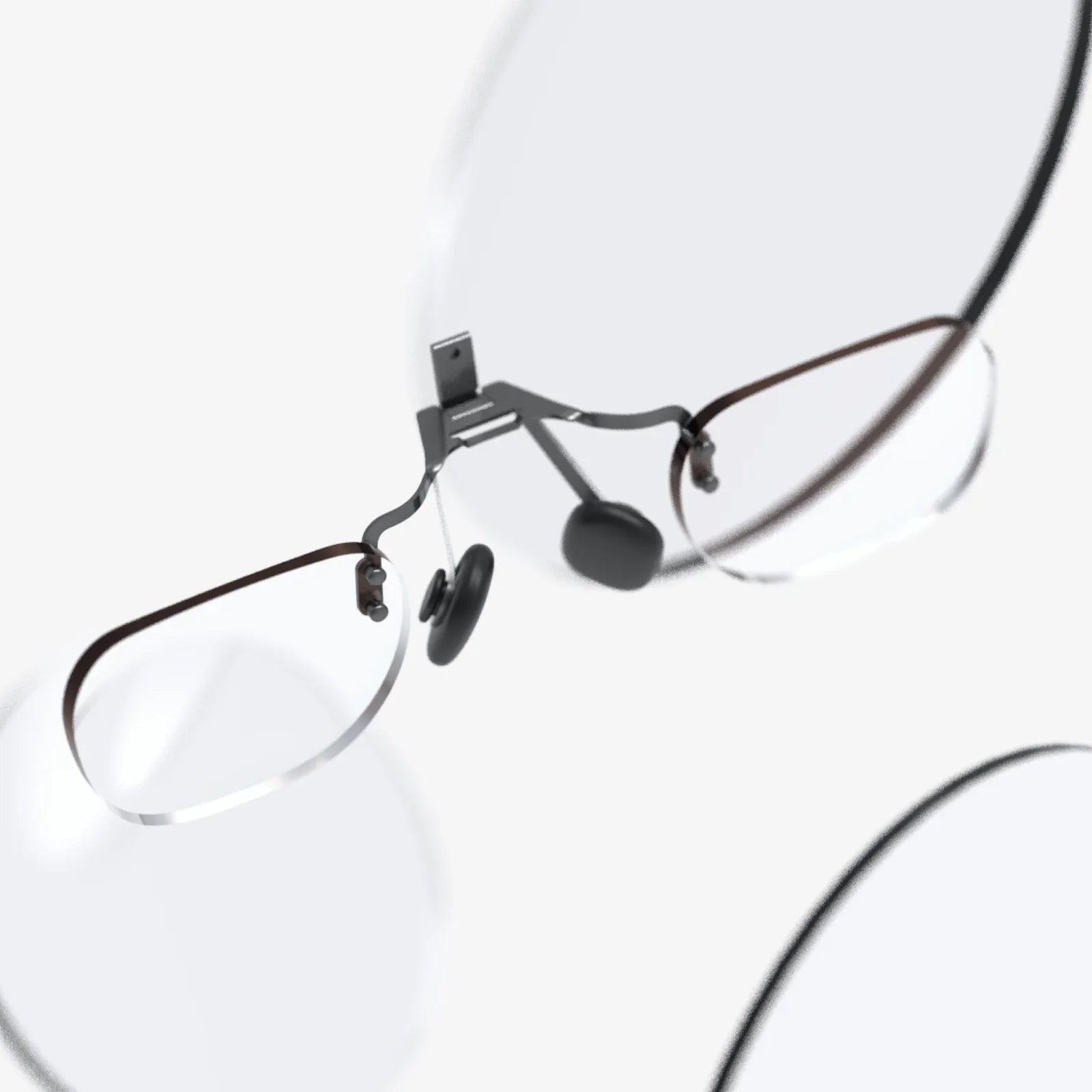
The world is putting on a new pair of eyes. From the confines of our living rooms to the cutting-edge training facilities of Fortune 500 companies, a silent revolution is underway, one headset at a time. The virtual reality head-mounted display market is no longer a niche playground for early adopters and gamers; it has exploded into a central arena defining the next epoch of human-computer interaction. This isn't just about escapism; it's about augmentation, education, connection, and the very reshaping of industry. The question is no longer if this technology will become ubiquitous, but how quickly we will adapt to the new realities it creates.
The Meteoric Ascent: From Sci-Fi to Mainstream
The journey of the VR head-mounted display from a fantastical concept in science fiction to a tangible consumer and enterprise product is a tale of relentless innovation. Early iterations were bulky, expensive, and offered low-fidelity experiences that often induced discomfort. However, the convergence of several critical technologies acted as a catalyst for change. Advances in micro-displays, offering higher resolutions and faster refresh rates, began to eliminate the screen-door effect that plagued early devices. Simultaneously, breakthroughs in miniaturized sensors—accelerometers, gyroscopes, and magnetometers—dramatically improved positional and rotational tracking, making virtual worlds feel stable and responsive.
The development of more sophisticated and efficient processing units, both within standalone devices and in external computing systems, provided the necessary computational horsepower to render complex, immersive environments in real-time. This technological trifecta—display, tracking, and processing—lowered the barriers to entry not only in terms of cost but also in user experience. The market responded with fervor, transitioning from a period of cautious curiosity to one of explosive growth and fierce competition, driving prices down and capabilities up at an astounding rate.
Unpacking the Market Dynamics: A Fragmented Ecosystem
The structure of the VR head-mounted display market is complex and can be segmented along several key axes, each with its own growth trajectory and target audience.
By Device Type
Standalone (Untethered) Devices: These all-in-one units have become the driving force behind market volume and accessibility. With a complete computing system, battery, and tracking sensors integrated into the headset itself, they offer unparalleled ease of use and freedom of movement. They have successfully demystified VR for the mass market, removing the need for a powerful external computer or complex setup procedures. This segment is characterized by intense competition, with numerous players vying for dominance in the consumer space.
Tethered/PC-Connected Devices: Representing the high-end of the consumer market, these headsets are physically connected to a powerful computer or gaming console. This tether provides a virtually unlimited pool of processing power, enabling experiences of unparalleled graphical fidelity, complexity, and immersion. They are the preferred choice for hardcore gamers, professional designers, and researchers who require the highest possible performance, albeit at the cost of mobility and a higher total system price.
Smartphone-Based Devices: Once a popular entry point, this segment has largely been cannibalized by the rapid advancement of standalone devices. While they offered a low-cost introduction to VR by leveraging the display and processing power of a smartphone, they were limited by their computational constraints, lack of robust positional tracking, and rapid battery drain.
By Application
The application landscape for VR HMDs has diversified dramatically, moving far beyond its gaming origins.
Gaming and Entertainment: Still the largest and most visible segment, VR gaming offers a level of immersion flat screens cannot match. The market is supported by a robust and growing ecosystem of developers creating everything from casual experiences to deep, narrative-driven adventures. Furthermore, VR is revolutionizing media consumption, offering immersive 360-degree videos and virtual concerts that make users feel like they are truly there.
Enterprise and Training: This is arguably the fastest-growing and most valuable segment. Companies across sectors like manufacturing, aviation, and energy are using VR to train employees in complex, dangerous, or expensive procedures within a completely safe virtual environment. Surgeons can practice operations, engineers can walk through digital prototypes of machinery before it's built, and retail staff can train for high-pressure sales scenarios. The ROI is clear: reduced risk, lower costs, and improved learning outcomes.
Education and Academia: VR has the power to transform education from a passive to an active experience. Instead of reading about ancient Rome, students can walk its streets. Medical students can explore detailed anatomical models in 3D space. The potential for experiential learning is limitless, fostering deeper understanding and retention of complex subjects.
Healthcare and Therapy: The therapeutic applications are profound. VR is being used for exposure therapy to treat phobias and PTSD, allowing patients to confront triggers in a controlled setting. It aids in physical rehabilitation by making exercises more engaging, and is even used for pain distraction during painful medical procedures.
Retail and Real Estate: These industries use VR for virtual showrooms and property tours, allowing customers to explore products or homes from anywhere in the world. This expands market reach and enhances the customer decision-making process.
The Catalysts of Growth: Fueling the Expansion
Several powerful forces are acting as tailwinds for the entire VR HMD ecosystem.
Proliferation of 5G Technology: The high bandwidth and low latency of 5G networks are key to enabling cloud-based VR and augmented reality experiences. This could eventually allow for incredibly high-fidelity experiences to be streamed to lighter, less expensive headsets, offloading complex computation to the cloud.
Advancements in Haptic Feedback and Controllers: Immersion is not just visual and auditory. The development of more advanced motion controllers and haptic feedback vests and gloves allows users to "feel" the virtual world, adding a critical layer of tactile sensation that deepens the sense of presence.
The Metaverse Vision: While often overhyped, the concept of a persistent, interconnected network of virtual spaces has captured the imagination of corporations and consumers alike. VR headsets are positioned as the primary gateway into these digital worlds, fueling massive investment in both hardware and software development from some of the world's largest tech companies.
Remote Work and Collaboration: The global shift toward remote work has accelerated the adoption of VR for virtual meetings and collaborative design sessions. These virtual spaces offer a sense of co-presence and shared context that video conferencing cannot, making them a powerful tool for distributed teams.
Navigating the Challenges: Hurdles on the Path to Ubiquity
Despite the optimistic trajectory, the market faces significant hurdles that must be overcome to achieve true mass adoption.
User Experience and Comfort: Issues like simulator sickness, often caused by latency or a mismatch between visual and vestibular stimuli, remain a problem for a segment of users. Furthermore, device comfort during extended use is a critical area of focus. Headsets need to become lighter, better balanced, and more ergonomic to encourage longer session times.
Content Gap and Developer Support: Hardware is nothing without software. While the content library is growing, there is still a need for more high-quality, long-form experiences, particularly outside of gaming, to justify the investment for the average consumer. Sustaining a vibrant developer ecosystem is crucial.
Privacy and Data Security: VR headsets are data collection powerhouses. They track precise head and hand movements, eye gaze, and even biometric data. This raises enormous privacy concerns. How is this data used? Who owns it? Robust regulations and transparent policies are essential to build user trust.
Digital Divide and Accessibility: The cost of high-end equipment, combined with the need for technical literacy, risks creating a new digital divide. Ensuring the technology is accessible and affordable across different economic and geographic demographics is a societal challenge.
Gazing into the Crystal Ball: The Future of Immersive Computing
The future of the VR head-mounted display market is not just about incremental improvements to existing form factors; it points toward a fundamental convergence of the digital and physical worlds.
The line between VR and its cousin, augmented reality (AR), will continue to blur. The development of passthrough AR technology, which uses cameras to feed a real-time video feed of the real world into the headset, is a stepping stone to true mixed reality (MR). Future devices will likely be MR-capable, allowing users to seamlessly blend holographic digital content with their physical environment. This will unlock applications we are only beginning to imagine, from interactive instructions overlaid on real-world machinery to persistent digital art installations in our homes.
Technologies like varifocal displays, which dynamically adjust focus to match the user's gaze, and advanced eye-tracking will solve lingering comfort issues and enable powerful new features like foveated rendering, which drastically reduces processing load by rendering only the area of the screen the user is directly looking at in high detail. Furthermore, breakthroughs in brain-computer interfaces (BCI) could eventually allow for control of virtual environments through thought alone, representing the ultimate frontier in immersive interaction.
The VR head-mounted display is evolving from a peripheral into a portal. It is the key that unlocks doors to new worlds for entertainment, new dimensions for learning, and new paradigms for work. As the hardware dissolves into lighter, more powerful, and more intuitive forms, the very concept of "going online" will be replaced with "stepping into" a layered reality. The market's trajectory is not just one of commercial success, but of fundamentally redefining human experience in the digital age. The headset is being fitted; the next reality is loading, and it promises to be more immersive, more connected, and more transformative than anything we have yet experienced.
Share:
AR Kit App Glasses: The Invisible Computer and the Future at Your Fingertips
AI Productivity Tools Market Reshaping the Future of Work and Business Efficiency