


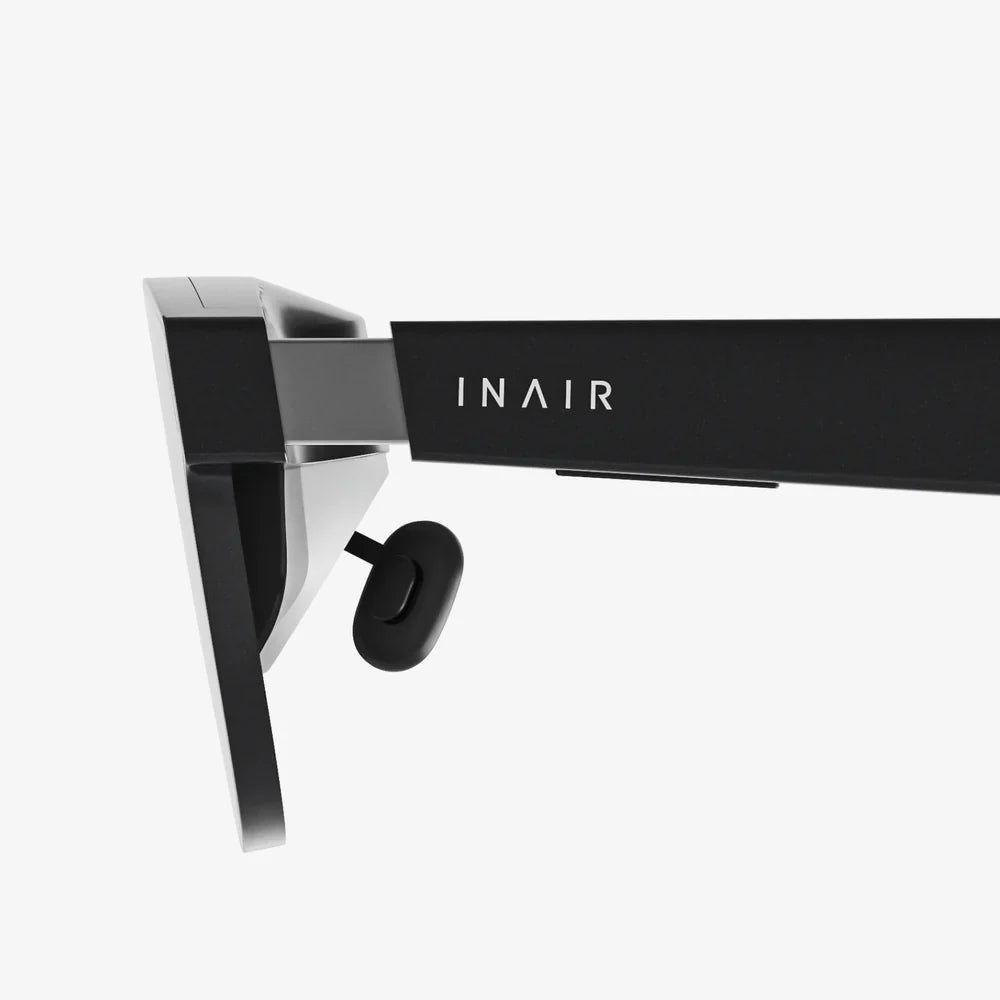
You’re about to step into another world, to trade reality for a digital dream. But the gateway to these experiences, the very window to these virtual realms, is the display technology housed within the headset. The choice between headsets often boils down to a single, critical question: which one offers the visual fidelity to make you forget you’re wearing a device at all? This isn't just about raw specs; it's about how those specs translate into pure, unadulterated immersion. The journey to find your perfect visual portal starts here, with a deep and detailed comparison of what truly makes a VR display great.
The Pillars of Visual Fidelity: Core Display Specifications
To understand the landscape of VR displays, we must first break down the core specifications that define the visual experience. These are the numbers on the spec sheet, but their real-world impact is profound.
Resolution and Pixels Per Degree (PPD)
Most consumers are familiar with resolution—terms like 4K or 2160p are common in the television market. In VR, resolution refers to the total number of pixels on the display panels for each eye. A higher number generally means a sharper image. However, the raw resolution number alone is misleading. Because VR lenses magnify the screen to fill your entire field of view, a more accurate metric is Pixels Per Degree (PPD).
PPD measures how many pixels are packed into one degree of your field of vision. The human eye can discern approximately 60 PPD. Early VR headsets struggled with 5-10 PPD, resulting in a noticeable "screen door effect" (SDE), where you could see the gaps between pixels. Modern high-end headsets have made tremendous strides, now offering 25 PPD and beyond. This drastically reduces SDE and creates a much clearer, more lifelike image. It’s the difference between looking through a dirty window and looking through perfectly clear glass.
Refresh Rate: The Engine of Smoothness
If resolution defines clarity, the refresh rate defines smoothness. Measured in Hertz (Hz), the refresh rate is the number of times the display updates with a new image each second. Standard headsets often start at 72Hz, while high-performance devices can reach 90Hz, 120Hz, and even 144Hz.
A higher refresh rate is crucial for two reasons. First, it drastically reduces perceived latency—the delay between your head moving and the image updating. Low latency is essential for preventing simulator sickness, a form of motion sickness caused by a disconnect between what your eyes see and what your inner ear feels. Second, a high refresh rate makes fast-paced action, such as in combat simulators or rhythm games, feel incredibly fluid and responsive. It’s the difference between a choppy, jarring motion and buttery-smooth movement that keeps you firmly anchored in the experience.
Field of View: Expanding Your Digital World
Field of View (FoV) is the extent of the observable world seen at any given moment, measured diagonally in degrees. A typical human FoV is around 220 degrees. Most VR headsets offer between 90 and 120 degrees. A wider FoV is a double-edged sword. It significantly enhances immersion by reducing the binocular-like "goggle effect," making the virtual world feel vast and encompassing. However, a wider FoV, when paired with a fixed resolution, can lower the PPD, potentially making the image less sharp. It also requires more graphical processing power to render a larger scene. Engineers are constantly balancing FoV against resolution and performance to find the optimal sweet spot for immersion without compromise.
The Battle of Panel Technologies: LCD vs. OLED
The heart of any display is its panel technology. In the VR space, two giants have long dominated the conversation: LCD and OLED. Each has distinct advantages and trade-offs that directly shape your virtual experience.
LCD (Liquid Crystal Display)
LCD panels are the workhorses of the VR industry. Their primary advantage is their ability to achieve very high resolutions at a lower manufacturing cost compared to OLED. This has made them the go-to choice for headsets prioritizing clarity and pixel density to eliminate the screen door effect.
However, LCDs have a significant drawback: they require a backlight. This means blacks appear as dark gray, as the backlight is always on. This results in a lower contrast ratio—the difference between the brightest brights and the darkest darks. In space sims or dark horror games, this can shatter immersion, as deep space looks more like a murky fog than an infinite void. LCDs also typically have slower pixel response times than OLEDs, which can lead to slight motion blur in fast-moving scenes.
OLED (Organic Light-Emitting Diode)
OLED technology is revered for its perfect blacks and superb contrast. Each pixel is its own tiny light source; when a pixel is off, it is truly off, resulting in absolute black. This creates stunning, vibrant images with incredible depth and realism. The potential for HDR (High Dynamic Range) in VR is largely dependent on OLED-like technology. Furthermore, OLEDs have exceptionally fast pixel response times, virtually eliminating motion blur and ghosting.
The traditional challenge with OLED has been a higher cost and a phenomenon called mura—slight variations in brightness between pixels that can create a faint, uneven film over the image. Another historical limitation was achieving the same high subpixel density as LCDs, which sometimes led to a more visible screen door effect. However, recent advancements like OLEDoS (OLED on Silicon) are overcoming these hurdles, combining the perfect blacks of OLED with incredibly high pixel densities.
The New Contender: Micro-OLED
Micro-OLED represents the next evolutionary step. These are incredibly small, high-density OLED panels built directly onto a silicon wafer, similar to how computer chips are made. This allows for resolutions and pixel densities that were previously unimaginable, far surpassing standard LCD and OLED panels. Micro-OLED panels offer exceptional contrast, perfect blacks, and lightning-fast response times in a very compact form factor. They are currently the pinnacle of VR display technology, found in the latest high-end headsets, and point the way toward the future of ultra-clear, ultra-immersive visuals.
Beyond the Panel: The Critical Role of Optics and Software
The display panel is only half the story. The lenses placed in front of it and the software driving it are equally vital in delivering the final image to your eyes.
Lens Technology: From Fresnel to Pancake
For years, the standard in VR was Fresnel lenses. These are thin, lightweight lenses with concentric ridges that allow them to be large and magnify the image without the weight of a traditional glass lens. Their major drawback is optical artifacts, primarily god rays—glare and scattering that appears around high-contrast elements, like white text on a black background.
The new standard is rapidly becoming pancake lenses. These are compound lenses that use polarization folding to bend light, allowing for a much shorter distance between the display and the eye. This enables slimmer, lighter headset designs. Crucially, they provide a much larger eyebox (the sweet spot where the image is clear) and significantly reduce god rays and other distortions, offering edge-to-edge clarity. The trade-off is that they absorb more light, requiring brighter displays to compensate, which is why they are perfectly paired with efficient technologies like Micro-OLED.
Software Enhancements: Eye-Tracking and Foveated Rendering
Perhaps the most significant software advancement working in tandem with displays is the combination of eye-tracking and foveated rendering. Eye-tracking sensors monitor exactly where your pupils are looking on the screen.
Foveated rendering uses this data to work in harmony with how the human eye itself functions. Our central vision (the fovea) is extremely sharp, but our peripheral vision is much lower resolution. Foveated rendering renders the area you are directly looking at in full, high resolution, while intelligently lowering the rendering quality in your peripheral vision. The result? A massive reduction in the graphical processing power required—sometimes up to 70%—with zero perceptible loss in visual quality. This allows headsets to drive incredibly high-resolution displays at high frame rates without requiring a supercomputer, making high-fidelity VR more accessible than ever before.
The Human Factor: Comfort, IPD, and Personal Perception
Technical specifications are meaningless if the headset is uncomfortable or doesn't fit the user. A key visual comfort factor is Interpupillary Distance (IPD) adjustment. IPD is the distance between the centers of your pupils. Headsets offer either software-based IPD adjustment (which simply shifts the image) or physical IPD adjustment (which mechanically moves the lenses and displays themselves). Physical adjustment is vastly superior, as it ensures the sweet spot of the lenses is perfectly aligned with your eyes, providing the sharpest possible image and reducing eye strain. A mismatch can lead to a blurry picture and discomfort, undermining even the best display.
It is also crucial to remember that perception is subjective. Some individuals are more sensitive to refresh rate, while others prioritize contrast and black levels. The "best" display is, ultimately, the one that looks and feels best to you.
The Future is Bright: What's Next for VR Displays?
The pace of innovation in VR display technology is breathtaking. We are already seeing the commercialization of Micro-OLED, but the horizon holds even more promise. Technologies like Micro-LED offer the potential for even greater brightness, contrast, and efficiency than OLED. Varifocal lenses, which can dynamically adjust focus to match the depth of the virtual object you're looking at, could finally solve the vergence-accommodation conflict, a major source of eye fatigue in current headsets. The end goal is clear: photorealistic visuals with wide fields of view, all running wirelessly on lightweight, comfortable form factors.
Your next virtual adventure awaits, but its impact will be dictated by the quality of the window you choose to look through. This comparison isn't about declaring a single winner; it's about empowering you to understand the trade-offs between resolution, refresh rate, contrast, and optics. The perfect headset display is the one that disappears, seamlessly weaving the digital tapestry into your perception until the headset on your face and the world it creates are one and the same. The future of these visual gateways is brighter, sharper, and more immersive than ever, and it’s a future that’s arriving faster than you think.
Share:
How Much Does a VR Headset Cost in Philippines: The Ultimate 2024 Buyer's Guide
How Long Should You Stay On A VR Headset - A Guide To Healthy Immersion