


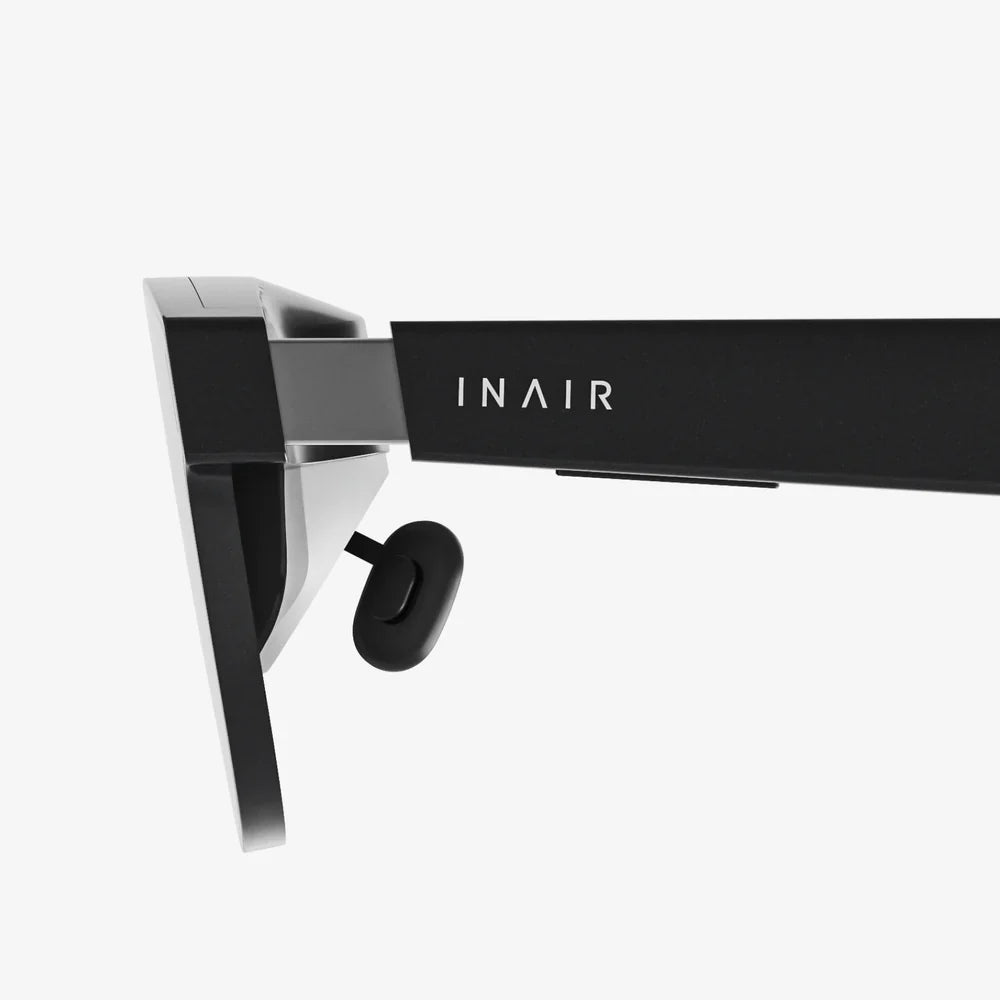
Imagine a world where the boundary between your digital life and your physical reality doesn't just blur—it vanishes. This isn't a distant sci-fi fantasy; it's the imminent future being unlocked by a seemingly minor yet profoundly significant shift in design philosophy: the VR headset facing forward. This reorientation is far more than a simple hardware tweak; it's the key that opens the door to a new paradigm of computing, one where we are no longer prisoners in a virtual cell but active participants in a blended universe. The era of solitary, blindfolded immersion is giving way to a new age of connection, awareness, and limitless possibility, all starting with the direction we choose to look.
The Historical Veil: Isolation as the Default
For decades, the primary goal of virtual reality was total sensory immersion. The design imperative was to block out the physical world completely, creating a sealed chamber for the mind. Users donned bulky headsets and disappeared into digital realms, cut off from their surroundings, the people in the room, and even their own bodies. This approach was necessary to sell the illusion, to convince the brain that the pixels before it were a new reality. However, this isolation became the technology's greatest limitation. It was an experience you had to schedule, a journey you took alone. The hardware was a wall, and users were on the wrong side of it, facing inward.
The Pivot to Presence: What "Facing Forward" Really Means
The concept of a VR headset facing forward is both literal and metaphorical. Literally, it refers to the integration of high-resolution, color video passthrough cameras on the front of the device, pointing out into the user's environment. But metaphorically, it represents a fundamental pivot in the industry's goals: from inward-facing isolation to outward-facing integration.
This forward gaze is powered by a suite of sophisticated technologies:
- High-Fidelity Passthrough: Early black-and-white or grainy video feeds are being replaced with full-color, low-latency video streams that attempt to replicate human vision. This allows users to see their own hands, their keyboard, their coffee mug, and the people they are with, all while remaining inside the headset.
- Advanced Spatial Mapping: Simultaneous Localization and Mapping (SLAM) algorithms work in tandem with depth sensors to constantly scan and understand the geometry of the room. The headset doesn't just see the world; it comprehends it, identifying floors, walls, tables, and obstacles.
- Persistent Digital Anchors: By understanding the space, the headset can pin digital objects—a virtual monitor, a piece of art, a interactive control panel—to specific physical locations. These objects remain locked in place, even if the user removes the headset and returns later.
Bridging Realities: The Power of Blended Experiences
The true magic begins when the digital and physical cease to be separate layers and start to interact. A VR headset facing forward acts as the ultimate augmented reality display, but with the full immersion of VR available at a moment's notice.
Imagine a designer sculpting a 3D model with their hands, using physical tools that are tracked and integrated into the digital workflow. They can glance to their left and see their real-world sketchbook, then look back to their creation. A mechanic could see a holographic schematic overlaid onto a complex engine block, with animated instructions guiding each step, all while maintaining a clear view of their physical tools. The potential for training, design, and manufacturing is staggering, transforming every physical space into a potential canvas for digital innovation.
The Social Revolution: Ending Virtual Solitude
Perhaps the most humanizing impact of this forward-facing technology is its effect on social interaction. Traditional VR is profoundly antisocial; a person wearing a headset is gone, unreachable. The new paradigm changes everything.
With a clear view of the room, users can make eye contact, see facial expressions, and read body language. They can share a virtual experience with a friend in the same physical space—watching a movie on a virtual big screen while sitting on their actual couch, or playing a mixed-reality game that transforms their living room into a digital playground. The headset becomes a window, not a blindfold. It enables co-presence, allowing people to inhabit the same blended space together, merging the best of physical togetherness with the infinite possibilities of the digital.
Navigating the New Frontier: Challenges and Considerations
This exciting future is not without its hurdles. Achieving perfect visual passthrough—with no latency, perfect alignment, and natural depth perception—remains a significant technical challenge. The "vergence-accommodation conflict," where your eyes struggle to focus on digital objects placed in the physical world, is a physiological puzzle that researchers are still solving.
Furthermore, this constant surveillance of our personal spaces raises critical questions about data privacy. The amount of intimate data a device like this can collect—the layout of your home, your habits, the objects you own—is unprecedented. Robust, transparent data policies and on-device processing will be non-negotiable requirements for widespread adoption. Users must have absolute confidence that their physical world remains their own.
The Future is Forward: What Lies Ahead
The trajectory is clear. The VR headset facing forward is the foundational technology for the spatial computing era. We are moving towards devices that we wear all day, not just for dedicated play sessions. They will replace our laptops, phones, and televisions, projecting infinite screens into our field of view and allowing us to interact with information in a more intuitive, spatial way.
The next steps will involve miniaturization towards glasses-like form factors, improved battery life, and even more seamless integration with our biological senses. The goal is to make the technology itself disappear, leaving only the magic of the blended experience. We are building the interface for the metaverse, and it will be one that respects and enhances our physical reality, rather than seeking to escape from it.
This isn't just about seeing the world through a new lens; it's about fundamentally redefining our relationship with technology. The forward-facing headset is the first true embodiment of a philosophy that puts people and their environment at the center of the digital revolution. It promises a future where we are empowered, connected, and enhanced, not isolated and withdrawn. The door to this new world is now open, and it's facing forward, waiting for you to step through.
Share:
Best Independent VR Headset: A Guide to Untethered Immersion
Most High End VR Headset - A Deep Dive Into the Pinnacle of Immersive Technology