


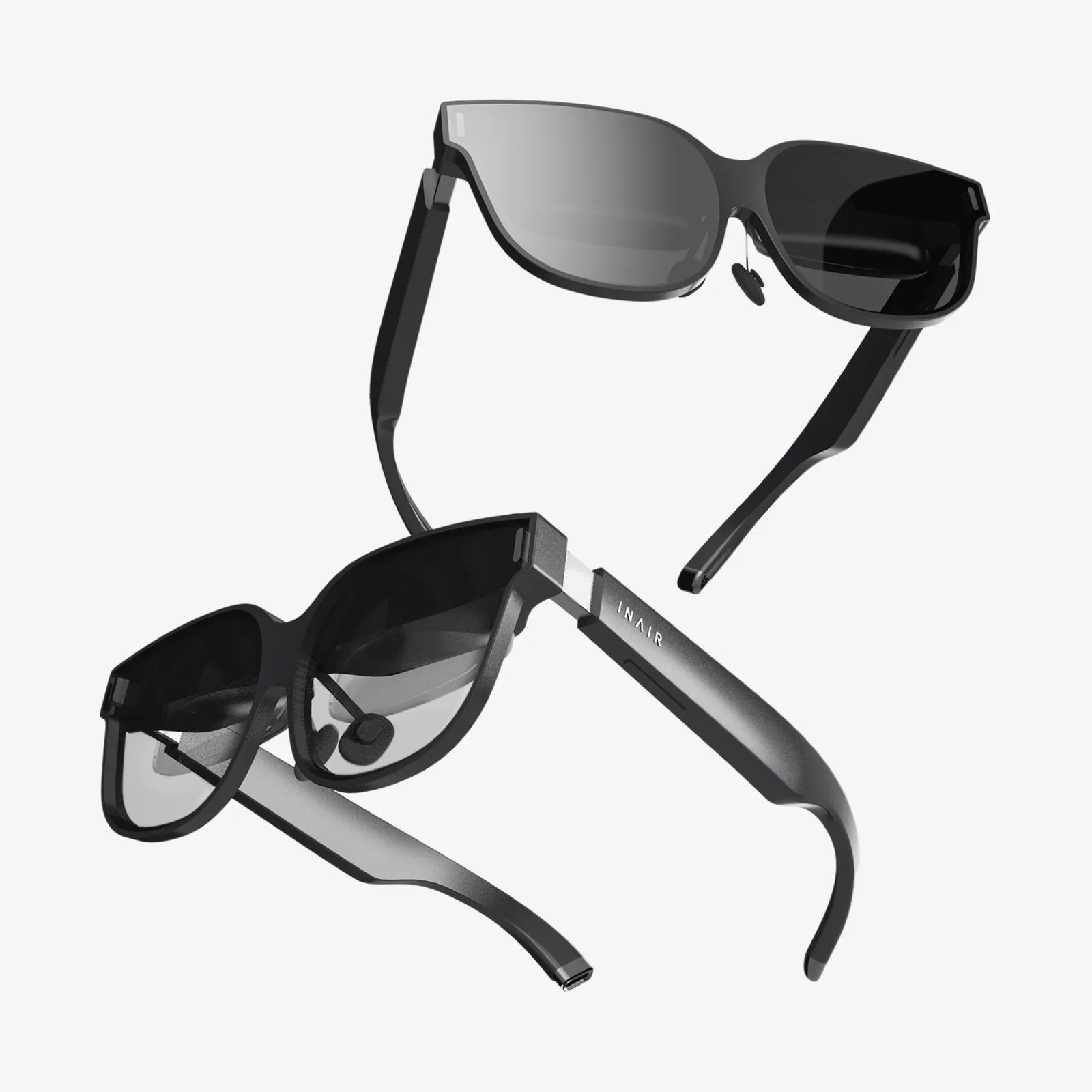
- by wangfred
VR Headset for Augmented Reality: The Ultimate Portal to a Blended World
- by wangfred
Imagine a device that doesn't just transport you to fantastical digital realms but also transforms your living room into a strategic command center, overlays a virtual pet that reacts to your real furniture, or guides you through repairing a complex engine with holographic arrows and instructions. This isn't a glimpse into a distant sci-fi future; it's the burgeoning reality made possible by a modern VR headset for augmented reality. This single piece of technology represents the most significant leap in human-computer interaction in decades, promising to dissolve the barriers between the world we inhabit and the data we create. The race to own this blended space, the next major computing platform, is on, and it starts on your face.
For years, Virtual Reality (VR) and Augmented Reality (AR) were discussed as distinct, parallel paths. VR offered total immersion, a complete replacement of your visual and auditory reality, ideal for gaming and simulations. AR, often experienced through smartphone screens or specialized smart glasses, projected digital information onto the real world, useful for navigation and basic information overlay. The development of a true VR headset for augmented reality shatters this dichotomy. It represents a convergence, a hybrid device capable of switching between or blending these modes seamlessly.
This is achieved through a combination of advanced hardware: high-resolution displays, outward-facing cameras, sophisticated sensors, and powerful onboard processing. The cameras act as your digital eyes, capturing a live feed of your physical environment. This feed is then processed and displayed on the internal screens, effectively letting you "see through" the headset. But the magic happens when the headset begins to composite persistent, believable digital objects into that video feed in real-time, anchoring them to your physical space with astonishing accuracy.
The ability to function as a portal to augmented reality isn't magic; it's a symphony of cutting-edge technologies working in perfect harmony.
The cornerstone of AR functionality is high-fidelity passthrough technology. Early implementations were laggy, low-resolution, and disorienting. Modern systems use high-resolution RGB cameras, often paired with depth sensors, to create a crisp, full-color, and real-time view of the outside world. More than just a video feed, the headset uses simultaneous localization and mapping (SLAM) algorithms to scan, map, and understand the geometry of your room. It identifies floors, walls, ceilings, furniture, and other surfaces, creating a persistent digital twin of your space. This map allows digital objects to occlude correctly behind your sofa or rest convincingly on your desk.
Gone are the days of external sensors placed around the room. Modern headsets use inside-out tracking, leveraging the same cameras and sensors to track the headset's position and orientation in space with six degrees of freedom (6DoF). This means you can walk around, crouch, and lean in to examine a holographic model from every angle. Spatial anchors allow you to "pin" digital content to a specific physical location. You could place a virtual television on your wall or a digital sculpture on your coffee table, and it will remain there, session after session, for you or others to find.
Processing the immense data from multiple camera feeds, running complex environment-mapping algorithms, and rendering high-resolution 3D graphics requires immense computational power. This is handled by a sophisticated system-on-a-chip (SoC) or, in some cases, a connected computing unit. This processor is the unsung hero, ensuring the blend between the real and virtual is seamless, responsive, and, most importantly, comfortable for the user, minimizing the latency that can cause motion sickness.
While immersive gaming is a powerful and obvious application, the potential of a VR headset for augmented reality stretches far beyond entertainment, poised to revolutionize numerous industries.
This is where the technology is already proving its immense value. Imagine a surgeon visualizing a patient's MRI scan overlaid directly onto their body during a procedure, or a field engineer seeing the internal schematics of a machine they are repairing, with animated instructions highlighting the next step. Architects and interior designers can walk clients through full-scale, interactive 3D models of unbuilt structures. These applications reduce error, improve efficiency, and lower training costs by creating risk-free, highly realistic simulations.
The concept of the "metaverse" is intrinsically linked to this technology. Instead of a flat video call, teams from across the globe can meet in a shared virtual office or around a 3D model of a new product, interacting with it and each other as if they were in the same room. Avatars can convey body language and gesture, making communication more natural and effective than a traditional conference call. This has the potential to redefine remote work, making it a more connected and collaborative experience.
On a consumer level, the possibilities are limited only by imagination. You could have multiple virtual monitors for your laptop, creating a massive, portable workspace anywhere. Artists can sculpt in 3D using virtual clay that appears to sit in their hands. Fitness apps can turn your home into an immersive gym with a virtual trainer coaching you. Educational experiences can bring historical events to life in your living room or allow you to explore the solar system at scale.
Despite the exciting progress, the journey to making a VR headset for augmented reality a mainstream consumer device is fraught with significant hurdles that developers are racing to overcome.
The goal is photorealistic passthrough and digital rendering that is indistinguishable from reality. We are not there yet. Current limitations include a slightly narrowed field of view, occasional visual artifacts, and the challenge of accurately representing complex lighting and reflections. Furthermore, headsets need to become lighter, more comfortable for all-day wear, and less socially isolating. The ideal form factor—something approaching the weight and size of regular eyeglasses—is still years away, requiring breakthroughs in display technology (like micro-LED) and battery miniaturization.
A headset that maps your home and records your environment raises profound privacy questions. This data is incredibly sensitive. Manufacturers must implement robust, transparent security measures. This includes on-device processing for sensitive data, clear user controls over what is stored and shared, and ethical guidelines on how this unprecedented window into our lives is used. Building trust with consumers is paramount.
Hardware is nothing without software. While many compelling applications exist, the true "killer app" that will drive mass adoption for consumers—the equivalent of the spreadsheet for the PC or the web browser for the internet—has yet to be universally agreed upon. Furthermore, a thriving ecosystem of interoperable applications and experiences is needed to create a seamless and valuable user experience, moving away from the walled gardens of today.
The current generation of devices is merely the first step. The trajectory points toward even more incredible integrations. We can anticipate advancements in haptic feedback, allowing you to feel digital objects. Eye and facial tracking will make avatars more expressive and enable intuitive interface control. Eventually, neural interfaces could allow us to manipulate digital elements with our thoughts. The line between assistant and tool will blur as AI agents become embedded within these environments, proactively providing information and context based on what we're looking at and what we're trying to achieve.
This technology won't just change what we do; it will change how we perceive, learn, and connect. It represents a fundamental shift from looking at a screen to living inside a responsive, intelligent information space. The device on your face will become the remote control for your reality, a lens through which the digital world bleeds into the physical, enhancing every facet of human endeavor. The question is no longer if this future will arrive, but how quickly we will adapt to and shape this new, blended world it creates.
We stand at the precipice of a new dimension of computing, one where information is no longer confined to rectangles of glass but is woven into the very fabric of our existence. The potential to enhance human capability, to democratize expertise, and to create new forms of art and storytelling is staggering. The journey into this augmented age is just beginning, and the key to unlocking it is waiting, not in a lab, but on the shelf, ready to redefine your reality with the simple act of putting it on.
Share:
Augmented Reality Not Working? The Ultimate Troubleshooting and Future-Proofing Guide
Opportunities in Augmented Reality: Shaping the Future of How We See the World