


Imagine a device that doesn’t just sit on your face but becomes a seamless extension of your consciousness, a portal to any reality you can conceive, and a bridge to human connection that transcends physical boundaries. This isn’t science fiction; it’s the exhilarating frontier of VR headset ideas that are poised to redefine our very perception of reality. The journey beyond the current generation of hardware is already underway, fueled by breakthroughs in materials science, neuroscience, and artificial intelligence. We are on the cusp of a revolution where the line between the digital and the physical will not just blur but may disappear entirely. The next wave of innovation isn't about incremental upgrades; it's about a fundamental reimagining of what a VR headset can be and, more importantly, what it can enable us to do.
Beyond the Screen: The Pursuit of Ultimate Realism
The primary goal of any visual technology is to fool the brain into accepting the digital as real. Current devices have made incredible strides, but the quest for true photorealism continues. Future VR headset ideas are laser-focused on eliminating every last barrier to immersion.
Varifocal and Light Field Displays
The current fixed-focus nature of most headsets presents a fundamental problem known as the vergence-accommodation conflict. Your eyes may converge on a virtual object, but they remain focused at a fixed distance, causing strain and breaking immersion. The solution lies in varifocal displays, which dynamically adjust the focal plane to match where the user is looking. Imagine lenses that physically move or use liquid crystal structures to bend light, allowing your eyes to naturally refocus on near and far objects just as they do in the real world. Taking this a step further are light field displays, which replicate the way light rays emanate from real objects, providing natural depth cues and enabling true focus and parallax. This technology would allow users to focus their eyes anywhere in a scene effortlessly, a monumental leap towards visual realism.
High Dynamic Range (HDR) and Wider Field of View
True immersion requires more than just sharpness; it requires the full spectrum of light and vision our eyes are capable of perceiving. Next-generation headsets will incorporate HDR capabilities, delivering incredibly deep blacks and dazzlingly bright highlights that match the luminance range of the natural world. This will make virtual sunsets feel warm, explosions feel blindingly intense, and dark corridors feel truly ominous. Coupled with this will be ultra-wide field of view (FOV) displays, expanding from the current ~100 degrees to 180 degrees or more, encompassing our entire peripheral vision. This eliminates the distracting "goggle effect" and creates a profound sense of presence, making the virtual environment feel limitless.
Feeling the Virtual: The Haptic Revolution
Visuals are only one piece of the sensory puzzle. To truly believe in a virtual world, we must be able to feel it. The future of VR haptics moves far beyond simple controller rumble, aiming to replicate the full complexity of touch.
Ultra-Precise Controller and Glove Feedback
The evolution of hand-tracking will lead to sophisticated haptic gloves. These won't just vibrate; they will provide nuanced force feedback, simulating the resistance of pressing a button, the tension of drawing a bowstring, or the texture of a rough surface. Using a combination of actuators, tendons, and microfluidic systems, these gloves could constrict and press on the skin to mimic the shape and feel of virtual objects, creating the sensation of holding a delicate glass or a heavy rock. This technology will be transformative for fields like remote surgery, virtual sculpting, and any application where dexterity and touch are paramount.
Full-Body Haptic Suits and Sensory Vests
For complete immersion, the feedback must extend to the entire body. Haptic suits and vests, embedded with a grid of precise actuators, are being developed to simulate everything from the impact of a bullet to the gentle patter of rain. Imagine feeling the rumble of a virtual engine through your chest, the directional push of wind during a flight simulation, or the creepy-crawly sensation of a spider scurrying across your back in a horror game. This full-body haptic layer adds a powerful emotional and physical dimension to VR, deepening the connection to the experience.
Untethered and Unconstrained: The Wireless Future
Freedom of movement is essential for presence. While wireless adapters exist, the future lies in complete self-containment without sacrificing performance.
Cloud Streaming and Edge Computing
The immense computational power required for photorealistic VR has traditionally demanded a physical tether to a powerful computer. The solution is to offload this processing to the cloud. With the rollout of high-speed, low-latency 5G and future 6G networks, complex rendering can be done on remote servers and streamed directly to a lightweight, untethered headset. This paradigm shift, known as cloud gaming or cloud-based rendering, would turn the headset into a sophisticated receiver, freeing the user entirely and making high-end VR accessible to anyone, anywhere.
On-Device AI Processing and Foveated Rendering
Future headsets will also pack significant processing power on-board, thanks to specialized AI chips. These will handle critical tasks like inside-out tracking, gesture recognition, and environmental understanding in real-time, making setup instantaneous and use completely intuitive. Furthermore, advanced eye-tracking will enable foveated rendering at an unparalleled level. This technique renders the area of the screen you are directly looking at in high resolution while subtly reducing the detail in your peripheral vision, mimicking the human eye. With AI-powered prediction, this process can be made incredibly efficient, drastically reducing the graphical processing power needed and enabling stunning visuals on a mobile chipset.
Blurring the Lines: Mixed Reality and the Physical World
The ultimate VR headset may not be for VR alone. The convergence of virtual and augmented reality into a single device—often called Mixed Reality (MR) or XR—is a key direction for innovation.
High-Fidelity Passthrough and Environmental Reconstruction
Future headsets will feature ultra-high-resolution, low-latency color cameras for video passthrough. This will allow users to see their physical environment not as a grainy, distorted monochrome view, but in stunning, real-time detail. This is the foundation for seamless MR. Beyond just seeing the world, these headsets will constantly scan and reconstruct the environment in 3D, understanding the geometry,材质, and even the semantic meaning of objects (e.g., a chair, a table, a wall). This allows virtual objects to interact convincingly with the real world: a virtual character could sit on your real sofa, casting accurate shadows, and a virtual ball could bounce off your real floor.
Contextual and Persistent AR Overlays
This technology enables a world where digital information is persistently anchored to your physical space. Your virtual monitors and workspaces could remain exactly where you left them when you take the headset off and put it back on. You could have a virtual recipe browser permanently attached to your kitchen wall, or leave virtual notes for family members on the refrigerator. This creates a seamless blend of the digital and physical, transforming the headset from an entertainment escape into an indispensable tool for everyday life, productivity, and creativity.
The Next Interface: Brain-Computer Integration and Biometrics
The most radical VR headset ideas involve moving beyond physical controllers and even hand-tracking to a direct connection with the human nervous system.
Non-Invasive Neural Inputs
Research into non-invasive brain-computer interfaces (BCIs) is advancing rapidly. Future headsets could incorporate sensors (like EEG or functional near-infrared spectroscopy - fNIRS) that read neural activity through the scalp. This could enable control mechanisms based on thought alone—imagining moving your hand to trigger an action—or even more profound applications like manipulating virtual objects with your mind. Furthermore, this technology could read user states like focus, excitement, or fear, allowing the virtual experience to adapt in real-time to your emotions, creating a deeply personalized and responsive narrative.
Biometric Feedback for Adaptive Experiences
Beyond neural signals, future headsets will likely integrate a suite of biometric sensors. Heart rate monitors, eye-tracking (for pupil dilation), galvanic skin response sensors, and facial expression tracking via internal cameras will provide a constant stream of data on the user's emotional and physical state. A horror game could sense your rising heart rate and delay the next jump scare, building tension even further. A meditation app could monitor your breathing and brainwaves to guide you into a deeper state of relaxation. This biometrically-driven feedback loop will make VR experiences not just interactive, but empathetic and truly transformative.
Form and Function: The Invisible Computer
For mass adoption, the hardware must become socially acceptable and comfortable for all-day use. This requires a revolution in industrial design and materials.
Slimline Form Factors and Holographic Optics
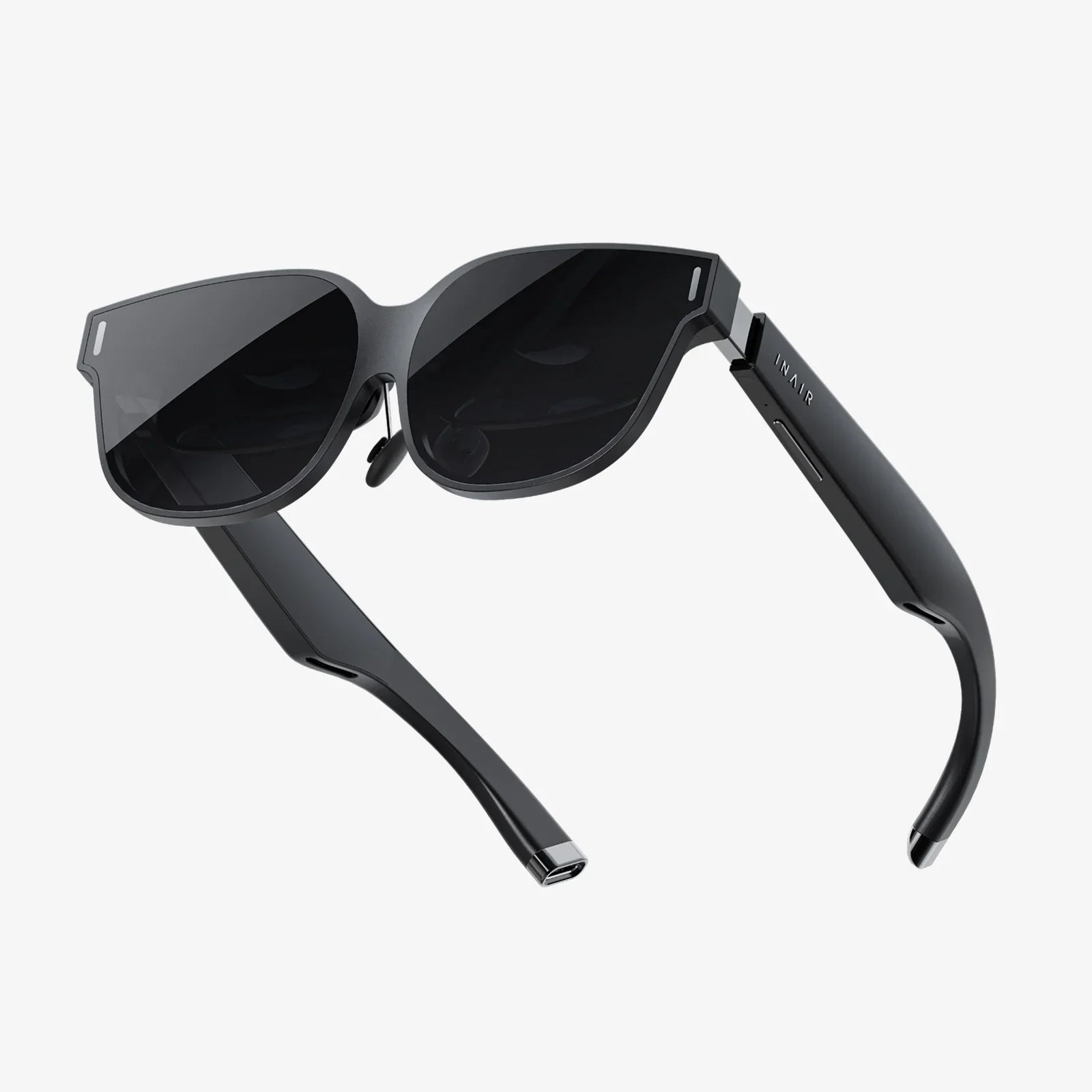
The bulky, front-heavy design of current headsets is a significant barrier. The future points towards sleek, glasses-like form factors. This will be achieved through advancements like pancake lenses, which use folded optics to reduce total distance, and holographic optics, which use laser light and diffraction patterns to create images, potentially eliminating traditional lenses altogether. These technologies could shrink the required hardware to a package not much larger than a pair of sunglasses, making them lightweight, comfortable, and something people would be willing to wear in public.
Personalized Fit and Adaptive Comfort
Future headsets will be highly customizable. They could feature automatically adjusting interpupillary distance (IPD), dynamically dimming lenses for AR experiences, and even prescription lenses built-in. Materials will shift to breathable, lightweight composites and memory foam that molds to the individual's face. Active cooling systems will prevent fogging and overheating, while built-in spatial audio will provide high-quality sound without the need for bulky headphones. The goal is to make the technology so comfortable and intuitive that the user forgets it's there, allowing them to focus entirely on the experience.
The VR headset of tomorrow is not merely a peripheral; it is evolving into a comprehensive sensory gateway, a productivity engine, and a social lifeline. It will be a device that understands your environment, responds to your emotions, and empowers you to create, connect, and explore in ways that are currently unimaginable. We are moving towards a future where putting on a headset won't mean escaping reality, but enhancing it, augmenting it, and connecting with its hidden digital layer. The race to build this ultimate portal is on, and the ideas shaping it promise to unleash a wave of innovation that will ripple through every aspect of our lives, forever changing how we work, play, and perceive the world around us.
Share:
How to Use AR iPhone 12 Pro: A Complete Guide to Augmented Reality
How to Use AR iPhone 12 Pro: A Complete Guide to Augmented Reality