


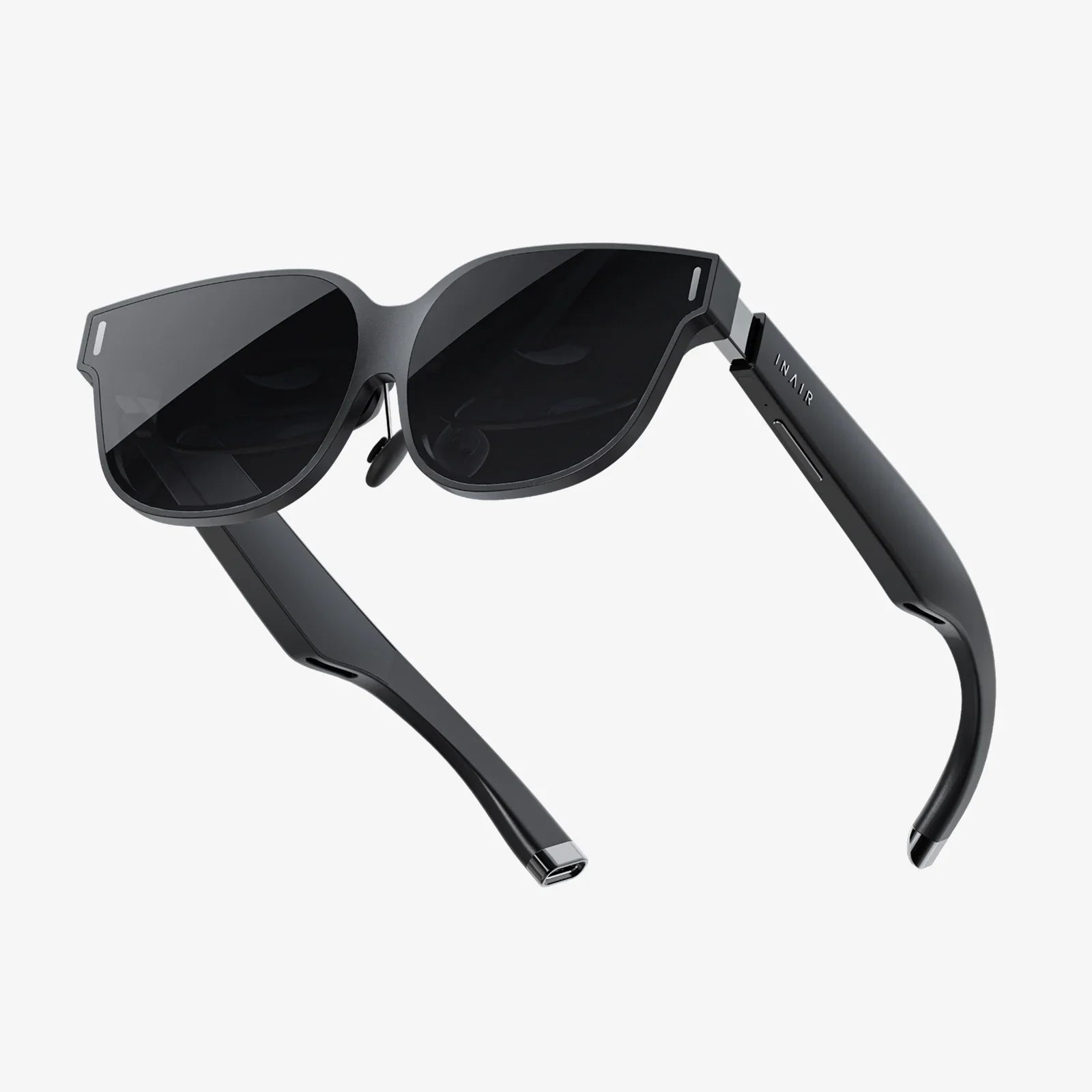
Remember the first time you strapped a virtual reality headset to your face? The promise was intoxicating—a ticket to another world, a digital playground limited only by imagination. The reality, for many early adopters, was somewhat different: a blurry, pixelated view, a tangled mess of cables, a nagging sense of nausea, and a forehead left sore from the heavy, unbalanced weight. It was incredible, but it was also undeniably a prototype, a glimpse of a future that hadn't quite arrived. Fast forward to today, and that future is not just knocking at the door; it has kicked it down. The pace of VR headset improvements has been nothing short of revolutionary, transforming clunky hardware into sleek, sophisticated portals that are finally ready for the masses. This isn't just an incremental upgrade; it's a complete reimagining of what it means to step into another dimension.
The Quest for Visual Fidelity: Beyond the Screen Door
For years, the single biggest barrier to immersion in VR was the visual experience. Early headsets suffered from a combination of low resolution and the dreaded 'screen-door effect' (SDE), where users could see the fine lines between pixels, like looking through a mesh screen door. This constant reminder of the technology's artifice shattered the sense of presence.
Modern VR headset improvements have tackled this issue with remarkable success. The adoption of high-resolution displays, often with pixel densities exceeding 20 pixels per degree (PPD), has made SDE a relic of the past. We're now seeing headsets with resolutions rivaling 4K per eye, delivering stunning clarity and sharpness. But resolution is only part of the story. The implementation of advanced lens technology, moving from traditional Fresnel lenses with their blurry edges and 'god rays' to custom pancake lenses or even aspherical elements, has dramatically improved edge-to-edge clarity, optical clarity, and overall comfort. These lenses are not only superior optically but also more compact, contributing to a slimmer headset profile.
Furthermore, the move to Micro-OLED displays is a game-changer. Unlike the LCDs of old, Micro-OLEDs offer perfect blacks, an incredibly high contrast ratio, and faster response times. This means virtual worlds are no longer washed out; they are vibrant, deep, and rich with color and shadow, adding a layer of realism that was previously impossible. These visual VR headset improvements are fundamental, moving the experience from 'seeing a simulation' to 'believing you are there.'
The Liberation of Wireless Freedom and Standalone Power
Perhaps the most democratizing shift in VR has been the move away from being tethered to a powerful, expensive external computer. The advent of standalone VR headsets has completely changed the landscape. These all-in-one devices pack the necessary processing power, battery, and sensors into a single, self-contained unit.
This shift represents a monumental VR headset improvement in accessibility and ease of use. No longer do users need to clear a room, set up external sensors, and worry about tripping over a cable during an intense gameplay session. The freedom to turn, crouch, and spin 360 degrees without a second thought is liberating. It transforms VR from a stationary, PC-bound experience into a truly physical and room-scale activity that can be enjoyed anywhere with a bit of space.
Under the hood, this is powered by custom-built chipsets specifically designed for the intense demands of virtual reality. These systems-on-a-chip (SoCs) are marvels of engineering, balancing immense graphical processing power with extreme power efficiency to ensure a reasonable battery life. The continuous optimization of these chips and their accompanying software is a critical, though often invisible, area of VR headset improvements, enabling more complex and beautiful worlds to run on a device you wear on your face.
Ergonomics and Comfort: Designing for Long-Term Wear
A headset can have the best screen in the world, but if it's a pain to wear, it will gather dust. Early VR was notorious for being front-heavy, creating pressure on the cheeks and forehead, causing overheating, and leading to 'VR face'—those tell-tale red marks after a session. Modern design philosophy has made ergonomics a primary battleground for VR headset improvements.
We are seeing a strategic redistribution of weight. Instead of placing all the heavy components—battery, processors—at the front, designers are now using rigid, halo-style straps or flexible straps with a counter-weight battery at the back. This creates a balanced feel that sits comfortably on the head rather than clamping onto the face. The use of lighter materials, better padding with breathable fabrics, and adjustable dials for a perfect fit are now standard.
These comfort-focused VR headset improvements are crucial for expanding VR's use cases beyond short 20-minute gaming sessions. For VR to become a true platform for work, socializing, and extended entertainment, it must be comfortable enough to wear for hours on end. The latest generation of headsets is finally approaching that gold standard.
The Rise of Passthrough AR and Mixed Reality
For years, Virtual Reality and Augmented Reality were seen as separate paths. VR was about full immersion in a digital world, while AR was about overlaying digital objects onto the real world. The latest VR headset improvements are brilliantly blurring this line through high-fidelity color passthrough cameras.
This technology allows the headset to use its external cameras to show a real-time video feed of your physical surroundings. While early implementations were grainy, monochrome, and laggy—useful only for avoiding obstacles—new sensors deliver a high-resolution, full-color, low-latency view of the real world. This opens the door to Mixed Reality (MR), where digital objects can be anchored to and interact with your physical space. You can have a giant virtual screen pinned to your real wall, resize it with a pinch, and watch a movie while still being aware of your room. You can play a game where virtual characters burst through your actual walls, or use a virtual tennis racket to hit a virtual ball off your real coffee table.
This isn't just a new feature; it's a fundamental VR headset improvement that redefines the device's purpose. It transforms the headset from a tool solely for escape into a potential productivity machine, a social hub, and a new medium for creative expression that blends the real and the virtual seamlessly.
Intuitive Interaction: From Clumsy Wands to Expressive Hands
How we interact with the virtual world is just as important as how we see it. The first generation of motion controllers, while revolutionary, often felt like holding a clumsy wand. They had buttons, triggers, and joysticks mapped from a traditional gamepad, which didn't always feel natural.
VR headset improvements in input have been dramatic. The current standard is controllers that are ergonomically designed to feel like an extension of your hands, with precise haptic feedback that provides a nuanced sense of touch—from the gentle buzz of a virtual butterfly landing on your finger to the jarring recoil of a virtual weapon.
The next frontier, already being realized, is controller-free hand tracking. Using the headset's onboard cameras and sophisticated machine learning algorithms, headsets can now track all 26 degrees of freedom of your hands and fingers without any external hardware. This allows for the most intuitive interaction possible: using your actual hands. You can pinch, grab, point, and gesture naturally to manipulate the virtual world. This VR headset improvement lowers the barrier to entry even further (no need to learn a controller scheme) and increases immersion exponentially, as your real-world actions are mirrored perfectly in the digital space.
Eye-Tracking and Foveated Rendering: The Brain Behind the Beauty
One of the most technically profound VR headset improvements is the integration of eye-tracking technology. By using infrared sensors to precisely monitor where your pupils are looking, the headset gains a deep understanding of your intent and focus.
This enables two major advancements. The first is social presence. In multiplayer VR applications, avatars can now have their eyes rendered to mimic your real eye movements, including blinks and saccades. This creates an uncanny level of non-verbal communication, making social interactions feel genuinely human and expressive.
The second, and perhaps more impactful, application is a performance technique called foveated rendering. The human eye only sees a small central area (the fovea) in high detail; our peripheral vision is much lower resolution. Eye-tracking allows the headset to know exactly where you are looking. It can then render the area in the center of your gaze in full, high resolution, while dynamically reducing the rendering quality in your peripheral vision. Since you cannot perceive this reduction, the visual experience remains identical, but the computational savings are enormous—often reducing the GPU workload by 50% or more. This VR headset improvement is the key to generating photorealistic graphics on standalone hardware, allowing for more complex scenes, higher frame rates, and better battery life without any sacrifice in visual quality.
The Invisible Engine: Software, UI, and Ecosystem
Hardware is nothing without software. The operating systems and user interfaces within VR have undergone their own quiet revolution. Early VR interfaces were often clunky menus ported from 2D screens. Today's VR environments are spatial operating systems designed from the ground up for 3D interaction.
These VR headset improvements in software include intuitive multi-tasking with multiple resizable windows, seamless integration of passthrough for quick environmental checks, and streamlined navigation. Furthermore, the growth of the content ecosystem is a soft improvement that feeds back into the hardware's value. A robust library of games, fitness apps, social platforms, creative tools, and even productivity software justifies the hardware investment and pushes developers to continue innovating and taking advantage of the latest technological advancements.
The journey of VR headset improvements is a story of solving a complex puzzle of physics, human physiology, and computer science. Each breakthrough in resolution, comfort, interaction, and intelligence builds upon the last, creating a positive feedback loop of innovation. We have moved from the awkward, exciting infancy of VR into its confident, capable adolescence. The headaches and hurdles are fading into memory, replaced by sheer wonder and tangible utility. The door is now open, not just to better games, but to new ways of working, connecting, and experiencing reality itself. The next time you pick up a modern headset, you're not just putting on a device; you're stepping through a portal that has been refined by years of relentless progress, and it's finally ready to deliver on its world-changing promise.
Share:
Best Intro VR Headset: Your Definitive Guide to Starting Your Virtual Journey
Best VR Headset for Multiple Monitors: The Ultimate Guide to Your Virtual Workspace