


- by wangfred
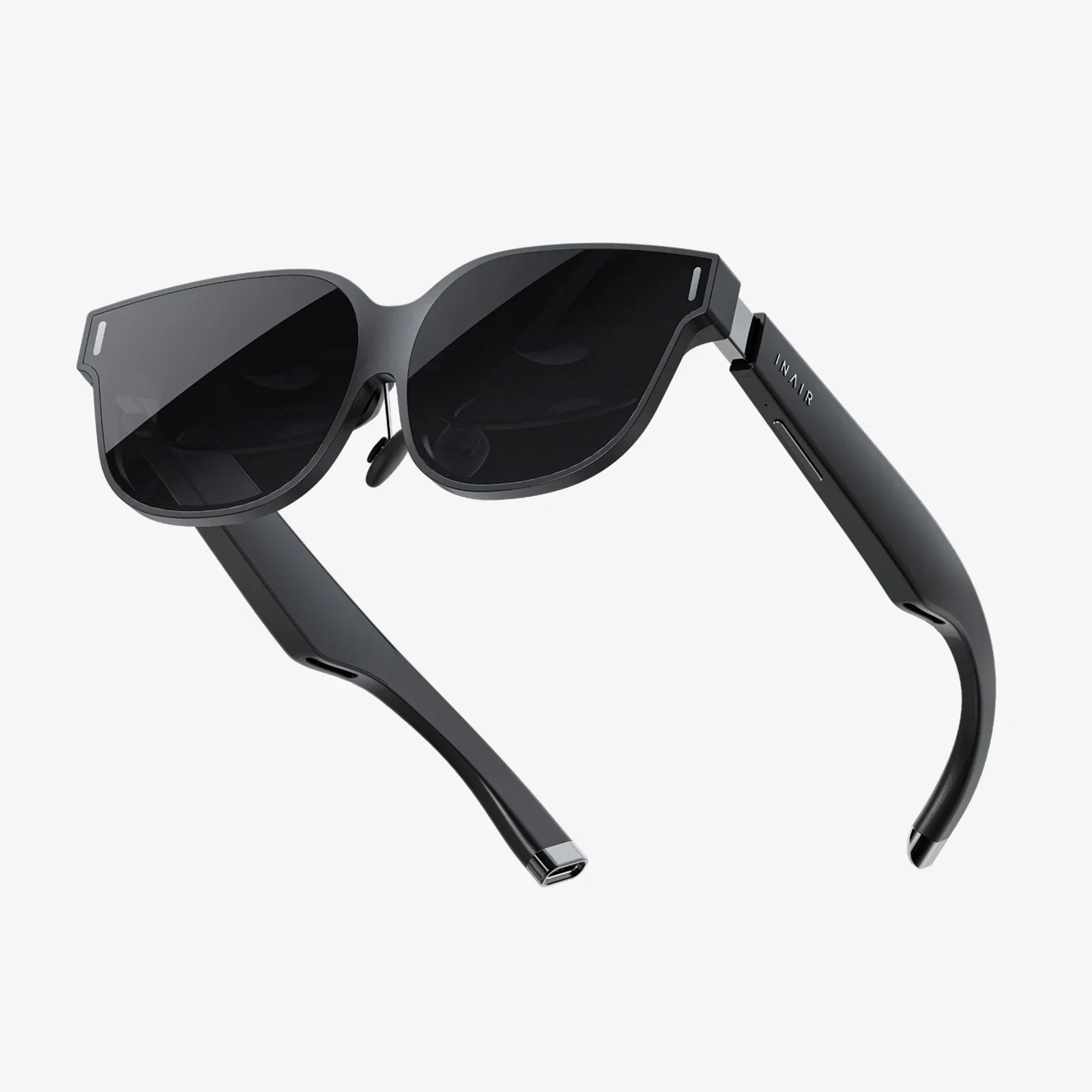
VR Headset Introduction: Your Portal to Immersive Digital Realities
- by wangfred
Imagine standing on the surface of Mars, feeling the desolate, red sand beneath your virtual boots. Picture yourself sitting in the front row of a concert thousands of miles away, the music thrumming through you as if you were truly there. Envision learning complex human anatomy by walking through a beating, larger-than-life heart. This is no longer the stuff of science fiction. This is the promise and the power of the modern virtual reality headset, a device that has evolved from a clunky curiosity into a sleek portal to infinite experiences. The digital frontier is no longer on a screen in front of you; it now surrounds you, and it is waiting to be explored. The journey begins with a single piece of technology, a gateway to the impossible: the VR headset.
At its essence, a VR headset is a sophisticated piece of hardware designed to trick your brain into believing you are somewhere you are not. This illusion, known as presence, is achieved through a complex interplay of several key technologies working in perfect harmony.
The most direct interface between you and the virtual world is the display. Modern headsets use two high-resolution screens (one for each eye) or a single screen split into two segments. These are typically LCD or OLED panels, chosen for their fast response times and rich color reproduction. The screens are positioned very close to the eyes, but special lenses refocus and reshape the picture for each eye, creating a wide field of view (FOV) that fills your peripheral vision. This stereoscopic vision is crucial for depth perception, making a flat image feel like a vast, three-dimensional space. The pursuit of higher resolution and a wider FOV is a constant driver of innovation, aiming to eliminate the "screen door effect"—the faint visible grid between pixels—and create a truly seamless visual experience.
For the virtual world to react to you, the headset must know its precise position and orientation in physical space. This is accomplished through a combination of internal and external sensors.
Your hands are your primary tools for interacting with the world, and VR controllers are their digital analogs. These wireless devices are packed with their own sensors, allowing the system to track their position and rotation. They feature buttons, joysticks, triggers, and touch-sensitive surfaces to provide a rich input language. More importantly, advanced haptic feedback systems use precise vibrations and force feedback to simulate the feeling of touching virtual objects—the recoil of a weapon, the thump of a basketball, or the subtle texture of a virtual interface. This tactile feedback is a giant leap towards true immersion, bridging the gap between seeing an action and feeling it.
Sound is half of the experience. Spatial audio, or 3D audio, is a critical technology that makes sounds appear to come from specific points in the virtual space. If someone calls your name from behind in a game, you will hear it from behind. This is achieved through advanced audio processing that mimics how human ears perceive sound direction and distance using head-related transfer functions (HRTF). Many high-end headsets build this technology directly into the headstrap, using speakers that sit close to, but not on, the ears, preserving immersion while allowing you to hear real-world sounds if necessary.
While gaming is the most famous application, the utility of VR headsets extends far beyond entertainment, revolutionizing fields from education to enterprise.
Gaming in VR is a fundamentally different activity. Instead of controlling a character on a screen, you become the character. The adrenaline rush of a firefight, the tension of a horror game, and the wonder of exploring a fantasy world are all exponentially heightened by the first-person perspective. Beyond gaming, VR is creating new forms of narrative. Cinematic VR experiences place you inside the movie, able to look around and choose where to focus your attention. Social VR platforms allow you to meet friends, attend events, and collaborate in virtual spaces as customizable avatars, offering a powerful sense of shared presence that video calls cannot match.
VR provides a safe, controlled, and incredibly effective environment for training. Medical students can practice complex surgical procedures on virtual patients without risk. Mechanics can learn to repair intricate machinery with a digital twin. Astronauts have used VR for decades to simulate missions. This "learning by doing" approach drastically improves knowledge retention and skill acquisition. Imagine a history class where students can virtually walk through ancient Rome, or a biology lesson where they can shrink down to explore the human bloodstream. The potential for immersive education is limitless.
Architects, engineers, and designers are using VR to visualize their creations long before the first brick is laid. Clients can take a photorealistic walkthrough of a building that only exists as a digital model, allowing them to experience the scale, lighting, and flow of a space and make informed changes. This saves immense amounts of time and resources, preventing costly mistakes and ensuring the final product meets expectations.
The power of immersion is being harnessed for mental and physical health. VR exposure therapy is a proven method for treating phobias (like fear of heights or flying) and PTSD by gradually exposing patients to triggers in a safe, controllable environment. Physical therapists use engaging VR games to motivate patients during rehabilitation exercises. Furthermore, VR meditation apps can transport users to serene beaches or peaceful forests, offering a powerful tool for mindfulness and stress relief.
With several categories of headsets available, choosing the right one depends on your priorities: convenience, performance, or accessibility.
These all-in-one devices have the computer, display, and sensors built directly into the headset. They are completely wireless, requiring no connection to an external device, making them the easiest to set up and use. They offer incredible freedom of movement and are the most accessible entry point into high-quality VR. The trade-off is that their processing power is self-contained, so the graphical fidelity and complexity of experiences are generally lower than what is possible on more powerful, tethered systems.
These headsets act as a display and sensor package that must be connected via a cable to a powerful external computer. This computer handles all the heavy graphical processing, enabling the highest possible resolutions, the most detailed textures, and the most complex and visually stunning experiences available. This is the domain of the enthusiast and the professional, offering unparalleled performance for cutting-edge gaming, simulation, and design work. The obvious downside is the cable, which can limit movement and break immersion, and the significant additional cost of the required high-end computer.
This category, which involved slotting a smartphone into a head-mounted holder with lenses, was instrumental in introducing millions to the concept of VR. However, it offered a limited experience with poor tracking, low fidelity, and a lack of immersive controllers. This category has largely been phased out and superseded by the far superior standalone headset.
The technology is advancing at a breathtaking pace. Several key developments are poised to make VR headsets even more compelling, comfortable, and socially integrated. The pursuit of visual perfection continues with varifocal displays, which dynamically adjust focus to mimic how human eyes perceive objects at different distances, reducing eye strain. Eye-tracking technology will not only enable more intuitive interfaces (menus that activate by looking at them) but also allow for foveated rendering—a technique that renders only the center of your vision in high detail while subtly reducing the quality in your periphery, drastically reducing the processing power needed. The ultimate goal is a shift towards more natural forms of interaction, moving beyond controllers to advanced hand-tracking and, eventually, direct neural interfaces. Furthermore, the lines between VR and its sibling technology, augmented reality (AR), are beginning to blur. Future headsets may offer a seamless blend of the digital and the physical, overlaying useful information and digital objects onto the real world through high-resolution passthrough cameras.
The age of passive observation is over. We are entering an era of experience, and the humble VR headset is your ticket to the main event. It’s a key that unlocks not just new games, but new ways to connect, to learn, to create, and to see the universe—and our place within it—differently. This is more than just hardware; it’s the beginning of a fundamental shift in how we interact with technology itself. The virtual frontier is vast, unexplored, and expanding every day. All you have to do is put on the headset and take the first step.
Share:
What Kind of VR Headset Should I Buy - The Ultimate 2024 Buyer's Guide
Can VR Headset Damage Eyes? An In-Depth Look at the Science and Safety