


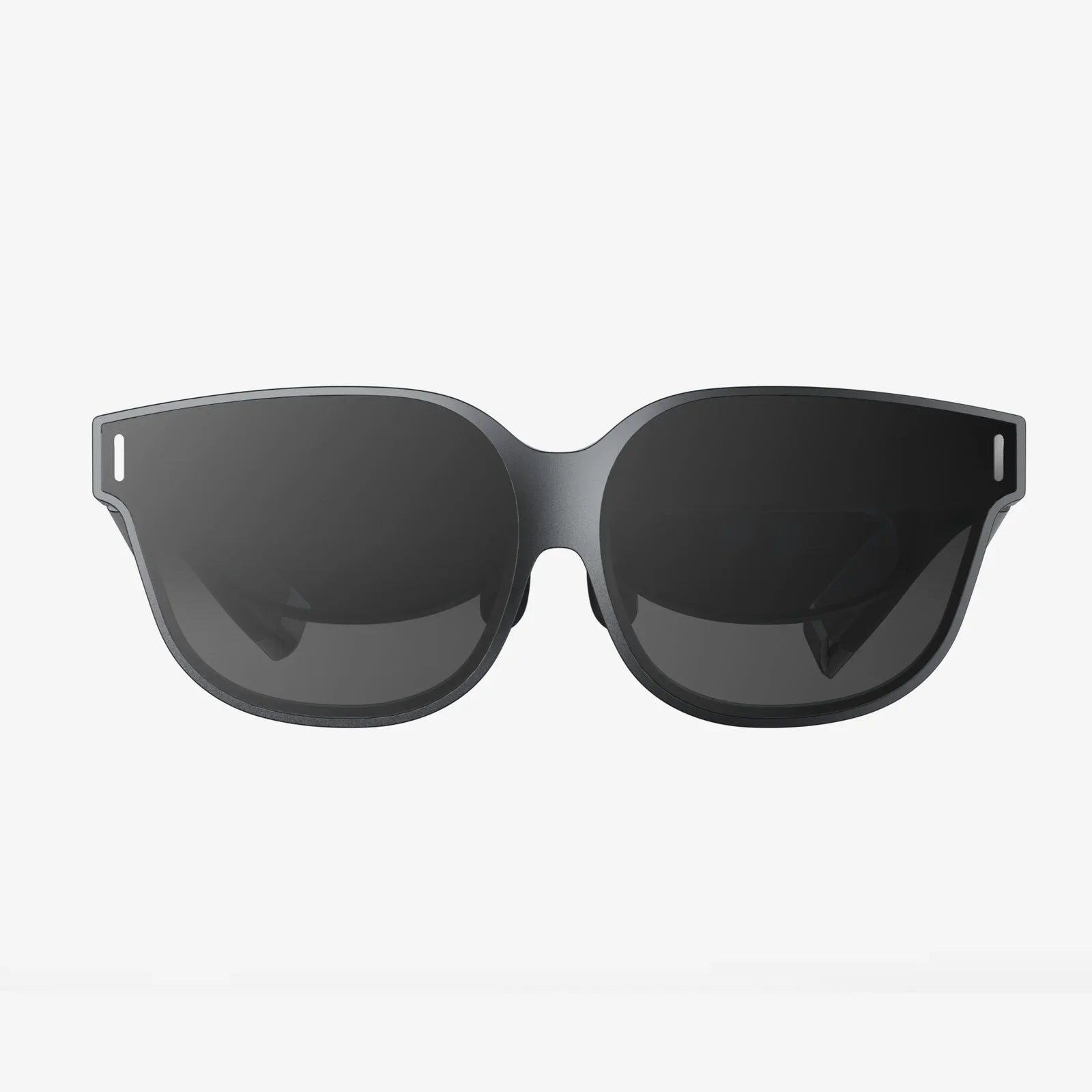
The virtual reality landscape is no longer a futuristic fantasy but a burgeoning reality, and at its core lies a device that serves as the gateway to these digital realms: the VR headset. To the casual observer, the market might appear as a homogenous collection of face-mounted computers. However, a closer examination reveals a highly stratified and strategically segmented ecosystem. Understanding VR headset market segmentation is crucial for manufacturers, developers, investors, and consumers alike, as it dictates everything from technological innovation and content creation to pricing strategies and target audiences. This deep dive unravels the intricate layers of this market, moving beyond a one-size-fits-all view to explore the distinct categories vying for dominance in the immersive future.
The Pillars of Segmentation: Beyond Just Price
Market segmentation for VR headsets is primarily built upon a foundation of key differentiating factors. While price is the most visible and immediate differentiator for consumers, it is ultimately a consequence of deeper technological and functional choices made by manufacturers. The primary axes of segmentation include:
- Processing Power and Dependency: Where does the computational heavy lifting occur? Is it inside the headset (standalone), on an external PC or console (tethered), or within a smartphone (mobile)?
- Intended Use Case and Environment: Is the device designed for high-octane gaming, enterprise training, social interaction, or casual media consumption?
- Feature Set and Technological Sophistication: This encompasses display resolution, refresh rate, field of view, tracking capabilities (inside-out vs. outside-in), and the inclusion of advanced features like eye-tracking and facial expression capture.
- Ecosystem and Content Library: The platform to which the headset is bound, which dictates the available software, services, and social features.
These factors intertwine to create clear, distinct segments, each with its own champions, challenges, and target demographic.
The Apex Predators: The Tethered PCVR Segment
Occupying the high-end tier of the market is the tethered, or PC-connected, VR segment. These devices are the performance powerhouses of the VR world, designed to deliver the most visually stunning, computationally intensive, and immersive experiences possible. They are umbilically connected to a high-end gaming computer or a powerful games console, which acts as their external brain.
Defining Characteristics:
- Unmatched Performance: Leveraging the powerful GPUs and CPUs of modern gaming rigs, these headsets push the boundaries of graphical fidelity, physics simulations, and complexity in virtual environments.
- Premium Experience at a Premium Cost: The total cost of ownership is significant, requiring not only a costly headset but also a substantial investment in the compatible computer hardware.
- Primary Use Case: Almost exclusively targeted at hardcore gaming enthusiasts, simulation enthusiasts (flight sims, racing sims), and certain professional applications like advanced architectural visualization and R&D where graphical precision is paramount.
- Advanced Features: This segment is often the first to incorporate cutting-edge technologies such as ultra-high-resolution displays, wide field of view lenses, precise outside-in tracking systems (though inside-out is now common), and professional-grade add-ons like full-body tracking suits.
The tethered segment, while not the largest in terms of unit sales, is critically important. It serves as the innovation engine for the entire industry, pioneering new technologies that eventually trickle down to more accessible segments. It creates the "wow" factor and sets the benchmark for what is possible in VR, driving aspiration and fueling the dreams of consumers who may start with more accessible devices.
The Mass Market Contenders: The Standalone/All-in-One Segment
If the tethered segment is the innovation engine, the standalone segment is the growth engine. This category has exploded in popularity and is largely responsible for bringing VR to a mainstream audience. As the name implies, these headsets have all the necessary computing hardware, sensors, and batteries built directly into the device. They require no wires to a PC, no console, and no phone—they are completely self-contained.
Defining Characteristics:
- Ultimate Convenience and Accessibility: The elimination of cables and the need for external hardware dramatically lowers the barrier to entry. Users can simply put on the headset and be in VR within seconds, anywhere with enough space to move safely.
- The Content Conundrum: The experiences are inherently limited by the mobile-grade processors and thermal constraints of a wearable device. While performance has improved leaps and bounds, it cannot rival a high-end PC. Thus, the content is often less graphically complex but designed for broader appeal.
- Diverse Use Cases: This segment has successfully expanded beyond gaming. It is the home of fitness applications, social VR platforms, immersive media consumption (360-degree videos, virtual theaters), and a vast array of casual games and experiences.
- Ecosystem Lock-in: Major players in this space operate walled-garden ecosystems. The hardware is a gateway to a specific digital storefront, social network, and suite of services, creating powerful brand loyalty and recurring revenue streams through software sales.
The standalone segment can be further subdivided into performance tiers. Some devices focus on providing a solid, accessible entry point with a strong emphasis on media and social features. Others position themselves as more powerful "prosumer" devices within the standalone category, offering enhanced performance for serious gaming and even the ability to connect to a PC for a tethered experience, effectively bridging two segments.
The Fading Echo: The Mobile VR Segment
Once a promising avenue for introducing VR to the masses, the mobile VR segment has significantly declined. This model utilized a smartphone, slotted into a head-mounted holder, to act as both the display and the computer for VR experiences. The lenses in the holder would then refract the smartphone's screen for a stereoscopic effect.
Rise and Fall:
- The Initial Promise: Mobile VR was incredibly cheap and accessible. Millions of people already owned the core computational device—their phone. It offered a tantalizing first taste of virtual reality with virtually no commitment.
- Technical Limitations: The experience was severely hampered by the limited processing power of phones (leading to simplistic graphics), the lack of positional tracking (users could only look around, not move within the space), and rapid battery drain. The user experience was often clunky, involving overheating phones and low-quality lenses.
- Displacement by Standalones: The rapid advancement and price reduction of true standalone headsets made the mobile VR value proposition obsolete. Why use an inferior, inconvenient phone-based system when a dedicated, more capable, and still affordable standalone device exists? Major tech companies have since deprioritized and discontinued their mobile VR platforms.
While this segment is now a niche, it played a vital historical role in democratizing access to basic VR and building initial consumer awareness.
The Professional Frontier: The Enterprise VR Segment
Beyond the consumer-facing segments lies a high-stakes, high-value market: enterprise VR. This is not defined by a single form factor but by a purpose. Enterprise-grade headsets are tools designed for business, training, design, and collaboration. They can be modified versions of consumer tethered or standalone devices, or they can be purpose-built from the ground up.
Defining Characteristics:
- Ruggedness and Reliability: Built to withstand use by multiple employees in various environments, often featuring more durable materials, easier-to-clean surfaces, and longer-life components.
- Software and Security: Enterprise devices prioritize software solutions for deployment, management, and security at scale (device management platforms, secure data handling). The content is specialized professional software, not games.
- Specialized Features: These headsets often incorporate technology that is rare or unnecessary in consumer devices, such as ultra-precise inside-out tracking for industrial simulations, varifocal displays for reading text comfortably, and advanced eye-tracking for data collection on user attention and performance in training scenarios.
- Value Proposition: The cost is justified by a return on investment (ROI)—through reduced training costs, improved safety, enhanced design processes, or more effective remote collaboration. The sales cycle is longer and involves B2B relationships, not retail consumer sales.
This segment is less about volume and more about value, with individual headset costs often far exceeding even premium consumer devices due to the specialized hardware and software packages.
The Driving Forces Behind Segmentation
This clear fragmentation of the VR headset market is not an accident; it is the result of powerful, strategic forces.
- Technological Trade-offs: There is a fundamental trade-off between performance and convenience. You cannot have a device that is both as powerful as a high-end PC and as portable and affordable as a standalone headset—at least not with current technology. Manufacturers must choose where on this spectrum they want to compete.
- Addressable Market Size: The potential audience for a $400 standalone headset is orders of magnitude larger than that for a $1,500+ PCVR setup (plus the cost of the PC). Companies aiming for mass adoption are inevitably pushed toward the standalone segment.
- Content as a Kingmaker: The segments are reinforced by their content libraries. A developer creating a graphically intensive AAA game will target the PCVR audience. A developer building a social fitness app will target the largest standalone user base. This creates a feedback loop where hardware attracts certain content, which in turn attracts certain users.
- Strategic Business Models: Some companies sell hardware at or near cost to build a user base and monetize through their software and services ecosystem. Others, particularly in the enterprise space, operate on a high-margin, premium hardware model. These divergent strategies cement the segmentation.
The Future: Blurring Lines and Converging Paths
The boundaries between these segments are not rigid and are beginning to blur. We are witnessing the emergence of hybrid devices that attempt to bridge gaps. For instance, high-end standalone headsets now often feature the ability to connect to a PC, offering users the flexibility to enjoy both the convenience of mobile VR and the power of tethered VR from a single device. This represents a convergence strategy aimed at capturing users across multiple segments.
Furthermore, technological advancements like cloud computing and 5G networks hint at a future where the location of processing power becomes irrelevant. "Cloud VR," where rendering is done on remote servers and streamed to a lightweight headset, could potentially disrupt the entire segmentation model, offering high-end experiences on a convenient form factor. While still in its infancy, this technology poses a long-term threat to the current tethered vs. standalone dichotomy.
The enterprise segment will continue to be a driver of innovation, adopting advanced features like photorealistic avatars and haptic feedback long before they become consumer standards. Meanwhile, the consumer standalone segment will continue to iterate, becoming lighter, more powerful, and more socially integrated, further solidifying its position as the gateway to the metaverse for the average user.
The VR headset market segmentation is a dynamic and evolving framework, a reflection of an industry rapidly maturing and searching for its ideal place in the world. It tells a story of technological constraints, strategic battles, and the diverse ways humanity seeks to escape into and enhance its reality. For anyone looking to understand the present or predict the future of immersive technology, ignoring these critical divisions is to miss the whole picture.
From the untethered freedom of a standalone headset transporting you to a virtual concert to the raw graphical power of a PCVR rig simulating a race car at 200 mph, each segment offers a unique key to a different door in the vast building of virtual reality. The choice of which key to use—and which door to open—is no longer just about budget; it's about purpose, passion, and the profound desire to experience the digital frontier on your own terms. The battle for your field of view is more nuanced and strategically complex than ever before.
Share:
Virtual Goggles for iPhone 7: The Ultimate Guide to Affordable Mobile VR
Best VR Headset Under 25: A Deep Dive into Affordable Immersion