


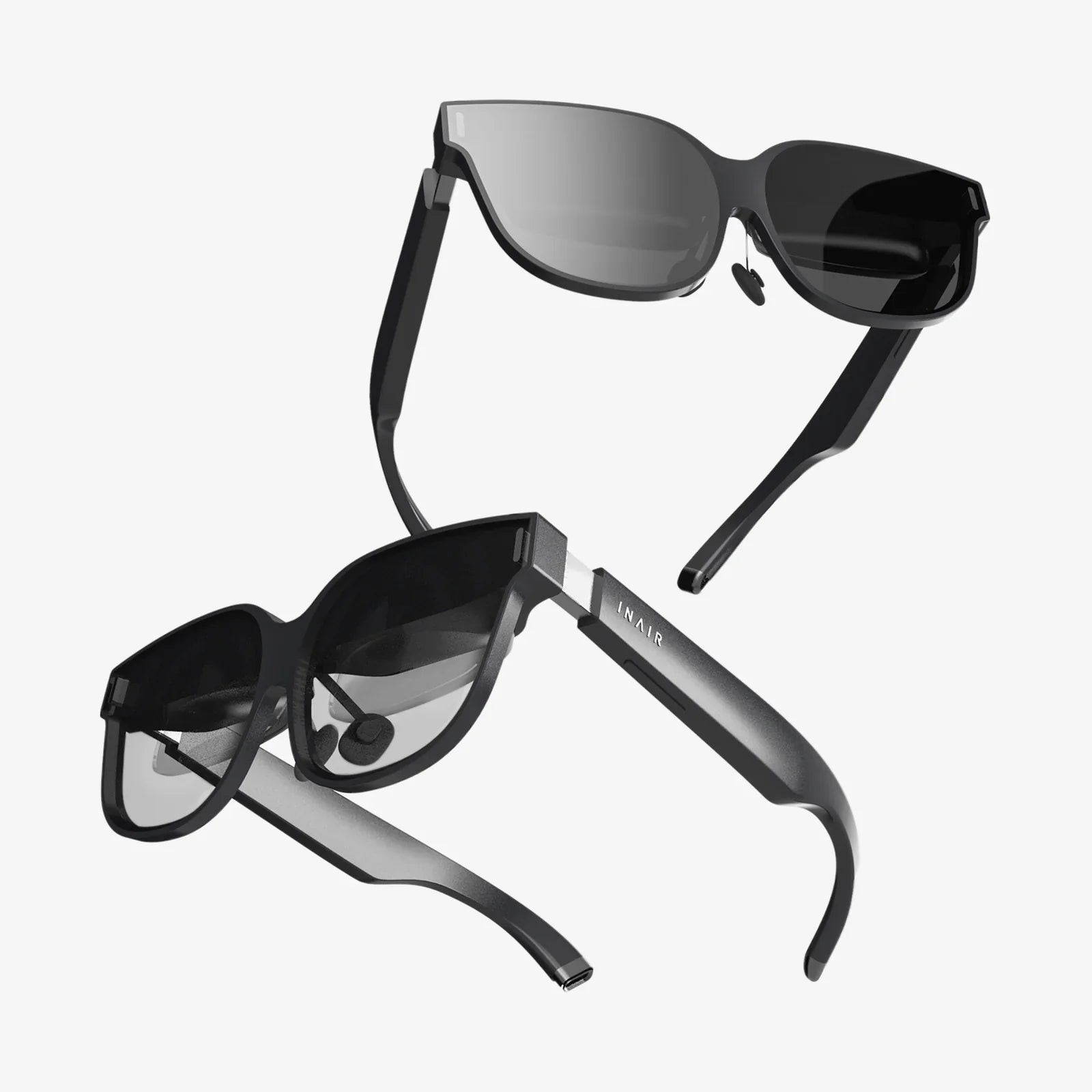
Imagine a device that can transport you from your living room to the edge of a volcano, the depths of the ocean, or a fantastical realm of pure imagination. This is no longer the stuff of science fiction; it's the tangible reality offered by modern virtual reality technology, a revolution arguably ignited by a single, pivotal piece of hardware. The journey of the VR headset, particularly the path carved by a certain pioneering company, has not just created a new gadget but is fundamentally reshaping how we play, connect, work, and perceive reality itself.
The Spark That Ignited the Modern VR Revolution
While the concept of virtual reality has existed for decades, often appearing in clunky, impractical, and astronomically expensive forms, the modern era began with a seismic shift in approach. The critical innovation wasn't just better screens or faster processors; it was a commitment to accessibility and immersion. The foundational idea was to create a device that was powerful enough to convince the brain it was somewhere else, yet attainable enough for the average consumer. This meant solving age-old problems like motion sickness through incredibly low-latency head tracking and developing intuitive, natural input methods that replaced complex button-laden controllers.
The early developer kits demonstrated a proof of concept that captivated both gamers and technologists. It showed that presence—the eerie and powerful sensation of actually being inside a virtual space—was achievable. This pursuit of presence became the north star, driving innovations in display technology, optical engineering, and spatial audio. High-resolution, fast-switching screens were placed behind precisely calibrated lenses to create a wide field of view and eliminate the "screen door effect" that plagued earlier attempts. Sophisticated sensor arrays, including gyroscopes, accelerometers, and external cameras, worked in tandem to track the slightest movement of the user's head with imperceptible delay, which is the absolute key to maintaining immersion and comfort.
Beyond the Hype: The Core Technologies That Make It Work
To understand the impact, one must appreciate the technological symphony inside a modern headset. It's a marvel of miniaturization and software integration.
Visual Immersion: A Window to Another World
The visual experience is the first and most critical pillar. Early consumer units already offered a quantum leap over their predecessors, but the evolution has been relentless. Current-generation devices employ custom-made LCD or OLED panels with resolutions that approach human visual acuity, combined with a high refresh rate that ensures smooth, judder-free motion. This is crucial for preventing sim sickness. The optics have evolved similarly, with advanced Fresnel lenses and now pancake lenses becoming standard, allowing for a much slimmer and lighter headset design without sacrificing visual fidelity or field of view.
Inside-Out Tracking: Cutting the Cords to the Real World
Perhaps the most significant leap forward in usability was the move to inside-out tracking. Initial systems required external sensors placed around the room to monitor the headset's position. The shift to inside-out tracking eliminated this cumbersome setup. Now, with a constellation of cameras embedded on the headset itself, the device can see the world, map its environment in real-time, and understand its own position within it. This technology, powered by powerful computer vision algorithms, not only tracks the headset but also enables features like passthrough—allowing users to see a grayscale or color view of their physical surroundings without removing the device, blending the real and the virtual.
The Controllers: An Extension of Your Hands
Immersion would be broken if you were given a generic gamepad to interact with a 3D world. The development of motion-tracked controllers was a masterstroke. These aren't just wands; they are ergonomic devices designed to be held naturally, with buttons, triggers, and joysticks placed intuitively. Most importantly, they are tracked in full 3D space with sub-millimeter precision. This allows for interactions that feel magical: picking up a virtual object by actually reaching for it, painting in 3D space, or deflecting an incoming laser bolt with a lightsaber by moving your actual arm. Later iterations introduced finger-tracking, capable of detecting individual finger movements, bringing a new level of nuanced expression and control that edges ever closer to using our bare hands.
A New Canvas: The Explosion of Content and Experiences
Hardware is nothing without software. The ecosystem that has blossomed around this technology is vast and diverse, proving its utility far beyond initial expectations.
Redefining Interactive Entertainment
Gaming was the obvious first application, and it remains a powerhouse. VR gaming is not simply playing a game on a screen; it is inhabiting it. The sense of scale, depth, and physicality is transformative. A towering giant feels truly towering. Leaning over a virtual cliff edge triggers genuine vertigo. This medium has given birth to entirely new genres and experiences that are impossible to replicate on flat screens, from rhythm games that have you dancing and slashing to blocks of light, to breathtaking narrative adventures where you are the protagonist in the story. Social VR platforms have also emerged, allowing people to meet, play games, watch movies, and attend events as customizable avatars in shared virtual spaces, offering a compelling vision of the metaverse as a place for genuine human connection.
Transforming Enterprise and Practical Applications
The value of VR extends far beyond the living room. In enterprise, it is revolutionizing training and design. Surgeons can practice complex procedures on virtual patients without risk. Architects and engineers can walk clients through full-scale, immersive models of unbuilt structures. Large corporations use it for immersive employee training simulations, from public speaking to handling dangerous machinery. The ability to simulate any environment or scenario safely and repeatedly is an invaluable tool across medicine, aviation, manufacturing, and education.
The Horizon: Where Do We Go From Here?
The technology is still in its relative infancy, and the path ahead is even more exciting. Several key areas are poised for massive growth. The holy grail for many is achieving true photorealistic realism, leveraging advancements in foveated rendering (where eye-tracking allows the headset to render only the area you're directly looking at in full detail, saving processing power) and ever-higher resolution displays. Haptic feedback technology is advancing to provide not just controller rumble, but full-body suits and gloves that can simulate touch, pressure, and temperature.
Furthermore, the line between AR (Augmented Reality) and VR is blurring. The concept of mixed reality (MR) is gaining traction, where digital objects are seamlessly anchored and interacted with in your real physical space. Imagine having multiple large virtual screens for your work setup, a virtual pet running around your actual apartment, or playing a board game that materializes on your real table. This fusion of the digital and physical promises to be the next major computing platform, changing how we interact with information and with each other on a fundamental level.
Of course, this future is not without its challenges. Questions of privacy, data security, and the long-term psychological effects of spending significant time in virtual environments are critical conversations that must evolve alongside the technology itself. Establishing ethical guidelines and user protections will be essential for building a future that is beneficial for all.
We are standing at the precipice of a new dimension of human experience, one that was unlocked by a simple yet profound idea: that a headset could be more than a display—it could be a portal. The technology has already moved from a niche curiosity to a transformative force across multiple industries, and its potential is only beginning to be tapped. The virtual world is waiting, and it's more real than ever before.
Share:
How Much Is a VR Set? A Complete Guide to Virtual Reality Pricing
International Journal of Human-Computer Interaction: Shaping Our Digital Future