


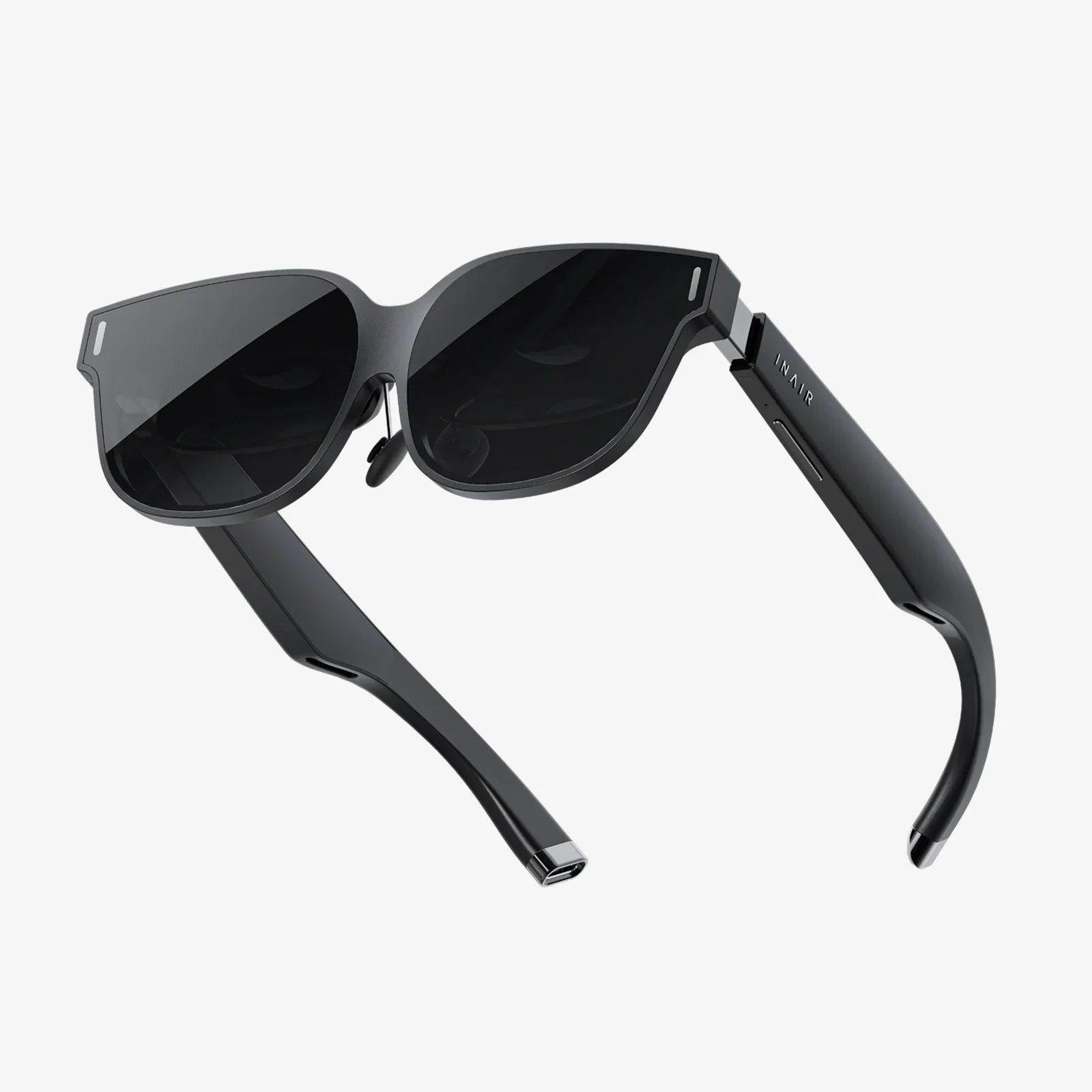
The moment you first lower a VR headset onto your head is a moment of profound transition—a silent click that seals out the familiar world and opens a portal to the impossible. It’s an act that feels both futuristic and instinctively primal, a deliberate step away from the screen in your hand or on your desk and into a realm where the digital universe envelops you completely. This simple gesture, the donning of the device, is the gateway to experiences that can thrill, educate, terrify, and connect us in ways previously confined to the pages of science fiction. It is the beginning of a journey that challenges our very perception of reality itself.
The Evolution of the Interface: From Screen to Sphere
The history of human-computer interaction has been a steady march towards greater immersion. We evolved from punch cards and command lines to the graphical user interface (GUI), which gave us a digital desktop we could navigate with a mouse. The touchscreen then brought us even closer, putting that power directly at our fingertips. But placing a VR headset on your head represents the most significant leap yet. It moves beyond an interface you look at to an environment you exist within.
This shift is fundamental. Instead of manipulating a cursor or a touchpoint, your entire body becomes the controller. Your head turns, and the world turns with you. You reach out a hand, and a digital representation of it reaches out in kind. This embodiment is the core magic of virtual reality. The technology achieves this through a sophisticated combination of components all working in concert the instant the headset is secured:
- Visual Immersion: High-resolution displays are mounted mere centimeters from your eyes, filling your entire field of view. Lenses then focus and reshape the image from these twin screens, creating a stereoscopic 3D effect that gives depth and scale to the virtual world.
- Precise Tracking: A combination of internal sensors (like gyroscopes and accelerometers) and external cameras or lasers tracks the precise orientation and position of your head. This is known as 6 Degrees of Freedom (6DoF), allowing you to not just look around but also lean in, crouch down, and move through the virtual space.
- 3D Audio: Spatial audio is crucial for selling the illusion. Sounds come from specific points in the 3D space around you—a whisper behind your left ear, an explosion in the distance—making the environment feel tangible and real.
The Mind and Body in the Machine: A Psychological and Physiological Journey
The psychological impact of having a VR headset on your head is a rich area of study. The brain is remarkably adept at accepting the virtual world as real, a phenomenon known as presence. When presence is achieved, your logical mind may know you're standing in your living room, but your subconscious reacts to the virtual reality as truth. This is why you might feel a genuine sense of vertigo on a virtual plank high above a city, or an instinctual flinch when a digital dinosaur roars in your face.
This powerful effect has incredible therapeutic potential. Psychologists are using VR exposure therapy to treat phobias and PTSD, allowing patients to confront their triggers in a safe, controlled environment. The simple act of putting on a headset can transport someone to a serene beach for meditation or a calming forest for mindfulness exercises, demonstrating a potent tool for mental wellness.
However, this immersion is not without its physical considerations. For some, the sensory conflict between what the eyes see and what the inner ear feels can lead to simulator sickness, a form of motion sickness. Developers combat this with clever design techniques like fixed-frame references and teleportation movement. Furthermore, the weight and fit of the device itself are critical. A well-designed headset distributes weight evenly to avoid pressure on the face and bridge of the nose, ensuring comfort for extended sessions. The ergonomics of the strap system are as important as the computational power inside, as discomfort is the fastest way to break presence.
Beyond the Game: The Expansive Universe of Applications
While gaming is the most famous application, the value of a VR headset on your head extends far into nearly every professional and creative field.
Revolutionizing Education and Training
Imagine a medical student practicing a complex surgical procedure not on a cadaver but on a hyper-realistic, repeatable virtual patient. Or a history class not reading about ancient Rome but walking through a faithfully reconstructed Forum. VR provides experiential learning that is simply impossible with textbooks or videos. It allows for the safe, cost-effective training of high-risk professions, from pilots and surgeons to welders and mechanics, providing a hands-on experience without the real-world consequences of failure.
Transforming Enterprise and Design
Architects and engineers are using VR to step inside their blueprints and 2D designs. Donning a headset allows them to experience the scale, flow, and lighting of a building before a single brick is laid. Car designers can sit inside the chassis of a new vehicle model, and global teams can collaborate in a shared virtual space as if they were in the same room, manipulating 3D models and data visualizations with an intuitive, natural interface.
Redefining Social Connection and Storytelling
Social VR platforms are creating new forms of interaction where avatars can convey body language and share experiences, from watching a concert together to playing a game of virtual chess. This offers a profound sense of togetherness that video calls cannot replicate. For storytellers and artists, VR is a new canvas. It is a medium for immersive journalism that can place you in the center of a news event and for cinematic experiences where you are not just a passive viewer but an active participant within the narrative.
The Horizon of Tomorrow: What Lies Ahead for the Headset
The technology is advancing at a breathtaking pace. The headsets of the future will be lighter, more powerful, and more comfortable. We are moving towards devices that can do away with external sensors for inside-out tracking and eventually towards varifocal lenses that mimic the eye’s natural focus, reducing eye strain. The ultimate goal is a pair of glasses that can seamlessly transition between augmented reality (AR) and fully immersive VR, blending the digital and physical worlds.
Research into brain-computer interfaces (BCIs) hints at a future where control could be achieved through thought alone, moving beyond handheld controllers. Haptic feedback suits and gloves are already emerging to provide tactile sensation, allowing you to feel the texture of a virtual object. These advancements will only deepen the sense of presence, making the line between the real and the virtual increasingly blurred.
Of course, this future is not without its challenges and ethical questions. Issues of data privacy, psychological long-term effects, and the potential for addiction in hyper-realistic virtual worlds are serious concerns that society must address. The concept of the "metaverse," a persistent network of shared virtual spaces, brings up questions of digital ownership, identity, and economic disparity.
Yet, the potential for positive change is immense. This technology offers new ways to visualize complex problems, connect across vast distances, and experience empathy by seeing the world through another's eyes. It is a tool for creativity, innovation, and human connection unlike any we have seen before.
That initial act—lifting the device, feeling its weight, and settling it onto your head—is more than just putting on a piece of hardware. It is a conscious choice to explore, to learn, to escape, and to connect. It is the modern-day equivalent of opening a storybook and stepping into its pages. As the headset finds its place and the real world fades to black, you are not just a user operating a machine; you are a pioneer standing on the threshold of a new frontier, ready to explore the limitless landscapes of human imagination.
Share:
VR Headset Specifications: The Ultimate Guide to Understanding What Really Matters
Android XR Guide: Your Ultimate Handbook to Navigating the Immersive Future