


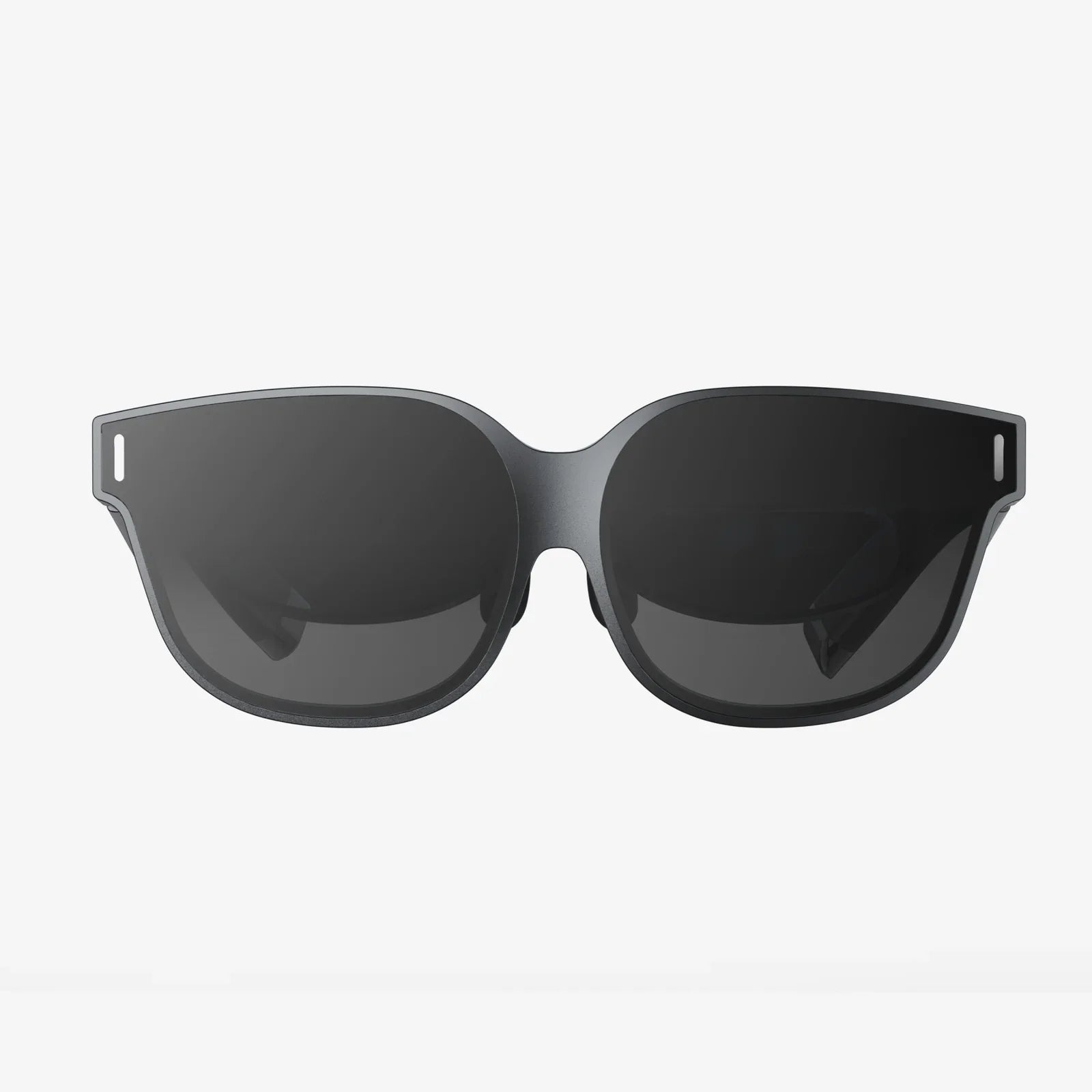
Imagine stepping through a portal into another world, feeling the sun on a virtual beach, standing on the surface of Mars, or sitting front row at a concert happening halfway across the globe. This is no longer the stuff of science fiction; it’s the tangible, awe-inspiring reality offered by the modern VR headset product. These devices are more than just sophisticated pieces of consumer electronics; they are the ultimate keys to unlocking experiences previously confined to our imagination, promising to redefine how we work, learn, connect, and play. The journey into these digital realms is just a headset away, and it’s a journey that is reshaping our perception of reality itself.
The Engine Behind the Illusion: Core Technologies Explained
At its heart, a VR headset product is a masterclass in sensory deception, a carefully orchestrated illusion designed to trick your brain into believing you are somewhere you are not. This magic is powered by a symphony of advanced technologies working in perfect harmony.
Visual Immersion: Screens and Lenses
The primary gateway into virtual reality is through your eyes. Modern headsets employ high-resolution displays—often one for each eye—to create a stereoscopic 3D image. The critical metrics here are resolution, measured in pixels per degree (PPD), and refresh rate, measured in hertz (Hz). A higher PPD reduces the "screen door effect" (where users can see the lines between pixels), while a higher refresh rate, ideally 90Hz or above, ensures smooth motion and drastically reduces the potential for motion sickness. These displays are paired with specialized lenses that sit between your eyes and the screens. These lenses focus and reshape the image, creating a wide field of view (FOV) that fills your peripheral vision, further selling the illusion of being inside the digital world.
Precise Head and Motion Tracking
For the virtual world to feel responsive and real, the headset must know exactly where you are looking and how you are moving. This is achieved through a combination of internal and external sensors.
- Inside-Out Tracking: Cameras mounted on the headset itself constantly scan the surrounding environment, tracking fixed points in the room to understand its position and orientation in real-time. This method offers great freedom of movement without external hardware.
- Outside-In Tracking: External sensors or base stations placed around the play area emit signals (like lasers or infrared light) that are picked up by sensors on the headset and controllers. This method is often praised for its exceptional precision and low latency, crucial for competitive gaming and professional applications.
Audio and Haptics: Completing the Sensory Picture
True immersion is a multi-sensory experience. Spatial audio, or 3D audio, is a critical component. Instead of stereo sound that feels like it’s coming from your ears, spatial audio uses advanced algorithms to make sounds appear to originate from specific points in the 3D space around you. The rustle of leaves behind you or the whisper of a character to your left adds a profound layer of depth and realism.
Similarly, haptic feedback provides the sense of touch. This technology has evolved far beyond simple controller rumbles. Advanced haptics in controllers, and even in specialized suits and gloves, can simulate the texture of a surface, the recoil of a tool, or the impact of a virtual object, creating a powerful physical connection to the digital realm.
Beyond the Game: The Expansive Universe of VR Applications
While gaming remains the most visible and popular application, the utility of a VR headset product extends into nearly every facet of modern life, proving its value as a transformative tool rather than just a toy.
Revolutionizing Education and Training
VR offers an unparalleled medium for experiential learning. Instead of reading about ancient Rome, students can take a guided tour through a meticulously reconstructed digital forum. Medical students can practice complex surgical procedures on virtual patients without risk, allowing for mistake-driven learning. Similarly, VR is revolutionizing corporate and industrial training. Engineers can walk through a full-scale 3D model of a machine before it’s built, and emergency responders can train for high-stress scenarios in a completely safe, controlled virtual environment. The ability to practice, fail, and learn in a realistic yet consequence-free space is a pedagogical breakthrough.
Transforming Social Connection and Remote Work
The concept of the "metaverse"—a persistent network of shared virtual spaces—is being built on the foundation of VR technology. Social VR platforms allow people to gather as expressive avatars, playing games, watching movies, or simply chatting in environments that feel significantly more present and personal than a video call. This has profound implications for remote work. Teams distributed across the globe can collaborate in a shared virtual office, interacting with 3D data models on a whiteboard or brainstorming in a simulated environment, fostering a sense of togetherness that flat screens cannot replicate.
Breakthroughs in Healthcare and Therapy
The therapeutic potential of VR is staggering. It is being successfully used for exposure therapy, helping patients with phobias (like fear of heights or flying) confront their triggers in a gradual, controlled manner. It’s also used for pain management, where immersive experiences can distract the brain from chronic pain signals. For patients undergoing painful procedures or arduous rehabilitation exercises, VR can make the process more engaging and tolerable, often leading to better outcomes.
A New Canvas for Art and Storytelling
Artists and filmmakers are embracing VR as a new medium. Instead of observing a painting or watching a film, you can step inside it. VR art applications allow creators to sculpt and paint in 3D space, while immersive films and experiences place you at the center of the narrative, giving you agency and a unique perspective that traditional media cannot offer. This represents a fundamental shift from storytelling to story-living.
Navigating the Virtual Frontier: Considerations and Challenges
Despite the incredible promise, the world of VR is not without its hurdles and important considerations for both developers and users.
The Comfort Conundrum
Early VR often faced a significant barrier: motion sickness, often caused by a disconnect between what the eyes see (movement) and what the inner ear feels (stationary). While higher refresh rates, better tracking, and software techniques like "comfort mode" tunneling have mitigated this for many, it remains an issue for some users. Furthermore, the form factor itself—strapping a device to your face—can be cumbersome. The industry is relentlessly pursuing lighter, more ergonomic, and ultimately wireless designs to improve comfort for extended use.
The Content Ecosystem
A VR headset product is a portal, but its value is defined by the worlds it can access. The content library, while growing exponentially, is still maturing. The industry faces the classic chicken-and-egg problem: developers need a large user base to justify high-budget projects, and users want high-quality content to justify their purchase. However, the success of several flagship titles and experiences has proven a strong market exists, driving continued investment and innovation in content creation.
Ethical and Social Implications
As with any powerful technology, VR raises important questions. Data privacy is a paramount concern, as these devices can collect highly detailed information about your environment, movements, and even biometric responses. Establishing clear ethical guidelines and robust security protocols is essential. Furthermore, the potential for addiction or for users to retreat into a virtual world at the expense of their physical reality is a topic of ongoing discussion, highlighting the need for healthy usage habits and digital wellness features.
The Next Dimension: What the Future Holds
The evolution of the VR headset product is accelerating at a breathtaking pace. The trajectory points towards devices that are smaller, lighter, more powerful, and more seamlessly integrated into our lives. Key areas of development include:
- Varifocal and Eye-Tracking: Future headsets will track your eyes to know precisely where you are looking. This allows for dynamic focus (simulating depth of field) and enables foveated rendering—a technique that maximizes processing power by rendering only the spot you're looking at in full detail, while the periphery is less detailed, dramatically improving performance.
- Hyper-Realistic Avatars: Advancements in facial tracking and full-body capture will allow our digital selves to express the full nuance of human emotion and movement, making social and professional interactions in VR indistinguishable from reality.
- The Merging of Realities: The line between VR and the physical world will continue to blur through Augmented Reality (AR) and Mixed Reality (MR). Passthrough cameras on VR headsets are already allowing users to see their real environment, enabling digital objects to be placed and interacted with on your actual desk, heralding a future where our digital and physical lives coexist and enhance one another.
The VR headset product has shattered the barrier between the digital and the physical, offering a glimpse into a future where our experiences are not limited by geography, physics, or even our own reality. It is a tool for creation, connection, and exploration on a scale humanity has never before possessed. From the operating room to the classroom, the virtual theater to the social space, its impact is only beginning to be felt. This isn’t just about putting on a headset; it’s about stepping into the next great technological revolution, one immersive experience at a time, and discovering a new way to be human in an increasingly digital age.
Share:
VR Headset Doesn't Work? The Ultimate Guide to Diagnosing and Fixing Your Virtual Reality Problems
Extended Reality Market 2025: A Deep Dive into the Future of Immersive Technology