


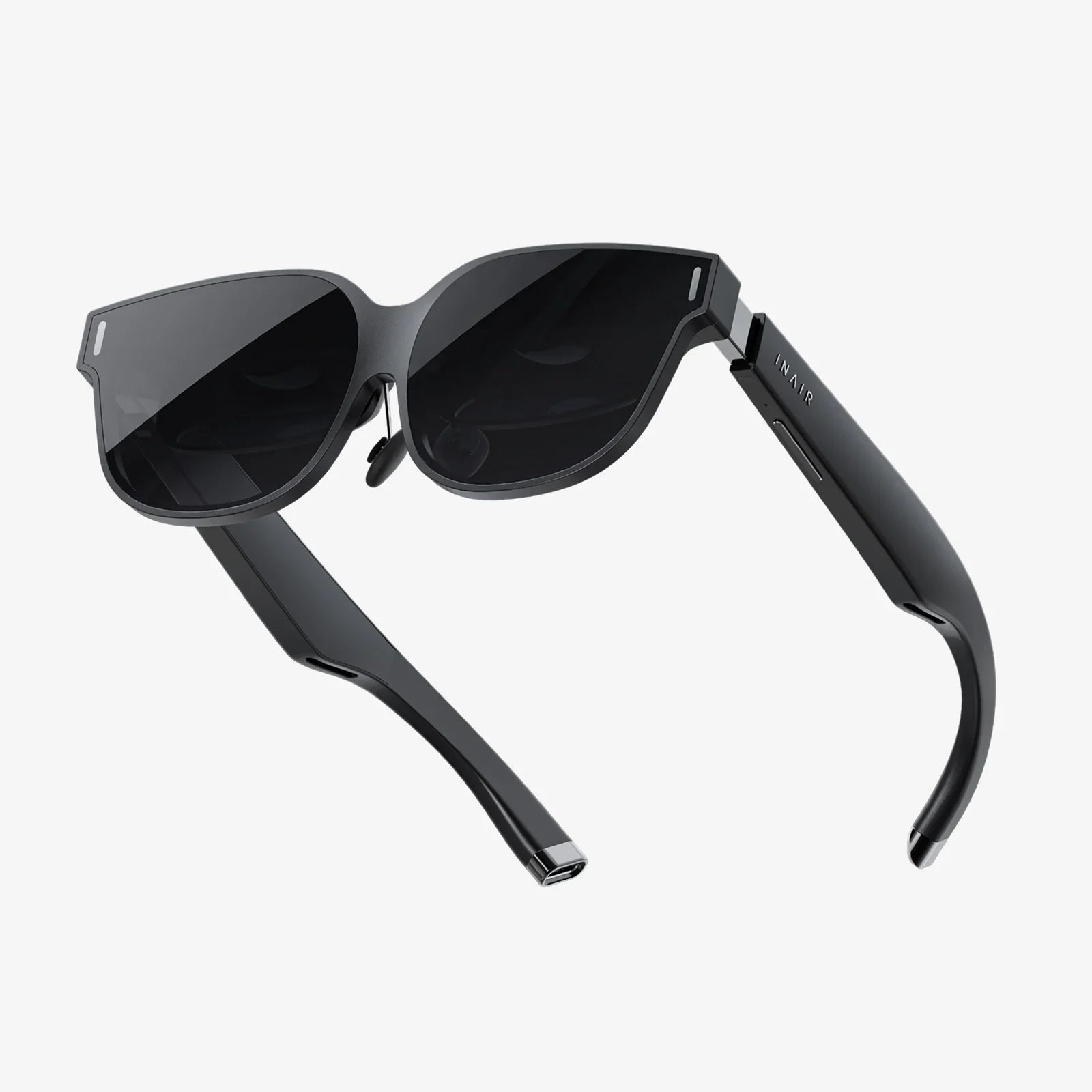
Imagine stepping through your living room wall into a bustling ancient Roman marketplace, feeling the sun on your virtual skin and hearing the chatter of merchants. Or, picture yourself standing atop a virtual skyscraper, your palms sweating as you peer over the edge, your brain completely convinced of the perilous height. This is no longer the stuff of science fiction; it is the immediate, visceral reality offered by modern VR headsets. While many perceive these devices as high-tech gaming peripherals, their true purpose is far more profound, ambitious, and is rapidly evolving to reshape nearly every facet of our lives. The journey of the VR headset is one from niche toy to transformative tool, and understanding its purpose is to understand a significant part of our technological future.
The Foundational Triad: Immersion, Interaction, and Imagination
At its core, the fundamental purpose of any VR headset is to achieve one thing: the suspension of disbelief. This is accomplished through a powerful combination of three key elements.
Total Sensory Immersion
The primary mechanism of a VR headset is to shut out the physical world and replace it with a digital one. High-resolution displays placed mere centimeters from the eyes fill the entire field of view. Advanced head-tracking technology, often using a combination of gyroscopes, accelerometers, and external or internal cameras, ensures that the virtual world responds naturally to the slightest movement of your head. This creates a compelling illusion of presence—the undeniable feeling of "being there." This sensation is the bedrock upon which all other VR purposes are built.
Intuitive Interaction
Immersion would be a hollow experience without the ability to interact with the virtual environment. This is where motion-tracked controllers come into play. These devices translate your real-world hand and arm movements into the digital realm, allowing you to reach out, grab, throw, push, and manipulate virtual objects. The purpose here is to make the interaction as natural and intuitive as possible, bypassing traditional input devices like keyboards and mice to create a direct, embodied connection with the digital world. Haptic feedback, which provides subtle vibrations and forces, further deepens this connection by offering tactile sensations.
Unleashing Imagination
The hardware is merely a vessel. The true magic, and thus a critical part of a VR headset's purpose, is to serve as a canvas for human imagination. Developers, artists, engineers, and storytellers are using this new medium to create experiences that were previously impossible. They can craft worlds that obey different physical laws, recreate historical events with stunning accuracy, or visualize complex data in three-dimensional space. The headset is the gateway through which users access these creations, making it a tool for empathy, education, and pure wonder.
Beyond the Game: The Expansive Ecosystem of VR
While gaming remains a popular and powerful application, it is merely the tip of the iceberg. The purpose of VR headsets has expanded into a multitude of serious and transformative fields.
Revolutionizing Education and Training
VR is perhaps one of the most powerful educational tools ever invented. Its purpose in this domain is to move learning from passive absorption to active experience.
- Historical Exploration: Instead of reading about the pyramids of Giza, students can don a headset and walk through them at their actual scale, witnessing their construction firsthand.
- Scientific Visualization: Medical students can practice complex surgical procedures on virtual patients, making mistakes without consequences. Biology students can journey inside a human cell, watching proteins and DNA interact in a 3D space.
- Skills Training: From welders to airline pilots, VR provides a safe, cost-effective, and repeatable environment to practice high-stakes skills. Emergency responders can train for disaster scenarios that would be too dangerous or expensive to recreate in reality.
The purpose here is clear: to enhance understanding, improve retention, and accelerate mastery through experiential learning.
Transforming Healthcare and Therapy
The therapeutic potential of VR is staggering. Clinicians are using headsets for a variety of purposes that directly improve patient outcomes.
- Exposure Therapy: Patients dealing with phobias (fear of heights, flying, spiders) can be gradually and safely exposed to their triggers within a controlled virtual environment, allowing them to work through their anxiety.
- Pain Management: Immersive VR experiences have been shown to effectively distract patients from acute pain, such as that experienced during wound care or physical therapy for burn victims, reducing the need for medication.
- Cognitive Rehabilitation: Patients recovering from strokes or brain injuries can use VR tasks to retrain their brains, improving motor skills, coordination, and cognitive function in engaging ways.
- Surgical Planning: Surgeons can use VR to visualize and plan for complex operations by exploring 3D models of a patient's specific anatomy derived from CT or MRI scans.
Redefining Enterprise and Remote Collaboration
The global shift to remote work has highlighted a key purpose for VR: overcoming the limitations of video calls. The concept of the "metaverse" or "enterprise VR" is to create persistent virtual workspaces.
- Virtual Prototyping: Automotive and architectural designers can collaborate on life-sized 3D models of cars or buildings, examining every detail long before physical prototypes are built, saving immense time and resources.
- Remote Collaboration: Teams spread across the globe can meet in a virtual boardroom, interacting with 3D data models, presentations, and whiteboards as if they were in the same physical space. This restores the non-verbal cues and sense of shared presence that is lost on traditional video conferencing platforms.
- Virtual Tourism and Real Estate: Potential tourists can take preview trips to holiday destinations, while real estate agents can offer fully immersive virtual tours of properties to clients anywhere in the world.
Fostering Social Connection and Empathy
At its heart, a VR headset is a social technology. Its purpose is to connect people across vast distances in a more meaningful way than a phone or video call ever could.
- Shared Experiences: Friends can gather in a virtual cinema to watch a movie, attend a live concert with avatars of thousands of other fans, or simply hang out in a virtual space, playing games and interacting with natural body language.
- Empathy Machines: Documentary filmmakers are using VR to create powerful pieces that place viewers directly in the shoes of others. You can experience a day in the life of a refugee, gaining a deeper, more visceral understanding of their plight than any news article could provide. The purpose is to foster a global sense of empathy and shared humanity.
The Future Purpose: Towards a Seamless Interface
The evolution of the VR headset's purpose is far from over. We are moving towards a future where the boundary between the physical and digital worlds becomes increasingly blurred.
The Rise of Augmented and Mixed Reality
The line between VR (fully digital) and AR (digital overlays on the real world) is blurring into Mixed Reality (MR). Future headsets will likely serve a dual purpose: capable of full immersion when desired, but also of layering useful digital information onto your physical surroundings. Imagine a mechanic seeing repair instructions overlaid on an engine or a surgeon seeing a patient's vital stats floating beside them during an operation. The purpose shifts from replacing reality to augmenting it.
The Quest for Authentic Social Presence
Future advancements will focus on making social interactions in VR indistinguishable from real life. This involves photorealistic avatars driven by facial and eye-tracking technology that conveys your exact expressions and emotions. The purpose will be to make remote interaction feel truly authentic, potentially reducing the need for physical travel and redefining the concept of community.
Integration with AI and the Internet of Things
VR headsets will become the primary visual interface for interacting with AI and smart environments. You could visualize and interact with a complex AI assistant in 3D space or use gesture controls to manage the lighting, temperature, and entertainment systems in your smart home. The purpose expands from being a portal to virtual worlds to being a central command center for your digital life.
The humble VR headset, often misunderstood as a mere gaming gadget, is in reality a key that unlocks doors to new dimensions of human experience. Its purpose is as vast as our own creativity—to heal, to teach, to connect, and to explore. It is a mirror reflecting our own world with new clarity and a window into worlds we have yet to imagine. As the technology continues to shrink, become more powerful, and seamlessly integrate into our lives, the question will slowly shift from "What is the purpose of a VR headset?" to "What aspect of my life has it not yet enhanced?" The next chapter of human-computer interaction is being written not on a screen, but all around us.
Share:
AI Sunglasses Features: The Ultimate Guide to Smart Eyewear Technology
VR Headset Watching Movies: The Ultimate Guide to a Revolutionary Cinema Experience