


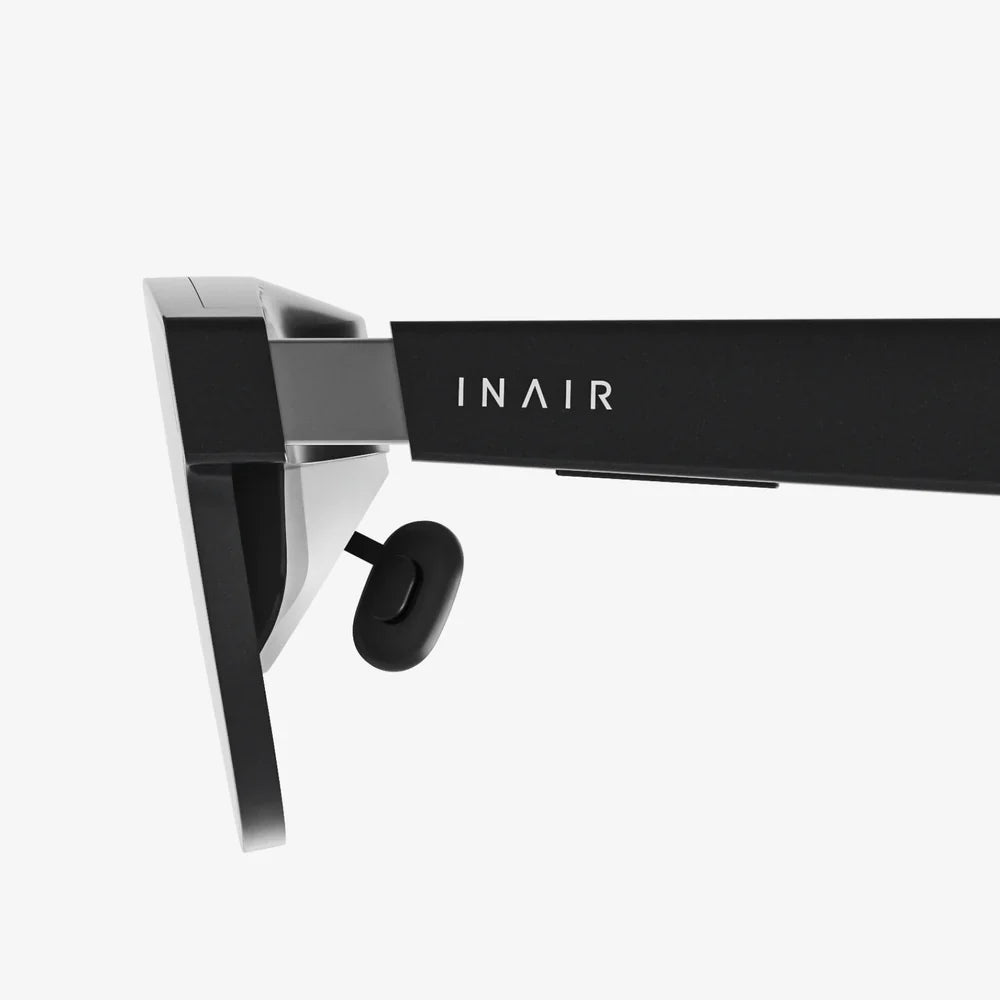
Imagine slipping a sleek, futuristic visor over your eyes and being instantly transported from your living room to the edge of a volcano, the front row of a concert, or the bridge of a starship. This isn't science fiction; it's the everyday magic made possible by a VR headset that uses your phone. This ingenious category of technology transformed smartphones from mere communication devices into powerful portals for virtual exploration, democratizing an experience once reserved for high-end enthusiasts and placing it directly into the pockets of millions. The journey from a simple piece of cardboard to sophisticated, interactive headsets is a story of innovation, accessibility, and the untapped potential hiding in our hands.
The Genesis of a Revolution: How It All Began
The concept was deceptively simple yet revolutionary. The core idea hinges on a fundamental truth: a modern smartphone is a technological marvel. It packs a high-resolution display, a powerful processor, sophisticated motion sensors (gyroscopes, accelerometers), and a capable audio system. A VR headset that uses a phone is, at its heart, an elegant harness for this existing technology. It provides the lenses that warp and focus the smartphone's screen into a stereoscopic, immersive 3D view, and the structure that blocks out external light and sound, allowing you to become fully absorbed in the digital realm.
The story cannot be told without mentioning the pivotal moment in 2014 when a simple, low-cost prototype made of cardboard, magnets, and rubber bands was unveiled. This wasn't just a product; it was an open-source concept that sparked a global movement. It demonstrated that immersive VR didn't require a thousand-dollar investment. Almost overnight, developers and manufacturers saw the potential, leading to an explosion of more refined, comfortable, and functional headsets made from durable plastics and foams, complete with adjustable head straps and improved lenses.
How the Magic Works: A Technical Breakdown
Understanding the mechanics demystifies the experience. The process is a fascinating synergy between your phone's hardware and the headset's design.
The Display and Lenses
Your phone's screen is divided into two identical images, one for each eye. The headset's lenses are the crucial component that makes this work. They are placed between your eyes and the screen, performing two key functions. First, they magnify the image to fill your entire field of vision. Second, and more importantly, they correct the image using a technique called "barrel distortion." The software pre-warps the image in the opposite way, so when viewed through the lenses, it appears perfectly normal and incredibly vast, creating the illusion of depth and space.
The Invisible Guides: Tracking Movement
Immersion would be impossible if the virtual world didn't move with you. This is where your phone's built-in sensors come into play. The gyroscope detects rotational movements—when you turn your head left, right, up, or down. The accelerometer senses linear motion, like leaning forward or sideways. The magnetometer acts as a digital compass, helping to correct for drift and maintain a stable horizon. Together, these sensors provide what is known as 3 Degrees of Freedom (3DoF) tracking, allowing you to look around the virtual environment naturally. More advanced models sometimes include an external controller, which connects via Bluetooth and uses its own sensors for basic interaction.
The Software Ecosystem
The hardware is useless without the software to drive it. This led to the development of dedicated platforms and app stores. These digital marketplaces became hubs for VR content, hosting everything from immersive 360-degree videos and simple games to educational apps and virtual tours. The software development kits (SDKs) provided by these platforms made it easier for creators to build experiences specifically optimized for mobile VR, ensuring smooth performance and a comfortable user experience.
The Golden Age: Accessibility and Mainstream Adoption
The impact of phone-based VR was immediate and profound. Its primary advantage was, and remains, accessibility. For a fraction of the cost of a high-end PC-connected system, anyone with a compatible smartphone could dive into VR. This low barrier to entry was a gift to consumers and developers alike.
For the first time, filmmakers could experiment with 360-degree storytelling, placing the viewer directly in the scene. Educators found new ways to engage students, from virtual field trips to ancient Rome to interactive human anatomy lessons. Game developers explored new genres of casual, immersive gaming. Brands and marketers created innovative virtual experiences to showcase products and destinations. It became a popular tool for showcasing real estate, allowing potential buyers to take virtual walkthroughs of properties from anywhere in the world.
This period was the true democratization of virtual reality. It wasn't the most powerful VR experience available, but it was the most accessible, introducing the concept to a massive global audience and proving there was a hungry market for immersive content.
Weighing the Experience: Strengths and Limitations
Like any technology, phone-based VR is a study in trade-offs, offering incredible accessibility at the cost of raw power and some advanced features.
The Advantages: Why It Captured Our Imagination
- Unbeatable Affordability: The most significant advantage. The headset itself is inexpensive, and the computational power comes from a device many already own.
- Remarkable Portability: These headsets are typically lightweight, compact, and require no external wires or base stations. You can easily slip one into a bag and experience VR at a friend's house, in a hotel room, or even outdoors.
- Simplicity and Ease of Use: The setup is often as simple as inserting a phone, launching an app, and placing the headset on your head. There's no complex PC setup, driver installation, or cable management.
- A Gateway to VR: For countless people, this was their first taste of virtual reality. It served as a perfect introduction, fostering interest and building the foundational market for more advanced technologies.
The Challenges: The Limits of Mobile Power
- Performance Constraints: A smartphone's processor and battery are not designed for the sustained, high-intensity workload of premium VR. This can lead to graphical limitations, shorter session times due to battery drain and device overheating, and a less smooth experience overall.
- Limited Interaction: Most basic headsets offer only rotational tracking (3DoF). You can look around, but you cannot lean in, walk through, or use your hands naturally in the space. While some systems included simple controllers, they couldn't match the precision of external sensors used by dedicated systems.
- The Comfort Factor: Adding a relatively heavy smartphone to the front of a headset can make it front-heavy and uncomfortable for extended periods. Furthermore, the lenses and screens, while good, are generally not on par with the dedicated, higher-refresh-rate displays found in premium standalone devices.
- Fragmentation: With a vast array of Android and iOS devices on the market, each with different screen sizes, resolutions, and sensor quality, developers faced a challenge in creating consistent experiences for all users.
The Evolutionary Crossroads: The Rise of Standalone VR
The technology landscape is perpetually shifting. The immense popularity and proven market demand created by phone-based VR paved the way for its natural successor: the standalone VR headset. These all-in-one devices addressed the core limitations of the phone-powered model. They integrated a dedicated, optimized display, a processor designed specifically for VR workloads, built-in batteries, and, most importantly, advanced inside-out tracking systems that enable full 6 Degrees of Freedom (6DoF). This means the headset can track not just your head rotations but also your positional movement through space, and controllers can track the precise movement of your hands, unlocking a new level of immersion and interaction.
The arrival of these powerful, yet still relatively accessible, standalone headsets shifted the industry's focus. Support for many phone-based VR platforms waned as tech companies channeled their resources into this new, more capable category. This led many to wonder about the future of the device-that-uses-a-phone model.
A Lasting Legacy and Niche Future
While the spotlight may have moved to standalone devices, the phone-based VR headset is far from obsolete. Its legacy is secure, and it continues to serve important niches. It remains the absolute most affordable entry point into VR. For someone curious but unwilling to make a significant investment, it's a perfect testing ground. It's also an excellent media viewer for consuming 360-degree photos and videos, offering a experience that is still vastly superior to watching on a flat screen.
In educational contexts, where budget is often a primary concern, these headsets offer a way to deploy VR to an entire classroom at a manageable cost. The technology also continues to evolve in interesting ways. Newer models feature improved lenses, better comfort designs, and even wireless controllers that provide a more interactive experience than relying solely on a head-tracking gaze pointer.
The story of the VR headset that uses a phone is not one of obsolescence, but of evolution. It was the necessary catalyst that brought virtual reality out of the laboratory and into the mainstream consciousness. It proved the concept, built the audience, and inspired the next generation of immersive technology. It demonstrated that sometimes, the most powerful innovations aren't about creating something entirely new, but about seeing the hidden potential in the technology we already have. That powerful supercomputer in your pocket will always be ready to serve as your ticket to another world, waiting only for a simple headset to unlock its immersive potential.
Your smartphone is more than a communication device; it's a dormant gateway to adventure, education, and experiences limited only by imagination. While the VR landscape continues to evolve at a breakneck pace, the humble headset that started it all remains the easiest and most affordable way to tear a hole in reality and step through. The next world you explore might just be a simple download and a click away, hidden in plain sight within the device you already hold.
Share:
Extended Reality News: The Dawn of a New Informative Dimension
How Much Is a VR Headset Cost? A Complete Price Breakdown