


- by wangfred
VR Headset Trends 2025: The Immersive Future is Now
- by wangfred
Imagine slipping on a pair of sleek, lightweight glasses and instantly being transported to a front-row seat at a live concert on the other side of the world, collaborating with colleagues as lifelike holograms in your living room, or training for a complex surgical procedure with tactile feedback so real you can feel the subtle resistance of tissue. This isn't a distant science fiction fantasy; it's the palpable future being forged by the groundbreaking VR headset trends of 2025. The industry is undergoing a radical transformation, moving beyond niche gaming peripherals to become the next fundamental computing platform, and the innovations on the horizon promise to redefine human connection, creativity, and experience itself.
For years, the quest for higher resolution has been the primary driver of headset development. In 2025, while pixel density continues to climb, the focus has dramatically shifted to achieving holistic visual fidelity that tricks the brain into complete belief.
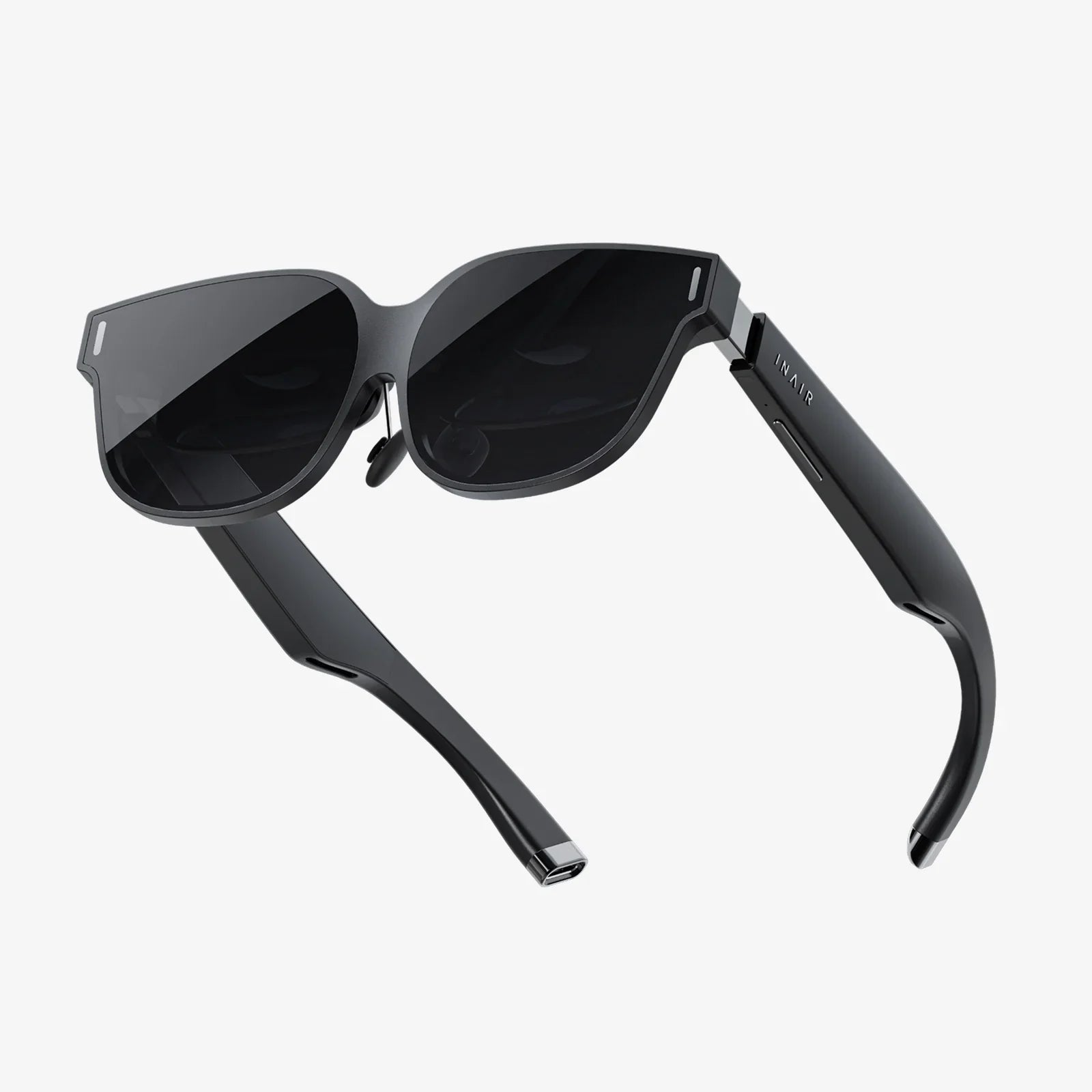
Micro-OLED and Pancake Lenses: The bulky, front-heavy designs of the past are being replaced by sleek, glasses-like form factors. This is largely thanks to the widespread adoption of Micro-OLED displays, which offer incredibly high pixel-per-degree density and perfect blacks in a minuscule package. Coupled with advanced Pancake lens systems, these displays allow for a drastic reduction in the distance between the screen and the eye, slimming down the entire headset profile without compromising on a massive, crisp field of view.
High Dynamic Range (HDR) and Eye-Tracking: Resolution is meaningless without contrast and color. In 2025, high-fidelity HDR is becoming standard, enabling visuals that burst with the same vibrant luminosity and deep shadows we expect from premium televisions. This is intelligently powered by sophisticated eye-tracking technology. By knowing precisely where you are looking, the headset can employ foveated rendering—a technique that renders the center of your vision in ultra-high detail while subtly reducing the quality in your peripheral vision. This massive computational saving allows for photorealistic graphics without requiring impossibly powerful and expensive hardware, making high-end VR more accessible.
Varifocal Displays and Resolution: A longstanding challenge in VR has been the vergence-accommodation conflict—your eyes struggle to focus on virtual objects at different distances because the screen is fixed. 2025 sees the commercial arrival of varifocal displays, which dynamically adjust the focal plane of the lenses to match the depth of the virtual object you're looking at. This eliminates eye strain and is a monumental leap towards achieving true visual comfort and depth realism, making prolonged sessions in virtual environments feel completely natural.
The archetypal VR headset—a bulky box strapped to your face—is becoming obsolete. The trend is decisively moving towards minimalism, comfort, and all-day wearability.
The Rise of Standalone and Ultra-Lightweight Designs: The tether to a powerful external computer is being severed for all but the most extreme professional applications. Standalone headsets are now the norm, with on-board processing power that rivals last-generation consoles. These devices are incredibly lightweight, often using advanced materials like magnesium alloys and carbon fiber to reduce weight to under 200 grams. The goal is to create a device you forget you're wearing, moving VR from an intentional activity to an always-available tool.
Mixed Reality as the Default: Pure virtual reality, where the real world is completely blocked out, is becoming just one mode of operation. The dominant trend is towards passthrough AR or mixed reality (MR). High-resolution, color-accurate cameras on the outside of the headset feed a real-time video feed of your surroundings to the internal displays. This allows digital objects to be convincingly anchored to your physical world. You can have multiple large virtual screens positioned around your real-world desk, play a game where digital creatures hide behind your sofa, or follow a holographic recipe overlay while cooking. This seamless blending is turning headsets into versatile tools for work, socializing, and play.
The most significant shift in 2025 isn't just hardware; it's the intelligence that powers it. Artificial intelligence is being baked directly into the headset's silicon and software, transforming it from a passive display into an active, contextual partner.
On-Device AI Processors: Dedicated Neural Processing Units (NPUs) are now a standard component in high-end headset chipsets. This allows for complex AI tasks to be processed locally on the device, ensuring ultra-low latency and protecting user privacy. This onboard intelligence is the engine for everything from advanced avatar expression to real-time environmental understanding.
Contextual Awareness and Generative Environments: Your headset will understand its environment. Using a combination of cameras, depth sensors, and AI, it can map a room, identify objects (a table, a screen, a wall), and understand their properties. This allows digital content to interact realistically with the physical world—a virtual ball will bounce off your real table. Furthermore, generative AI can be used to dynamically create or alter virtual worlds based on voice commands or user behavior, leading to infinitely personalized and responsive experiences.
Intuitive Interaction and AI Companions: Controllers are not going away for intense gaming, but for many tasks, they are becoming optional. AI-powered hand-tracking is now so precise and low-latency that it can track subtle finger movements, allowing for complex gestures and natural interaction with virtual interfaces. Voice assistants have evolved into persistent, contextual AI companions that can guide you through experiences, provide information overlays in real-time, or even serve as non-player characters with incredibly advanced and natural dialogue.
Immersion is more than just what you see. The next frontier is engaging the other senses to create a truly embodied experience.
Advanced Haptics and Force Feedback: Rudimentary vibration is being replaced by sophisticated haptic systems. This includes everything from haptic gloves that provide resistance and texture feedback when you touch a virtual object to full-body suits and vests that can simulate impact, pressure, and even environmental effects like wind or rain. In 2025, we are seeing the emergence of smaller, more targeted haptic actuators integrated directly into headset straps, able to simulate the sensation of rain on your scalp or a whisper close to your ear.
Spatial Audio and Personalization: 3D spatial audio is table stakes. The new trend is personalized audio profiles. Using biometric data, the headset can tailor the audio experience to the unique shape of your ear canal, providing an unparalleled sense of direction and presence. This makes distant voices sound truly distant and nearby actions feel jarringly close, completing the auditory illusion.
The Emerging Frontier of Neural Interfaces: While still in early stages, 2025 is a pivotal year for non-invasive neural input. Consumer-grade headsets are beginning to experiment with electroencephalography (EEG) sensors built into the headstrap. These can read rudimentary brain signals, such as focus or relaxation states, allowing for new forms of biofeedback meditation apps. More excitingly, they are exploring the potential for simple command input—thinking "select" to activate a menu item. This represents the first baby steps towards a future of truly thought-driven interaction.
Powerful hardware is useless without a compelling reason to use it. The trends in software and ecosystem development are finally providing that reason at scale.
The Professionalization of VR: Enterprise and professional use cases are exploding. From architects walking clients through unbuilt designs to medical students practicing complex procedures in risk-free simulations, VR is proving its value as a productivity tool. In 2025, we see the maturation of enterprise-grade software suites for collaboration, design, and training, all built around these new, comfortable, and powerful headsets.
Interoperability and Open Standards: The walled-garden approach is crumbling. The major trend is towards open standards that allow avatars, assets, and experiences to travel between different virtual platforms and worlds. You might create an avatar on one platform and use it to attend a conference in another. This interoperability is the foundational bedrock for a practical and connected metaverse, not as a single destination, but as a layer of interconnected experiences over the internet.
Social and Live Events: The killer app for VR in 2025 is other people. Social platforms are leveraging photorealistic avatars driven by face and eye-tracking, making digital interactions feel incredibly human. Attending live concerts, sporting events, and conferences in VR is becoming a mainstream alternative, offering a sense of presence and shared experience that flat screens cannot replicate.
The trajectory is clear and unstoppable. The VR headsets of 2025 are shedding their clunky, isolating past and evolving into elegant, intelligent portals that enrich our reality rather than replace it. They are becoming the canvas for the next era of human-computer interaction, built on a foundation of seamless visual fidelity, ambient artificial intelligence, and multi-sensory immersion. This isn't just about better games; it's about better tools for work, deeper ways to connect, and new frontiers for human expression and exploration. The line between what is real and what is virtual is not just blurring—it's becoming irrelevant, and the gateway to this new layered existence is sitting right on the bridge of your nose.