


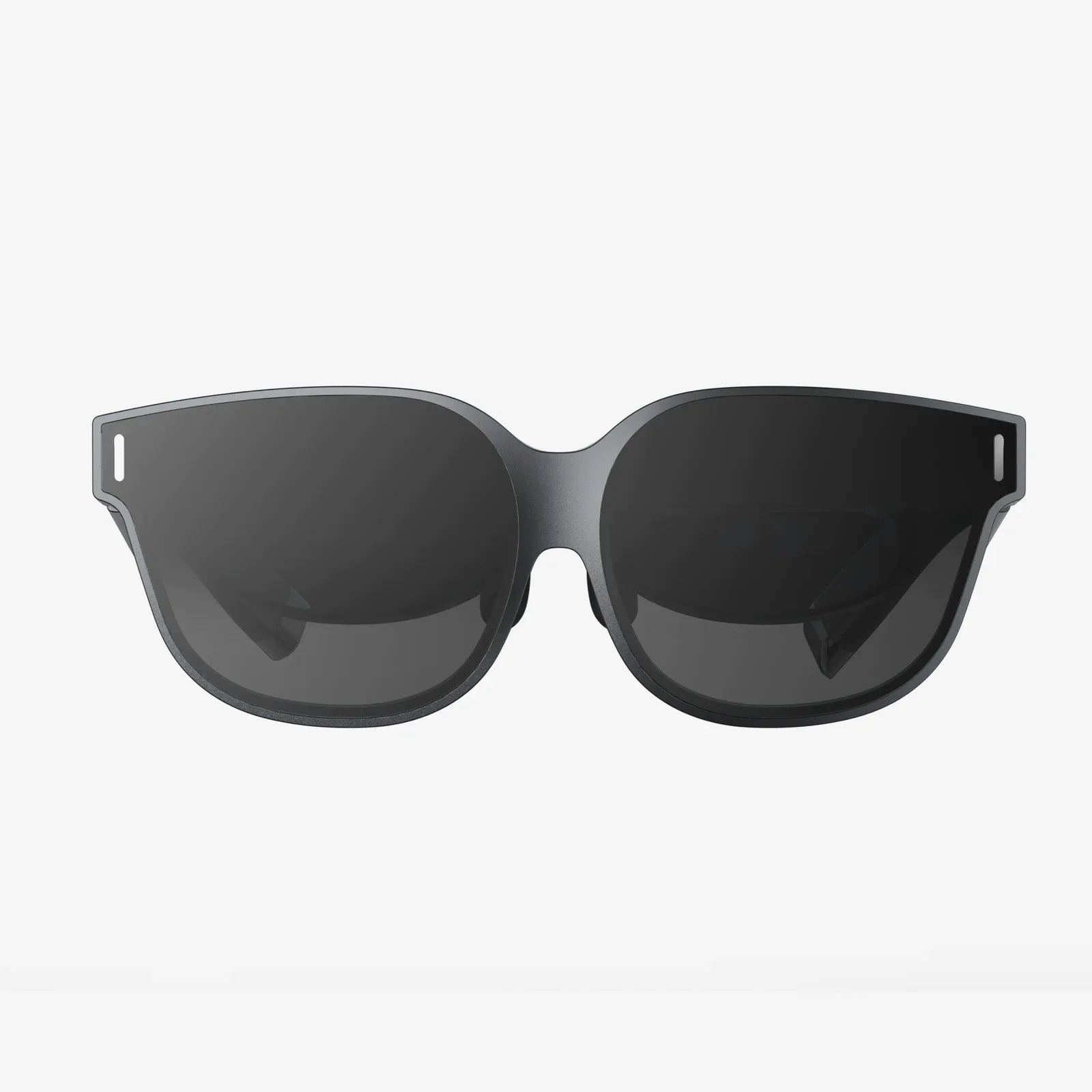
Imagine slipping on a device and instantly being transported to a surgical operating room, a classroom on the other side of the globe, or the surface of Mars. This is no longer the stuff of science fiction; it's the powerful reality unlocked by the modern virtual reality headset. While often associated with pulse-pounding gaming adventures, the true potential of VR technology stretches into nearly every facet of our professional and personal lives, promising a revolution in how we learn, work, heal, and connect.
The Foundational Experience: Entertainment and Gaming
It is impossible to discuss the adoption of VR without acknowledging its most famous application: entertainment. This sector served as the initial catalyst, drawing millions of users into the virtual realm and proving the technology's capability to deliver profound immersion.
The gaming industry has been completely transformed. Players are no longer external controllers of an on-screen avatar; they become the protagonist. The ability to look around a digitally crafted world with natural head movements, to reach out and interact with objects using motion-tracked controllers, creates a level of presence and engagement that flat screens cannot match. From exploring vast open worlds and solving intricate puzzles to experiencing heart-stopping horror scenarios, gaming provides the most immediate and visceral demonstration of VR's power.
Beyond interactive games, VR has created a new paradigm for media consumption. Imagine watching a film not on a rectangle in your living room, but from within the scene itself. 360-degree videos allow users to be passive observers in a fully spherical environment, whether that's front row at a concert, deep within a rainforest, or embedded with a news crew in a conflict zone. This format offers unparalleled empathy and understanding, placing the viewer directly in the shoes of another.
Live events have also found a new home in virtual spaces. Major sports leagues now offer VR streaming, allowing fans to experience games from the best seats in the stadium—or even from the sidelines—all from their homes. Music festivals and concerts are being broadcast in VR, creating a sense of shared experience and community among geographically dispersed attendees. This application saw a significant surge during global lockdowns, providing a vital sense of connection and cultural participation when physical attendance was impossible.
Revolutionizing Education and Training
Perhaps the most promising and impactful of all VR headset uses lies in the field of education and professional training. The technology's ability to simulate any environment or scenario safely, repeatedly, and at a low cost is nothing short of revolutionary.
Immersive Learning
For students, history lessons can be transformed into virtual field trips to ancient Rome or Egypt. Biology classes can involve walking through a scaled-up model of a human cell. Astronomy students can take a spaceship tour of the solar system. This experiential learning boosts engagement and retention by making abstract concepts tangible and unforgettable. Complex subjects like physics and chemistry can be taught through interactive experiments that would be too dangerous, expensive, or simply impossible to conduct in a school lab.
High-Stakes Skill Development
In professional fields, VR training is saving lives and money. Surgeons and medical students can practice intricate procedures on virtual patients, honing their skills without any risk. These simulations can include rare complications, allowing practitioners to experience and manage crises in a controlled setting. Similarly, pilots have used flight simulators for decades, and VR now makes this training more accessible and realistic than ever.
The applications extend to countless other trades. Mechanics can train on virtual engines, welders can perfect their technique, and police officers can de-escalate high-pressure situations through role-play in hyper-realistic scenarios. The headset provides a safe sandbox for making mistakes, learning from them, and building muscle memory and confidence.
Soft Skills and Corporate Training
Corporate training has also been revitalized by VR. Employees can practice public speaking by delivering presentations to a virtual audience, receive training on complex machinery, or run through emergency drills like fire evacuations. Soft skills, such as leadership, empathy, and customer service, are being taught through interactive narratives where the user's choices directly impact the outcome, providing immediate feedback on their interpersonal effectiveness.
Transforming Healthcare and Therapy
The healthcare industry is leveraging VR not just for training, but also for direct patient treatment, diagnosis, and therapy, offering new hope and innovative solutions for a range of conditions.
Pain Management and Distraction Therapy
VR has proven to be a powerful tool for pain management. By immersing patients in calming, engaging virtual worlds, the technology can effectively distract the brain from processing pain signals. This is particularly beneficial for burn victims during wound care dressing changes, for patients undergoing painful medical procedures, and for those dealing with chronic pain conditions, often reducing the reliance on pharmacological painkillers.
Exposure Therapy and Mental Health
In mental health, VR exposure therapy (VRET) is a breakthrough treatment for phobias, anxiety, and PTSD. Therapists can gradually and carefully expose patients to their triggers—such as heights, flying, spiders, or simulated combat environments—within the safety and complete control of a virtual space. This allows patients to confront and process their fears at a manageable pace, building resilience and coping mechanisms that transfer to the real world.
Cognitive and Physical Rehabilitation
For physical rehabilitation, VR turns repetitive and often tedious exercises into engaging games and activities. Patients recovering from strokes, spinal cord injuries, or surgeries can perform prescribed movements in a virtual environment that provides motivation and clear goals, significantly improving adherence to therapy programs. Furthermore, VR is being used for cognitive rehabilitation, helping patients with brain injuries relearn skills and improve memory, attention, and problem-solving abilities through targeted virtual tasks.
Redefining Design, Architecture, and Retail
The concept of "seeing before building" has been taken to a whole new level with virtual reality. Industries that rely on spatial design and prototyping are using VR to iterate faster, collaborate better, and make more informed decisions.
Architects and interior designers can walk clients through photorealistic 3D models of unbuilt homes, offices, and structures. Clients can experience the scale of a room, the flow of a space, and the interplay of light at different times of day, providing feedback that can be incorporated long before ground is broken. This prevents costly changes during construction and ensures the final product meets the client's vision.
Automotive and industrial designers use VR to prototype and examine new vehicle designs or complex machinery at a 1:1 scale, identifying ergonomic or aesthetic issues early in the design process. In retail, VR is powering virtual showrooms and try-before-you-buy experiences. Customers can see how a new sofa would look in their living room, try on virtual clothing, or customize products in a 3D space, enhancing consumer confidence and reducing return rates.
The Future of Remote Work and Social Connection
The massive shift toward remote work has highlighted both the benefits of flexibility and the limitations of traditional video conferencing tools. VR presents a compelling solution, aiming to create a sense of "presence" and shared space that flat screens cannot provide.
Virtual meeting platforms within VR allow colleagues from around the world to gather as lifelike avatars in a shared digital office, conference room, or creative workshop. These spaces can incorporate virtual whiteboards, 3D models, and shared documents, making collaboration on complex projects feel more natural and productive. The subtle body language and spatial audio available in these environments foster a stronger sense of team cohesion and engagement compared to a grid of faces on a screen.
On a social level, VR is fostering new forms of community and connection. Platforms exist where users can meet new people, attend virtual classes, play games, or simply hang out in digital worlds. For individuals who are geographically isolated or have mobility issues, this technology offers a powerful antidote to loneliness, providing a way to share experiences and build meaningful relationships through a profound sense of shared presence.
Accessibility and Considerations for the Future
As with any transformative technology, the expansion of VR headset uses brings challenges that must be addressed. Issues of accessibility, both in terms of cost and physical ability, remain barriers to universal adoption. Not all experiences are designed with motion or visually impaired users in mind. Furthermore, ethical questions regarding data privacy, prolonged exposure, and the psychological effects of increasingly realistic virtual worlds are critical areas for ongoing research and responsible development.
Despite these challenges, the trajectory is clear. The VR headset is evolving from a niche gaming peripheral into a universal tool for human augmentation. As the technology becomes more powerful, affordable, and comfortable, its integration into our daily routines will only deepen.
The humble VR headset is far more than a portal to games; it is a surgical trainer, a classroom, a therapy clinic, a design studio, and a global boardroom. It is a machine for building empathy by letting us walk in another's shoes and a tool for mastering complex skills without real-world risk. We are standing at the precipice of a virtual revolution, limited only by our imagination, ready to strap on a headset and step into the next chapter of human experience.
Share:
Best VR Goggles for iPhone: Your Ultimate Guide to Mobile Immersion
XR VR Headset: The Ultimate Portal to Blended Realities and Uncharted Experiences