


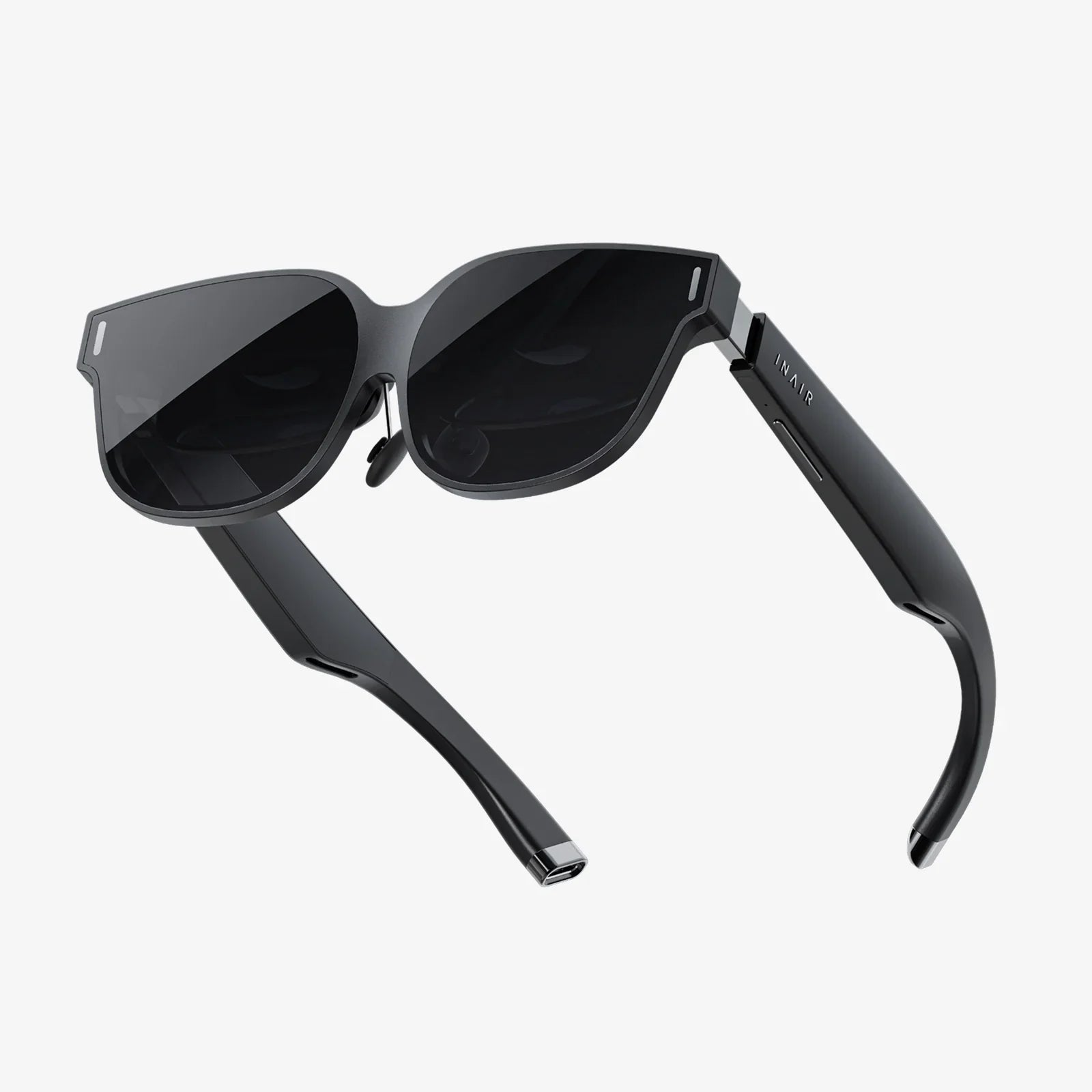
You've saved up, you've done the research, and you're finally ready to take the plunge into virtual reality. The excitement is palpable as you unbox your new portal to other worlds. You power it on, the screens dazzle with promise, and then... you put it on your head. In that moment, the single most important factor separating a transcendent experience from a disappointing one isn't the resolution, the field of view, or the tracking fidelity—it's the often-overlooked, yet critically important, metric of VR headset weight. This unseen burden, or lack thereof, will ultimately dictate every minute you spend in the metaverse, from exhilarating first steps to the inevitable neck strain that can cut your adventures short. Understanding this crucial element is the key to unlocking virtual reality's true potential.
The Physics of Presence: Why a Few Grams Feel Like a Ton
To the uninitiated, discussing a difference of 200 or 300 grams might seem like nitpicking. However, the human head and neck form a delicate biomechanical system that is exquisitely sensitive to additional load. The average human head weighs between 4.5 and 5 kilograms (10-11 pounds). Every additional gram added by a VR headset acts as a lever arm, exerting torque and placing stress on the cervical spine and the intricate web of muscles that support it.
This isn't just about static weight. VR is an active medium. Users are ducking, weaving, looking up at dragons, and down at intricate details on a virtual desk. This dynamic movement dramatically increases the perceived weight and strain. A 600-gram headset during a frantic session of a rhythm game can feel exponentially heavier than the same headset does when you're sitting still watching a 360-degree video. The center of gravity is another paramount factor. A heavier headset with its weight distributed closer to the face and balanced over the center of mass of the skull will feel significantly lighter than a technically lighter headset where the weight is cantilevered out in front, constantly pulling the head forward and forcing the neck muscles to work overtime to counteract the torque.
The Anatomy of Weight: What's Inside That Shell?
To understand the battle over grams, one must first dissect the components that contribute to the overall mass of a VR headset. It's a constant tug-of-war between performance and portability.
- Displays and Optics: High-resolution, fast-refresh-rate displays are the soul of immersion, but they require substantial hardware. Coupled with the complex lens assemblies needed to focus the image for your eyes, this system is a major contributor to overall weight. Advancements like pancake lenses are helping to reduce the depth and, in some cases, the weight of the optical stack.
- Structural Housing: The shell must be rigid enough to protect delicate internal components and maintain the precise alignment of optics and sensors. While manufacturers often use lightweight polymers and composites, achieving structural integrity without adding bulk is a key engineering challenge.
- Processing Power: For standalone headsets, the integrated processor, its cooling system (fans or heat sinks), and the large battery required to power everything represent a significant portion of the device's mass. This is the fundamental trade-off between the convenience of wireless freedom and the added weight it necessitates.
- Tracking Technology: An array of external cameras or internal sensors (IMUs) is essential for tracking head movement. Each sensor and its associated wiring adds incremental weight.
- Audio Solutions: Integrated headphones or spatial audio systems, while convenient, also contribute to the final number on the scale.
- Comfort Counterweights: Ironically, some of the most effective comfort solutions involve adding more weight. A counterweight at the back of the headstrap helps balance the front-heavy load, improving overall comfort even though it increases the total mass the user is carrying.
The Spectrum of Strain: From Featherlight to Formidable
The VR market offers a wide spectrum of weights, each correlating strongly with device type and capability.
On the lighter end of the spectrum (approximately 200-400 grams), you typically find mobile-based holders and ultra-lightweight standalone devices focused on casual media consumption or fitness. These prioritize minimalism and often make compromises on processing power, battery life, and sometimes feature sets like advanced haptics or eye-tracking.
The middle ground (roughly 400-600 grams) is occupied by the majority of mainstream standalone and PC-tethered headsets. This weight class represents the current industry compromise, offering robust feature sets, good performance, and respectable battery life while attempting to keep mass within a tolerable range for most users for sessions lasting one to two hours.
At the heavier end (700 grams and above) are typically professional-grade and enterprise-focused systems. These devices are engineering marvels packed with cutting-edge technology: ultra-high-resolution displays, built-in computers, advanced inside-out tracking with numerous cameras, and integrated audio. They are designed for maximum fidelity and functionality, often with the understanding that they will be used for shorter, more focused sessions or in scenarios where absolute visual quality outweighs comfort concerns.
The Human Factor: Physiology, Perception, and Pain Points
Weight is not an absolute metric; its impact is deeply personal and subjective. A multitude of human factors dictate how a given headset will feel.
- Neck Strength and Physiology: A user's natural neck strength and posture play a huge role. What feels light to one person may be unbearable for another. Underlying neck or back conditions can be exacerbated by even a moderately weighted headset.
- Head Shape and Size: A well-designed strap system can distribute weight evenly across the cranium, mitigating pressure points. For those with larger or smaller-than-average head sizes, finding a headset that fits correctly is paramount to managing weight effectively. A poor fit forces the user to overtighten the straps, creating painful pressure on the cheeks and forehead.
- Session Duration and Content Type: A thirty-minute session playing an active shooter game is a completely different physical experience from a four-hour work session in a virtual office. The longer the session, the more pronounced the effects of weight become, with fatigue accumulating incrementally.
- User Experience and Acclimatization: First-time users often report a heightened sensitivity to weight and discomfort. Regular users can develop a tolerance, much like a runner building endurance, but this does not eliminate the underlying biomechanical stress.
Beyond the Scale: The Art of Distribution and Comfort Design
Manufacturers are engaged in a relentless pursuit of comfort, and their strategies often extend far beyond simply shaving off grams. The art of weight distribution is arguably more important than the raw number itself.
A premium rigid headstrap that cups the back of the skull is far more effective at distributing weight than a simple elastic band. These systems often incorporate a top strap that pulls upward, relieving pressure from the face. Facial interfaces made from breathable, high-density foam or even custom-molded materials can create a secure seal without requiring excessive strap tension. The quest for perfect balance continues with the strategic placement of the battery in the rear of the headstrap on many modern standalone devices, acting as a built-in counterweight to neutralize the forward mass of the display.
These design choices demonstrate that a slightly heavier headset with an exceptional ergonomic design can provide a vastly more comfortable experience than a lighter one with a poor design. It's the difference between holding a five-pound weight in your hand versus having it perfectly balanced on your head.
The Future is Light: Material and Manufacturing Innovations
The industry is not standing still. The next generation of VR hardware is being built on a foundation of new technologies explicitly aimed at solving the weight problem.
Materials science is at the forefront. The use of magnesium alloys, carbon fiber composites, and advanced polymers is becoming more common, offering strength and rigidity at a fraction of the weight of traditional materials. In optics, the shift from traditional Fresnel lenses to pancake lenses is a game-changer. These compact multi-element designs drastically reduce the distance needed between the display and the eye, allowing for much slimmer and lighter headset profiles without sacrificing optical quality.
Perhaps the most significant future shift will come from the development of micro-LED and OLEDoS (OLED on Silicon) displays. These technologies promise incredibly high resolutions and brightness in incredibly small and power-efficient packages, reducing the size and weight of both the displays and the batteries needed to run them. As cloud-based rendering and 5G connectivity mature, the concept of a "dumb" headset that offloads all processing to an external device or the cloud could eventually eliminate the need for heavy onboard computing hardware altogether, paving the way for glasses-like form factors that weigh little more than a pair of sunglasses.
Choosing Your Burden: A Buyer's Guide to Weight and Comfort
For consumers navigating the market, weight should be a primary consideration, but it must be contextualized.
- Identify Your Use Case: Are you a hardcore gamer planning multi-hour sessions, or a casual user who will primarily watch movies? The former should prioritize ergonomics and weight distribution above all else, while the latter might be able to tolerate a lighter, less feature-rich device.
- Read Between the Specs: Don't just look at the product's listed weight. Research the headstrap design. Is it rigid? Does it include a top strap? Is the battery rear-mounted for balance? User reviews and expert impressions that specifically mention long-term comfort are more valuable than any spec sheet.
- Prioritize Adjustability: A headset with multiple points of adjustment (IPD, strap angle, depth) will have a much higher chance of conforming to your unique physiology and distributing weight comfortably.
- Consider Aftermarket Solutions: If you already own a headset that becomes uncomfortable, all is not lost. The market for aftermarket comfort accessories is thriving. Upgraded headstraps with better padding and counterweights, alternative facial interfaces made from leather or silicone, and even overhead suspension systems can dramatically improve the experience of a heavy headset.
- If Possible, Try Before You Buy: Just as you would test-drive a car, if you have the opportunity to demo a headset for even a few minutes, take it. Pay attention to how it feels on your face, where the pressure points are, and how it moves when you look around quickly.
The journey of VR is a journey towards invisibility—the point where the technology fades away, leaving only the experience. We are moving decisively away from the clunky, face-crushing prototypes of the past and towards a future of sleek, balanced, and forgettable hardware. Every gram shed, every ergonomic breakthrough, and every material innovation is a step toward that ultimate goal. The weight on your head is the final barrier to true presence, and the entire industry is focused on lifting it. The next time you step into a virtual world, the most immersive experience will be the one you hardly feel at all.
Share:
What Is Extended Reality Technology? The Ultimate Guide to the Future of Digital Interaction
What Is Augmented Reality Heads Up Display - The Future On Your Horizon