


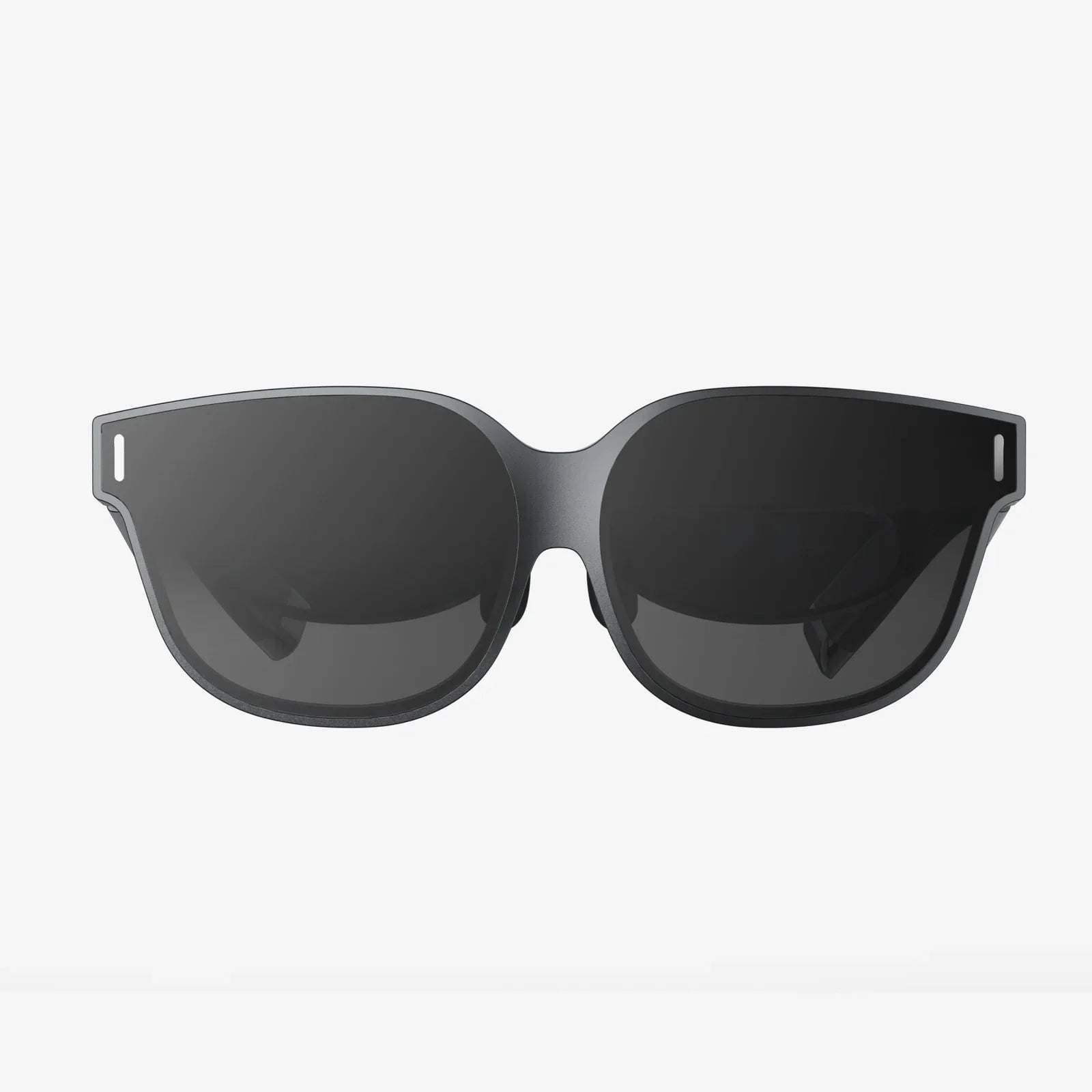
Imagine slipping on a device and instantly stepping into another reality—a world where you are the protagonist, where the rules of physics are yours to bend, and where your every movement is mirrored by a digital avatar. This is no longer the stuff of science fiction; it's the tangible, pulse-quickening experience offered by the modern VR headset with controller. This powerful duo has shattered the barrier between the digital and the physical, transforming passive observation into active participation and creating a new frontier for human experience that is as limitless as our imagination.
The Dynamic Duo: More Than the Sum of Its Parts
At its core, a virtual reality system is built on two fundamental pillars: the headset and the controllers. One is the portal; the other is your key. The headset functions as your sensory gateway. It houses high-resolution displays for each eye, creating a stereoscopic 3D effect that provides depth and scale. Advanced lenses focus and reshape the picture, while integrated gyroscopes, accelerometers, and often external or inward-facing cameras track the precise orientation and position of your head in real-time. This is known as six degrees of freedom (6DoF) tracking, allowing you to not just look around (rotational tracking) but also to lean in, duck, and move through the virtual space (positional tracking). It’s the ultimate illusion of being there.
But presence is hollow without agency. This is where the controllers enter the equation. They are the physical extension of your will in the digital realm. Early VR experiments often relied on traditional gamepads or even keyboard and mouse, creating a dissonance between the immersive visual experience and the clunky, abstract method of interaction. The dedicated motion controller solved this problem elegantly. These ergonomic devices are tracked in 3D space just like the headset, meaning your real-world hand movements are translated one-to-one into the virtual environment. They are your hands, your tools, your weapons, and your paintbrushes.
The magic happens in the synergy between the two. The headset convinces your brain you are somewhere else, and the controllers confirm it by giving you a body and the ability to interact with that new world. This combination is what transforms a visually impressive tech demo into a truly transformative experience.
A Journey Through Interaction: From Buttons to Intuition
The evolution of VR controllers is a story of the pursuit of perfect intuition. The earliest consumer models were simple wands, often tracked by external sensors placed around the room. They featured triggers, grips, buttons, and touchpads. While revolutionary at the time, they were still recognizably controllers—tools you held, rather than hands you possessed.
The next significant leap was the adoption of inside-out tracking, where cameras on the headset itself track the controllers, eliminating the need for external base stations. This made VR systems more accessible and easier to set up, removing a significant barrier to entry for the average consumer.
However, the most profound evolution has been in the realm of haptic feedback. Basic rumble motors have given way to sophisticated haptic systems that can simulate the texture of a virtual object, the recoil of a weapon, or the gentle thrum of a car's engine. This tactile layer adds a crucial dimension to immersion, bridging the gap between what you see your virtual hand doing and what you feel in your real hand.
The horizon of controller technology points toward an even more seamless future. Hand tracking, which uses the headset's cameras to track your bare hands without any controllers, is already a reality for many systems, offering a new level of intuitive interaction for menus and certain experiences. The ultimate goal is a blend of technologies: the precise input and haptic feedback of physical controllers combined with the freedom and natural expression of hand tracking, used contextually depending on the task at hand.
Beyond the Game: The Expansive Universe of VR Applications
While gaming is the most famous application, the utility of a VR headset with controller stretches far beyond.
Revolutionizing Education and Training
Imagine medical students practicing complex surgical procedures on virtual patients, making mistakes and learning without any real-world risk. Architects and engineers can walk through full-scale 3D models of their designs long before ground is broken, manipulating structural elements with virtual hands. Historical students can literally walk through ancient Rome, holding and examining artifacts. The controllers make this learning active and experiential, dramatically improving retention and understanding.
Transforming Creative Industries
Artists are using VR as a new medium. With controllers acting as brushes, pallet knives, and sculpting tools, they can paint in three dimensions, create life-sized sculptures from virtual clay, and design in an immersive space. The ability to reach into and walk around a creation fundamentally changes the artistic process. Similarly, filmmakers are using VR to storyboard scenes in a virtual 3D space, blocking out actor movements and camera angles with an intuitive, hands-on approach.
Redefining Remote Collaboration and Social Connection
Video conferencing is a poor substitute for sharing a physical space. VR collaboration platforms allow colleagues from across the globe to meet in a virtual boardroom, a design studio, or on the surface of Mars. They can manipulate 3D models together, write on virtual whiteboards, and interact with avatars that feature expressive hand gestures—all thanks to the nuanced data provided by the controllers. This fosters a sense of shared presence that flat screens cannot replicate.
Enhancing Fitness and Rehabilitation
A new genre of fitness applications has turned workouts into engaging games. Players slash through blocks to the rhythm of music, box against virtual opponents, or climb sheer cliffs. The controllers track their movements, providing data on speed, accuracy, and calories burned, turning exercise into an adventure. In physical therapy, VR is used to guide patients through rehabilitation exercises in engaging environments, making repetitive motions less tedious and more motivating.
Choosing Your Portal: A Buyer's Considerations
For those looking to enter the virtual realm, the choice of a VR headset with controller ecosystem depends on several key factors. The primary divide is between tethered and standalone systems. Tethered headsets connect to a powerful external computer, delivering the highest possible visual fidelity and processing power for the most graphically intense experiences. Standalone systems are all-in-one units with computing power built into the headset, offering unparalleled freedom and convenience at the potential cost of some graphical detail.
Beyond that, consider the tracking quality. Does the system use external sensors or inside-out tracking? While inside-out is more convenient, some external sensor systems still offer marginally higher precision for competitive gaming. Examine the controllers themselves. How do they feel in your hand? Are the buttons and triggers responsive? What kind of haptic feedback do they offer? The quality of the controllers is just as important as the quality of the headset's display.
Finally, the value of a platform is in its software library. Ensure the ecosystem you choose has a robust storefront with applications and experiences that align with your interests, whether that's cutting-edge games, professional creative tools, or social spaces.
The Future is in Your Hands: What Comes Next?
The trajectory of VR is bending toward greater immersion and accessibility. We are moving toward lighter, more comfortable headsets with higher-resolution displays and wider fields of view. Controller technology will continue to advance, with more precise haptics, better finger tracking, and even adaptive triggers that can simulate resistance. The lines between the physical and virtual will further blur with the integration of augmented reality (AR) features, allowing digital objects to interact with your real-world environment.
The true endgame may be a shift away from handheld controllers altogether, toward neural interfaces or sophisticated gloves that provide full haptic sensation. But for the foreseeable future, the VR headset with controller remains the most accessible, powerful, and effective way to reach out and touch a digital world.
The click of a power button, the familiar weight of the headset settling on your brow, and the cool grip of the controllers in your palms—this is the modern-day ritual for stepping through the looking glass. It’s an invitation to explore universes confined only by the creativity of their creators, to learn by doing, to create from the inside out, and to connect with others in spaces unbounded by geography. This technology is not just about seeing a new world; it’s about reaching into it and leaving your mark. The controllers are your instruments, and the experience is waiting for you to press start.
Share:
Best AI Goggles: The Ultimate Guide to the Future of Augmented Vision
Best AI Goggles: The Ultimate Guide to the Future of Augmented Vision