


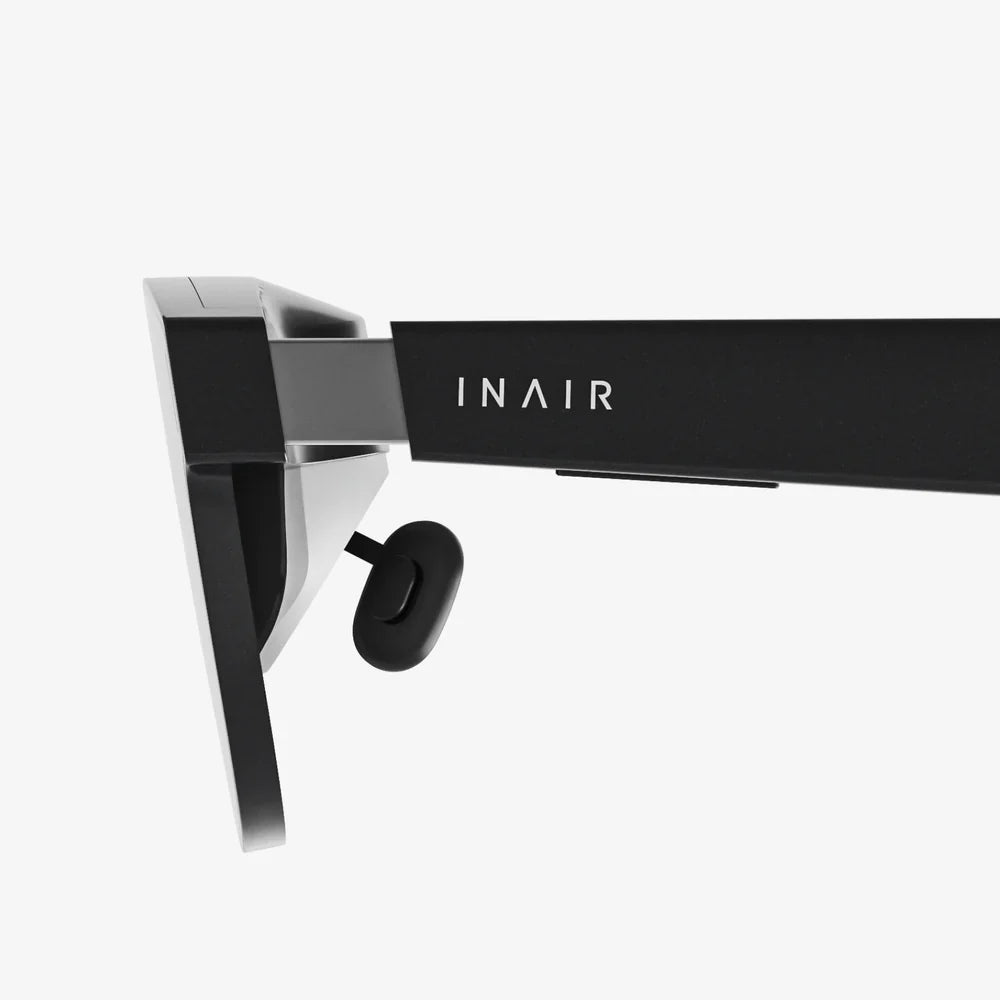
Imagine stepping through a portal into another world, a dimension limited only by the imagination, where you can climb Himalayan peaks, dissect a human heart, or design a skyscraper—all from your living room. This is no longer the stuff of science fiction; it is the compelling reality offered by modern VR headsets, the most direct gateway to immersive digital experiences that are reshaping our perception of entertainment, work, and human connection. The journey of these devices from niche curiosities to powerful portals of potential is a story of relentless innovation, and it’s a story that is just beginning to unfold.
The Architectural Pillars of Virtual Reality
At its core, a VR headset is a sophisticated piece of technology designed to trick the human brain into accepting a digital reality. This illusion is built upon several critical technological pillars working in perfect harmony.
The Display: The Window to Another World
The most immediate interface between the user and the virtual environment is the display. Modern headsets utilize high-resolution LCD or OLED panels, one for each eye, to create a stereoscopic 3D effect. Key metrics here are resolution, measured in pixels per inch (PPI), and refresh rate, measured in hertz (Hz). A higher resolution drastically reduces the "screen door effect"—the visible gap between pixels—making the virtual world appear crisp and solid. A high refresh rate, typically 90Hz and above, is crucial for maintaining smooth motion and minimizing latency, which is the delay between a user's movement and the corresponding update in the display. This low latency is fundamental to preventing the disorientation and nausea associated with earlier VR technology.
Tracking and Controllers: Bringing You and Your Hands Into the Game
Immersion shatters the moment the virtual world doesn't respond accurately to your physical movements. This is where tracking systems come into play. There are two primary methods:
Outside-In Tracking: This system uses external sensors or base stations placed around the room to precisely monitor the position of the headset and controllers. It is renowned for its exceptional accuracy and low latency, making it the gold standard for high-fidelity experiences where precise movement is paramount.
Inside-Out Tracking: A more recent and user-friendly innovation, this method embeds cameras directly onto the headset itself. These cameras observe the surrounding environment, tracking the user's position relative to the room and mapping the controller's movements. This eliminates the need for external hardware setup, offering greater freedom and ease of use, though it can sometimes be slightly less accurate for rapid, precise motions behind the user's back.
The controllers themselves are marvels of haptic engineering. They are often equipped with an array of sensors, including inertial measurement units (IMUs) for detecting orientation, and they provide tactile feedback through advanced haptics. This can range from a simple rumble to nuanced vibrations that simulate the feeling of drawing a bowstring, touching a rough surface, or catching an object.
Audio: The Unseen Hand of Immersion
Visuals are only half the experience. Spatial, or 3D, audio is what completes the illusion. By using head-related transfer functions (HRTFs), VR systems can simulate how sound waves interact with the human head and ears. This allows them to create sounds that appear to come from specific points in the 3D space around you—behind, above, or far in the distance. The subtle crunch of gravel underfoot from the correct direction or the whisper of an enemy approaching from the left adds a deep, often subconscious, layer of believability that is critical for total immersion.
Beyond the Game: The Expansive Universe of VR Applications
While gaming remains the most famous and commercially successful application for VR headsets, their utility stretches far beyond entertainment, infiltrating and revolutionizing numerous professional fields.
Revolutionizing Education and Training
VR offers an unparalleled tool for experiential learning. Medical students can now perform intricate virtual surgeries, making mistakes and learning procedures without any risk to a patient. History classes can become virtual field trips, walking through ancient Rome or standing on the deck of a historic ship. Corporate training is being transformed through realistic simulations for everything from public speaking and leadership scenarios to dangerous industrial equipment operation, ensuring workers are better prepared and safer.
Transforming Design and Architecture
For architects, engineers, and designers, VR is a revolutionary prototyping tool. Instead of looking at a building design on a flat screen, they can don a headset and walk through a full-scale, photorealistic model of the unbuilt structure. This allows for the identification of design flaws, the experience of spatial relationships, and the testing of lighting and acoustics long before construction begins, saving immense time and resources.
Expanding Healthcare and Therapeutics
The therapeutic potential of VR is vast and growing. It is being successfully used for exposure therapy, helping patients with phobias or PTSD confront and manage their triggers in a safe, controlled environment. It aids in physical rehabilitation by turning repetitive exercises into engaging games, improving patient motivation and outcomes. VR is also being explored for pain management, distracting patients during painful procedures with calming or engaging virtual environments.
Redefining Social Connection and Remote Work
VR platforms are evolving into vibrant social spaces where people can meet, attend concerts, watch movies, and collaborate. For remote work, VR meeting rooms offer a sense of presence and shared space that video calls cannot match. Avatars can make eye contact, use body language, and interact with 3D models collaboratively, making distance feel insignificant and fostering a stronger sense of team cohesion.
Navigating the Virtual Frontier: Challenges and Considerations
Despite the exciting progress, the path forward for VR is not without its obstacles and important ethical considerations.
The Accessibility Hurdle
The cost of high-end hardware, coupled with the requirement for a powerful computing system, can still be a significant barrier to entry for many consumers. While more affordable options exist, they often represent a compromise in performance and experience. Achieving a balance between high fidelity and low cost remains a key challenge for widespread adoption.
The Comfort Conundrum
Issues like VR-induced motion sickness, known as cybersickness, still affect a portion of users. Furthermore, the ergonomics of headsets—their weight, heat generation, and pressure on the face—can limit comfortable usage sessions. Future iterations must prioritize lighter materials, better weight distribution, and improved ventilation to become all-day productivity tools.
The Ethical and Societal Dimension
As these virtual worlds become more pervasive, new questions arise. What are the psychological effects of long-term immersion? How do we protect privacy and data security in environments that can track our movements, gaze, and even physiological responses? Establishing clear ethical guidelines and robust data protection frameworks will be essential to ensure this technology develops in a way that benefits and protects users.
The Future is Immersive: What Lies on the Horizon
The evolution of VR headsets is accelerating toward a future where the line between the physical and digital worlds becomes increasingly blurred.
We are moving toward devices that are lighter, wireless, and more powerful, with resolutions approaching and surpassing human visual acuity. The next great leap will be in the realm of input, moving beyond handheld controllers to technologies like advanced hand-tracking, which already allows users to manipulate virtual objects with their bare hands, and eventually, brain-computer interfaces (BCIs) that could translate neural signals directly into digital actions.
The concept of the "metaverse," a persistent, shared, and interconnected universe of virtual spaces, is intrinsically linked to the advancement of VR. While still largely conceptual, it represents a vision where our digital and physical lives are seamlessly integrated, with VR headsets acting as our primary access point to a new layer of reality built on top of our own.
The true potential of VR headsets lies not in replacing our reality, but in augmenting it. They are the ultimate tools for empathy, allowing us to see the world through another's eyes. They are the ultimate simulation machines, enabling us to practice, learn, and create without real-world consequences. They are the ultimate communication devices, collapsing geographical distance into irrelevance. This technology promises to unlock new forms of art, storytelling, and human experience that we are only just beginning to conceive.
The headset is no longer just a peripheral; it is a passport. It’s an invitation to explore the outer limits of creativity, to connect in profound new ways, and to experience stories not as a spectator, but as the protagonist. The virtual frontier is open, and it awaits your first step. The only real question left is: which world will you choose to explore first?
Share:
Glasses That Connect to Your Phone: The Dawn of a Seamless Digital Life
Benefits of Wearable Technology: A Deep Dive into How Wearables Are Reshaping Our Lives