


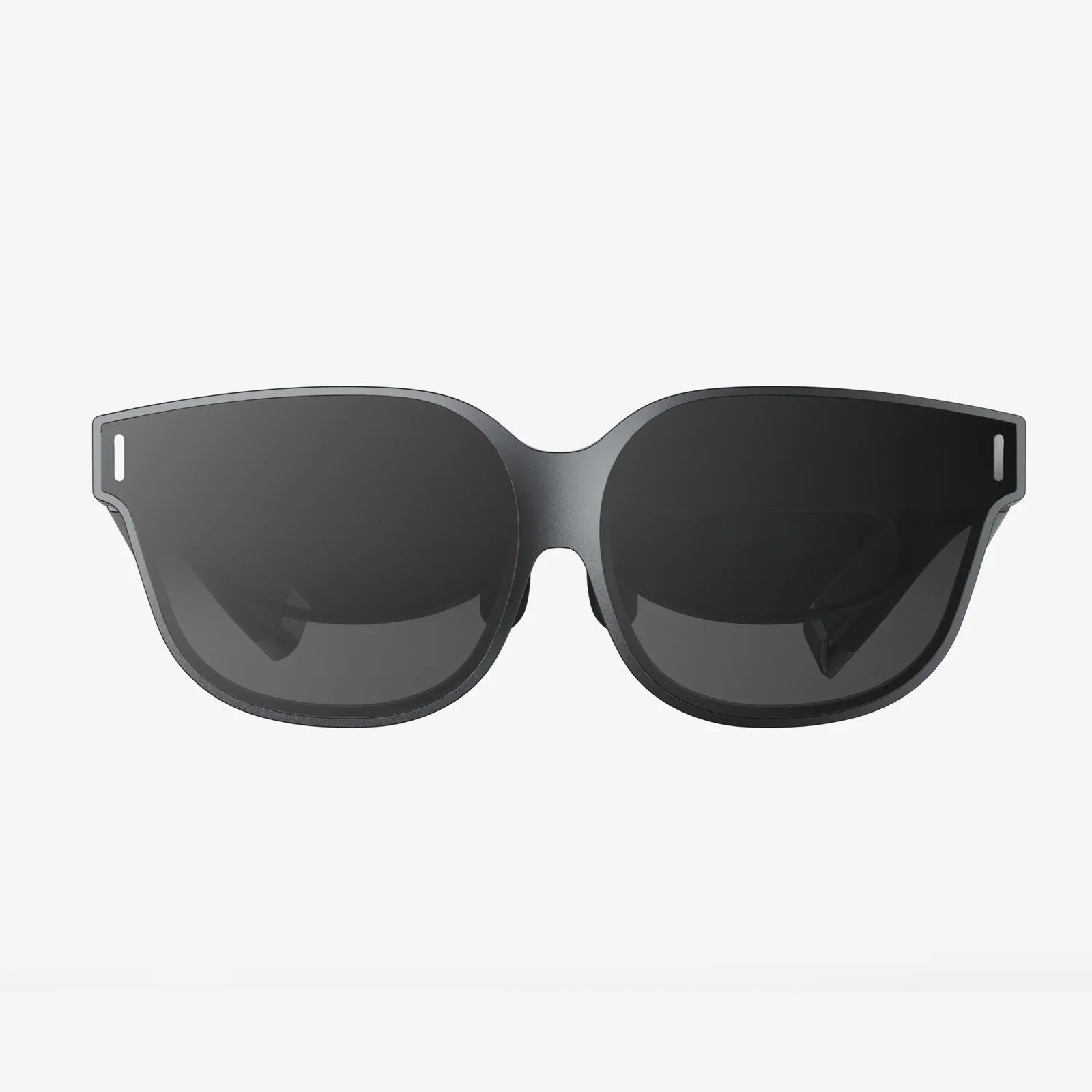
Remember the first time you held a window to another world in your hands? For many, that moment arrived not with a high-end, dedicated gaming rig, but with a simple piece of folded cardboard and the smartphone already in their pocket. The concept of VR headsets for iPhone 5s devices might seem like a relic from a bygone era of technology, but it represents a crucial, revolutionary chapter in the story of virtual reality. It was the moment VR stopped being a fantastical concept in science fiction and became something accessible, affordable, and astonishing. This deep dive isn't just a nostalgic trip; it's an exploration of how this specific combination of pioneering hardware and ingenious design democratized an entire medium, and a look at what it can still offer today.
The Dawn of Accessible VR: A Revolution in Your Pocket
The release of certain pioneering viewer designs in the mid-2010s didn't just create a new product category; it sparked a global movement. Suddenly, the barrier to entry for virtual reality was not a two-thousand-dollar computer and a headset to match, but a sixty-dollar accessory. The iPhone 5s, being one of the most popular and capable smartphones of its time, naturally became the flagship device for this new experience. It was the perfect storm: a phone with a high-quality Retina display, a robust gyroscope and accelerometer, and just enough processing grunt to deliver compelling, if basic, virtual experiences.
This period was defined by a sense of wonder and experimentation. Developers rushed to create experiences tailored to the constraints and opportunities of mobile-powered VR. The results were a wild and wonderful mix of 360-degree videos, immersive photospheres, simple interactive games, and educational tours. The iPhone 5s, with its familiar and intuitive interface, was the key that unlocked this digital treasure chest for millions.
Understanding the Technical Partnership: iPhone 5s Meets VR
To appreciate this pairing, one must understand the core technology at play. Mobile VR headsets for the iPhone 5s are, at their essence, sophisticated optical holders. They contain no processors, no internal screens, and very few have their own sensors. Their primary components are:
- Lenses: These are the most critical element. High-quality, precision-molded plastic or glass lenses are placed between your eyes and the iPhone's screen. Their job is to refocus your vision, transforming the standard rectangular display into a wide, immersive field of view. They also magnify the screen to eliminate the "looking through a mail slot" effect and create a stereoscopic 3D image by presenting a unique image to each eye.
- Head Mount: Typically made from plastic, foam, and adjustable straps, the mount's sole purpose is to hold the iPhone securely and comfortably in front of your face, blocking out ambient light to enhance immersion.
- Interaction Mechanism: Basic models relied on a single magnetic or capacitive input on the side of the headset to trigger a "click" on the screen. More advanced models included a simple Bluetooth remote or a basic gamepad for slightly more complex input.
The iPhone 5s itself acted as the engine, screen, and brain of the entire operation:
- The Display: The 4-inch Retina display, with a resolution of 1136 x 640 pixels, was sharp for its time. However, when split in half for each eye (effectively 568 x 640 per eye), the pixel density became the primary limitation, leading to the infamous "screen door effect" where users could discern the gaps between pixels.
- The Processor: The A7 chip, Apple's first 64-bit mobile processor, was groundbreaking. It provided enough power to render the two distinct visual perspectives required for stereoscopic 3D and to handle the high frame rates necessary to prevent motion sickness (ideally 60fps).
- The Sensors: This was the true magic. The iPhone 5s's advanced gyroscope, accelerometer, and magnetometer worked in tandem to track head movement with incredibly low latency. When you turned your head, the virtual world responded instantly. This precise rotational tracking is what sold the illusion of VR more than any other feature.
Setting Up the Experience: A Step-by-Step Guide
Getting started with a VR headset for an iPhone 5s is a straightforward process, a testament to its accessible design.
- Choose Your Headset: Select a viewer that is explicitly compatible with the iPhone 5s's dimensions. Its 4-inch screen and specific thickness are key. A headset designed for a larger phone will not hold the 5s securely.
- Prepare the iPhone: Ensure your phone's operating system is updated to the highest version it supports. While modern VR apps may not be available, the foundational software for VR video players and basic apps will still function. Clean the screen thoroughly—any smudges will be magnified by the lenses.
- Download VR Content: The App Store remains a repository for classic VR applications. Search for terms like "VR player," "360 video," "cardboard VR," or "mobile VR." Many popular apps from the era are still available for download. Additionally, platforms like YouTube have a massive library of 360-degree videos that can be played through the standard YouTube app or a dedicated VR player app.
- Insert and Calibrate: Carefully place the iPhone into the headset's tray, ensuring it is centered. Launch your chosen VR app before placing the phone into the headset. Once the app is running, insert the phone and close the lid. Put on the headset and adjust the straps for comfort. Most apps have a calibration icon (often a small dot or circle) that you can focus on to reset the tracking orientation.
The App Ecosystem: What Can You Actually Do?
The universe of content for iPhone 5s-powered VR is vast, though it exists now as a historical archive of innovation. The experiences fall into several distinct categories.
360-Degree Video and Photography
This was the "killer app" for early mobile VR. Users could stand on the summit of Mount Everest, sit courtside at a basketball game, or stand on the stage of a rock concert. The experience is passive but profoundly impactful. The iPhone 5s handles video playback beautifully, offering a truly immersive way to experience travel documentaries, music videos, and short films.
Interactive Games and Experiences
While not as complex as modern titles, the games developed for this platform were marvels of creative coding. Simple space shooters where you aimed by moving your head, escape rooms where you had to look around to find clues, and roller coaster simulators that delivered genuine thrills were all common. These experiences showcase the A7 chip's ability to handle real-time 3D graphics in a demanding dual-rendering environment.
Educational and Cultural Tools
Museums and educational institutions quickly adopted this technology. Apps allowed users to take virtual tours of the Louvre, explore ancient Roman ruins reconstructed in 3D, or even travel inside the human body. For students and the curious-minded, it was an unparalleled tool for exploration.
Embracing the Limitations: A Reality Check
To approach this technology today requires an understanding of its inherent constraints. This is not the high-fidelity VR of the modern era, and managing expectations is key to enjoying the experience.
- Visual Fidelity: The screen door effect is the most noticeable limitation. The world will look pixelated, especially when trying to view text or distant objects. This is the trade-off for using a now-outdated mobile display.
- Processing Power: The A7 chip was a champion in its day, but it will chug and frame rates will drop on more complex applications. This can lead to discomfort for some users. Sticking to simpler experiences like 360 video is recommended.
- Lack of Positional Tracking: This is the biggest technical difference. The iPhone 5s can track rotation—you can look left, right, up, and down. But it cannot track translation—leaning forward, backward, or side-to-side. If you lean in to look at a virtual object, the entire world will move with you, breaking immersion. This is why modern VR systems use external cameras or internal sensors to enable 6 degrees of freedom (6DoF).
- Battery Life and Heat: VR is computationally intensive and will drain the iPhone 5s's battery rapidly. It will also cause the device to become quite warm during extended use.
The Creative Potential: Beyond Consumer Entertainment
The legacy of the iPhone 5s and mobile VR extends beyond gaming and videos. It became a powerful, low-cost tool for creators and professionals. Filmmakers used early 360-degree camera rigs and the iPhone 5s to preview shots on location. Architects and designers used it to create basic client walkthroughs of 3D models. Educators built entire lesson plans around virtual field trips. This accessibility fostered a wave of creativity, proving that the power to create and experience virtual worlds didn't belong solely to large corporations with massive budgets.
A Lasting Legacy and a Bridge to the Future
The era of the iPhone 5s and basic mobile VR headsets was not the end goal; it was the foundational step. It served as the critical bridge that introduced tens of millions of people to the principles of virtual reality—immersion, presence, and interactive storytelling. It proved there was a massive market hungry for these experiences, which in turn drove investment into the higher-end technology we see today. The precise head-tracking, the app distribution model, and the design language of modern VR all owe a debt to these early, humble pioneers.
So, what's the verdict on seeking out a VR headset for an iPhone 5s today? It won't deliver the heart-pounding action of a modern VR game or the crisp clarity of a contemporary headset. But what it offers is something perhaps even more valuable: a pure, unadulterated sense of wonder. It’s a chance to experience the digital world through the lens of a recent technological revolution, to understand how far we've come by exploring where it all began. For a developer, it's a lesson in elegant optimization. For a historian, it's a perfectly preserved artifact of a computing paradigm shift. And for anyone with a spirit of curiosity, it remains a perfectly functional portal to thousands of experiences, from the serene to the spectacular, all waiting to be rediscovered. That first window to another world is still open, and all it asks is that you look through it.
Share:
Cost of VR Headset Price: A Comprehensive Breakdown and Future Outlook
VR Headset People: The Pioneers, The Players, and The Future of Human Connection