


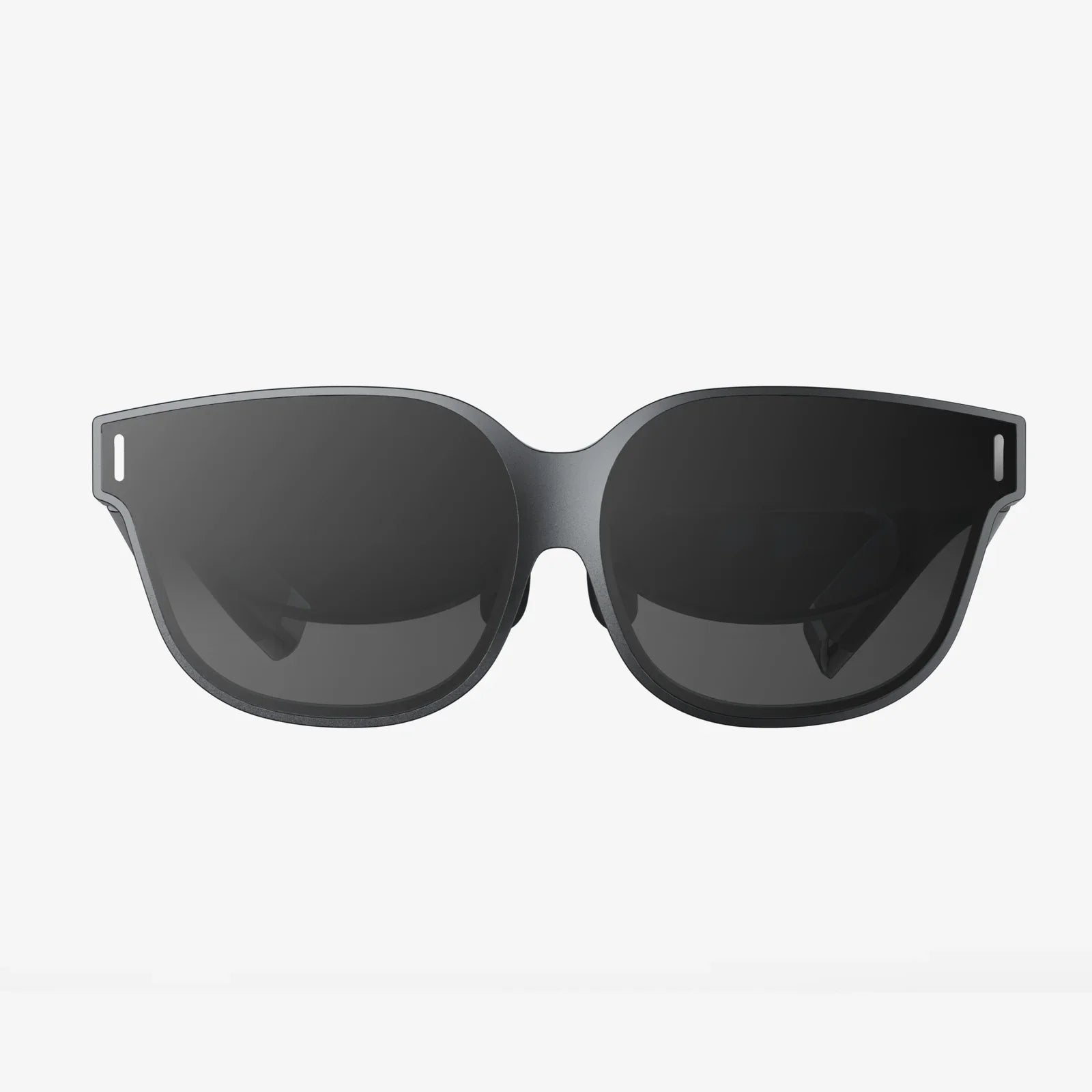
Imagine slipping on a device and instantly being transported to the front row of a concert on the other side of the world, walking on the surface of Mars, or training for a complex surgical procedure without risk. This is no longer the stuff of science fiction; it is the compelling reality offered by modern VR headsets, a technology that promises not just to change how we play games, but to fundamentally alter our perception of reality itself. The door to countless new worlds is now open, waiting for you to step through.
A Journey Through Time: The Evolution of Immersive Technology
The dream of virtual reality is far older than the silicon and glass that power today's devices. The concept can be traced back to the mid-20th century, with pioneering inventions like the Sensorama in the 1950s, a bulky mechanical apparatus that aimed to engage multiple senses for a cinematic experience. The term "virtual reality" itself was popularized in the late 1980s by Jaron Lanier, whose company developed some of the first commercial, though astronomically expensive and limited, head-mounted displays. For decades, the technology remained a niche curiosity, confined to research labs and high-budget industrial and military simulations due to its prohibitive cost and technical limitations. The graphics were primitive, the latency—the delay between a user's movement and the visual response—was high enough to cause discomfort, and the form factor was unwieldy. It was a classic case of the idea being decades ahead of the necessary technology. The true revolution began in the early 2010s with the advent of the smartphone industry. The mass production of high-resolution, miniaturized displays, precise motion sensors, and powerful mobile processors finally provided the essential building blocks. This led to the development of accessible, consumer-grade VR headsets, launching a new era of immersive computing that is now accelerating at a breathtaking pace.
More Than Meets the Eye: Deconstructing the Modern VR Headset
At its core, a VR headset is a sophisticated piece of engineering designed to trick the human brain into believing it is somewhere else. This illusion is achieved through a combination of key components working in perfect harmony. The most immediate element is the visual system. Users look through a pair of high-resolution displays (one for each eye) housed inside the headset. These displays show slightly different images to each eye, creating a stereoscopic 3D effect that provides depth perception. Between the displays and the user's eyes are specialized lenses that focus and reshape the image, creating a wide field of view that fills the user's peripheral vision, which is crucial for fostering a sense of presence. This visual system is supported by a critical feature known as head tracking. Using a combination of internal sensors like gyroscopes, accelerometers, and external or built-in cameras, the headset constantly monitors its own position and orientation in space. This allows the virtual environment to respond in real-time as the user looks up, down, left, right, or even crouches and leans, making the world feel solid and responsive. For a truly immersive experience, most systems also include spatial audio. Rather than standard stereo sound, this technology uses head-related transfer functions (HRTF) to simulate how sound waves interact with the human head and ears. This allows developers to create a 3D soundscape where a noise behind the user actually sounds like it's coming from behind, further cementing the illusion of being inside the virtual world. Finally, interaction is handled through controllers. These are typically held in each hand and are also tracked by the system, allowing users to see virtual representations of their hands or tools. They feature buttons, triggers, and haptic feedback motors that provide subtle vibrations, enabling users to reach out, grab, push, and manipulate the digital environment in an intuitive way.
A World of Experiences: Applications Beyond Gaming
While gaming remains the most prominent and commercially successful application, serving as a major driver for consumer adoption, the potential of VR headsets extends far beyond entertainment. They are proving to be powerful tools across a diverse range of fields. In education, students are no longer limited to reading about ancient Rome; they can take a guided tour through a meticulously reconstructed digital version of the Colosseum. Medical students can practice complex procedures on virtual patients, and astronomy classes can become interstellar voyages. In healthcare, the applications are even more profound. VR is being used for exposure therapy to help patients overcome phobias like fear of heights or flying in a safe, controlled environment. It is also employed in physical rehabilitation, where gamified exercises can motivate patients to complete repetitive movements, and is even used as a powerful tool for pain distraction during painful wound care procedures. The corporate world has embraced VR for training and collaboration. Employees can be trained to operate heavy machinery or handle dangerous situations without any real-world risk. Architects and engineers can walk clients through unbuilt designs at a 1:1 scale, and remote teams can meet in a shared virtual boardroom, interacting with 3D models and data visualizations as if they were in the same physical space. Furthermore, VR has become a new canvas for artists and storytellers, offering a medium for immersive films and interactive narratives where the viewer is placed inside the story. Social platforms within VR allow people to meet, attend events, play games, and simply hang out using personalized avatars, offering a new form of human connection that transcends geographical boundaries.
Navigating the Virtual Frontier: Considerations and Challenges
Despite the incredible promise, the path forward for VR is not without its obstacles and important considerations. One of the most common hurdles for new users is a phenomenon known as simulator sickness, a form of motion sickness characterized by dizziness, nausea, and disorientation. This is often caused by a mismatch between the visual motion perceived in the headset and the lack of corresponding physical motion sensed by the inner ear. While advancements in display technology with higher refresh rates and lower latency have significantly reduced this issue, it remains a barrier for some individuals. The physical design of the headsets themselves also presents a challenge. While becoming lighter and more comfortable, they can still be cumbersome to wear for extended periods. The quest for a perfect balance between high-fidelity graphics, wireless freedom, long battery life, and an affordable, lightweight form factor is the central engineering challenge for the industry. Beyond the physical, there are significant social and ethical questions emerging. As people spend more time in richly detailed virtual worlds, concerns about data privacy, psychological effects, and the potential for addiction need to be carefully studied and addressed. Establishing etiquette and norms for behavior in social VR spaces is an ongoing process. Furthermore, the cost of high-end equipment and the powerful computing hardware required to run it can still be a barrier to widespread adoption, though the market is rapidly expanding with more accessible options.
The Horizon of Possibility: What the Future Holds
The technology behind VR headsets is advancing at a staggering rate, pointing toward a future that feels increasingly seamless and integrated into our daily lives. Several key developments are on the horizon. The concept of the "metaverse," a persistent network of interconnected virtual spaces, is a major driving force, envisioning a future where our social and professional lives have a significant virtual component. Technological strides are being made in areas like varifocal and light field displays, which aim to solve the eye strain issues associated with current fixed-focus lenses and create more natural and comfortable visuals. Haptic feedback is evolving from simple controller vibrations to full-body suits and gloves that can simulate the feeling of touch, wind, and temperature, dramatically deepening the level of immersion. Perhaps the most transformative future technology is the development of brain-computer interfaces (BCIs), which research suggests could one day allow users to control virtual environments through thought alone, bypassing the need for controllers entirely. As these technologies mature and converge, the line between the physical and the digital will continue to blur, opening up possibilities we are only beginning to imagine.
The journey of VR headsets is a testament to human ingenuity, transforming a futuristic dream into a tangible gateway to infinite experiences. This is not merely about a new screen to look at; it is about a new space to exist within. It is a medium for empathy, allowing us to see the world through another's eyes, a tool for creation that unleashes entirely new forms of art, and a bridge that connects us in ways previously confined to imagination. The headset itself is simply the key—the real magic lies in the boundless worlds it unlocks and the profound ways it is poised to reshape our reality, our work, and our connections with each other.
Share:
Human Computer Interaction Design: The Invisible Art Shaping Our Digital Lives
Holographics: Illuminating the Future of Interaction, Entertainment, and Industry