


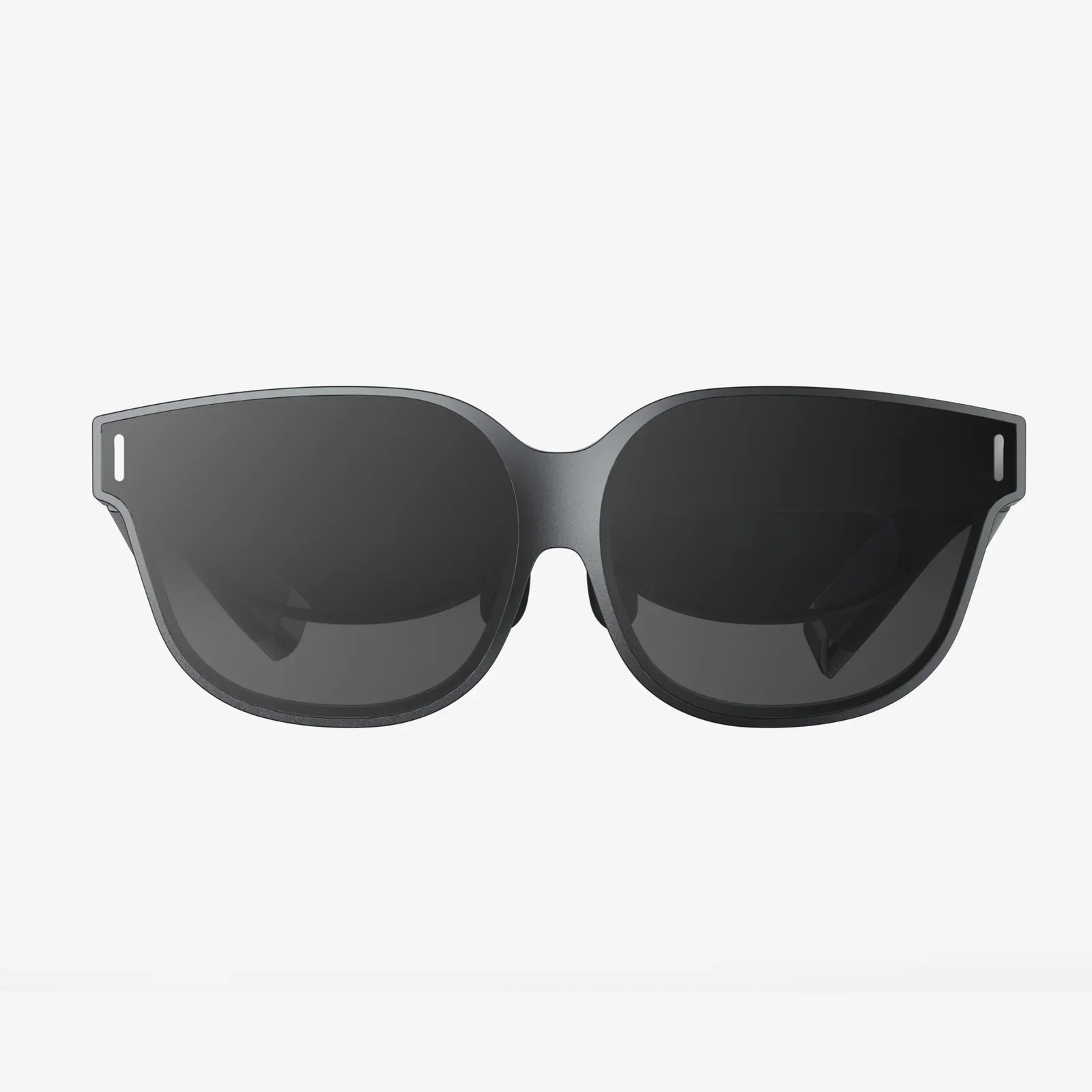
Imagine slipping on a device and instantly being transported to the front row of a concert on another continent, walking on the surface of Mars, or sitting face-to-face with a digital avatar of a loved one thousands of miles away. This is no longer the stuff of science fiction; it is the compelling reality offered by modern VR helmets. These sophisticated pieces of technology are rapidly evolving from niche gaming peripherals into powerful portals capable of reshaping every facet of our lives, from how we play and learn to how we work and connect. The journey of the VR helmet is a story of breathtaking innovation, and we are only just beginning to scratch the surface of its profound potential.
From Science Fiction to Shelves: A Brief History of Immersive Dreams
The concept of virtual reality is far older than the silicon and sensors that power today's devices. For decades, it lived primarily in the imaginations of authors and filmmakers. The first tangible steps towards consumer VR were clumsy and commercially unsuccessful, often amounting to little more than expensive novelties that failed to deliver a convincing experience. They were plagued by low-resolution displays, crippling latency that induced nausea, and a complete lack of compelling software. For a long time, the promise of VR remained just that—a promise.
The modern renaissance began in the early 2010s, driven by a perfect storm of technological advancement. The widespread adoption of high-definition smartphone displays provided a cheap and readily available source for high-resolution screens. Similarly, the miniaturized motion sensors developed for phones—gyroscopes, accelerometers, and magnetometers—became the essential building blocks for tracking head movement. A new generation of VR helmets, powered by these components and backed by significant corporate investment, finally brought a credible and accessible immersive experience to the public. This marked the definitive transition from a futuristic concept to a transformative consumer technology.
Deconstructing the Portal: The Core Technologies Inside a VR Helmet
At its heart, a VR helmet is a masterclass in sensory deception, employing a suite of advanced technologies to trick your brain into believing the digital world is real.
The Display: Your Window to Another World
The most direct interface between you and the virtual world is the display. Modern VR helmets utilize two high-resolution screens (one for each eye) or a single screen split into two segments. Key specifications include:
- Resolution: Measured in pixels per inch (PPI) or, more commonly for VR, by the total pixels across the display (e.g., 1832 x 1920 per eye). Higher resolution drastically reduces the "screen door effect," where users could see the gaps between pixels, thus enhancing clarity and immersion.
- Refresh Rate: Measured in Hertz (Hz), this is how many times the image on the screen refreshes per second. A higher refresh rate (90Hz, 120Hz, and now even 144Hz+) is critical for smooth visuals. It reduces motion blur and, most importantly, minimizes latency, which is a primary cause of simulation sickness.
- Field of View (FoV): This is the extent of the observable world seen at any given moment, measured diagonally in degrees. A wider FoV (aiming for the human average of ~210°) increases the feeling of "presence"—the sensation of actually being in the virtual environment. Most current consumer devices sit between 90° and 120°.
Tracking: Mapping Your Movement into the Void
For immersion to hold, the virtual world must respond to your movements with perfect fidelity and instant response. This is achieved through sophisticated tracking systems.
- Inside-Out Tracking: Cameras mounted on the helmet itself look outward to track the position of your controllers and identify unique features in your physical environment. This creates a spatial map, allowing the helmet to understand its position in the room without external hardware. It offers excellent freedom and ease of setup.
- Outside-In Tracking: External sensors or base stations placed around the play area emit signals (like lasers or infrared light) that are picked up by sensors on the helmet and controllers. This method is often considered the gold standard for precision and low latency, especially critical for competitive gaming and professional applications, but requires a more complex setup in a dedicated space.
Lenses: The Gateway to Focus
Positioned between your eyes and the screens are specialized lenses. Their job is to focus and reshape the flat images from the screens into a stereoscopic, panoramic field of view that feels natural. Early Fresnel lenses were effective but could cause god rays and glare around high-contrast objects. Newer developments like pancake lenses are allowing for much thinner and lighter helmet designs while improving optical clarity and edge-to-edge sharpness.
Audio and Haptics: Completing the Sensory Picture
Immersion is not a purely visual experience. Spatial audio is crucial; it uses head-related transfer functions (HRTF) to simulate how sound waves interact with the human head and ears, making sounds appear to come from specific points in 3D space. Hearing a creature creeping up behind you or the echo of your footsteps in a virtual cavern is profoundly convincing.
Furthermore, haptic feedback is evolving beyond simple controller rumble. Advanced helmets are beginning to incorporate haptic motors on the headstrap itself, allowing developers to simulate sensations like a gentle breeze, the impact of a raindrop, or the rumble of a nearby explosion, directly on the user's head.
Beyond the Game: The Expansive Applications of VR Helmets
While gaming remains a massive driver of adoption, the utility of VR helmets extends far beyond entertainment.
Revolutionizing Education and Training
VR offers an unparalleled medium for experiential learning. Instead of reading about ancient Rome, history students can take a guided tour through a digitally reconstructed Forum. Medical students can practice complex surgical procedures on virtual patients, making mistakes without consequences. Astronauts, pilots, and surgeons all use high-fidelity VR simulators to train for high-stakes scenarios in a safe, controlled, and repeatable environment. This "learning by doing" in VR dramatically improves knowledge retention and skill acquisition.
Transforming the Workplace
The concept of the "virtual office" is becoming a reality. VR helmets enable immersive remote collaboration, where distributed teams can meet in a shared digital space as lifelike avatars, interacting with 3D models of products, architectural designs, or complex data visualizations in a way that is impossible on a flat video call. This is revolutionizing fields like architecture, engineering, and design, allowing for real-time prototyping and review.
Breaking New Ground in Healthcare and Therapy
The therapeutic potential of VR is immense. It is being successfully used for exposure therapy, helping patients with phobias (like fear of heights or flying) confront their triggers in a safe, gradual manner. It's also used for pain distraction, immersing burn victims in a calming snowy landscape during painful wound care procedures, which has been shown to significantly reduce perceived pain levels. Furthermore, VR experiences are providing cognitive stimulation and virtual travel opportunities for patients with mobility issues or those in long-term care facilities.
Redefining Social Connection and Live Events
VR social platforms allow people to gather, play games, watch movies, and simply hang out as expressive avatars, fostering a sense of shared presence that traditional social media lacks. Furthermore, VR helmets are becoming a new front-row seat for live events. You can experience the energy of a live sports game, the spectacle of a music festival, or the awe of a theatrical performance from perspectives that are impossible for any physical attendee, all from your living room.
Navigating the Frontier: Challenges and Considerations
Despite the exciting progress, the path forward for VR is not without its obstacles.
- Comfort and Form Factor: While improving, many helmets are still too heavy, bulky, and cumbersome for extended use. The industry is aggressively pursuing lighter materials, better weight distribution, and more compact optical systems to make the technology disappear on your head.
- The Accessibility Hurdle: Cost remains a significant barrier to mass adoption. A high-quality VR setup, including the necessary powerful computer, represents a considerable investment. Making the technology more affordable is key to its growth.
- Content is King: The hardware is nothing without compelling software. While the library of games and experiences grows daily, the industry needs more killer apps—especially outside of gaming—to justify the purchase for the average consumer.
- Ethical and Social Implications:
The very power of VR immersion raises important questions. Prolonged use in virtual environments could have psychological effects that are not yet fully understood. Issues of data privacy are paramount, as these devices can collect highly detailed biometric and behavioral data. Furthermore, as virtual worlds become more appealing, society will have to grapple with the potential for escapism and the blurring of lines between reality and simulation.
The Next Dimension: The Future of VR Helmets
The evolution of this technology is accelerating toward a future that feels like magic. Several key developments are on the horizon that will further dissolve the barrier between the real and the virtual.
Varifocal Displays and Eye-Tracking: Current VR helmets have a fixed focal plane, which can cause a conflict between vergence (where your eyes point) and accommodation (how they focus), leading to eye strain. Next-generation systems with eye-tracking and varifocal lenses will dynamically adjust the focus based on where you are looking, creating a much more natural and comfortable visual experience. This technology will also enable foveated rendering, where the helmet renders only the area you are directly looking at in full detail, drastically reducing the computational power required.
The Path to True Augmented Reality (AR) Integration: The ultimate goal for many is a single device that can seamlessly blend the real and the virtual—a pair of stylish glasses that can overlay digital information onto the physical world. While current AR glasses have limited field of view and capability, the technological advancements in VR displays and optics are directly paving the way for these future AR devices. The line between VR and AR will eventually blur into a single spectrum of mixed reality (MR) experiences.
Hyper-Realistic Avatars and Social Presence: With advances in facial tracking and haptics, our digital representations will cease to be cartoonish avatars and become photorealistic extensions of ourselves. Sensors will capture our subtle facial expressions, eye movements, and even body language, translating them into the virtual world with stunning accuracy. This will make remote social interaction and collaboration feel genuinely lifelike.
Brain-Computer Interfaces (BCI): Looking even further into the future, the ultimate input method may be our own neural signals. Early-stage research into non-invasive BCIs aims to allow users to control virtual environments through thought alone, potentially providing the final key to total immersion.
We are standing at the precipice of a new era of human-computer interaction. VR helmets are not just a new screen; they are the first true prototypes of a universal portal. They promise a future where distance is irrelevant, where learning is an adventure, where creativity is unbounded by physical tools, and where our digital and physical selves begin to converge. The headset you strap on today is a glimpse into that incredible tomorrow—a tomorrow being built, one immersive experience at a time.
Share:
AR in Web: The Invisible Revolution Reshaping Our Digital Experience
Glasses That Play Music: The Future of Personal Audio is on Your Face